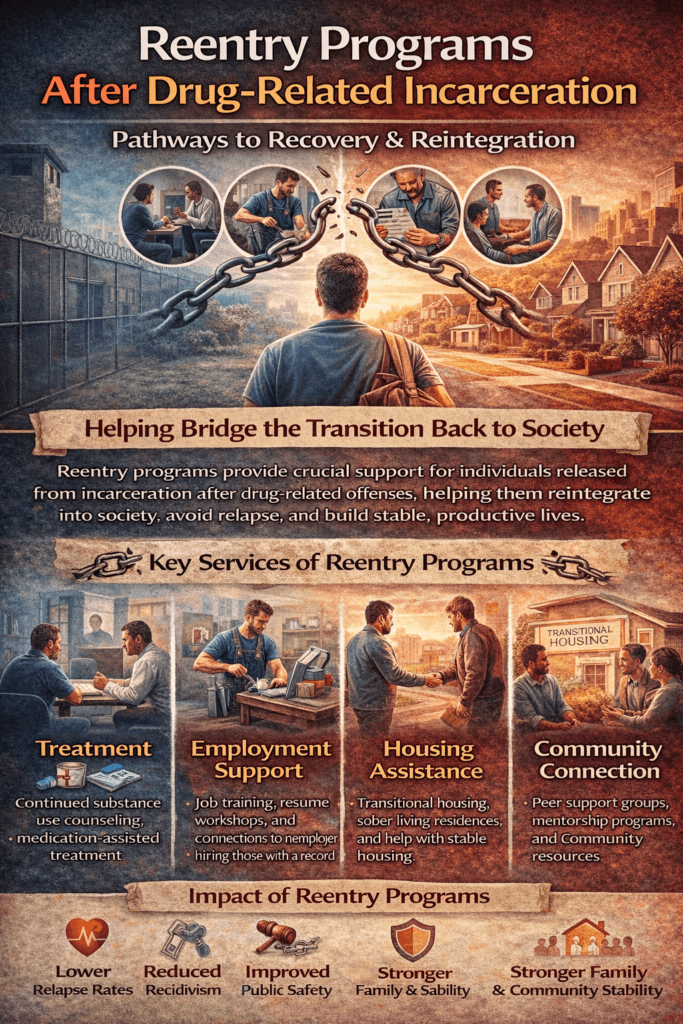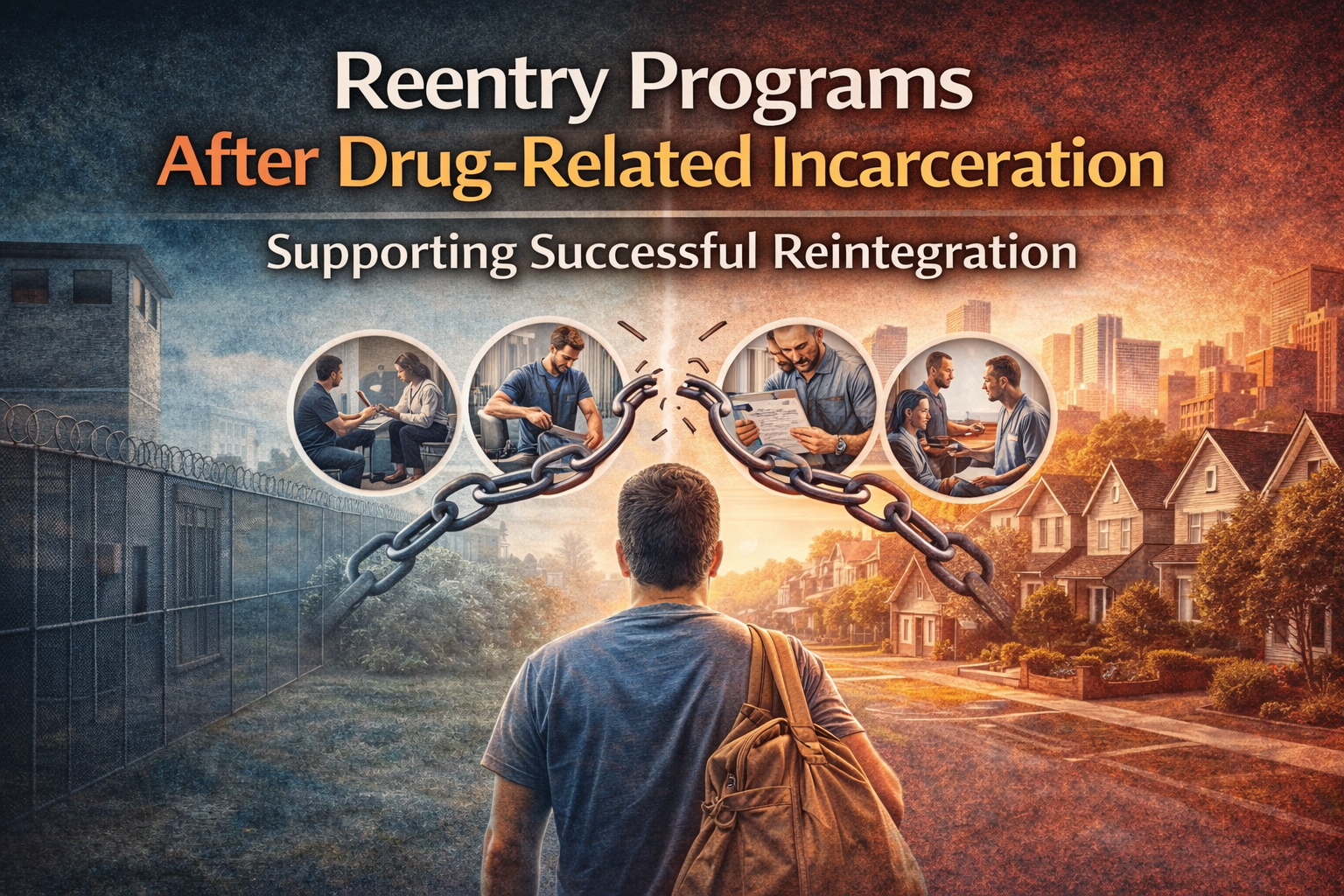
Reentry programs after drug-related incarceration serve as vital bridges between confinement and successful community reintegration. Individuals leaving correctional settings often face multiple barriers at once, including limited job opportunities, unstable or unsafe housing, untreated substance use disorders, mental health challenges, and social stigma that can make rebuilding life feel overwhelming. Without structured support, these obstacles can increase the likelihood of relapse, legal difficulties, or returning to environments associated with past substance use. Reentry programs address this vulnerable transition period by providing coordinated services, including addiction treatment, counseling, employment training, case management, and connections to housing and social resources. By offering guidance, accountability, and practical assistance, these programs help participants rebuild stability, develop confidence, and establish healthier routines as they reintegrate into society.
Reentry Programs After Drug-Related Incarceration: Pathways to Recovery and Reintegration
Reentry programs for individuals released after drug-related incarceration play a critical role in reducing relapse, lowering recidivism, and helping people rebuild stable, healthy lives. Transitioning from incarceration back into the community is often overwhelming. Many individuals face barriers such as limited employment opportunities, housing instability, stigma, untreated mental health conditions, and lack of access to substance-use treatment. Without structured support, these challenges can increase the risk of returning to substance use or reoffending. Reentry programs are designed to bridge this gap by providing coordinated services that address both immediate needs and long-term stability.
One of the most important components of reentry programs is continuity of care for substance use treatment. Individuals who received treatment while incarcerated benefit most when services continue after release. Programs that link participants with outpatient counseling, medication-assisted treatment, peer recovery groups, and case management significantly improve outcomes. Consistent care helps stabilize brain chemistry, reduce cravings, and provide coping tools for stressors encountered in daily life.
Employment support is another cornerstone of successful reintegration. Many reentry initiatives offer vocational training, resume workshops, interview preparation, and partnerships with employers willing to hire individuals with criminal records. Meaningful work provides financial stability, structure, and a sense of purpose—protective factors strongly associated with reduced relapse and improved mental health.
Housing assistance also plays a major role. Safe, stable living environments decrease exposure to high-risk situations and provide a foundation for rebuilding daily routines. Transitional housing, sober living residences, and supportive housing programs offer structured settings where individuals can focus on recovery while gradually increasing independence.
Reentry programs frequently include life-skills training, such as financial literacy, conflict resolution, time management, and communication skills. These practical tools help individuals navigate responsibilities that may feel unfamiliar after incarceration. Learning how to manage stress, solve problems, and build healthy relationships strengthens resilience and reduces vulnerability to setbacks.
Equally important is community connection. Isolation is a major risk factor for relapse and recidivism, while belonging is a powerful protective factor. Peer mentors, support groups, faith-based programs, and community organizations help participants build supportive networks that reinforce accountability and encourage one another. Having people who understand their experiences can make the transition feel less intimidating and more hopeful.
Despite their proven benefits, access to reentry programs is not always consistent. Funding limitations, geographic disparities, and policy barriers can restrict availability. Expanding these programs and improving coordination between correctional systems, healthcare providers, and community organizations can significantly improve public health and safety outcomes.
Ultimately, reentry after drug-related incarceration is not simply about release—it is about rebuilding. Effective reentry programs recognize that recovery and reintegration require structure, support, and opportunity. When individuals are given access to treatment, employment, housing, and community connections, they are far more likely to succeed, contributing positively to society while sustaining long-term recovery and stability.
Self-Management Strategies to Successfully Integrate Into a Reentry Program After Drug-Related Incarceration
Reentry after drug-related incarceration is a major life transition that requires more than external support—it also depends on internal readiness and self-management. While reentry programs provide essential resources such as treatment referrals, job assistance, and housing support, individuals who actively participate in their own growth often experience the strongest outcomes. Self-management strategies help returning citizens build stability, maintain recovery, and successfully navigate the demands of community reintegration.
One of the most important steps is setting realistic, structured goals. Reentry can feel overwhelming if everything is tackled at once. Breaking goals into small, achievable steps—such as attending weekly meetings, applying for one job per day, or maintaining a consistent sleep schedule—creates momentum and builds confidence. Writing goals in a journal or planner can help track progress and reinforce accountability.
Another key strategy is developing a consistent daily routine. Structure provides predictability and reduces stress, especially during early reentry when uncertainty is high. Scheduling regular times for meals, work search activities, counseling sessions, exercise, and rest helps regulate mood and energy levels. Routine also minimizes idle time, which can otherwise increase cravings or risky decision-making.
Emotional regulation skills are equally vital. Individuals reentering society may experience anxiety, frustration, or self-doubt. Learning coping techniques—such as deep breathing, grounding exercises, mindfulness, or journaling—can help manage intense emotions before they escalate. Practicing these skills regularly strengthens resilience and improves decision-making during stressful moments.
Maintaining active engagement with program services is another essential habit. Attending appointments, communicating honestly with case managers, and following through on recommended steps ensures individuals receive the full benefit of available support. Reentry programs are most effective when participants view them as partnerships rather than obligations.
Healthy relationship choices also play a major role. Surrounding oneself with supportive, recovery-focused individuals can reinforce positive habits, while distancing from environments or peers associated with past substance use reduces relapse risk. Building new connections through peer support groups, mentorship programs, or community organizations can foster a sense of belonging and encouragement.
Physical health should not be overlooked. Adequate sleep, balanced nutrition, hydration, and regular movement support brain function, emotional balance, and impulse control. When the body is stable, the mind is better equipped to handle stress and maintain recovery goals.
Finally, practicing self-compassion and patience is crucial. Reintegration is rarely perfect, and setbacks can occur. Viewing mistakes as learning opportunities rather than failures helps maintain motivation and prevents discouragement. Progress often happens gradually, and recognizing small achievements reinforces long-term success.
In summary, successful reintegration after drug-related incarceration is strengthened by intentional self-management. Goal setting, routine building, emotional regulation, engagement with services, healthy relationships, physical care, and self-compassion, when combined, create a strong personal foundation. When individuals combine these internal strategies with external program support, they greatly increase their chances of achieving stability, recovery, and a meaningful new chapter in life.
Family Support Strategies to Support Reentry After Drug-Related Incarceration
Reentry after drug-related incarceration is a complex transition that affects not only the individual returning home but also their entire family system. While reentry programs provide essential services such as treatment referrals, housing support, and employment assistance, family involvement often determines how successfully someone reintegrates into daily life. Families who understand the challenges of reentry and respond with structure, empathy, and consistency can become one of the strongest protective factors against relapse and recidivism.
One of the most powerful family strategies is creating a stable and supportive environment. Returning individuals may feel overwhelmed by new responsibilities, social expectations, and emotional pressures. A predictable home routine—regular meals, consistent sleep schedules, and clear expectations—can help reduce stress and provide a sense of security. Stability signals safety to the nervous system and supports emotional regulation during a vulnerable transition period.
Open, respectful communication is equally important. Many people leaving incarceration carry shame, fear of judgment, or uncertainty about their future. Families who listen without interrupting, avoid accusatory language, and express encouragement help rebuild trust. Statements such as “We’re proud of your effort” or “We’re here to support you” can strengthen confidence and motivation. Positive communication also makes it easier for the individual to ask for help before problems escalate.
Families can also assist with practical reintegration tasks. Navigating appointments, transportation, identification documents, employment applications, or healthcare enrollment after release can be complicated. Providing help with scheduling, reminders, or paperwork reduces logistical stress and increases the likelihood that the individual will remain engaged in reentry services. These small acts of support often make a large difference in maintaining momentum.
Another key strategy is encouraging accountability while maintaining compassion. Healthy support balances understanding with clear boundaries. Families can set expectations for sobriety, treatment participation, and household responsibilities while still expressing care and respect. Boundaries are not punishments—they are protective structures that promote responsibility and long-term stability.
Supporting recovery-oriented relationships is also crucial. Families can encourage participation in counseling, peer support groups, or mentorship programs that reinforce positive habits. Celebrating milestones—such as completing a class, attending meetings consistently, or securing employment—helps reinforce progress and strengthens motivation.
At the same time, families must prioritize their own well-being. Supporting someone during reentry can be emotionally demanding. Seeking education about addiction and reentry challenges, joining family support groups, or speaking with counselors can help relatives stay grounded and avoid burnout. When families remain emotionally balanced, they are better equipped to provide steady, constructive support.
In the end, successful reentry is rarely achieved alone. It is a collaborative process that thrives on encouragement, structure, and understanding. Families who combine empathy with practical support help create an environment where individuals can rebuild confidence, maintain recovery, and move toward a stable, meaningful future. Their involvement does not just assist reintegration—it can transform it into a pathway of growth, healing, and renewed connection.
Community Resource Strategies to Strengthen Reentry After Drug-Related Incarceration
Successful reintegration after drug-related incarceration depends not only on individual motivation or family support, but also on the strength of community systems. Reentry programs are most effective when communities provide coordinated services that address the practical, psychological, and social barriers people face after release. Without these supports, individuals may struggle to secure employment, housing, healthcare, or treatment—factors strongly associated with relapse and recidivism. Communities that invest in structured resource networks create environments where returning citizens can stabilize, rebuild, and move forward productively.
One of the most impactful strategies is expanding accessible treatment and healthcare services. Community clinics, behavioral health centers, and recovery programs ensure continuity of care for individuals who began treatment while incarcerated. Access to counseling, medication-assisted treatment, and mental health services helps manage cravings, stabilize mood, and reduce the likelihood of substance use relapse. When services are affordable and stigma-free, individuals are more likely to remain engaged.
Employment pathways are another cornerstone of successful reentry. Community workforce programs, job training initiatives, and employer partnerships that offer second-chance hiring opportunities help individuals develop skills and secure stable income. Meaningful employment provides routine, purpose, and financial independence—key protective factors that support both recovery and lawful living.
Housing stability is equally essential. Transitional housing programs, sober living homes, and supportive housing initiatives provide safe environments where individuals can rebuild daily routines and focus on recovery goals. Stable housing reduces exposure to high-risk environments and increases the likelihood of maintaining employment and of participating in treatment.
Communities can also strengthen reentry outcomes through education and life-skills development. Local nonprofits, adult education centers, and faith-based organizations often provide classes in financial literacy, communication skills, digital literacy, and stress management. These practical skills help individuals navigate everyday responsibilities and build confidence as they transition back into society.
Another powerful resource is peer support and mentorship networks. Individuals who connect with mentors or peers who have successfully navigated reentry gain encouragement, accountability, and realistic guidance. Peer-led groups foster belonging and reduce isolation, which is especially important because loneliness and stigma can increase vulnerability to relapse or discouragement.
Collaboration across systems is what makes these efforts most effective. Partnerships between correctional institutions, healthcare providers, employers, housing agencies, and community organizations create a coordinated support structure. Shared referral systems, case management, and information exchange ensure that individuals do not fall through gaps during the transition period.
Ultimately, community resource strategies transform reentry from a high-risk transition into an opportunity for renewal. When communities provide accessible care, job opportunities, housing support, education, and mentorship, they create a foundation for stability and long-term success. Investing in reentry is not only beneficial for individuals—it strengthens public health, reduces recidivism, and promotes safer, more resilient communities for everyone.
Frequently Asked Questions
Here are some common questions:
1. What is a reentry program?
A reentry program is a structured support system designed to help individuals transition from incarceration back into the community. These programs provide services such as substance use treatment, job assistance, housing support, counseling, and life-skills training.
2. Why are reentry programs important after drug-related incarceration?
They reduce the risk of relapse and reoffending by addressing underlying challenges like addiction, unemployment, unstable housing, and mental health needs. Without support, these barriers can make reintegration much harder.
3. Who qualifies for a reentry program?
Eligibility varies by program, but many serve individuals recently released from jail or prison, especially those with substance-related offenses or identified treatment needs.
4. What services do reentry programs typically offer?
Most programs include case management, addiction treatment referrals, mental health counseling, job training, resume help, housing assistance, and peer support groups.
5. Do reentry programs actually reduce recidivism?
Yes. Research shows that structured reentry support—especially programs that combine treatment, employment assistance, and mentoring—can significantly reduce recidivism and improve long-term stability.
6. How do reentry programs help with addiction recovery?
They provide continuity of care after release, connecting individuals to counseling, medication-assisted treatment, recovery groups, and relapse-prevention planning.
7. Can family members be involved in reentry programs?
Often yes. Many programs encourage family participation through education sessions, counseling, or support meetings to strengthen relationships and create a stable home environment.
8. What challenges do people face after release without support?
Common challenges include unemployment, stigma, lack of housing, untreated addiction, limited access to healthcare, and difficulty navigating legal or social service systems.
9. How can someone enroll in a reentry program?
Enrollment may occur before release through correctional staff, probation officers, social workers, or community organizations. Some programs also accept walk-ins or referrals after release.
10. What makes a reentry program successful?
Effective programs combine structure, individualized planning, accountability, and ongoing support. Programs that integrate treatment, employment pathways, housing stability, and mentorship tend to produce the best outcomes.
Conclusion
Effective reentry programs demonstrate that successful reintegration is not just about release—it is about preparation, support, and opportunity. When individuals have access to coordinated services, supportive relationships, and pathways to employment and housing, they are far more likely to maintain recovery and build productive lives. Investing in reentry initiatives benefits not only returning citizens but also families, communities, and public safety. By prioritizing continuity of care and practical resources, society can transform reentry from a vulnerable moment into a foundation for long-term stability and positive change.
Video: