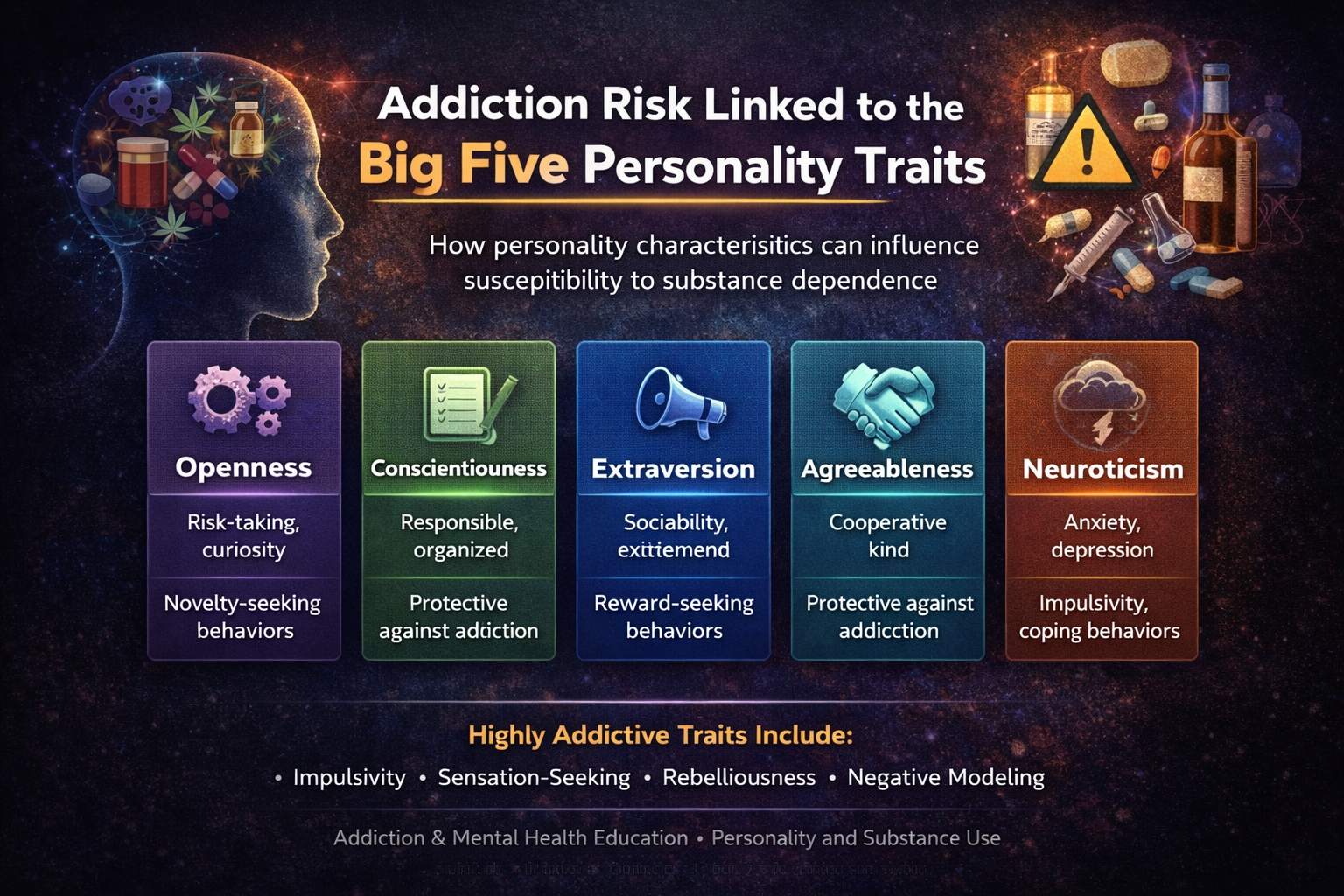
Addiction risk is influenced by a complex interaction of biological, psychological, and social factors, with personality playing an important role in how individuals respond to stress, regulate emotions, and make decisions. The Big Five Personality Traits—neuroticism, conscientiousness, extraversion, agreeableness, and openness—provide a widely used framework for understanding these patterns. While no personality trait causes addiction on its own, certain trait profiles are associated with higher vulnerability when adequate coping skills and support systems are absent. Recognizing these links helps shift the focus from blame to prevention and personalized support.
The Big Five Personality Traits Associated with Addiction
Personality plays an important role in how individuals respond to stress, regulate emotions, and make decisions—factors that strongly influence vulnerability to addiction. One of the most widely accepted frameworks in psychology is the Big Five Personality Model, which describes personality across five core traits: openness, conscientiousness, extraversion, agreeableness, and neuroticism. While no personality trait causes addiction on its own, certain trait patterns are consistently associated with increased or decreased risk.
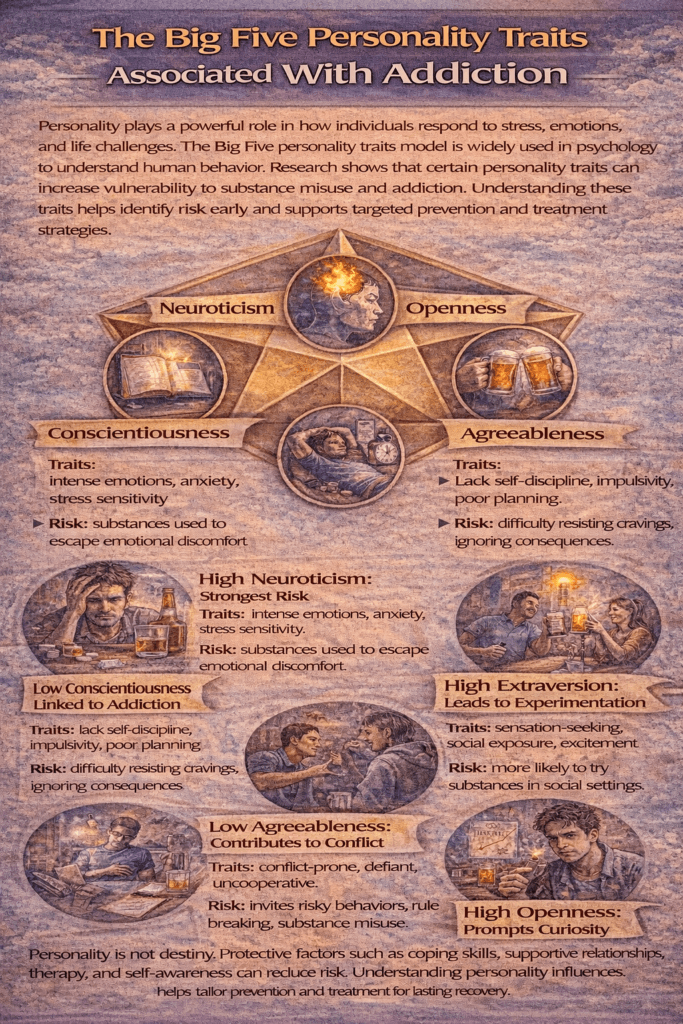
Neuroticism is the trait most strongly linked to addiction risk. Individuals high in neuroticism tend to experience intense emotional distress, anxiety, mood instability, and sensitivity to stress. Substances may be used as a coping mechanism to manage overwhelming emotions, making repeated use more likely during periods of psychological strain.
Low conscientiousness is another key factor. Conscientiousness involves self-discipline, planning, impulse control, and goal-directed behavior. Individuals with lower levels of conscientiousness may struggle with delayed gratification and consistency, increasing vulnerability to impulsive substance use and difficulty maintaining recovery routines.
High extraversion can also contribute to addiction risk in certain contexts. Extraverted individuals often seek stimulation, excitement, and social engagement. While extraversion itself is not harmful, it may increase exposure to social environments where substance use is normalized, such as parties or peer-driven settings.
Low agreeableness has been associated with higher rates of substance misuse, particularly when combined with impulsivity or antisocial tendencies. Individuals lower in agreeableness may be more resistant to social norms, authority, or feedback from others, thereby reducing protective influences such as family or peer intervention.
High openness to experience is more complex. Openness is associated with curiosity, creativity, and willingness to try new things. While it can support adaptability and insight in recovery, higher openness may also increase experimentation with substances, especially during adolescence or young adulthood.
Understanding how the Big Five personality traits interact with addiction helps shift the conversation away from blame and toward prevention. Personality traits influence risk, coping styles, and recovery needs—but they are not destiny. When personality-informed strategies are combined with education, support, and treatment, individuals can build resilience and pursue recovery in ways that align with their natural strengths.
Self-Management Strategies to Reduce Addiction Risk Linked to the Big Five Personality Traits
Personality traits influence how individuals cope with stress, regulate emotions, and respond to temptation—factors that play a meaningful role in addiction vulnerability. Within the Big Five Personality Model (neuroticism, conscientiousness, extraversion, agreeableness, and openness), certain trait patterns are associated with a higher risk for substance misuse. Self-management strategies can help individuals work with their personality traits rather than against them to reduce addiction risk.
For individuals high in neuroticism, emotional regulation is the most critical self-management focus. Heightened anxiety, mood swings, and stress sensitivity increase the likelihood of using substances to self-soothe. Strategies such as mindfulness, cognitive restructuring, journaling, relaxation techniques, and consistent sleep routines help stabilize emotions and reduce reliance on substances for relief.
Those with low conscientiousness benefit from structure and external support. Because this trait is linked to impulsivity and difficulty with long-term planning, self-management strategies should emphasize routines, reminders, goal-setting tools, and accountability systems. Breaking goals into small, manageable steps helps reduce impulsive decisions that can lead to substance use.
Individuals high in extraversion often thrive on stimulation and social interaction, which can increase exposure to substance-use environments. Self-management strategies include choosing social activities that do not revolve around substances, practicing assertive refusal skills, and seeking excitement through healthy outlets such as sports, creative projects, or leadership roles.
For those lower in agreeableness, self-management involves strengthening empathy, reflection, and awareness of consequences. Practicing pause-and-reflect techniques, improving communication skills, and learning to tolerate feedback can reduce resistance to support and lower risk-taking behaviors associated with substance misuse.
Individuals high in openness to experience may benefit from channeling their curiosity into safe, constructive exploration. Creative expression, learning, travel, mindfulness practices, and personal growth activities can satisfy novelty-seeking tendencies without resorting to substance experimentation.
Across all personality traits, self-awareness is the foundation of prevention. Understanding personal strengths, vulnerabilities, and stress responses enables individuals to select coping strategies that align with their natural disposition. Addiction risk is not determined by personality alone, but thoughtful self-management can significantly reduce vulnerability and support long-term well-being.
By tailoring self-management strategies to personality traits, individuals gain greater control, resilience, and insight, thereby transforming personality from a risk factor into a protective asset.
Family Support Strategies to Reduce Addiction Risk Linked to the Big Five Personality Traits
Personality traits influence how individuals experience emotions, respond to stress, and engage with their environment. Within the Big Five Personality Model—neuroticism, conscientiousness, extraversion, agreeableness, and openness—certain traits are associated with increased vulnerability to addiction when adequate support is lacking. Families play a powerful protective role by adapting their support strategies to align with these personality-driven needs.
For individuals high in neuroticism, family support should emphasize emotional safety and reassurance. These individuals are more sensitive to stress, anxiety, and mood changes, making them vulnerable to substance use as a coping mechanism. Families can help by validating emotions, encouraging healthy coping skills, and avoiding criticism or emotional invalidation that may intensify distress.
When low conscientiousness is present, family structure and consistency are especially important. Families can support by helping establish routines, encouraging goal-setting, and offering gentle accountability without control or punishment. Clear expectations combined with encouragement help reduce impulsivity and support healthier decision-making.
Individuals high in extraversion benefit from family guidance around social environments. Because extraversion often increases exposure to peer settings where substance use is normalized, families can help by promoting substance-free social activities, reinforcing refusal skills, and supporting involvement in positive group-based outlets such as sports, volunteering, or creative collaboration.
For those lower in agreeableness, family support strategies should focus on communication and connection rather than confrontation. Resistance to authority or feedback can increase risk when relationships become adversarial. Families that emphasize respect, collaborative problem-solving, and calm discussion are more likely to maintain influence and reduce oppositional behaviors linked to substance misuse.
Individuals high in openness to experience often benefit from family support that encourages exploration in safe, constructive ways. Families can nurture creativity, curiosity, and learning while clearly discussing risks associated with experimentation. Providing opportunities for growth without substances reduces the appeal of risky exploration.
Across all personality traits, the most effective family strategy is early, compassionate engagement. Families who recognize personality-driven vulnerabilities, communicate openly, and seek professional guidance when needed create environments that reduce addiction risk. Personality traits are not flaws—they are patterns that, when supported thoughtfully, can become strengths rather than pathways to substance misuse.
By tailoring family support to individual personality traits, families can play a critical role in prevention, resilience, and long-term well-being—helping loved ones thrive without relying on substances to cope or belong.
Community Resource Strategies to Reduce Addiction Risk Linked to the Big Five Personality Traits
Personality traits influence how individuals cope with stress, seek stimulation, regulate emotions, and respond to social environments—all factors that shape vulnerability to addiction. Within the Big Five Personality Model (neuroticism, conscientiousness, extraversion, agreeableness, and openness), certain traits may increase risk when supportive systems are lacking. Community resources play a critical role in offsetting these risks by providing structure, education, connection, and early intervention.
For individuals high in neuroticism, community mental health resources are especially protective. Access to counseling services, stress-management programs, mindfulness groups, and trauma-informed care helps individuals manage emotional distress without relying on substances. Community clinics and wellness programs normalize help-seeking and reduce stigma around emotional vulnerability.
Those with low conscientiousness benefit from community programs that provide structure and accountability. Job-training programs, recovery-friendly workplaces, mentoring initiatives, and skills-based workshops support goal setting, routine building, and follow-through. These resources reduce impulsive decision-making and reinforce healthier behavioral patterns.
Individuals high in extraversion often thrive in social settings, which can increase exposure to substance-use environments. Communities can reduce risk by offering substance-free social outlets such as sports leagues, arts programs, volunteer opportunities, and youth centers. Positive, engaging group activities meet social needs without normalizing substance use.
For individuals lower in agreeableness, community resources that emphasize collaboration rather than authority are most effective. Peer-led programs, restorative justice initiatives, and group-based problem-solving models encourage engagement without confrontation. These approaches build trust and reduce resistance that can interfere with prevention efforts.
Those high in openness to experience benefit from community opportunities that channel curiosity and creativity into safe exploration. Educational workshops, cultural programs, innovation spaces, and personal-development courses provide stimulation and growth while reducing the appeal of risky experimentation with substances.
Across all personality traits, early education and accessible prevention services are key. Community-wide awareness campaigns, school-based programs, and integrated mental health and substance-use services help individuals recognize risk early and seek support before patterns escalate.
Community resource strategies are most effective when they are inclusive, accessible, and responsive to individual differences. By offering diverse supports that align with personality-driven needs, communities can transform vulnerability into resilience—reducing addiction risk and promoting long-term mental health, connection, and well-being.
Frequently Asked Questions
Here are some common questions:
What are the Big Five Personality Traits?
The Big Five Personality Traits are neuroticism, conscientiousness, extraversion, agreeableness, and openness to experience. They describe broad patterns of thinking, feeling, and behavior that remain relatively stable over time.
Do personality traits cause addiction?
No. Personality traits do not cause addiction on their own. Addiction develops from a combination of genetic, biological, psychological, and environmental factors. Personality traits can influence vulnerability or resilience, but are not destiny.
Which Big Five trait is most strongly linked to addiction risk?
High neuroticism is most consistently associated with increased addiction risk. Individuals high in neuroticism may experience intense emotional distress and may use substances to cope with anxiety, stress, or negative moods.
How does conscientiousness affect addiction risk?
Low conscientiousness is linked to higher addiction risk due to challenges with impulse control, planning, and delayed gratification. Higher conscientiousness tends to be protective, supporting self-regulation and long-term goal pursuit.
Is extraversion a risk factor for addiction?
Extraversion can increase risk in certain contexts, particularly when social environments normalize substance use. However, extraversion can also be protective when channeled into healthy social, recreational, or leadership activities.
What role does agreeableness play in addiction risk?
Lower agreeableness may be associated with a higher risk when it leads to resistance to rules, feedback, or social norms. Higher agreeableness can be protective by strengthening social bonds and responsiveness to support.
Does openness to experience increase addiction risk?
High openness may increase the likelihood of experimentation, especially during adolescence or young adulthood. At the same time, openness can support creativity, insight, and adaptability in recovery when paired with healthy coping strategies.
Can personality traits change over time?
Personality traits are relatively stable but not fixed. Life experiences, therapy, skills training, and supportive environments can shift how traits are expressed and reduce associated risks.
How can understanding personality traits help prevent addiction?
Understanding personality traits allows for personalized prevention strategies. Coping skills, support systems, and interventions can be tailored to individual strengths and vulnerabilities, improving effectiveness.
Can family and community support reduce personality-related addiction risk?
Yes. Strong family relationships, supportive communities, and accessible mental health resources can significantly reduce addiction risk by buffering stress, improving coping skills, and offering early intervention.
Is personality-based prevention used in treatment settings?
Yes. Many modern prevention and treatment approaches consider personality traits to guide therapy, skill-building, and recovery planning, helping individuals work with their natural tendencies rather than against them.
Conclusion
Understanding addiction risk through the lens of the Big Five personality traits highlights the importance of tailored prevention and intervention strategies. Personality traits shape how individuals experience challenges, seek connection, and manage impulses, but they do not determine outcomes. With appropriate self-management skills, family support, and community resources, personality-related vulnerabilities can be balanced and even transformed into strengths. By integrating personality awareness into education, prevention, and treatment, individuals and communities can more effectively reduce the risk of addiction and support long-term well-being.
Video: These 5 Traits Predict Addiction #bigfive #psychology #mentalwellness