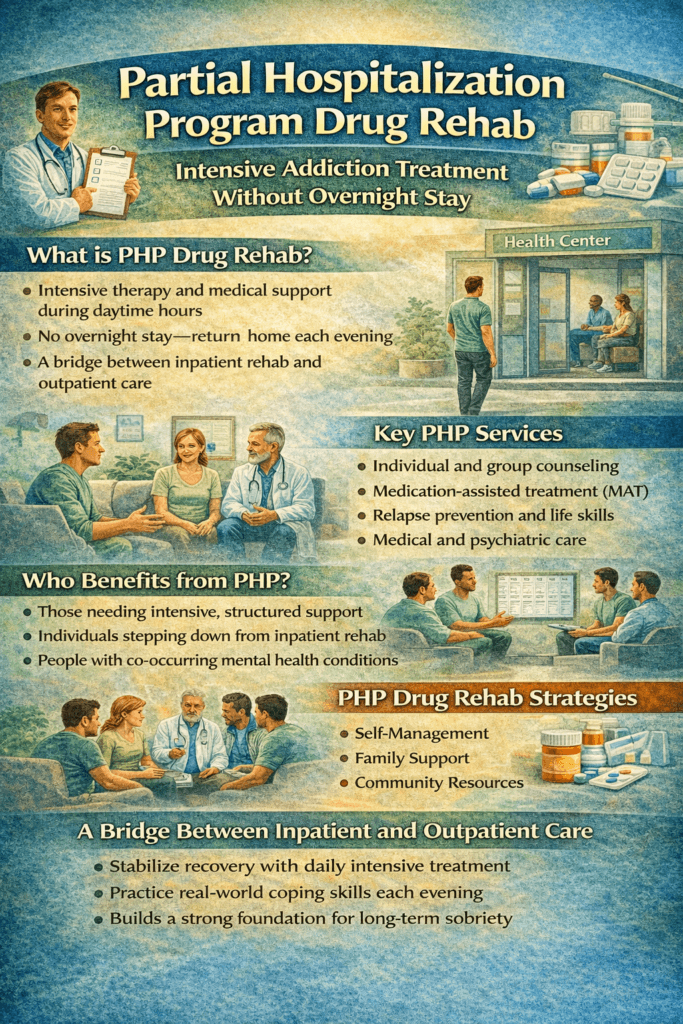
Partial Hospitalization Programs (PHPs) have become an essential level of care in modern addiction treatment, offering intensive daily therapy and medical support without requiring an overnight residential stay. PHP drug rehab is designed for individuals who need structured, high-intensity treatment but are stable enough to live at home or in supportive housing. By combining clinical services, medication management, behavioral therapy, and skill development, PHPs provide a powerful bridge between inpatient rehab and outpatient care, helping individuals stabilize recovery while practicing real-world coping strategies.
Partial Hospitalization Program Drug Rehab: Intensive Treatment Without Overnight Stay
Partial Hospitalization Programs (PHPs) have become an essential level of care in modern addiction treatment. For individuals struggling with substance use disorders who need structured, intensive support but do not require 24-hour inpatient supervision, PHP drug rehab offers an effective middle ground. These programs provide comprehensive daily treatment while allowing participants to return home or to supportive housing in the evenings.
PHP drug rehab typically involves five to six hours of treatment per day, several days per week. Services often include individual counseling, group therapy, medication management, psychiatric care, relapse-prevention training, and life-skills development. This high level of clinical intensity helps stabilize individuals early in recovery while reinforcing coping strategies for real-world environments.
One of the major benefits of PHP is continuity of care. Individuals transitioning from inpatient rehab often step down into PHP as a bridge between residential treatment and outpatient services. This gradual transition reduces the risk of relapse by maintaining therapeutic momentum while reintroducing personal responsibilities, such as work, family, and community life.
Partial hospitalization also supports medication-assisted treatment for those using MOUD for opioid use disorder or other psychiatric medications. Daily medical monitoring ensures medication effectiveness, supports side-effect management, and enhances adherence, all of which improve treatment outcomes.
Another advantage is flexibility. PHP allows individuals to practice recovery skills in real-life settings each evening and then process challenges in therapy the next day. This immediate feedback loop strengthens behavioral change and confidence.
PHP drug rehab is particularly helpful for individuals with co-occurring mental health conditions such as depression, anxiety, or trauma disorders. Integrated psychiatric and addiction care ensures both conditions are treated simultaneously, reducing the cycle of relapse.
By offering intensive therapy, medical oversight, and structured daily programming without full hospitalization, Partial Hospitalization Programs provide a powerful, balanced path to recovery. For many, PHP marks the turning point from crisis stabilization to long-term independent sobriety.
Self-Management Strategies in Partial Hospitalization Program Drug Rehab
Partial Hospitalization Programs (PHPs) provide intensive addiction treatment during the day while allowing individuals to return home or to supportive housing in the evenings. This structure offers powerful clinical support, but long-term success also depends on how individuals manage their recovery outside program hours. Self-management strategies help participants take active ownership of their progress while maximizing the benefits of PHP drug rehab.
A key self-management strategy is to build consistency in daily routines. PHP schedules often include several hours of therapy, education, and medical check-ins. Creating consistent wake-up times, meal schedules, and evening routines stabilizes mood, reduces stress, and reinforces commitment to treatment.
Self-monitoring is another important tool. Participants can track cravings, emotional changes, triggers, and sleep quality through journaling or recovery apps. Bringing these observations into therapy sessions allows clinicians to adjust treatment plans quickly and helps individuals recognize early warning signs of relapse.
Managing triggers outside program hours is essential. PHP participants practice coping skills learned in therapy—such as breathing techniques, grounding exercises, or thought reframing —when faced with real-world stressors. This immediate practice strengthens confidence and builds relapse-prevention skills.
Medication adherence also plays a role in self-management. Individuals receiving medication-assisted treatment or psychiatric medications must take prescriptions as directed and communicate side effects or concerns to medical staff. Consistency improves stabilization and recovery outcomes.
Healthy lifestyle choices further support treatment success. Balanced nutrition, hydration, physical activity, and adequate sleep support the repair of brain function affected by substance use. Avoiding high-risk social environments and scheduling sober activities reinforces progress made in treatment.
Finally, engaging with support systems outside PHP hours strengthens recovery. Peer meetings, family check-ins, and sober social networks provide encouragement and accountability.
Self-management transforms PHP from a clinical service into a daily practice of recovery. When individuals actively apply skills, track progress, and maintain healthy routines, Partial Hospitalization Programs become a powerful bridge to lasting independence and long-term sobriety.
Family Support Strategies in Partial Hospitalization Program Drug Rehab
Partial Hospitalization Programs (PHPs) offer intensive addiction treatment during daytime hours while allowing individuals to return home or to supportive housing in the evenings. This level of care provides strong clinical structure, but family involvement often determines whether treatment gains translate into lasting recovery. Family support strategies strengthen engagement, reduce relapse risk, and create a stable environment where healing can continue beyond the therapy room.
One essential family strategy is understanding how PHP works. When families learn that PHP combines medical oversight, therapy, skill-building, and relapse-prevention training, they are better equipped to encourage consistent attendance and participation. Education reduces confusion and prevents unrealistic expectations about immediate recovery.
Families can also support routine and accountability. Encouraging timely arrival to sessions, maintaining a consistent evening routine at home, and reinforcing healthy daily habits help stabilize early recovery. Simple actions such as shared meals, consistent bedtime routines, and sober household activities promote emotional regulation and a sense of security.
Emotional support is equally critical. Individuals in PHP often process trauma, cravings, and lifestyle changes. Families that practice active listening, patience, and non-judgmental communication create a safe space for honesty rather than secrecy. This openness allows challenges to be addressed before they become relapse triggers.
Creating a substance-free home environment further strengthens treatment success. Removing alcohol or drugs from shared spaces and discouraging high-risk social contacts reduces temptation during vulnerable early recovery stages.
Family participation in therapy or educational sessions offered by PHP programs also improves outcomes. Learning about addiction, communication skills, and boundary setting helps families support recovery without becoming controlling or enabling.
Finally, healthy boundaries are vital. Supporting recovery means encouraging independence and responsibility, not managing every decision. Balanced involvement builds confidence and long-term self-efficacy.
When Partial Hospitalization treatment is paired with informed, compassionate family support, individuals are more likely to stay engaged in care, apply learned skills at home, and achieve sustainable recovery. Families become partners in healing, turning daily life into an extension of the treatment environment.
Community Resource Strategies in Partial Hospitalization Program Drug Rehab
Partial Hospitalization Programs (PHPs) provide intensive, structured addiction treatment during the day while allowing individuals to return home or to supportive housing in the evenings. This level of care is highly effective for stabilizing recovery, but long-term success depends on more than clinical services alone. Community resources play a vital role in reinforcing treatment progress, reducing relapse risk, and supporting individuals as they transition back into everyday life.
One key community strategy is expanding access to PHP services. Community health centers, behavioral health clinics, and hospital-affiliated outpatient programs make partial hospitalization available without requiring full residential admission. Telehealth PHP options also help individuals in rural or underserved areas receive consistent treatment.
Peer recovery networks further strengthen engagement. Local recovery groups, peer mentors, and sober community centers provide shared experience and accountability outside program hours. These connections reduce isolation and help individuals practice social skills in substance-free environments.
Practical support services are equally important. Transportation assistance, childcare services, housing programs, and employment resources remove barriers that often interfere with consistent PHP attendance. When daily living needs are supported, individuals can focus more fully on treatment and skill-building.
Community education and stigma-reduction initiatives also improve outcomes. Public awareness programs that promote addiction as a medical condition encourage individuals to seek help earlier and remain engaged in treatment longer. Knowledgeable communities create safer, more supportive recovery environments.
Finally, collaboration among medical providers, mental health professionals, social services, and recovery organizations ensures continuity of care. When community systems communicate and coordinate, individuals experience smoother transitions from PHP to outpatient care and long-term support services.
By surrounding Partial Hospitalization treatment with strong community resources, recovery extends beyond the clinic walls. Accessible services, peer networks, and practical assistance make PHP a sustainable pathway to independence, stability, and lasting sobriety.
Frequently Asked Questions
Here are some common questions:
What is a Partial Hospitalization Program (PHP) for drug rehab?
A Partial Hospitalization Program is an intensive addiction treatment program that provides several hours of therapy and medical support during the day while allowing individuals to return home or to supportive housing in the evening.
How is PHP different from inpatient rehab?
Inpatient rehab requires a 24-hour residential stay. PHP offers a similar level of clinical intensity during daytime hours but does not require overnight residence.
How is PHP different from outpatient treatment?
PHP is more intensive than standard outpatient care. It includes longer daily therapy sessions, medical monitoring, and structured programming several days per week.
Who benefits most from PHP drug rehab?
Individuals who need strong clinical support but are medically stable enough to live at home benefit most. PHP is also commonly used as a step-down level of care after inpatient rehab.
What services are provided in PHP?
PHP typically includes individual therapy, group counseling, relapse-prevention training, medication management, psychiatric care, and life-skills development.
Can someone work or attend school while in PHP?
Because PHP runs for several hours per day, scheduling work or school may be limited initially. Many individuals return to work or school gradually as treatment progresses.
Is medication-assisted treatment available in PHP?
Yes. PHP programs commonly provide medication-assisted treatment for opioid or alcohol use disorders, along with monitoring and dosage management.
Can PHP treat co-occurring mental health conditions?
Yes. PHP programs often provide integrated care for depression, anxiety, trauma, and other mental health disorders alongside addiction treatment.
How long does PHP treatment last?
Program length varies by individual needs but typically ranges from 2 to 6 weeks, with transitions to outpatient care afterward.
Is PHP effective for relapse prevention?
Yes. PHP allows individuals to practice coping skills at home each evening and process challenges in therapy the next day, strengthening relapse-prevention skills.
Does PHP include family involvement?
Many PHP programs offer family education sessions or family therapy to improve communication and recovery support at home.
How do I know if PHP is the right level of care?
A clinical assessment by an addiction or mental health professional determines whether PHP is appropriate based on symptom severity, safety, and support environment.
Will insurance cover PHP drug rehab?
Most insurance plans cover PHP as a recognized level of addiction treatment, though coverage details vary by provider and plan.
What happens after PHP ends?
Most individuals transition to intensive outpatient programs or standard outpatient therapy to continue recovery support.
Conclusion
Partial Hospitalization Program drug rehab offers a balanced approach to addiction treatment, delivering intensive clinical care while allowing individuals to remain connected to their daily lives. When PHP services are reinforced with self-management practices, family involvement, and community resources, recovery skills extend beyond the treatment setting and become part of everyday routine. This combination strengthens relapse prevention, builds independence, and supports long-term sobriety. As addiction care continues to evolve, PHP remains a vital pathway for individuals seeking structured support without full residential commitment, offering stability, growth, and renewed hope for lasting recovery.
Video: The Real Reason People Choose Partial Hospitalization #Treatment #Hope