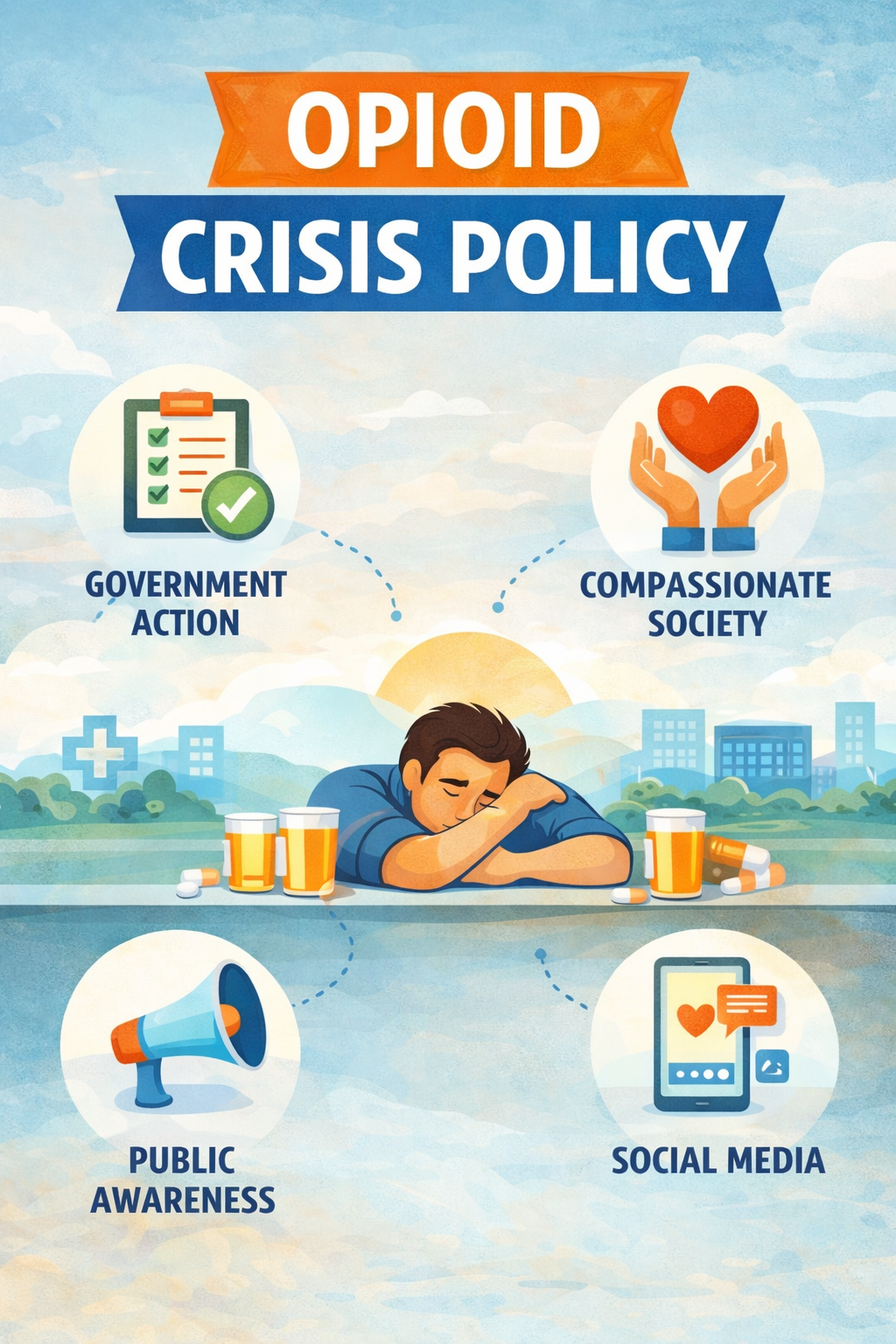
The opioid crisis remains one of the most urgent public health challenges of our time, affecting individuals, families, healthcare systems, and entire communities. Addressing this crisis requires more than medical treatment alone; it demands sustained policy attention, government action, responsible use of social media, and supportive societal ideologies. When policymakers prioritize overdose prevention and treatment access, governments invest in evidence-based interventions, social media amplifies education and advocacy, and society embraces compassion over stigma, meaningful progress becomes possible. A coordinated approach across these sectors is essential to reduce opioid-related harm and build pathways to recovery.
Why the Overdose Crisis Must Remain on the Policy Agenda
The overdose crisis continues to claim lives at an alarming rate, making it one of the most urgent public health emergencies of our time. While media attention and political focus may shift to other issues, the reality is that overdose deaths remain widespread and preventable. Keeping the overdose crisis on the policy agenda is essential to sustain funding, expand treatment access, and implement evidence-based interventions that save lives.
One major reason for continued policy attention is the evolving nature of the drug supply. Synthetic opioids such as fentanyl and emerging stimulant-opioid combinations have dramatically increased overdose risk. Policies must adapt quickly to emerging drug trends by supporting early-warning systems, toxicology surveillance, and rapid community response strategies.
Another critical factor is treatment accessibility. Many individuals still face barriers to detox services, rehabilitation programs, medication-assisted treatment, and mental health care. Policy decisions directly influence insurance coverage, workforce training, and geographic availability of treatment facilities. Without sustained legislative focus, these gaps widen, and overdose rates rise.
Harm reduction strategies also rely on policy support. Programs providing naloxone distribution, syringe services, safe-use education, and overdose prevention sites have proven effectiveness in reducing deaths. However, these initiatives require legal authorization, public funding, and community acceptance — all of which are shaped by policy action.
The crisis further intersects with social determinants of health, including housing instability, unemployment, trauma, and lack of healthcare access. Comprehensive policy approaches must address these underlying conditions to reduce vulnerability to substance misuse and overdose.
Finally, data-driven policymaking ensures accountability. Continued monitoring of overdose statistics, treatment outcomes, and community needs allows governments to allocate resources effectively and adjust interventions based on evidence.
The overdose crisis is not a temporary issue — it is an ongoing public health challenge. When policymakers maintain focus, invest in prevention and treatment infrastructure, and support harm reduction and recovery services, lives are saved. Keeping the overdose crisis on the policy agenda is not just necessary — it is a moral responsibility.
What Government Policies Can Improve the Opioid Crisis?
The opioid crisis remains one of the most complex public health emergencies in modern history. Overdose deaths, rising dependence rates, and strained healthcare systems highlight the urgent need for effective government action. While addiction is a medical condition, policy decisions shape access to treatment, prevention programs, harm reduction services, and social support systems. Strong, evidence-based government policies can significantly reduce opioid misuse and save lives.
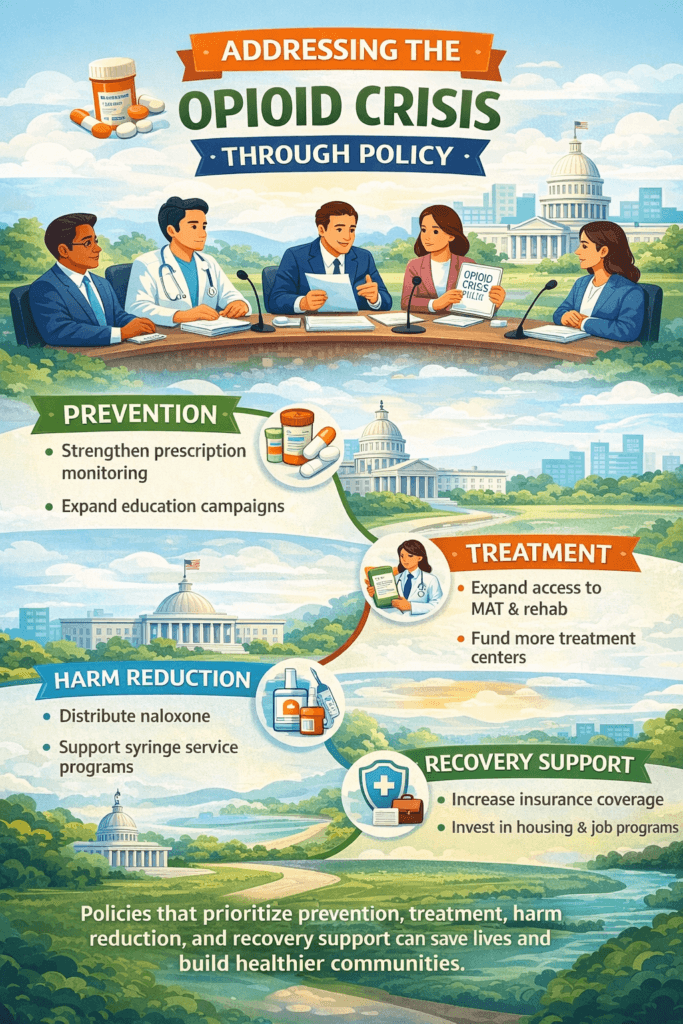
A critical policy focus is expanding access to treatment. Governments can improve insurance coverage for detox, rehabilitation, and medication-assisted treatment (MAT) such as methadone, buprenorphine, and naltrexone. Funding for treatment facilities in underserved and rural areas ensures that individuals receive timely care. Policies that integrate addiction treatment into primary healthcare also reduce stigma and improve early intervention.
Strengthening prescription monitoring programs (PDMPs) is another effective strategy. These databases help track opioid prescriptions, identify risky prescribing patterns, and prevent “doctor shopping.” When combined with provider education on responsible prescribing and pain management alternatives, PDMPs reduce unnecessary opioid exposure.
Supporting harm-reduction initiatives is essential for preventing overdose deaths. Policies that allow widespread naloxone distribution, syringe-exchange programs, and drug-checking services have proven to lower fatal overdoses and reduce infectious disease transmission. Some regions have also implemented supervised consumption sites, providing immediate medical response during overdose events.
Government policies must also invest in prevention and education. School-based programs, community outreach, and public awareness campaigns teach people about opioid risks, safe medication use, and how to recognize overdose symptoms. Prevention efforts reduce the number of individuals entering addiction pathways.
Finally, addressing social and economic risk factors is vital. Policies that expand mental health services, housing support, employment programs, and trauma-informed care reduce vulnerability to substance misuse. Addiction does not occur in isolation; policies must address the broader conditions that contribute to opioid dependence.
The opioid crisis cannot be solved by healthcare alone. It requires sustained government leadership, funding commitment, and data-driven policy reform. When governments prioritize access to treatment, harm reduction, prevention, and social support, communities experience fewer overdoses, stronger recovery outcomes, and healthier futures.
How Social Media Can Support Opioid Crisis Policies
Social media has become one of the most powerful tools for shaping public opinion, spreading information, and influencing policy decisions. In the context of the opioid crisis, social media platforms offer unique opportunities to raise awareness, promote evidence-based solutions, and hold policymakers accountable. When used responsibly, social media can strengthen opioid crisis policies and accelerate community-driven change.
One of the most significant contributions of social media is public awareness and education. Government agencies, healthcare organizations, and advocacy groups use platforms such as Facebook, Instagram, X (Twitter), and TikTok to share information about opioid risks, safe prescribing, treatment options, and overdose prevention. Viral campaigns can quickly reach large audiences, increasing understanding of addiction as a public health issue rather than a moral failing. This shift in perception helps build public support for compassionate, treatment-focused policies.
Social media also plays a key role in reducing stigma. Personal recovery stories, testimonials from families, and peer-support content humanize addiction and highlight that recovery is possible. When stigma decreases, communities are more likely to support funding for treatment programs, harm-reduction initiatives, and mental health services.
Another critical function is real-time policy advocacy. Social media allows citizens to voice concerns, share data, and mobilize support for legislation addressing treatment access, naloxone availability, prescription monitoring, and recovery funding. Hashtag campaigns and online petitions make it easier to pressure lawmakers to keep opioid crisis policies on the legislative agenda.
Social platforms also serve as early-warning and surveillance tools. Public health agencies monitor social media trends to identify emerging drug threats, overdose clusters, or misinformation about substances. This rapid information exchange allows quicker policy responses and targeted interventions.
Finally, social media provides a connection to resources. Many individuals struggling with opioid use discover treatment centers, helplines, recovery groups, and harm-reduction services through online posts and shared links. This direct pathway to care supports the effectiveness of policy investments in treatment infrastructure.
The opioid crisis requires collaboration between government, healthcare systems, and communities. Social media acts as a bridge connecting public awareness, advocacy, real-time data, and access to services. When strategically integrated into public health planning, social media strengthens opioid crisis policies, expands community engagement, and ultimately saves lives.
What Societal Ideologies Can Help Address the Opioid Crisis?
The opioid crisis is not only a medical or legal issue — it is also shaped by societal beliefs, values, and ideologies. How a society views addiction influences whether individuals receive punishment or treatment, whether funding goes to prisons or healthcare, and whether people struggling with substance use feel supported or stigmatized. Adopting compassionate, evidence-based social ideologies is essential to reducing opioid misuse and saving lives.
A foundational ideology for progress is public-health compassion over criminalization. Viewing addiction as a chronic health condition rather than a moral failure encourages policies that expand treatment, harm-reduction services, and recovery support instead of relying primarily on incarceration. This shift reduces stigma and promotes early help-seeking.
Another helpful societal belief is collective responsibility. Recognizing that addiction affects families, workplaces, and communities builds support for shared solutions such as community-based treatment programs, public funding for mental health services, and overdose-prevention education. When society accepts that recovery benefits everyone, investment in solutions increases.
Equity and social justice ideologies also play a vital role. The opioid crisis disproportionately affects underserved populations with limited access to healthcare, stable housing, and employment. Prioritizing fairness in healthcare access, insurance coverage, and social services ensures that recovery resources reach those at greatest risk.
A further important perspective is evidence-driven policymaking. Societies that value science and data support interventions proven to reduce overdose deaths, such as medication-assisted treatment, naloxone distribution, and safe-use education. Evidence-based ideology replaces fear-based decision-making with effective solutions.
Finally, recovery-oriented community culture strengthens long-term progress. Societies that promote peer support, second chances, and reintegration reduce relapse rates and help individuals rebuild meaningful lives after addiction.
The opioid crisis will not end through healthcare efforts alone. It requires a societal mindset that embraces compassion, shared responsibility, fairness, scientific evidence, and support for recovery. When these ideologies guide public attitudes and policies, communities become stronger, lives are saved, and lasting solutions to the opioid crisis emerge.
Frequently Asked Questions
Here are some common questions:
Q1: What is the opioid crisis policy?
Opioid crisis policy refers to laws, regulations, and government initiatives designed to reduce opioid misuse, prevent overdoses, expand treatment access, and support long-term recovery.
Q2: Why must the opioid crisis remain a policy priority?
Because overdose deaths continue to rise and drug supplies evolve rapidly, sustained policy attention is necessary to fund treatment services, harm-reduction programs, and prevention efforts that save lives.
Q3: What government actions are most effective in addressing the opioid crisis?
Effective policies include expanding access to medication-assisted treatment, improving prescription monitoring programs, funding rehabilitation services, supporting naloxone distribution, and increasing mental health resources.
Q4: How do prescription monitoring programs help?
Prescription Drug Monitoring Programs (PDMPs) track opioid prescriptions to prevent overprescribing, identify risky use patterns, and reduce doctor shopping.
Q5: What role does harm reduction play in policy?
Harm-reduction policies support naloxone access, syringe services, drug-checking programs, and overdose-prevention education to reduce deaths and disease transmission.
Q6: Why is treatment access a key policy issue?
Many individuals cannot access detox, rehab, or medication treatment due to cost, location, or insurance barriers. Policy reform helps close these gaps.
Q7: How does social media influence opioid crisis policy?
Social media raises awareness, reduces stigma, shares recovery stories, and mobilizes public support for evidence-based legislation.
Q8: What societal beliefs improve opioid crisis responses?
Viewing addiction as a health condition, valuing compassion over punishment, and supporting science-based interventions encourage better policy solutions.
Q9: How do policies address social risk factors?
Effective policies expand housing support, employment programs, trauma-informed care, and mental health services that reduce vulnerability to opioid misuse.
Q10: What happens if opioid crisis policies are not maintained?
Without sustained policy focus, treatment funding declines, prevention programs weaken, overdose rates rise, and communities bear greater health and economic burdens.
Conclusion
Solving the opioid crisis requires collective commitment and multi-level action. Strong government policies keep the crisis on the public agenda and ensure access to treatment, harm reduction, and recovery services. Social media expands awareness, reduces stigma, and mobilizes community advocacy for effective policy change. Supportive societal ideologies that value compassion, equity, and evidence-based care create an environment where individuals feel safe seeking help. When policy, government leadership, digital communication, and social values align, communities are better equipped to prevent overdoses, support recovery, and create lasting solutions to the opioid crisis.
Video: The Overdose Crisis Nobody Talks About #PublicHealth #Recovery