Myths about alcohol dependence are common and deeply rooted, shaping how individuals, families, and communities view the condition. Misconceptions—such as seeing it as a lack of willpower or believing recovery is quick—can lead to stigma, judgment, and delayed support. As a result, individuals may internalize these beliefs, affecting how they see themselves and their willingness to seek help. Challenging these myths is key to promoting a more accurate, compassionate understanding that supports recovery and long-term well-being.
Myths About Alcohol Dependence: Separating Fact from Fiction
Alcohol dependence is one of the most misunderstood conditions, often surrounded by stereotypes, misinformation, and oversimplified beliefs. These myths can shape how society views individuals struggling with alcohol use—and how those individuals see themselves. Unfortunately, misconceptions can delay treatment, reinforce stigma, and create unrealistic expectations about recovery.
Understanding the truth behind alcohol dependence is essential for promoting empathy, improving support systems, and encouraging effective treatment.
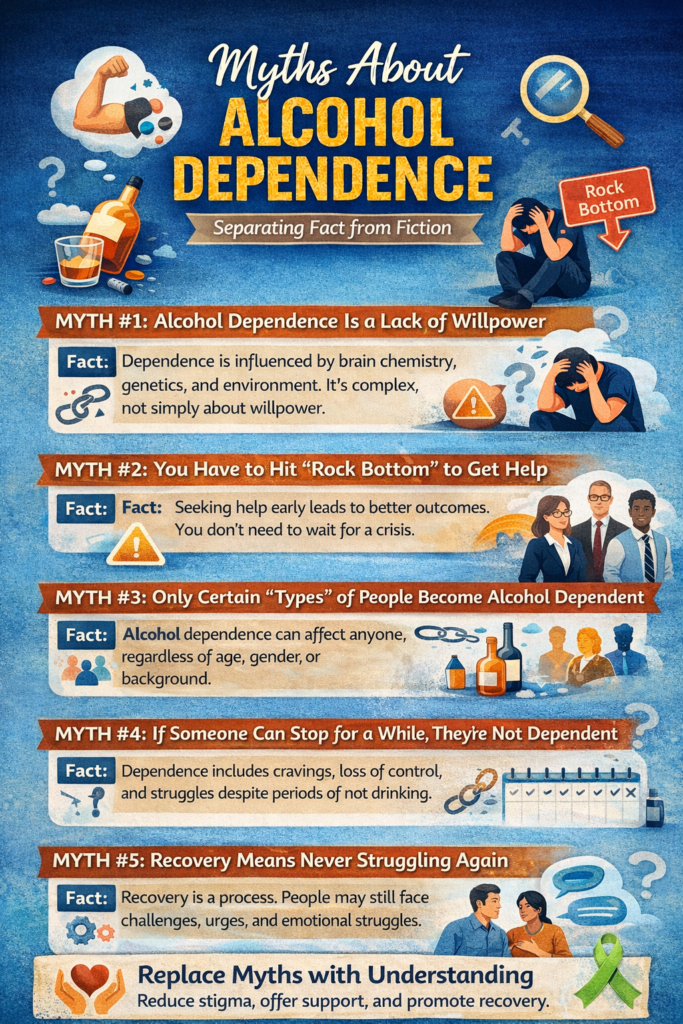
Myth 1: Alcohol Dependence Is a Lack of Willpower
One of the most common myths is that people with alcohol dependence simply lack discipline or self-control. In reality, alcohol dependence is a complex condition influenced by brain chemistry, genetics, environment, and psychological factors.
Alcohol alters the brain’s reward and decision-making systems, making it difficult to stop even when a person wants to. Recovery requires more than willpower—it often involves structured support, behavioral change, and sometimes medical intervention.
Myth 2: You Have to Hit “Rock Bottom” to Get Help
Many believe that individuals must reach a crisis point before they can recover. This idea can be dangerous, as it delays intervention and increases harm.
In truth, recovery can begin at any stage. Early recognition and support often lead to better outcomes and less long-term damage. Waiting for things to worsen is not necessary—and can be harmful.
Myth 3: Only Certain “Types” of People Become Alcohol Dependent
There is a stereotype that alcohol dependence only affects certain groups—such as those who are unemployed, socially isolated, or visibly struggling.
In reality, alcohol dependence can affect anyone, regardless of age, profession, education level, or background. Many individuals maintain jobs, relationships, and outward stability while still experiencing significant internal struggles.
Myth 4: If Someone Can Stop for a While, They’re Not Dependent
Periods of abstinence do not necessarily mean that dependence is absent. Many individuals cycle between stopping and returning to alcohol use.
Dependence is not defined by constant use alone, but by patterns such as:
- difficulty controlling intake
- strong cravings
- continued use despite negative consequences
Short-term control does not eliminate the underlying issue.
Myth 5: Recovery Means Never Struggling Again
Another misconception is that once someone stops drinking, the problem is completely resolved. In reality, recovery is an ongoing process.
Individuals may still experience:
- cravings
- emotional challenges
- stress-related triggers
Recovery involves learning how to manage these experiences, not eliminating them entirely.
Myth 6: Alcohol Dependence Is the Same for Everyone
Alcohol dependence does not look the same for every person. Some may drink daily, while others binge periodically. Some may experience severe physical dependence, while others struggle more with psychological patterns.
This variability means that treatment and recovery approaches must be individualized rather than one-size-fits-all.
Myth 7: Talking About It Makes It Worse
Some believe that discussing alcohol dependence will encourage or worsen the behavior. In reality, open and supportive conversations often reduce shame and increase the likelihood of seeking help.
Silence tends to reinforce stigma, while communication creates opportunities for understanding and support.
Myth 8: People with Alcohol Dependence Don’t Care About Others
This myth overlooks the internal conflict many individuals experience. Most people with alcohol dependence are aware of the impact on their loved ones and often feel guilt or shame about it.
Dependence can override intentions—not because the person doesn’t care, but because the condition affects decision-making and impulse control.
The Impact of Myths
These misconceptions do more than spread misinformation—they shape attitudes, influence treatment decisions, and affect recovery outcomes. When myths dominate, individuals may feel judged, misunderstood, or hesitant to seek help.
Replacing myths with an accurate understanding:
- reduces stigma
- promotes earlier intervention
- improves support from families and communities
Conclusion: Replacing Judgment with Understanding
Alcohol dependence is not a simple issue with simple explanations. It is a complex condition that requires informed, compassionate responses. By challenging common myths, we create space for more accurate conversations and more effective support.
Understanding leads to empathy.
Empathy leads to better support.
And better support creates stronger pathways to recovery.
The more we move beyond myths, the closer we get to meaningful change—for individuals, families, and communities alike.
Self-Management Strategies for Understanding the Myths About Alcohol Dependence
Misconceptions about alcohol dependence are not only widespread—they can also be deeply internalized. Many individuals unknowingly adopt these myths as part of their own belief system, which can shape how they view themselves, their recovery, and their ability to change. Understanding these myths is important, but actively managing how you respond to them is what creates lasting impact.
Self-management strategies help individuals challenge false beliefs, develop an accurate understanding, and build a healthier, more realistic perspective on alcohol dependence. This process is not just about learning the truth—it is about applying it in daily life.
Why Self-Management Matters
Myths about alcohol dependence can lead to:
- self-blame (“I should be able to control this”)
- shame (“This is my fault”)
- unrealistic expectations (“I should be completely fine by now”)
Without active self-management, these beliefs can undermine confidence and progress. By intentionally challenging and replacing them, individuals can create a more supportive internal environment for recovery.
1. Identifying Internalized Myths
The first step is recognizing which myths you may have internalized. These often show up as automatic thoughts or assumptions.
Examples include:
- “If I were stronger, I wouldn’t struggle.”
- “Other people have it worse, so this isn’t a real problem.”
- “If I relapse, I’ve failed completely.”
Self-awareness allows you to separate learned beliefs from actual reality.
2. Challenging Cognitive Distortions
Many myths are reinforced by distorted thinking patterns, such as all-or-nothing thinking or overgeneralization.
Self-management involves:
- questioning the accuracy of these thoughts
- asking: “Is this based on fact or assumption?”
- replacing them with balanced, evidence-based perspectives
For example:
“Recovery is a process with setbacks,” instead of “One mistake means failure.”
3. Replacing Shame with Education
One of the most effective ways to counter myths is through accurate knowledge. Understanding that alcohol dependence involves neurological, psychological, and environmental factors helps reduce self-blame.
This shift looks like:
- from “What’s wrong with me?” → “What factors are influencing this, and how can I manage them?”
Education transforms judgment into understanding.
4. Practicing Self-Compassion
Myths often reinforce harsh self-criticism. Self-compassion is essential for counteracting this.
This includes:
- acknowledging struggles without harsh judgment
- recognizing that recovery is challenging and non-linear
- treating yourself with the same understanding you would offer others
Self-compassion creates space for growth rather than reinforcing negative beliefs.
5. Setting Realistic Expectations
Unrealistic expectations—often rooted in myths—can lead to frustration and discouragement.
Healthy expectations involve:
- accepting that recovery takes time
- recognizing that challenges may persist
- focusing on progress rather than perfection
Realistic thinking supports consistency and long-term success.
6. Monitoring Self-Talk
Internal dialogue plays a major role in reinforcing or challenging myths. Self-management requires paying attention to how you speak to yourself.
Helpful practices:
- noticing negative or absolute language (“always,” “never”)
- intentionally shifting to more balanced statements
- reinforcing positive, realistic beliefs
Over time, this reshapes how you perceive yourself and your recovery.
7. Seeking Accurate and Supportive Information
Surrounding yourself with reliable information and supportive perspectives helps counter misinformation.
This might include:
- engaging in therapy or counseling
- attending support groups
- reading evidence-based resources
Exposure to accurate information reinforces healthier beliefs and reduces the influence of myths.
8. Building a Personal Narrative Based on Reality
Instead of allowing myths to define your story, self-management involves actively shaping your narrative based on truth and growth.
This includes:
- acknowledging past challenges without being defined by them
- recognizing strengths and progress
- viewing recovery as a process of development
Your identity becomes grounded in reality, not misconception.
Conclusion: Replacing Myths with Empowerment
Understanding the myths about alcohol dependence is only the first step—actively managing how those myths influence your thinking is what creates meaningful change. Through self-awareness, cognitive restructuring, and self-compassion, individuals can replace harmful beliefs with accurate, empowering perspectives.
You are not defined by misconceptions.
You are defined by your ability to question them, challenge them, and grow beyond them.
Recovery becomes stronger when it is built on truth rather than myth—and that truth begins with how you choose to understand yourself.
Family Support Strategies for Understanding the Myths About Alcohol Dependence
Misconceptions about alcohol dependence do not only affect individuals—they also shape how families respond, support, and communicate. Many families unintentionally adopt common myths, such as believing addiction is a matter of willpower or expecting immediate recovery after stopping alcohol use. These beliefs can lead to frustration, miscommunication, and unrealistic expectations.
Understanding and challenging these myths as a family is a critical step toward creating a supportive environment. When families replace misinformation with accurate knowledge, they become better equipped to encourage recovery, reduce stigma, and foster long-term healing.
Why Family Understanding of Myths Matters
Family members often play a central role in recovery. However, when their understanding is shaped by myths, it can result in:
- blame or judgment
- unrealistic expectations
- strained relationships
- reduced emotional support
By addressing these misconceptions, families can shift from reacting out of frustration to responding with empathy and insight.
1. Educate the Family as a Whole
One of the most effective strategies is collective education. Families benefit from learning about alcohol dependence together, rather than relying on assumptions or stereotypes.
This includes understanding:
- addiction as a complex condition, not a moral failure
- the role of brain chemistry and behavior patterns
- the reality that recovery is gradual and ongoing
Shared knowledge creates a common foundation for support.
2. Challenge “Willpower” Beliefs
A common myth is that individuals should be able to stop drinking through sheer determination. When families hold this belief, they may interpret struggles as a lack of effort.
Reframing this perspective:
- from “Why can’t you just stop?”
- to “What support or strategies might help you manage this?”
This shift reduces blame and opens the door to constructive support.
3. Adjust Expectations About Recovery
Families may expect a quick or complete change once alcohol use stops. When challenges persist, it can lead to disappointment or doubt.
Healthy expectations involve:
- recognizing that recovery includes setbacks and progress
- understanding that emotional and behavioral effects may continue
- valuing effort and improvement over perfection
Realistic expectations reduce pressure and improve communication.
4. Use Supportive and Non-Stigmatizing Language
Language reflects beliefs. Words rooted in myths can reinforce shame, while supportive language encourages growth.
Examples:
- “You’re working hard to improve” instead of “You keep messing up.”
- “I see your effort” instead of “Why aren’t you better yet?”
This approach helps individuals feel understood rather than judged.
5. Encourage Open Conversations About Misconceptions
Families may hold unspoken beliefs that influence their reactions. Creating space to discuss these openly can lead to greater understanding.
This might involve:
- asking questions rather than making assumptions
- discussing what addiction actually involves
- acknowledging past misunderstandings without blame
Open dialogue helps replace myths with shared insight.
6. Focus on Behavior, Not Labels
Myths often lead to labeling individuals in ways that limit how they are seen. Families can support change by focusing on behaviors and progress rather than fixed identities.
For example:
- recognizing positive actions and improvements
- separating the person from the behavior
This reinforces the idea that change is possible and ongoing.
7. Support Professional Guidance
Families do not need to navigate these misconceptions alone. Professional support can provide clarity and structure.
This may include:
- family therapy sessions
- educational programs about addiction
- support groups for families
Professional guidance helps families align their understanding with evidence-based perspectives.
8. Practice Patience and Flexibility
Letting go of myths takes time. Families may need to continuously challenge old beliefs and adjust their approach.
Patience involves:
- recognizing that understanding evolves
- being open to new information
- adapting responses as recovery progresses
Flexibility allows families to grow alongside the individual in recovery.
Conclusion: From Misconception to Meaningful Support
Family support is most effective when it is grounded in an accurate understanding rather than myth. By educating themselves, adjusting expectations, and communicating with empathy, families can create an environment that supports recovery rather than hinders it.
Replacing myths with knowledge transforms how families respond.
It shifts the focus from blame to understanding, from frustration to patience, and from limitation to possibility.
When families grow in their understanding, they don’t just support recovery—they become an essential part of it.
Community Resource Strategies for Understanding the Myths About Alcohol Dependence
Misconceptions about alcohol dependence are not just individual or family-level issues—they are reinforced and challenged at the community level. Communities shape public perception, influence access to information, and determine how individuals experiencing alcohol dependence are treated. When myths go unaddressed, they contribute to stigma, misunderstanding, and barriers to recovery. However, when communities actively promote accurate knowledge and supportive resources, they become powerful agents of change.
Community resource strategies focus on education, accessibility, and engagement to replace harmful myths with informed, compassionate understanding.
Why Community-Level Understanding Matters
Myths about alcohol dependence—such as the belief that it is a matter of willpower or that recovery is immediate—can discourage individuals from seeking help and limit the support they receive. Communities that challenge these misconceptions help create environments where recovery is more accessible and sustainable.
Community efforts can:
- reduce stigma and discrimination
- promote early intervention
- improve access to treatment and support
- foster a culture of empathy and awareness
When communities are informed, individuals are more likely to feel understood and supported.
1. Expanding Public Education Initiatives
One of the most effective ways to address myths is through community education. Public campaigns, workshops, and informational programs can provide accurate, evidence-based knowledge about alcohol dependence.
These initiatives may focus on:
- the biological and psychological aspects of addiction
- the reality of recovery as a process
- common myths and the facts that challenge them
Education helps shift public perception from judgment to understanding.
2. Promoting Accessible Support Services
Communities play a key role in ensuring that support services are visible and accessible. When resources are easy to find and use, individuals are more likely to seek help.
Examples include:
- local counseling and treatment centers
- peer support groups
- hotlines and outreach programs
Accessible services counter the myth that people must handle addiction on their own.
3. Partnering with Schools and Educational Institutions
Early education is critical in shaping long-term understanding. Schools and colleges can incorporate accurate information about alcohol dependence into health and wellness programs.
This helps:
- prevent the development of harmful stereotypes
- encourage early awareness and intervention
- promote informed decision-making among young people
Early education builds a foundation for healthier community attitudes.
4. Engaging Healthcare and Social Service Providers
Healthcare professionals and social service organizations are often trusted sources of information. Their role in correcting myths is essential.
Community strategies include:
- training providers to use non-stigmatizing language
- ensuring consistent, evidence-based messaging
- integrating addiction education into routine care
When professionals communicate accurately, it reinforces trust and understanding.
5. Utilizing Media and Public Messaging
The media plays a significant role in shaping beliefs about alcohol dependence. Communities can use media strategically to challenge myths and highlight real experiences.
This may involve:
- sharing recovery stories
- promoting fact-based campaigns
- avoiding sensationalized or stigmatizing portrayals
Positive representation helps normalize recovery and reduce misconceptions.
6. Creating Inclusive and Nonjudgmental Spaces
Communities that foster inclusion encourage individuals to seek help without fear of judgment. Safe spaces allow for open discussion and reduce the impact of stigma.
These spaces may include:
- community centers
- recovery-friendly workplaces
- faith-based or cultural organizations
Inclusivity ensures that support is available to diverse populations.
7. Encouraging Community Dialogue and Engagement
Open conversations about alcohol dependence help dismantle myths. Community forums, panels, and discussions provide opportunities to address misconceptions directly.
Benefits of dialogue:
- challenges misinformation
- increases empathy through shared experiences
- builds collective understanding
Engagement turns passive awareness into active change.
8. Coordinating Community Resources
Effective communities ensure that resources are connected rather than fragmented. Coordination between healthcare, education, and social services creates a more comprehensive support system.
This approach:
- reduces gaps in care
- improves communication across services
- ensures individuals receive consistent information
A coordinated system strengthens both understanding and recovery outcomes.
Conclusion: Building Informed and Supportive Communities
Understanding the myths about alcohol dependence requires more than individual awareness—it requires community-wide effort. When communities prioritize education, accessibility, and inclusive support, they create environments where misinformation is replaced with knowledge.
Communities have the power to reshape the narrative.
By challenging myths and promoting understanding, they reduce stigma, improve access to care, and support lasting recovery.
When communities become informed, they don’t just change perceptions—they change lives.
Frequently Asked Questions
Here are some common questions:
1. What are common myths about alcohol dependence?
Common myths include:
- it’s a lack of willpower
- people must hit “rock bottom” to recover
- only certain types of people are affected
- recovery is quick and easy
These misconceptions oversimplify a complex condition and can lead to misunderstanding and stigma.
2. Why do myths about alcohol dependence persist?
Myths persist due to cultural beliefs, media portrayals, lack of education, and stigma surrounding addiction. Many people rely on anecdotal experiences or stereotypes rather than evidence-based information, which reinforces misinformation over time.
3. Is alcohol dependence really about willpower?
No. Alcohol dependence involves changes in brain chemistry, behavior patterns, and psychological processes. While motivation is important, it is not sufficient on its own. Effective recovery often requires structured support, coping strategies, and sometimes professional treatment.
4. Do people need to hit “rock bottom” before getting help?
No. This is a harmful myth. Early intervention is often more effective and prevents further physical, emotional, and social damage. Waiting for a crisis can delay recovery and increase risk.
5. Can alcohol dependence affect anyone?
Yes. Alcohol dependence can affect individuals across all demographics—regardless of age, income, education, or background. It does not discriminate, even if it may appear differently in different people.
6. If someone can stop drinking temporarily, does that mean they’re not dependent?
Not necessarily. Many individuals with alcohol dependence can stop for short periods but struggle with long-term control, cravings, or relapse. Dependence is defined by patterns of behavior, not just continuous use.
7. Does recovery mean a person will never struggle again?
No. Recovery is an ongoing process. Individuals may continue to experience cravings, emotional challenges, or triggers. The goal is to manage these effectively, not eliminate all difficulty.
8. Why are these myths harmful?
Myths can:
- increase stigma and judgment
- discourage people from seeking help
- create unrealistic expectations
- reinforce shame and self-blame
This can delay recovery and reduce access to support.
9. How do myths affect people with alcohol dependence personally?
Individuals may internalize these beliefs, leading to thoughts like:
- “I should be able to fix this myself.”
- “If I’m still struggling, I’m failing.”
These thoughts can undermine confidence and discourage seeking help.
10. How can myths be challenged?
Myths can be challenged through:
- education and evidence-based information
- open, nonjudgmental conversations
- exposure to real recovery experiences
- professional guidance
Accurate understanding replaces stigma with empathy.
11. What role do families and communities play in addressing myths?
Families and communities influence beliefs and attitudes. By learning accurate information, using supportive language, and encouraging open dialogue, they can help reduce stigma and create environments that support recovery.
12. Are all people with alcohol dependence the same?
No. Alcohol dependence varies widely in severity, patterns, and underlying causes. Each individual’s experience is unique, which is why treatment and recovery approaches must be personalized.
13. Can myths impact recovery outcomes?
Yes. Believing myths can lead to delayed treatment, reduced motivation, and increased shame. In contrast, an accurate understanding improves engagement in recovery and supports long-term success.
14. How can someone replace myths with accurate beliefs?
- seek reliable, evidence-based information
- reflect on and challenge personal assumptions
- engage in therapy or support groups
- listen to the lived experiences of others in recovery
This process helps build a more realistic and supportive perspective.
15. Why is it important to talk openly about alcohol dependence?
Open conversations reduce stigma, normalize seeking help, and promote understanding. Silence often reinforces myths, while dialogue encourages education and support.
Conclusion
Addressing the myths surrounding alcohol dependence is a crucial step toward reducing stigma and improving outcomes for those affected. By replacing misinformation with evidence-based understanding, individuals and their support systems can approach recovery with greater empathy, patience, and realism. Letting go of these misconceptions allows space for more effective communication, stronger support networks, and healthier expectations. Ultimately, moving beyond myths not only changes how alcohol dependence is perceived—it also creates a more supportive environment where recovery is understood as a process of growth, not judgment.
Video: