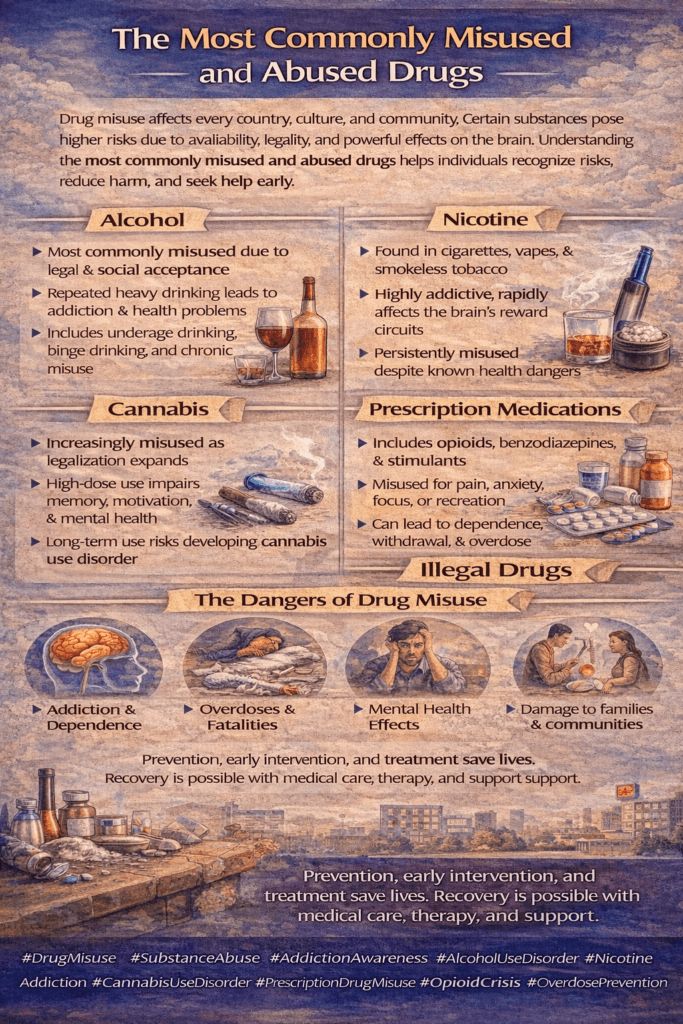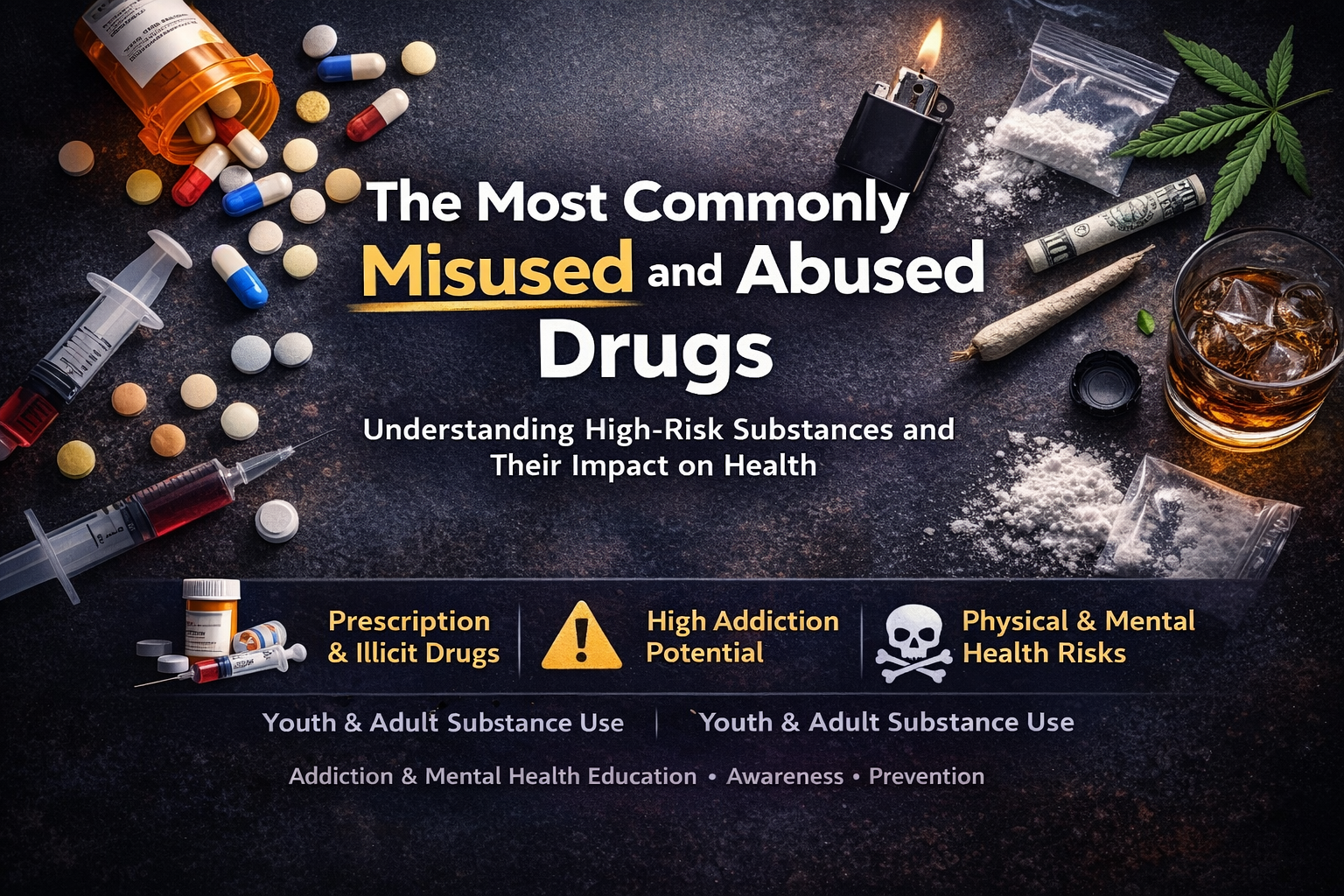
The misuse and abuse of drugs remain significant public health challenges worldwide, affecting individuals across all ages, cultures, and socioeconomic backgrounds. Substances such as alcohol, prescription medications, cannabis, stimulants, and sedatives are among the most commonly misused and abused due to their availability, social acceptance, or perceived safety. While some of these substances are legal or medically prescribed, misuse can still lead to serious physical, psychological, and social consequences. Understanding which drugs are most commonly misused—and why—helps highlight the need for prevention, education, and early intervention at both individual and community levels.
The Most Commonly Misused and Abused Drugs
Substance misuse and abuse remain major global public health concerns, affecting individuals, families, and communities across all demographics. While patterns of drug use vary by region and culture, certain substances consistently account for the highest rates of misuse due to their availability, addictive potential, and social acceptance.
Alcohol is the most commonly misused and abused drug worldwide. Its legal status and cultural normalization often disguise the risks associated with frequent or heavy use. Alcohol misuse contributes to chronic disease, accidents, violence, and mental health disorders, making it one of the leading causes of preventable harm globally.
Prescription drugs are another major category of misuse. Opioid pain medications, benzodiazepines, and stimulant prescriptions are often misused outside of medical guidance. What begins as legitimate treatment can escalate into dependence, especially when medications are taken in higher doses, more frequently than prescribed, or shared with others.
Cannabis is widely used and increasingly legalized in many regions, but misuse can still occur. Heavy or long-term use has been associated with cognitive impairment, mental health challenges, and reduced motivation, particularly when use begins during adolescence.
Stimulants, such as cocaine and methamphetamine, are highly addictive and linked to severe physical and psychological consequences. These substances significantly impact the cardiovascular system, brain function, and behavior, often leading to rapid dependence and social instability.
Sedatives and tranquilizers, including non-prescribed sleep aids and anti-anxiety medications, are commonly misused to cope with stress or insomnia. When combined with other substances—especially alcohol—the risk of overdose and respiratory depression increases substantially.
Understanding which drugs are most commonly misused and abused highlights the importance of prevention, education, and early intervention. Effective responses require a comprehensive approach that includes self-awareness, family support, community resources, and access to evidence-based treatment. Recognizing substance misuse as a health issue rather than a moral failing is essential for reducing harm and supporting recovery.
Self-Management Strategies to Avoid Abuse of the Most Commonly Misused and Abused Drugs
The misuse and abuse of substances such as alcohol, prescription medications, cannabis, stimulants, and sedatives often begin gradually and unintentionally. Self-management strategies empower individuals to recognize risks early, make informed choices, and maintain control over their behaviors before substance use becomes harmful.
One of the most important strategies is self-awareness. Understanding personal risk factors—such as stress, trauma, chronic pain, mental health challenges, or social pressure—helps individuals recognize when substance use is becoming a coping mechanism rather than a choice. Regular self-reflection facilitates the detection of changes in frequency, quantity, or motivation for use.
Setting clear personal boundaries is another key component. This includes deciding in advance how often or under what circumstances substances will be used, avoiding mixing substances, and committing to substance-free days or environments. Clear limits reduce impulsive behavior and support long-term self-control.
Effective stress management plays a critical role in prevention. Exercise, mindfulness practices, adequate sleep, creative activities, and structured routines reduce reliance on substances for emotional relief. When healthier coping tools are available, substances lose their role as a primary stress response.
Managing triggers is also essential. Triggers may include certain people, places, emotions, or situations linked to substance use. Identifying these triggers and planning alternative responses—such as leaving a situation, seeking support, or engaging in a grounding activity—reduces the likelihood of misuse.
Finally, seeking early support is a proactive self-management strategy, not a sign of failure. Talking with healthcare providers, counselors, or trusted support systems when concerns arise can prevent escalation into dependence. Early intervention consistently leads to better outcomes.
Self-management strategies focus on prevention through empowerment. By building awareness, setting boundaries, developing healthy coping skills, and addressing risks early, individuals can reduce the likelihood of substance abuse and protect their physical, emotional, and social well-being.
Family Support Strategies to Avoid Abuse of the Most Commonly Misused and Abused Drugs
Families play a critical role in preventing the misuse and abuse of substances such as alcohol, prescription medications, cannabis, stimulants, and sedatives. Strong family support systems act as protective factors by shaping beliefs, behaviors, and coping skills long before substance use becomes a serious concern.
One of the most effective strategies is open and ongoing communication. Families that talk honestly about drugs—how they affect health, relationships, and daily life—help reduce misinformation and stigma. These conversations should be age-appropriate, respectful, and nonjudgmental, allowing family members to feel safe discussing topics such as curiosity, peer pressure, or concerns without fear of punishment.
Modeling healthy coping behaviors is equally important. Family members, especially children and adolescents, observe how adults manage stress, pain, and emotions. When families demonstrate healthy alternatives—such as exercise, problem-solving, emotional expression, and seeking help—they reduce the likelihood that substances will be used as coping tools.
Establishing clear expectations and boundaries around substance use provides structure and consistency. Families that clearly communicate rules, values, and consequences related to drug and alcohol use help set behavioral norms. Predictable boundaries promote accountability while reinforcing care and concern rather than control.
Emotional connection and support are powerful protective factors. Strong family bonds reduce the desire to escape through substances by meeting core emotional needs such as belonging, validation, and security. Regular family time, active listening, and empathy strengthen trust and resilience.
Finally, families must be willing to act early and seek support together. Addressing warning signs—such as changes in behavior, mood, or functioning—early can prevent progression into substance abuse. Involving healthcare providers, counselors, or community programs reinforces the shared responsibility for prevention and recovery.
Family support strategies are not about surveillance or punishment; they are about connection, guidance, and early intervention. When families foster communication, model healthy behavior, set clear boundaries, and respond with compassion, they create a strong foundation for preventing substance misuse and promoting long-term well-being.
Community Resource Strategies to Avoid Abuse of the Most Commonly Misused and Abused Drugs
Communities play a central role in preventing the misuse and abuse of substances such as alcohol, prescription medications, cannabis, stimulants, and sedatives. While individual and family efforts are essential, community-level resources shape the broader environment that can either increase risk or promote resilience and healthy decision-making.
One of the most impactful strategies is community education and prevention programs. Schools, workplaces, faith-based organizations, and local health departments can provide accurate information about substance risks, early warning signs, and safe-use guidelines. Education reduces misinformation, challenges stigma, and encourages people to seek help before substance use escalates.
Accessible healthcare and support services are also critical. Community clinics, counseling centers, peer-support groups, and recovery programs provide early screening, brief interventions, and treatment options in close proximity to where people live. When services are affordable, culturally responsive, and easy to access, individuals are more likely to use them proactively.
Communities can further reduce risk by promoting safe and healthy alternatives. Recreational programs, youth centers, sports leagues, arts initiatives, and alcohol- and drug-free events provide meaningful social connection without substance use being the focus. These alternatives are especially important for adolescents and young adults who are strongly influenced by peer norms.
Policy and environmental strategies strengthen prevention at a population level. Responsible prescribing practices, prescription drug monitoring programs, safe medication disposal sites, responsible alcohol sales, and enforcement of safety regulations reduce availability and misuse while protecting public health.
Finally, strong community connections and recovery-friendly environments act as protective factors. Neighborhood organizations, recovery-friendly workplaces, mutual-aid groups, and volunteer networks foster belonging and purpose. When people feel connected and supported, they are less likely to turn to substances as a way to cope with stress, isolation, or unmet needs.
Preventing substance abuse is a shared community responsibility. By investing in education, accessible services, healthy social options, protective policies, and inclusive support networks, communities can reduce harm, promote resilience, and support healthier outcomes for individuals and families alike.
Frequently Asked Questions
Here are some common questions:
What are the most commonly misused and abused drugs?
The most commonly misused and abused drugs include alcohol, prescription medications (such as opioids, benzodiazepines, and stimulants), cannabis, and illicit stimulants like cocaine and methamphetamine. These substances are often misused due to availability, social acceptance, or perceived safety.
Why are legal or prescribed drugs commonly misused?
Legal and prescribed drugs are often misused because they are easily accessible and may seem less dangerous. However, using them outside medical guidance or in excessive amounts can lead to dependence, addiction, and serious health consequences.
What is the difference between misuse and abuse?
Misuse refers to using a substance in a way not intended or recommended, such as taking higher doses or using someone else’s prescription. Abuse involves continued use despite negative consequences and often includes loss of control and compulsive behavior.
Can someone misuse drugs without being addicted?
Yes. Drug misuse exists on a spectrum. Some individuals misuse substances occasionally without dependence, but repeated misuse increases the risk of developing substance use disorder over time.
What health risks are associated with drug misuse and abuse?
Health risks vary by substance but commonly include organ damage, mental health disorders, impaired cognitive function, increased risk of accidents, overdose, and long-term neurological changes.
Who is most at risk for drug misuse?
Risk factors include early exposure to substances, high stress, trauma, mental health conditions, chronic pain, peer influence, and lack of social support. Risk can affect people of any age or background.
How can misuse be prevented at the individual level?
Prevention includes self-awareness, setting clear boundaries, managing stress in healthy ways, avoiding high-risk situations, and seeking early support when concerns arise.
What role do families play in prevention?
Families help prevent misuse by communicating openly, modeling healthy behaviors, setting clear expectations, providing emotional support, and addressing concerns early without judgment.
How do community resources help reduce drug abuse?
Community resources provide education, prevention programs, counseling, peer support, treatment services, and policies that reduce access to and harm from drugs. Strong community connections reduce isolation and increase the likelihood of early intervention.
Is recovery from substance misuse possible?
Yes. Recovery is possible with the right combination of personal commitment, family support, community resources, and professional treatment. Early intervention greatly improves recovery outcomes.
Conclusion
Addressing the most commonly misused and abused drugs requires a comprehensive, compassionate approach that recognizes substance use as a health issue rather than a moral failing. Prevention efforts are most effective when self-management skills, family support, and community resources work together to reduce risk and promote resilience. Through education, supportive environments, accessible services, and early intervention, individuals and communities can reduce harm and support healthier choices. By increasing awareness and strengthening prevention strategies, it is possible to lessen the impact of substance misuse and improve long-term health and well-being.
Video: The Most Commonly Misused and Abused Drugs