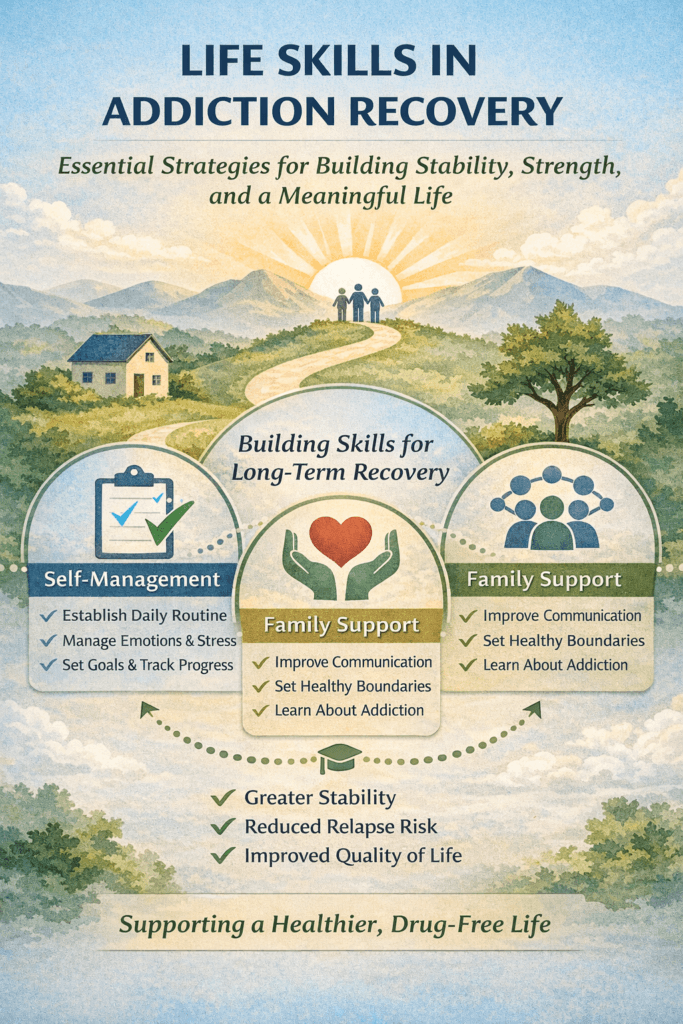
Life skills are a cornerstone of effective addiction recovery, shaping how individuals manage daily challenges, relationships, and long-term goals without returning to substance use. Addiction often disrupts the development or consistent use of essential skills such as emotional regulation, decision-making, communication, and problem-solving. Recovery, therefore, is not only about stopping substance use but about rebuilding the skills needed to live a stable, healthy, and meaningful life. Self-management strategies help individuals regulate emotions, establish routines, and make intentional choices. Family support strategies strengthen communication, boundaries, and emotional safety within the home. Community resource strategies expand recovery beyond the individual and family by providing access to peer support, healthcare, housing, employment, and opportunities for connection. Together, these life skills form an integrated framework that supports lasting recovery.
Life Skills in Addiction Recovery: Building a Stable and Meaningful Life
Recovery from addiction is about far more than stopping substance use—it is about learning how to live again. Addiction often disrupts essential life skills such as emotional regulation, decision-making, communication, and self-care. As substances become the primary coping mechanism, everyday skills slowly erode. Rebuilding these skills is a critical part of long-term recovery and sustained wellness.
Life skills in addiction recovery provide the foundation for independence, stability, and personal growth. They help individuals navigate daily stressors, maintain healthy relationships, and make choices aligned with their recovery goals rather than being driven by impulse or cravings.
One of the most important life skills in recovery is emotional regulation. Many people used substances to numb pain, manage anxiety, or escape overwhelming emotions. Recovery involves learning how to recognize emotions, tolerate discomfort, and respond in healthy ways. Skills such as mindfulness, grounding techniques, journaling, and distress tolerance help process emotions rather than avoid them.
Communication skills are also essential. Addiction often damages trust and leads to conflict, isolation, or secrecy. Learning how to communicate honestly, set boundaries, listen actively, and express needs respectfully helps rebuild relationships with family, friends, and coworkers. Healthy communication reduces misunderstandings and strengthens social support, both of which are major protective factors against relapse.
Another key area is problem-solving and decision-making. Addiction trains the brain to seek immediate relief, often ignoring long-term consequences. In recovery, individuals learn to slow down, evaluate options, consider outcomes, and make intentional choices. These skills support better decisions related to finances, employment, relationships, and health.
Daily living and self-management skills also play a central role. Establishing routines for sleep, nutrition, hygiene, and time management creates structure and predictability—two elements that support brain healing and emotional stability. Managing finances, keeping appointments, and meeting responsibilities builds confidence and restores a sense of control over one’s life.
Finally, coping and relapse prevention skills help individuals respond to cravings, stress, and triggers. Identifying high-risk situations, using healthy coping strategies, reaching out for support, and practicing self-compassion all reduce the likelihood of returning to substance use.
Life skills are not innate—they are learned, practiced, and strengthened over time. Therapy, recovery programs, peer support, and real-life practice all contribute to this process. As life skills improve, recovery shifts from survival to growth. Individuals begin to build lives defined not by addiction, but by purpose, connection, and resilience.
Recovery is not just about giving something up—it is about gaining the skills needed to move forward with clarity, confidence, and hope.
Self-Management Strategies: Life Skills That Strengthen Addiction Recovery
Addiction recovery requires more than abstaining from substances—it requires learning how to manage daily life in healthy, intentional ways. Self-management strategies are core life skills that help individuals take responsibility for their thoughts, emotions, behaviors, and routines. These skills support independence, stability, and long-term recovery by reducing chaos and increasing personal control.
One of the most important self-management strategies in recovery is establishing structure and routine. Addiction often creates disorganization, irregular sleep, poor nutrition, and missed responsibilities. Developing consistent daily routines for waking, meals, work, therapy, exercise, and rest helps regulate the nervous system and reduce stress. Structure provides predictability, which is especially important during brain healing.
Emotional self-management is another critical area. Many people used substances to cope with overwhelming feelings such as anxiety, anger, shame, or sadness. Recovery involves learning to identify emotions early, understand emotional triggers, and respond without substances. Skills such as mindfulness, deep breathing, grounding exercises, journaling, and cognitive reframing help individuals tolerate discomfort and respond thoughtfully rather than impulsively.
Goal setting and self-monitoring are key self-management tools. Recovery is strengthened when individuals set realistic, measurable goals related to health, relationships, work, or personal growth. Breaking goals into small, achievable steps builds confidence and motivation. Tracking progress—through journals, apps, or recovery plans—helps individuals stay accountable and recognize growth over time.
Time and stress management also play a major role in relapse prevention. Poor time management can lead to overwhelm, missed appointments, and emotional exhaustion. Learning to prioritize tasks, plan ahead, and balance responsibilities with rest reduces burnout. Healthy stress management strategies—such as exercise, creative outlets, social connection, and relaxation techniques—replace substance use as a coping response.
Another essential self-management skill is impulse control and decision-making. Addiction reinforces the habit of seeking immediate relief without considering consequences. Recovery teaches individuals to pause, evaluate options, and choose actions aligned with long-term goals. Practicing “urge surfing,” delaying decisions, and using coping plans during cravings helps weaken impulsive patterns.
Self-care and health management are foundational to recovery success. Adequate sleep, proper nutrition, hydration, medication adherence, and medical follow-up all support physical and mental stability. When basic needs are met, emotional regulation and decision-making improve significantly.
Self-management strategies are not about perfection—they are about progress and consistency. These skills develop through therapy, recovery programs, peer support, and daily practice. Over time, effective self-management transforms recovery from simply avoiding relapse into actively building a balanced, meaningful life.
By strengthening self-management life skills, individuals gain confidence, resilience, and the ability to navigate challenges without returning to substance use. Recovery becomes sustainable when people learn not just how to stop using—but how to manage life.
Family Support Strategies: Life Skills That Strengthen Addiction Recovery
Family support plays a powerful role in addiction recovery. Addiction affects not only the individual, but the entire family system—altering communication, trust, roles, and emotional safety. Developing family support strategies as life skills helps create an environment where recovery can grow, stabilize, and be sustained over time.
One of the most important family life skills in recovery is healthy communication. Addiction often leads to secrecy, blame, anger, or avoidance. Recovery requires learning how to communicate openly, respectfully, and without judgment. Families benefit from practicing active listening, using “I” statements, and expressing concerns without accusation. Clear, calm communication reduces conflict and helps everyone feel heard and valued.
Boundary setting is another essential family support strategy. Loving someone in recovery does not mean rescuing, controlling, or enabling. Healthy boundaries define what behaviors are acceptable and what consequences exist when boundaries are crossed. Boundaries protect both the individual in recovery and family members by promoting responsibility, accountability, and emotional safety. When boundaries are consistent, they support independence rather than dependence.
Education about addiction and recovery is a critical life skill for families. Understanding addiction as a chronic, treatable condition—not a moral failure—reduces stigma and unrealistic expectations. Families who learn about cravings, relapse risk, brain changes, and recovery stages are better equipped to respond with empathy and appropriate support rather than fear or frustration.
Another key family support skill is emotion regulation and self-care. Family members often carry anxiety, guilt, anger, or exhaustion related to their loved one’s addiction. Learning how to manage these emotions—through therapy, support groups, mindfulness, or stress-reduction practices—prevents burnout and codependency. When families care for their own well-being, they model healthy coping and stability.
Encouraging accountability without shame is also vital. Supportive families reinforce recovery behaviors such as attending treatment, following routines, and using coping skills, while avoiding criticism or punishment. Celebrating progress, acknowledging effort, and addressing concerns early helps maintain motivation and trust.
Finally, collaboration and shared problem-solving strengthen recovery. Families that work together to plan for triggers, manage stress, and navigate challenges create a sense of teamwork rather than opposition. Family therapy and peer support programs can help rebuild trust and clarify roles as recovery progresses.
Family support strategies are learned life skills, not instincts. With guidance and practice, families can move from crisis management to intentional support. When families develop healthy communication, boundaries, education, and self-care skills, they become a powerful source of strength, helping recovery move beyond survival toward long-term healing and connection.
Community Resource Strategies: Life Skills That Support Long-Term Addiction Recovery
Addiction recovery does not happen in isolation. While personal motivation and family support are vital, community resource strategies provide the life skills and external supports needed to sustain recovery in real-world environments. Learning to identify, access, and use community resources effectively empowers individuals to rebuild stability, purpose, and connection.
One essential life skill in recovery is help-seeking and resource navigation. Many people with addiction histories have learned to rely only on themselves or to avoid systems due to shame, stigma, or past negative experiences. Recovery involves learning to appropriately ask for help, complete applications, attend appointments, and advocate for one’s needs. These skills open doors to treatment, housing, healthcare, education, and employment opportunities.
Peer support and recovery networks are among the most powerful community resources. Support groups, recovery community centers, peer recovery coaches, and sober social activities provide opportunities to connect with others who understand lived experience. Learning to engage in peer support—honestly sharing, listening respectfully, and offering mutual encouragement—reduces isolation and reinforces recovery values.
Employment and vocational resources are another critical area. Addiction often disrupts work history, confidence, and financial stability. Community job programs, workforce development centers, and vocational training help individuals rebuild employment skills, including punctuality, communication, teamwork, and accountability. Gaining meaningful work supports self-esteem, structure, and financial independence—key protective factors against relapse.
Housing and basic-needs resources also support recovery life skills. Stable housing, food assistance, transportation services, and healthcare access reduce survival stress that can trigger substance use. Learning to budget, maintain housing, comply with lease agreements, and manage benefits strengthens independence and responsibility.
Community resources also promote healthy coping and lifestyle skills. Access to gyms, wellness programs, faith-based groups, creative spaces, volunteering opportunities, and educational workshops allows individuals to explore new interests and build a sense of purpose beyond addiction. Participation in community life helps shift identity from “someone in recovery” to “someone contributing and growing.”
Finally, community engagement and citizenship are advanced recovery life skills. Volunteering, mentoring, advocacy, and service help individuals rebuild trust with society and with themselves. Giving back reinforces accountability, empathy, and a sense of meaning—elements strongly associated with long-term recovery success.
Community resource strategies are learned skills that require practice, confidence, and support. When individuals in recovery learn how to use community systems effectively, they gain more than services—they gain belonging, opportunity, and hope. Recovery becomes sustainable when people are connected not only to treatment but to the broader community that supports a healthy, purpose-driven life.
Frequently Asked Questions
Here are some common questions:
What are life skills in addiction recovery?
Life skills in addiction recovery are practical abilities that help individuals manage emotions, responsibilities, relationships, and daily stress without using substances. These skills include self-management, communication, decision-making, coping strategies, and problem-solving that support long-term stability.
Why are life skills important for recovery?
Addiction often disrupts healthy routines and coping mechanisms. Life skills help replace substance use with healthier responses, reduce relapse risk, and support independence, confidence, and emotional regulation.
What self-management life skills support recovery?
Self-management skills include emotional regulation, stress management, impulse control, goal setting, time management, healthy routines, and self-care practices such as sleep, nutrition, and medical follow-up.
How do life skills help prevent relapse?
Life skills help individuals recognize triggers, manage cravings, tolerate distress, and make thoughtful decisions. When stress and emotions are handled effectively, the need to escape through substances decreases.
What role does family support play in life skills development?
Families help reinforce life skills by practicing healthy communication, setting boundaries, offering encouragement, and creating stable environments. Family involvement strengthens accountability and emotional safety.
How can families learn supportive life skills?
Families can learn recovery-supportive skills through education, family therapy, support groups, and counseling that focuses on communication, boundaries, and self-care.
What community resources support life skills in recovery?
Community resources include peer support groups, recovery community centers, vocational programs, housing services, healthcare providers, and educational or wellness programs that promote independence and connection.
Why is peer support considered a life skill?
Learning how to ask for help, share experiences, and build supportive relationships is a skill. Peer support reduces isolation and provides encouragement from individuals with lived experience of recovery.
Can life skills be learned later in life?
Yes. Life skills are learned behaviors, not fixed traits. With practice, guidance, and support, individuals can develop strong life skills at any stage of recovery.
How long does it take to build life skills in recovery?
Life skills develop gradually. Some skills improve early in recovery, while others strengthen over months or years. Consistent practice and support are key.
Are life skills taught in addiction treatment programs?
Most treatment programs include life skills training through therapy, group sessions, relapse prevention planning, and real-world practice.
What happens if life skills are not addressed in recovery?
Without life skills, individuals may struggle with stress, relationships, and responsibilities, increasing the risk of relapse. Addressing life skills supports long-term recovery success.
How do life skills improve quality of life?
Life skills increase stability, self-confidence, emotional balance, and meaningful relationships. Recovery becomes about growth and fulfillment, not just avoiding substance use.
Can improving life skills help co-occurring mental health conditions?
Yes. Skills such as emotional regulation, stress management, and routine building also support anxiety, depression, and trauma recovery.
What is the overall goal of life skills in addiction recovery?
The goal is to help individuals live independently, manage challenges effectively, maintain recovery, and build a healthy, purpose-driven life.
Conclusion
Sustainable addiction recovery is built on more than willpower—it is supported by practical, learnable life skills that empower individuals and their support systems. Self-management skills promote personal responsibility, emotional stability, and healthy daily routines. Family support strategies create environments of accountability, understanding, and encouragement while protecting the well-being of all members. Community resource strategies connect individuals to essential services, peer networks, and meaningful roles that foster independence and purpose. When these life skills work together, recovery shifts from crisis management to long-term growth. Strengthening self-management, family involvement, and community engagement allows recovery to extend beyond abstinence and become a pathway to resilience, connection, and a fulfilling life.
Video: Life Skills in Addiction Recovery