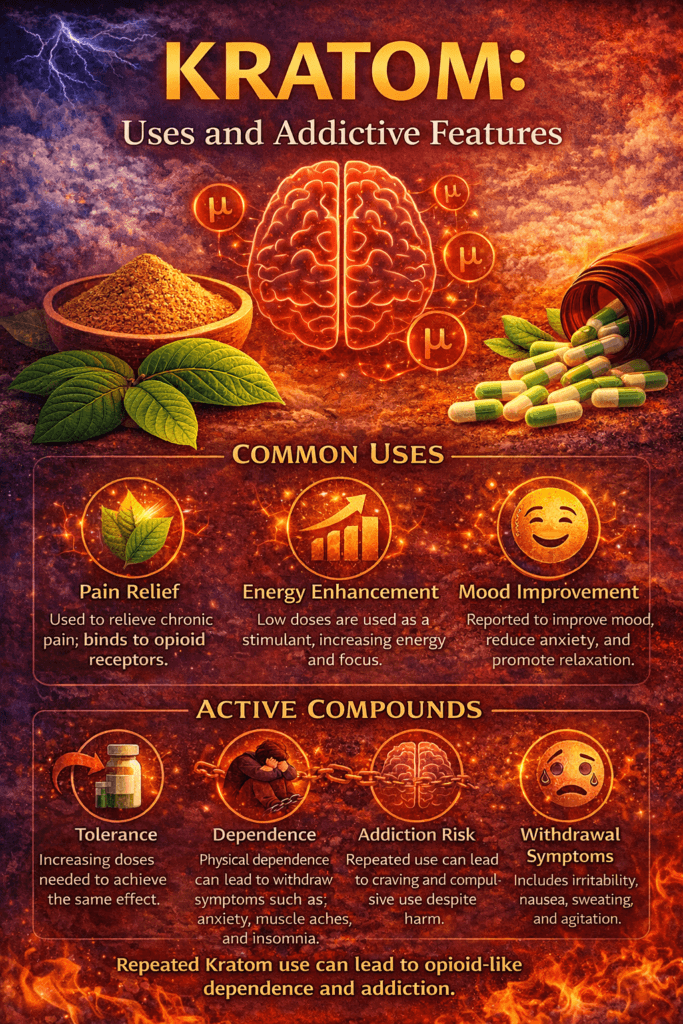
Kratom (Mitragyna speciosa) has emerged as a widely discussed herbal substance used for pain relief, mood enhancement, and energy stimulation. Although often perceived as a natural and safer alternative to opioids, kratom’s active compounds—mitragynine and 7-hydroxymitragynine—interact with opioid receptors in the brain, producing analgesic and sedative effects at higher doses. With repeated use, these pharmacological effects can lead to tolerance, physical dependence, and psychological addiction. Because kratom is readily accessible and variably regulated, individuals may underestimate its addictive potential. Understanding both its neurobiological impact and the behavioral patterns associated with misuse is essential for prevention and early intervention.
Can Kratom Be Used in Conjunction with Other Pain Management Modalities?
Chronic pain management often requires a multimodal approach—combining pharmacological treatments, physical therapies, behavioral interventions, and complementary strategies to improve function and quality of life. In recent years, kratom (a plant-derived substance from Mitragyna speciosa) has gained attention as an alternative or adjunctive option for pain relief. However, the question of whether kratom can be safely and effectively used alongside other pain management modalities requires careful clinical consideration.
Kratom contains active alkaloids, primarily mitragynine and 7-hydroxymitragynine, which interact with opioid receptors in the brain. At lower doses, it may produce stimulant-like effects; at higher doses, it can have sedative and analgesic properties. Because of its opioid-receptor activity, kratom may influence the same neural pathways targeted by traditional opioid medications, raising concerns about tolerance, dependence, and withdrawal.
From a theoretical perspective, kratom could be integrated into a multimodal pain management plan, but only under medical supervision. Multimodal pain management typically includes:
- Non-opioid medications (e.g., acetaminophen, NSAIDs)
- Physical therapy and exercise rehabilitation
- Cognitive behavioral therapy (CBT)
- Interventional procedures (e.g., nerve blocks)
- Mind-body approaches (e.g., mindfulness, biofeedback)
- Lifestyle interventions (sleep, nutrition, stress management)
The potential risks of combining kratom with other substances must be emphasized. Kratom may interact with prescription opioids, benzodiazepines, antidepressants, muscle relaxants, and alcohol. Because kratom affects central nervous system receptors, combining it with other sedating agents may increase the risk of respiratory depression, sedation, or impaired cognition. Additionally, kratom is not regulated in the same way as prescription medications, meaning product potency and purity can vary significantly.
Another consideration is the potential for cross-tolerance and dependence. Individuals using kratom alongside opioid medications may experience altered sensitivity to pain medications or increased risk of withdrawal symptoms if either substance is discontinued. There is also limited long-term research on kratom’s safety profile, particularly when used chronically or in combination with other therapies.
From a clinical standpoint, the safest approach to pain management prioritizes evidence-based treatments and coordinated care among healthcare providers. If a patient is considering kratom use, full disclosure to their medical team is essential to assess risks, monitor liver function if necessary, and prevent dangerous interactions.
In conclusion, while kratom is sometimes discussed as a complementary option in pain management, its use alongside other modalities requires caution, transparency, and professional guidance. Multimodal pain management remains the gold standard, focusing on individualized treatment plans that balance pain relief with safety, functionality, and long-term health outcomes.
Kratom and Chronic Pain: Relief, Risks, and the Path Toward Addiction
Chronic pain affects millions of individuals worldwide and often requires long-term, multifaceted management strategies. As concerns about opioid misuse have grown, some individuals have turned to alternative substances such as kratom (Mitragyna speciosa) for pain relief. While kratom is sometimes promoted as a “natural” remedy, its pharmacological effects and addiction potential warrant careful examination.
Kratom contains active alkaloids—primarily mitragynine and 7-hydroxymitragynine—that interact with opioid receptors in the brain. At moderate to higher doses, kratom can produce analgesic (pain-relieving) and sedative effects similar to opioids, although typically milder. For some individuals with chronic conditions such as back pain, neuropathic pain, or arthritis, kratom may initially reduce discomfort and improve daily functioning.
However, the mechanism that provides pain relief is also what creates risk. By stimulating opioid receptors, kratom influences the brain’s reward and pain modulation systems. With repeated use, the brain may adapt through neurochemical changes, leading to tolerance. This means individuals may require increasing amounts of kratom to achieve the same level of pain relief. Over time, this escalation can transition from therapeutic use to dependence.
Dependence develops when the body adapts to the presence of a substance and experiences withdrawal symptoms when it is reduced or stopped. Reported kratom withdrawal symptoms may include irritability, anxiety, insomnia, muscle aches, nausea, and mood disturbances. While often described as milder than traditional opioid withdrawal, the symptoms can still be distressing and contribute to continued use.
Psychological dependence is also a concern. Individuals managing chronic pain may rely on kratom not only for physical relief but also for emotional comfort—particularly if pain contributes to depression, frustration, or reduced quality of life. When a substance becomes the primary coping strategy, the risk of compulsive use increases.
Another factor is product variability and regulation. Kratom is not uniformly regulated, and potency can vary widely between products. Contaminants or inconsistent alkaloid concentrations increase the unpredictability of both therapeutic effects and adverse outcomes.
It is also important to recognize that chronic pain itself is a risk factor for substance misuse. Persistent discomfort can lead individuals to seek stronger or more frequent relief, especially when other pain management strategies feel inadequate. Without medical supervision, kratom use may unintentionally mirror patterns seen with opioid misuse.
In conclusion, while kratom may provide temporary relief for chronic pain, its opioid-like activity places users at risk for tolerance, dependence, and potential addiction. Individuals considering kratom for pain management should consult healthcare professionals and explore evidence-based, multimodal approaches—including physical therapy, behavioral interventions, non-opioid medications, and lifestyle modifications. Effective chronic pain treatment prioritizes both symptom relief and long-term safety, ensuring that short-term comfort does not evolve into a new health challenge.
Staying Safe: Self-Management Strategies to Avoid Kratom Addiction
Kratom (Mitragyna speciosa) is often marketed as a natural supplement for pain relief, mood enhancement, or energy. While some individuals use it for symptom management, kratom acts on opioid receptors in the brain and carries the potential for tolerance, dependence, and addiction. Because it is plant-derived, many people underestimate its risks. Effective self-management strategies can reduce the likelihood of misuse and help individuals maintain control over their health decisions.
One of the most important strategies is informed decision-making. Understanding that kratom has opioid-like properties changes the way it should be approached. Learning about tolerance, withdrawal symptoms, and psychological dependence helps individuals recognize early warning signs rather than dismiss them as harmless.
Another key strategy is clear intention setting. Before using any substance for pain or mood management, individuals should define specific goals: What symptom is being addressed? For how long? What alternative treatments are available? Without defined boundaries, use can gradually expand in frequency or dosage, increasing risk.
Monitoring frequency and dosage are essential. Keeping a written log of use—including amount, timing, and reason for use—can reveal patterns such as increasing tolerance or emotional reliance. Escalating dosage or using kratom to cope with stress rather than pain are signals to reassess use.
Developing healthy coping alternatives significantly reduces the risk of dependency. Chronic pain and emotional distress are common reasons for kratom use. Integrating physical therapy, structured exercise, mindfulness practices, cognitive behavioral strategies, relaxation techniques, and supportive counseling provides non-substance-based coping tools. When multiple coping options exist, reliance on one substance decreases.
Another protective factor is stress management. High stress increases vulnerability to substance misuse. Building routines that include sleep hygiene, balanced nutrition, time management, and regular physical activity helps stabilize mood and reduce the urge to self-medicate.
Avoiding polysubstance use is also critical. Combining kratom with alcohol, opioids, benzodiazepines, or other sedatives increases health risks and can accelerate dependence patterns. Even without combination use, individuals should consult healthcare professionals before starting or stopping kratom, particularly if taking prescription medications.
Accountability strengthens prevention. Seeking professional guidance from healthcare providers ensures that underlying pain or mental health conditions are treated appropriately. Additionally, sharing goals with a trusted friend, therapist, or support group provides an external perspective if use begins to escalate.
Finally, cultivating self-awareness and early intervention is crucial. Warning signs of potential addiction include cravings, inability to reduce use, using more than intended, withdrawal symptoms when stopping, and prioritizing kratom over responsibilities. Addressing these signs early—through medical consultation or counseling—can prevent progression to more severe dependence.
In summary, avoiding kratom addiction requires proactive self-management rather than reactive crisis response. Education, structure, alternative coping skills, stress regulation, and accountability form a protective framework. While kratom may be perceived as a natural remedy, its neurochemical effects warrant thoughtful, informed, and cautious use to safeguard long-term health and well-being.
Breaking the Cycle: How to Treat Kratom Addiction Safely and Effectively
Kratom (Mitragyna speciosa) is often perceived as a natural supplement for pain relief, mood enhancement, or energy. However, because it interacts with opioid receptors in the brain, repeated use can lead to tolerance, dependence, and addiction. When kratom use becomes compulsive—marked by cravings, inability to cut back, withdrawal symptoms, or continued use despite harm—professional treatment may be necessary. Effective treatment focuses not only on stopping use but also on addressing the biological, psychological, and behavioral components of addiction.
1. Medical Assessment and Supervised Withdrawal
The first step in treating kratom addiction is a comprehensive medical evaluation. A healthcare provider can assess the level of dependence, frequency of use, co-occurring mental health conditions, and other substance use.
Although kratom withdrawal is often described as milder than traditional opioid withdrawal, symptoms may include:
- Anxiety and irritability
- Insomnia
- Muscle aches
- Nausea
- Sweating
- Mood swings
Medical supervision can help manage these symptoms safely. In some cases, providers may use supportive medications to ease discomfort, improve sleep, or reduce anxiety during detoxification.
2. Behavioral Therapy
Behavioral interventions are central to long-term recovery. Evidence-based therapies include:
- Cognitive Behavioral Therapy (CBT): Helps individuals identify triggers, challenge unhelpful thoughts, and develop healthier coping strategies.
- Motivational Interviewing (MI): Strengthens personal motivation and commitment to change.
- Relapse Prevention Therapy: Teaches skills to manage cravings and high-risk situations.
Therapy addresses the psychological dependence that often sustains substance use even after physical withdrawal subsides.
3. Addressing Underlying Causes
Many individuals use kratom to manage chronic pain, anxiety, depression, or stress. Effective treatment must address these underlying conditions through:
- Non-opioid pain management strategies
- Physical therapy and exercise
- Psychiatric evaluation and medication, if appropriate
- Stress-reduction techniques and mindfulness training
When root causes are treated, reliance on kratom often decreases.
4. Support Systems and Peer Recovery
Social support significantly improves recovery outcomes. Peer support groups, outpatient programs, or structured recovery communities provide accountability and shared understanding. Support reduces isolation and reinforces long-term behavioral change.
Family involvement can also strengthen recovery by improving communication, rebuilding trust, and reinforcing healthy boundaries.
5. Lifestyle and Self-Management Strategies
Sustainable recovery requires lifestyle changes that support brain and emotional health:
- Regular sleep routines
- Balanced nutrition
- Structured daily schedules
- Physical activity
- Stress management practices
These habits stabilize mood and reduce the risk of relapse.
6. Monitoring and Long-Term Care
Addiction recovery is an ongoing process. Continued follow-up with healthcare providers ensures monitoring for signs of relapse and adjustment of treatment plans as needed. Recovery may involve setbacks, but relapse does not indicate failure—it signals the need for strengthened strategies.
Family Support Strategies: Understanding Kratom and Its Addictive Features
Kratom (Mitragyna speciosa) is often marketed as a natural remedy for pain relief, energy enhancement, or mood improvement. However, despite its plant-based origin, kratom acts on opioid receptors in the brain and carries the potential for tolerance, dependence, and addiction. Families play a crucial role in recognizing early warning signs, providing structured support, and preventing the escalation of problematic use. Understanding kratom’s addictive features allows families to respond proactively rather than reactively.
Understanding Kratom’s Addictive Potential
Kratom contains active compounds—primarily mitragynine and 7-hydroxymitragynine—that interact with the brain’s reward and pain systems. With repeated use, the brain may adapt, leading to:
- Tolerance (needing higher doses for the same effect)
- Psychological dependence (relying on kratom for emotional regulation)
- Physical dependence (experiencing withdrawal symptoms when stopping)
Withdrawal symptoms can include irritability, anxiety, insomnia, muscle aches, and mood disturbances. Families who understand these features are better equipped to identify behavioral changes early.
Key Family Support Strategies
1. Promote Open, Nonjudgmental Communication
Create a safe space where conversations about kratom use can occur without immediate criticism or punishment. Accusatory language may increase defensiveness, while curiosity-based dialogue encourages honesty. For example, asking, “What benefits do you feel you’re getting from kratom?” opens a discussion about underlying needs such as pain relief or stress management.
2. Educate the Family Unit
Learning together about kratom’s pharmacology, risks, and potential for dependence reduces misinformation. Education shifts the focus from moral judgment to health awareness, making prevention and intervention more collaborative.
3. Recognize Early Warning Signs
Families should watch for:
- Increasing frequency or dosage
- Mood swings or irritability when not using
- Financial strain related to purchasing kratom
- Withdrawal from responsibilities or relationships
- Defensive behavior when questioned about use
Early recognition allows for supportive intervention before dependence deepens.
4. Encourage Professional Evaluation
If kratom is being used for chronic pain, anxiety, or depression, families can support seeking medical or psychological care. Addressing underlying conditions reduces reliance on self-medication. A healthcare provider can assess risk and recommend evidence-based alternatives.
5. Establish Healthy Boundaries
Support does not mean enabling. Families may need to set clear expectations regarding financial support, household responsibilities, and behavioral standards. Boundaries provide structure and accountability while maintaining compassion.
6. Model Healthy Coping Mechanisms
Demonstrating stress management skills—such as exercise, problem-solving, mindfulness, and constructive communication—reinforces adaptive coping. Behavioral modeling is especially powerful in family systems.
7. Seek Family Counseling or Support Groups
Kratom misuse can strain relationships. Family therapy can improve communication patterns, rebuild trust, and develop unified support strategies. External guidance also helps family members process their own emotions.
Conclusion
Kratom’s natural origin does not eliminate its potential for addiction. By understanding its addictive features and responding with education, communication, structured boundaries, and professional collaboration, families can serve as protective factors rather than reactive responders. Early awareness and supportive intervention strengthen both individual recovery and overall family resilience. When families approach the issue with empathy and informed action, they significantly increase the likelihood of healthy outcomes.
Community Resource Strategies: Addressing Kratom Use and Its Addictive Features
Kratom (Mitragyna speciosa) has gained popularity as a “natural” alternative for pain relief, energy enhancement, and mood support. However, because it interacts with opioid receptors in the brain, kratom carries risks of tolerance, dependence, and addiction. As its availability has expanded in smoke shops, online marketplaces, and supplement stores, communities face increasing responsibility to address both public awareness and prevention. Effective community resource strategies can reduce harm, promote education, and support individuals at risk for kratom misuse.
Understanding Kratom’s Addictive Features
Kratom contains active alkaloids—mitragynine and 7-hydroxymitragynine—that bind to opioid receptors. Repeated use can lead to:
- Tolerance, requiring higher doses for the same effect
- Physical dependence, with withdrawal symptoms such as irritability, insomnia, muscle aches, and anxiety
- Psychological dependence, particularly when used for stress or emotional relief
Because kratom is often marketed as safe or herbal, individuals may underestimate these risks. Community-level education is therefore essential.
Key Community Resource Strategies
1. Public Education and Awareness Campaigns
Community health departments can implement evidence-based campaigns that clarify what kratom is, how it affects the brain, and its potential risks. Educational materials distributed in schools, healthcare settings, and community centers help counter misinformation and reduce stigma around seeking help.
2. Access to Integrated Healthcare Services
Communities should ensure that primary care providers, pain specialists, and mental health professionals are trained to screen for kratom use. Integrating substance use assessments into routine healthcare visits allows early identification of misuse patterns.
3. Mental Health and Pain Management Resources
Many individuals use kratom to self-manage chronic pain, anxiety, or depression. Expanding access to non-opioid pain treatments, physical therapy, behavioral therapy, and psychiatric services reduces reliance on self-medication. When underlying conditions are addressed, kratom misuse risk decreases.
4. Peer Support and Recovery Programs
Community-based recovery groups and peer-led programs provide safe spaces for individuals experiencing kratom dependence. These networks reduce isolation and offer practical coping strategies for managing cravings and withdrawal.
5. Regulation and Policy Advocacy
Local policymakers can work toward consistent product labeling, contamination testing, and consumer protection standards. While regulations vary by region, promoting transparency and safety standards helps reduce harm caused by inconsistent potency and adulterated products.
6. Professional Training and Continuing Education
Providing training for healthcare providers, school counselors, and community leaders ensures that professionals understand kratom’s pharmacology and addiction potential. Knowledgeable professionals are better equipped to guide individuals toward appropriate care.
7. Crisis and Early Intervention Services
Communities benefit from accessible hotlines, walk-in clinics, and early intervention programs. Early support reduces progression from occasional use to full dependence.
Kratom’s natural origin does not eliminate its addictive potential. Community resource strategies that emphasize education, healthcare integration, accessible mental health services, peer support, and responsible policy development create protective environments. When communities proactively address kratom use through informed and coordinated efforts, they reduce stigma, promote early intervention, and support healthier long-term outcomes. Preventing addiction is not solely an individual responsibility—it is a shared public health commitment.
Conclusion
Treating kratom addiction involves more than stopping the substance; it requires comprehensive care that addresses physical dependence, emotional triggers, and underlying health conditions. With medical guidance, behavioral therapy, supportive networks, and structured lifestyle changes, individuals can safely discontinue kratom use and build long-term stability. Recovery is achievable, especially when approached with informed care, patience, and sustained support.
Frequently Asked Questions
Here are some common questions:
1. What is kratom?
Kratom (Mitragyna speciosa) is a tropical tree native to Southeast Asia. Its leaves contain active compounds that can produce stimulant effects at low doses and sedative or pain-relieving effects at higher doses.
2. Why do people use kratom?
People commonly use kratom for:
- Chronic pain relief
- Increased energy and focus
- Mood enhancement
- Self-management of opioid withdrawal symptoms
However, many of these uses are not approved by regulatory health agencies.
3. How does kratom work in the body?
Kratom’s main alkaloids—mitragynine and 7-hydroxymitragynine—interact with opioid receptors in the brain. This interaction influences pain perception, mood, and reward pathways.
4. Is kratom considered an opioid?
Kratom is not classified as a traditional opioid, but it acts on some of the same opioid receptors. Because of this, it can produce opioid-like effects and carry similar risks.
5. Can kratom cause addiction?
Yes. Repeated use can lead to tolerance (needing more to feel the same effect), physical dependence, and psychological addiction. The risk increases with higher doses and frequent use.
6. What are the signs of kratom dependence?
Warning signs include:
- Increasing dosage over time
- Cravings
- Using more than intended
- Difficulty stopping
- Withdrawal symptoms when not using
7. What are kratom withdrawal symptoms?
Withdrawal may include:
- Irritability
- Anxiety
- Insomnia
- Muscle aches
- Sweating
- Nausea
- Mood changes
While often described as milder than opioid withdrawal, symptoms can still be distressing.
8. Is kratom safe because it is natural?
Not necessarily. “Natural” does not automatically mean safe. Many natural substances can have strong pharmacological effects and addiction potential.
9. Can kratom be used safely for chronic pain?
There is limited long-term research on its safety and effectiveness. Individuals considering kratom for pain should consult healthcare providers to discuss evidence-based alternatives and risks.
10. Does kratom interact with other medications?
Yes. Kratom may interact with opioids, benzodiazepines, antidepressants, alcohol, and other central nervous system depressants. Combining substances increases health risks.
11. Is kratom regulated?
Regulation varies by country and region. In some areas, kratom is legal but not tightly regulated, meaning product potency and purity may vary.
12. When should someone seek help for kratom use?
Professional help is recommended if:
- Use becomes difficult to control
- Withdrawal symptoms occur
- Responsibilities are affected
- There are health concerns related to the use
Early intervention improves recovery outcomes.
13. What treatment options are available for kratom addiction?
Treatment may include:
- Medical evaluation and supervised withdrawal
- Behavioral therapy (such as cognitive behavioral therapy)
- Treatment of underlying pain or mental health conditions
- Peer support and recovery programs
14. Can someone recover from kratom addiction?
Yes. With proper medical care, behavioral support, and structured coping strategies, individuals can successfully discontinue kratom use and maintain long-term stability.
Conclusion
Addressing kratom use and its addictive features requires a comprehensive, evidence-informed approach that prioritizes safety and long-term health. Effective treatment options include medically supervised withdrawal when necessary, behavioral therapies such as cognitive behavioral therapy, management of underlying pain or mental health conditions, and supportive recovery networks. Early recognition of tolerance, escalating use, or withdrawal symptoms significantly improves outcomes. Ultimately, informed awareness, integrated healthcare support, and structured treatment planning can help individuals discontinue problematic kratom use and build sustainable coping strategies that promote overall well-being.
Video: Should You Actually Use Kratom for Pain #kratom #doctorapproved #shorts