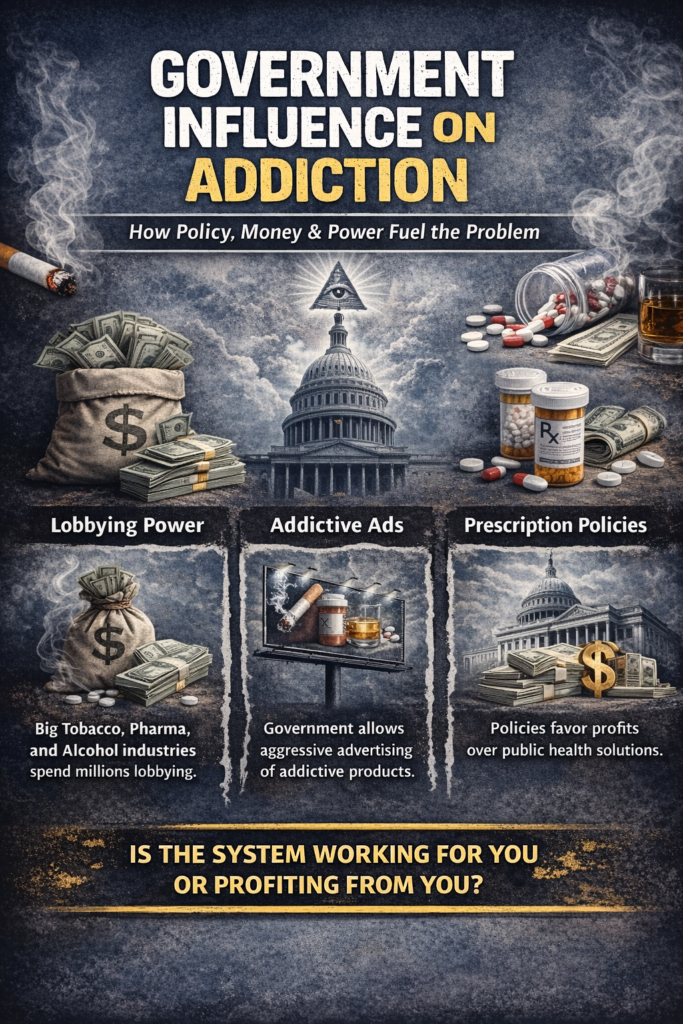
If you’ve ever wondered why junk food cravings seem almost impossible to resist or why certain apps keep pulling you back for “just one more minute,” it raises an important question: who—or what—is influencing these habits? Many of the products and platforms people interact with every day are intentionally designed to keep users engaged, and broader systems, including government policies and regulations, can shape how these products are created, marketed, and distributed. Governments influence public behavior through laws, taxation, advertising regulations, subsidies, and oversight of industries such as food, technology, tobacco, and alcohol. Sometimes this influence is direct, through policies that regulate or restrict certain products, while other times it is more subtle, allowing companies significant freedom in how addictive products are promoted to the public. These decisions can affect what is widely available, affordable, and socially normalized. As a result, the environments people live in—what foods are marketed, which apps dominate digital spaces, and how addictive substances are controlled—are partly shaped by policy choices. Exploring the relationship between government influence and addictive behaviors helps reveal how systems, incentives, and regulations can shape everyday habits, from what we snack on to how much time we spend on our screens. Understanding these dynamics can open the door to more informed conversations about public health, personal choice, and the role of policy in addressing addiction.
How Government Power Shapes Addiction Traps
Government influence on addictive behaviors isn’t always obvious. Policy, regulation, and even promotion of certain products play a pretty big role in shaping our environment. From the way fast food is advertised to how substances like alcohol or gambling are taxed, there’s often a guiding hand in the background.
For example, sugary drinks and processed foods are regularly linked to public health issues, but lobbyists and legislation sometimes protect these industries. In some places, there are even government subsidies that make these foods more widely available and affordable than healthier alternatives. This all feeds into a loop where addictive food and drink options are always within easy reach.
On top of that, governments can be involved in activities like lotteries or casinos, often citing funding for public goods. Yet, these institutions rely heavily on addictive patterns of play and frequent engagement. Increasingly, experts are examining the impact of these industries on vulnerable populations, noting that some sectors of society suffer more due to easier access and aggressive marketing. These dynamics shed light on how powerful interests can keep the status quo, making it tough for policy reforms to gain traction.
Breaking Down the Types of Government Influence on Addictive Behaviors
Several types of government action or inaction can make addictive activities and products more appealing:
- Legislation and Regulation: Laws determine what’s considered legal or who can access certain products. Sometimes, restrictions are in place to protect public health, but loopholes or lax enforcement can weaken these efforts.
- Advertising and Sponsorship: In many regions, addictive products are allowed to advertise heavily, such as the fast-food ads during sports games or the gambling ads popping up online. This persistent messaging can deepen cravings or normalize frequent use.
- Subsidies and Taxes: Lower taxes on alcohol or soft drinks can keep prices down, making them more attractive and accessible to everyone, including younger consumers.
- Information Control: Health warnings, nutrition labels, or educational campaigns may be handled in ways that minimize negative attention on certain products or warn only in the vaguest of terms, leaving consumers without enough context to make truly informed choices.
These influences add up to create an environment where the odds aren’t exactly stacked in favor of making healthy, addiction-free choices.
Where Subtle Influence Shows Up in Everyday Life
It’s not just about regulation; sometimes it’s about what governments allow or quietly support. Here are a few spots where that influence can creep in:
- Food Availability: Highly processed snacks and sugar-laden drinks are widely available, partly because they’re cheap to produce and subsidized more than healthier options. Communities with fewer resources often lack access to affordable, nutritious food, pointing to how policy decisions can shape dietary norms.
- Lottery Tickets and Online Gambling: Some governments fund social programs with gambling revenue. State-run lotteries are everywhere, and gambling is often promoted as harmless entertainment, even though evidence points to social and economic harms in some communities.
- Tech and Apps: Digital addiction through social media and online gaming sometimes gets overlooked or poorly regulated. Some regions try to protect children, but there are a lot of grey areas where addictive design slips through. The evolution of apps and tech platforms has reshaped how quickly and how often people are exposed to mindless scrolling or constant notifications. Many features are designed to keep users hooked as long as possible, and weak regulation has opened the door for more manipulative tactics.
The result can be an environment where stuff that triggers addictive behaviors is not only common, but feels normal, sometimes even encouraged. The situation is particularly concerning in digital spaces, with younger users often facing the most exposure.
Big Brother’s Role: Protecting or Enabling?
There’s a real balancing act here. On the one hand, governments step in to limit or warn about potentially addictive products, such as tobacco warning labels or age restrictions on liquor stores. On the other side, they also profit from or enable the very industries that rely on repeat, sometimes compulsive, use.
This conflict is pretty visible with products like alcohol and gambling. Many governments collect serious tax revenue from these sectors; shutting them down would mean losing funding for public services. So, decisions are made that sometimes prioritize economic interests over public health.
Even when certain regulations are in place, enforcement gaps and lobbying can weaken protections. Advertisements targeting teens or communities where unhealthy behaviors are already common are a frequent sticking point. It’s pretty easy to feel like addictive stuff is just part of the landscape, and that’s not by accident. The intertwining of governmental priorities and business interests can slow reform efforts, despite growing health concerns.
How Policy Shapes What You Crave
It’s easy to think that habits form in a vacuum, but policy shapes lots of everyday cravings. Here’s how it happens:
- Food Cravings: Government-approved school lunches, food deserts in urban areas, and subsidized ingredients all play a part in what’s easily available. If healthier choices are hard to find or cost more, people learn to crave what’s around them, making it tough to break old patterns.
- Digital Addiction: Lack of strong screen time regulations for children or nudges for social media companies to self-police means addictive games and endless scrolling features get designed into popular products. These strategies are hidden in algorithms and app design, tapping into our brain’s natural reward systems.
- Gambling and Alcohol: Moderate restrictions, or allowing programs that directly promote gambling, normalize, and sometimes even celebrate the habit. Public events with alcohol or lottery stands as a major feature reveal how common these practices have become.
Addiction is complicated, and while personal choice is a big factor, it rarely happens outside of this broader setup forged by policy and economics. When you look at which habits thrive, it’s clear the system has a big influence.
Should the Government Take a Stronger Stand Against Addictive Products?
Many public health advocates think governments could be doing way more. Some call for stricter advertising rules, higher taxes on products tied to addiction, or clearer health warnings. There’s also a push for programs that improve education about how certain products and apps are designed to keep you coming back for more.
Others argue that individuals are responsible for their choices, and that too much government involvement gets in the way of freedom. Still, when the scales are tipped by huge companies with powerful lobbyists, or when policies make the addictive choice the easiest one, a fair balance becomes tricky. International efforts, such as those by the World Health Organization and global advocacy groups, are calling for a united front to address these challenges through a mix of education, regulation, and innovation in public health messaging.
What Would Stronger Action Look Like?
- Raising taxes or putting tighter limits on advertising for things like alcohol, gambling, and fast food to make addictive options less visible or appealing
- Requiring more honest product warnings or clearer nutrition information on labels so consumers can make smarter choices
- Giving communities more resources to offer healthy choices, including public spaces and education, to break cycles where unhealthy habits are the default
- Setting tougher standards for addictive features in tech, especially for products aimed at kids and teens, with clear regulations and stronger oversight
Making these changes could mean fewer mixed messages about what’s “normal” or “fun” when it comes to things known to trigger or reinforce addictive patterns. Enhanced public discussions, transparency from companies, and grassroots community efforts all combine to create a stronger push for change.
Common Questions About Government and Addiction
Here are a few questions that pop up a lot when thinking about the government’s role in addiction:
Is government control always negative when it comes to addictive products?
Not necessarily. Many rules, like tobacco warnings and age restrictions, actually help protect the public from health risks. The problem comes when protection gets watered down behind the scenes or when money talks louder than public health data.
What’s a real-world example of government influence on addiction?
The heavy promotion and easy access to lottery games show how government funding priorities can encourage gambling, even when there’s evidence of rising addiction rates. In some countries, all you need to buy a lottery ticket is pocket change, sending mixed signals about the risks involved.
Can education programs make up for government inaction?
Education is super important, but when it’s up against fancy ad campaigns or design tricks in tech, it can get drowned out. A stronger policy mix is usually needed. Parents, schools, and grassroots organizations play a vital role, but structural change often requires government support or action.
What Can You Do to Push Back?
While governments play a major role, there are still practical ways to make informed choices and reduce risks:
- Stay curious and look at who profits from the products you use daily. Follow the money to understand deeper interests at play.
- Find trusted sources for health and nutrition info, and don’t hesitate to double-check claims made in ads or on packaging.
- Support local groups speaking up for policy change, or get involved in community efforts to provide alternatives, such as fresh produce drives or digital detox programs.
- Speak up. Public feedback can get policymakers’ attention, especially when it comes to what’s advertised and sold in your area. Campaigns, petitions, or simply voicing your opinion can lead to real results over time.
Knowing the bigger system in play can help you recognize not only your own habits but also the influences you might not see every day. Getting a clear picture means you can make choices with your eyes wide open, not just go along for the ride. With more awareness and community effort, it’s possible to push for healthier environments, even when the powers that be seem slow to act.
Video: Why the Government Made Addiction Worse #systemicissue #publichealth #shocking