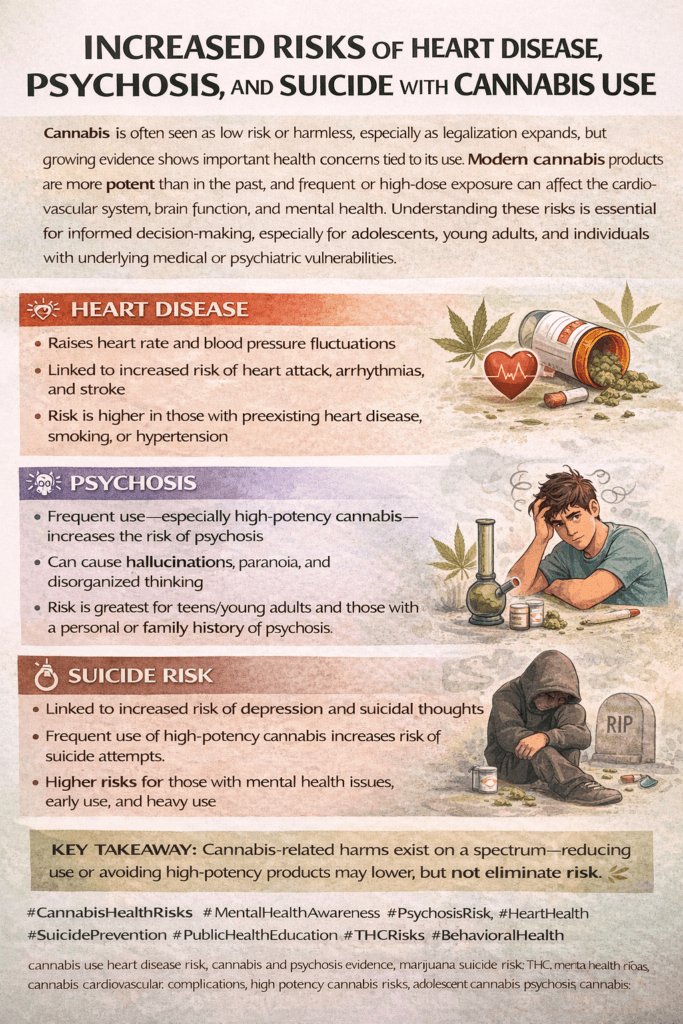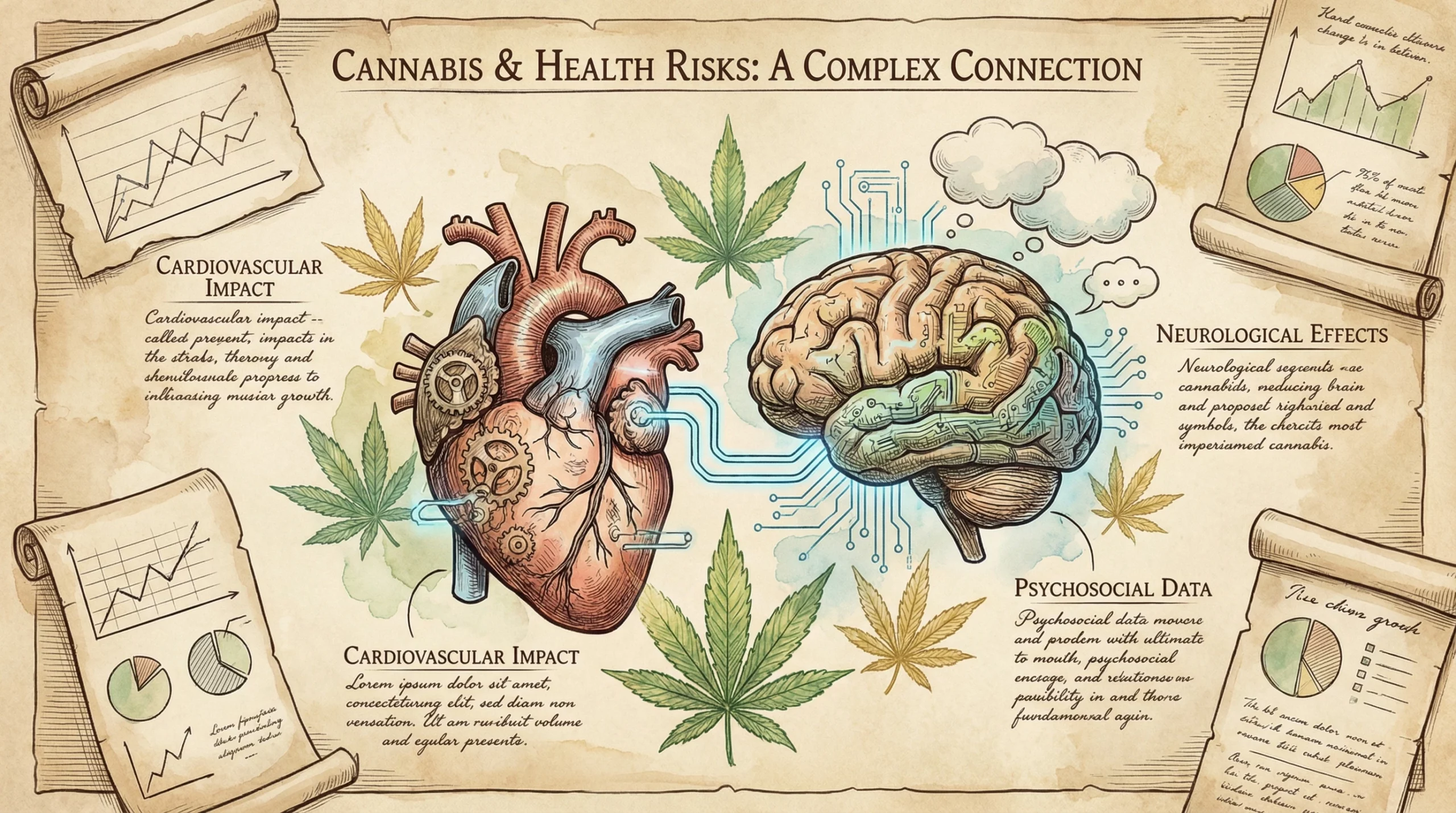
Cannabis use has gained attention as legalization expands and social attitudes shift. Often viewed as a low-risk or “natural” substance, it is commonly perceived as safer than other drugs. However, growing evidence shows that regular or heavy use can carry meaningful health risks. Research increasingly links cannabis use to cardiovascular problems, including heart disease, as well as serious mental health outcomes such as psychosis and suicidal thoughts or behaviors. Understanding these risks is not about fear or judgment, but informed decision-making. This introduction highlights current evidence to support clearer, more informed choices about cannabis use.
Understanding the Health Risks of Cannabis Use
It’s common to hear that cannabis is “natural” or “harmless,” but like anything you put in your body, it comes with some risks. Most people know about short-term effects like feeling high, increased appetite, or dry mouth, but long-term health impacts are a bigger deal than many realize.
Recent studies have brought to light connections between cannabis use and a higher risk of heart problems, mental health issues, and even an increased chance of suicide, especially among people who start using cannabis young or use it heavily. The picture isn’t simple, and not everyone who uses cannabis will encounter these issues, but the risks go up as use gets heavier and more frequent.
Heart Disease and Cannabis: What’s the Link?
Cannabis affects more than just mood or perception; it has direct effects on the body’s cardiovascular system. For a long time, researchers thought the connection was pretty minor. However, newer studies are showing reasons to pay closer attention.
- Increased Heart Rate: Right after using cannabis, your heart rate goes up for anywhere from 20 minutes to 3 hours. This puts extra strain on the heart, especially if you already have underlying heart conditions.
- Risk of Heart Attack: Some studies, like one published in the journal JAHA, point out that heart attack risk increases soon after using cannabis, particularly in adults under 45.
- Arrhythmias and Stroke: Regular cannabis use can play a role in abnormal heart rhythms or, in rare cases, even stroke, though the exact chances are still being studied for different groups.
People who use cannabis regularly and have other risk factors for heart disease, like smoking tobacco, having high blood pressure, or diabetes, should be extra careful and talk openly with their doctors. Younger people tend to think they’re immune to heart trouble, but some case reports show that even healthy adults can have unexpected problems after cannabis use.
Mental Health: Psychosis, Anxiety, and Suicide Risk
One area where science has gotten much clearer is the effect of cannabis on mental health. Most people are aware that cannabis can sometimes make you feel paranoid or anxious. But for some, especially those with certain genetic backgrounds or who use a lot at a young age, the risks can go much deeper.
Cannabis and Psychosis
Psychosis is a mental health problem where you lose touch with reality. Think delusions, hallucinations, and muddled thinking. People with a personal or family history of psychotic disorders like schizophrenia are much more likely to experience a psychotic episode if they use cannabis regularly.
Reports in journals like The Lancet Psychiatry estimate that high-potency cannabis can triple the risk of psychosis in people predisposed to mental health issues. Even in the general population, early or heavy cannabis use seems linked to higher rates of psychotic symptoms later in life.
Depression, Anxiety, and Suicide
- Anxiety and Depression: Though some users say cannabis helps them relax, frequent use is linked to higher rates of anxiety and depression, especially among teens and young adults.
- Suicidal Thoughts and Attempts: Some large studies, including data from the National Academies of Sciences, show that people who use cannabis regularly have a higher risk of both thinking about and attempting suicide compared to nonusers, even after controlling for other mental health problems.
The exact reasons are still being debated, but possibilities include changes to the way the brain’s chemical messengers work, increased feelings of hopelessness or paranoia, or cannabis simply making it tougher for some people to manage stress.
Factors That Make The Risks Higher
Cannabis affects everyone differently, but there are a few factors that make problems more likely. Understanding these can help people make smarter choices about when and how they use cannabis or whether to use it at all.
- Age at First Use: Starting cannabis use before age 18 is strongly linked with more severe impacts on mental health, since the brain is still developing at that age. This early introduction can alter brain chemistry and increase long-term risks.
- Frequency and Dose: The more often you use and the higher the THC content, the greater the risk, especially for psychosis and heart trouble. Using high-THC products frequently can significantly amplify these risks.
- Personal or Family History: If mental health issues run in your family or you’ve had mood or psychotic symptoms before, cannabis can act as a trigger and bring latent issues to the surface.
- Combination with Other Substances: Using cannabis along with alcohol, tobacco, or stimulants can make the risks add up even faster. Co-use is especially risky for heart-related problems or mental health crises, as substances can multiply each other’s effects.
Practical Tips for Safer Cannabis Use
If you or someone you care about is using cannabis but is concerned about the risks, there are practical steps that can help lower the chance of serious problems and fit better into a healthier lifestyle.
- Start Slow, Go Low: If you’re new to cannabis, avoid high-THC products and use small amounts to see how your body reacts. “Low and slow” is the common advice for a reason, helping you minimize unexpected reactions.
- Pay Attention to Mental Health: If you begin to notice increased anxiety, mood changes, trouble thinking clearly, or paranoia, consider taking a break and talking to a doctor or therapist right away. Early attention can help prevent more persistent problems.
- Be Honest with Your Healthcare Team: Doctors aren’t there to judge. They need accurate info to help you stay healthy. Telling your healthcare provider about your cannabis use can make checkups and emergency visits much safer and more useful.
- Stay Informed: Cannabis research is changing fast. Keeping up with new evidence from sources like the CDC or major medical journals is handy for making informed choices. Tracking down fresh information helps you understand what to watch for as trends change.
- Use Support Systems: If you ever feel worried about your usage or mental health, reach out to support groups, therapists, or community resources. Sometimes, just talking things through with others can make all the difference.
My Experience: What I’ve Seen and Learned
In my circles, I’ve seen both casual users and people who used cannabis a lot over many years. The casual users rarely had big issues, but among heavier users, especially those who started in their teens or had a history of anxiety, the problems were actually tough to watch: panic attacks, a few instances of psychotic episodes, and in one case, an emergency room visit for heart palpitations right after using a high-THC edible. Hearing their stories reminded me that risks are real, even if they’re not super common in everyone you meet.
For anyone reading this who is worried about themselves or someone else, early conversations and honest info-sharing make a big difference before things get complicated. When concerns are raised early, it’s often easier to set things right and guide someone to safer habits or professional support.
Frequently Asked Questions About Cannabis-Related Risks
Here are some quick answers to common questions I hear about cannabis and health risks:
Does everyone who uses cannabis end up with these problems?
Answer: No, not everyone who uses cannabis will have heart trouble, psychosis, or thoughts of suicide. But the risk goes up with frequent use, starting young, and underlying mental or physical health issues.
Is it safer to use CBD-only products?
Answer: CBD (cannabidiol) is not linked with the same risks as THC, but comprehensive research is ongoing. Products with little or no THC seem safer for most people who are worried about psychosis or heart problems.
Can quitting cannabis reverse these risks?
Answer: Many negative effects improve if you stop or reduce use, but for some, especially those who have had psychotic episodes, recovery can be slow. Always seek guidance if you’re having symptoms.
Wrapping Up: Staying Informed with Changing Science
Even as cannabis becomes more accepted and accessible, it’s really important to keep these long-term risks in mind, especially if you or someone in your life is starting to use cannabis more often. The science is still growing, and we learn more every year about how cannabis can affect heart health, mental state, and suicide risk. If you’ve got concerns, want to reduce risk, or just want to learn more, talking to health professionals and keeping up with trusted resources is pretty useful for making safe and smart choices. The more informed you are, the better positioned you’ll be to make the right choices for yourself and the people around you as cannabis trends keep evolving.
Video: I Didn’t Know Weed Could Do This #Psychosis #HealthRisks #Shocking