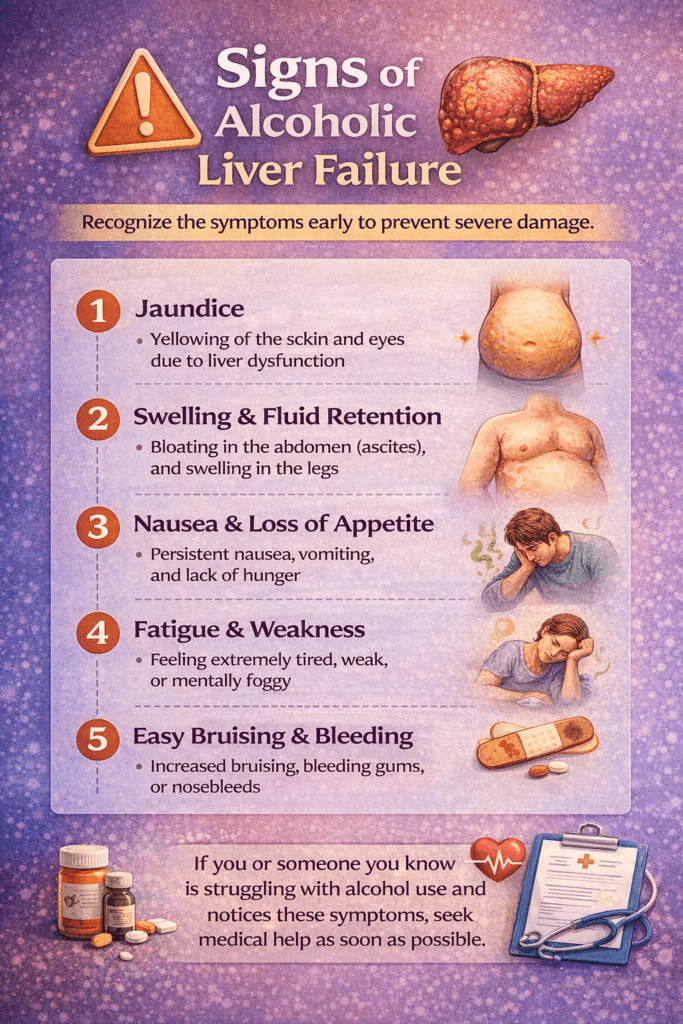
Alcohol-related liver failure is often overlooked until the symptoms become severe and impossible to ignore. One of the challenges is that early warning signs can be subtle—fatigue, mild abdominal discomfort, nausea, or changes in appetite—and are easily dismissed as stress or minor illness. Over time, however, continued alcohol use can lead to progressive liver damage, including inflammation, scarring (cirrhosis), and eventually liver failure. As the condition advances, symptoms may become more obvious, such as jaundice (yellowing of the skin and eyes), swelling in the abdomen or legs, confusion, easy bruising, and persistent weakness. Understanding these warning signs is critical because early medical intervention can slow progression and, in some cases, prevent irreversible damage. If you’re concerned about yourself or someone you care about, recognizing the symptoms and seeking prompt medical evaluation can make a life-saving difference.
Why Spotting Early Signals of Liver Failure Is Really Important
Recognizing early signals of liver failure connected to alcohol use can give people a better shot at getting help and making changes that could protect their health. From my experience, a lot of folks carry on with their routines without realizing their liver is quietly struggling. If you know about the liver’s role and what happens when it suffers alcohol damage, you’ll find it easier to spot the signs before things spiral.
The liver chips in with over 500 jobs, from filtering out toxins (including alcohol) and producing bile to balancing cholesterol and supporting your immune system. Over time, heavy and frequent alcohol use can pile on too much stress, triggering fatty liver, hepatitis, and finally scarring known as cirrhosis. When this damage keeps ticking along, the liver’s ability to heal nosedives, leading to outright liver failure.
Worldwide, liver disease linked to alcohol stands out as a huge public health issue, with millions of people facing complications every year. Keeping an eye out for the signals isn’t just about filling out a checklist—it can truly affect the course of your health and quality of life.
What Happens to the Liver With Alcohol Use?
The liver’s a real workhorse and better than most organs at bouncing back, but every machine has its breaking point. Even casual drinking can put a dent in your liver, while heavy or chronic alcohol use amps up the risks by a lot.
- Fatty Liver: Alcohol makes fat collect inside liver cells. You might not feel a thing at first, but it’s the earliest sign your liver’s under stress.
- Alcoholic Hepatitis: Continuous drinking can kick off inflammation. The liver swells, which may cause discomfort or pain, though many chalk it up to indigestion or regular stomach trouble.
- Cirrhosis: Scar tissue begins to crowd out healthy liver cells and block blood flow. Now the liver can’t keep up with its job, leading to ever-worsening issues.
Early Signals of Liver Failure to Watch For
Spotting signs early gives people a chance to seek help before lasting damage sets in. The warning lights aren’t always glaring, but they mean something. Here are symptoms you might notice in the early and middle stages of alcohol-related liver failure:
- Fatigue and Weakness: Feeling run down day after day, even after lots of rest? That’s often one of the first things folks overlook.
- Loss of Appetite and Weight Loss: Sometimes, people suddenly lose interest in food or lose weight without trying.
- Mild Upper Right Abdominal Discomfort: This spot sits just below your ribs. There might be pressure, mild bloating, or a persistent ache.
- Nausea or Vomiting: Having a queasy stomach after meals or alcohol can be another red flag.
- Jaundice (Yellowing Skin and Eyes): Look out for any change in skin tone or yellowing of the whites of your eyes—this should always be checked out quickly.
- Swollen Legs and Ankles (Edema): If your legs or ankles swell up, it might be because your liver’s losing its grip on salt and water balance.
- Dark Urine or Pale Stool: Changes in what comes out in the bathroom can be the first sign of other clues.
Recognizing More Severe Signals
When liver failure takes a bigger hold, these signals get harder to miss. Left untreated, the following red flags may develop:
- Confusion and Difficulty Focusing: If toxins start building up in your brain (a condition called hepatic encephalopathy), clear thinking and memory take a real hit.
- Major Abdominal Swelling (Ascites): This is far more than mild bloating—the abdomen can look rounded or tight due to fluid buildup.
- Bruising or Bleeding Easily: Since the liver helps your blood clot, you might notice bruises from small knocks or cuts that bleed more than normal.
- Intense Itching: Waste products can build up, making your skin itch all over, sometimes severely.
Don’t brush off these signals if you notice them. Getting checked sooner rather than later is always better.
Things That Can Throw You Off: Common Roadblocks to Spotting Liver Trouble
Liver failure related to alcohol can catch people off guard because many of the symptoms look like ordinary, everyday problems. Some common reasons these early clues get missed:
- Blaming Signs on “Getting Older”: Fatigue, lost appetite, or aches and pains might be chalked up to aging or general stress.
- Missing Small Changes: Even slight swelling or skin tone shifts are easy to overlook unless you’re looking for them.
- Stigma Around Alcohol Use: Lots of people avoid talking openly about how much they drink. That can make it harder for doctors to spot risky patterns early on.
- No Pain, No Problem? The liver doesn’t throw up a lot of pain alerts at first. By the time pain arrives, things could already be serious.
Why Getting a Checkup Matters So Much
Liver disease can be managed or at least slowed down if it’s spotted early. Blood work, imaging, and talking honestly with your healthcare provider go a long way. Even sharing your honest drinking habits helps doctors give you the best advice for your specific situation.
Taking Action: What If You Notice These Signs?
If you spot a mix of these symptoms—especially if you’re a regular or heavy drinker—it’s smart to reach out to a doctor. Early action can keep things from getting out of hand, and running a few blood or imaging tests can lay things out more clearly. Don’t wait for things to get worse before asking for support.
Tips for Supporting Liver Health and Reducing Risks
Taking care of your liver if you drink alcohol doesn’t have to mean flipping your whole world upside down overnight. Here are some practical tips to take care of your liver’s health:
- Cut Down on Alcohol: Consider taking breaks, swapping in nonalcoholic drinks, or capping your weekly intake.
- Get Routine Checkups: Annual or semi-annual blood tests provide a health snapshot. Ask your doctor about liver enzymes and fatty liver screening.
- Hydrate and Eat Well: Balanced meals and plenty of water support your liver as it processes toxins.
- Monitor Medications: Watch your use of painkillers like acetaminophen—these can pile on extra stress for your liver.
- Seek Help if Needed: If controlling drinking feels tough, reaching out to a mental health or addiction specialist is a seriously strong decision that could change your trajectory.
Support groups and community resources can make the process less overwhelming, and you don’t have to go it alone. Sometimes a small first step—like talking to your doctor—can set you on a path to feeling better than ever.
How Liver Failure Is Diagnosed and Managed
Doctors use blood tests, imaging (such as ultrasounds), and sometimes a liver biopsy to figure out how healthy your liver is. The sooner a problem is spotted, the more options are available, and sometimes the damage can even be dialed back.
With mild issues, quitting alcohol, eating better, and possibly using medication to bring down inflammation or manage symptoms are usually enough. In cases where things are more advanced, you might need more intensive care, and in rare cases, a liver transplant could be on the table.
Frequently Asked Questions About Liver Failure and Alcohol
Plenty of people want to know more about liver health but aren’t sure where to get straight answers. Here are a few of the questions I hear most:
Question: If I stop drinking now, will my liver heal?
Answer: In the early stages (fatty liver or mild hepatitis), removing alcohol can let the liver heal. Advanced scarring (cirrhosis) often can’t be reversed, but stopping drinking helps prevent more problems from piling on.
Question: Do I have to quit drinking for good?
Answer: Cutting back is helpful, but if you already show signs of liver damage, most doctors recommend quitting altogether to stop further harm.
Question: Are there signals before things get permanent?
Answer: Fatigue, mild abdominal pain, and changes in appetite often show up first, though sometimes you won’t notice anything until bigger problems hit—another reason why regular checkups matter a ton.
Question: Can young people get liver failure from alcohol?
Answer: Definitely. Although older adults are at greater risk, young adults who drink heavily or frequently can end up with liver trouble as well.
Staying Ahead With Knowledge and Action
Liver failure tied to alcohol rarely arrives out of nowhere. Your body usually sends out warning signs. Listening to your body, being honest about drinking, and scheduling regular health checks are your best tools to protect your liver. If you notice any of these clues—in yourself or in someone close—don’t hesitate to speak to a health professional. Taking action early means easier recovery, fewer bumps down the road, and a much brighter outlook ahead.
Video: Alcohol’s Damage to Your Liver Is Worse Than You Think #HealthFacts #Warning