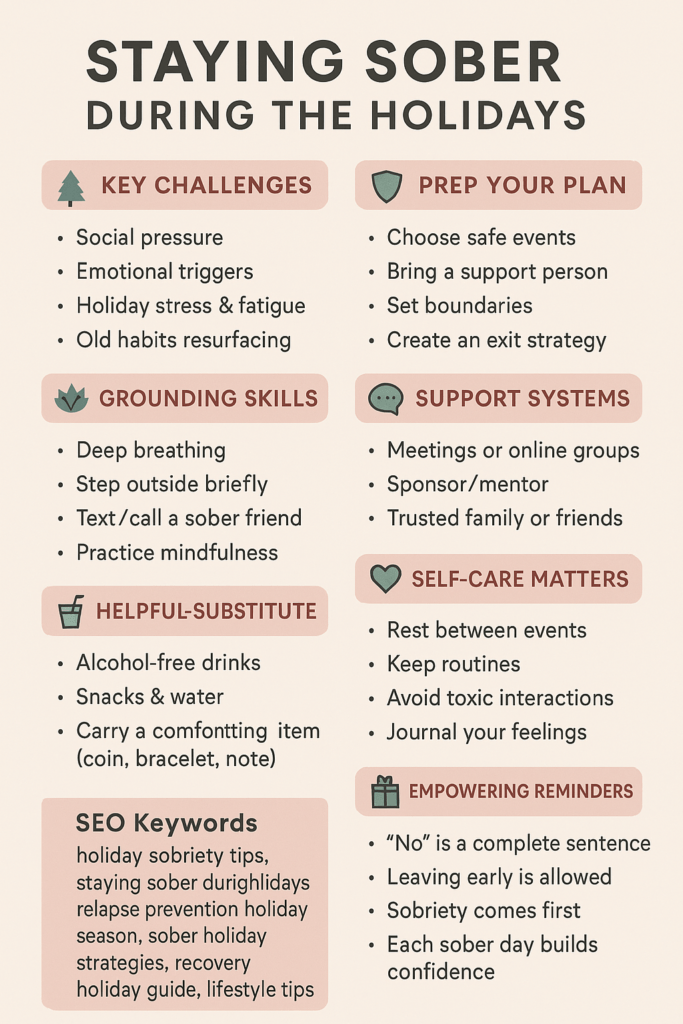
Why Holidays staying sober during the holidays can feel like a mountain to climb, especially when so many gatherings revolve around alcohol, celebration, and indulgence. Whether you’re new to sobriety or have been working at it for years, this season has a way of testing boundaries, stirring up old habits, and putting you in situations you might not face any other time of year. I’ve learned through experience that the key to getting through it isn’t just willpower—it’s preparation. Planning ahead, knowing your triggers, and having solid strategies in place can turn a stressful season into one that’s manageable and even genuinely enjoyable. In this guide, I’ll walk you through the tools and approaches I rely on to keep my sobriety strong throughout the holidays and stay centered amid all the festivities.
Challenging sobriety during the Holidays
The holidays can bring out all sorts of emotions: nostalgia, joy, stress, and sometimes even loneliness. Family traditions and social events might revolve around alcohol, which means temptation is often right in your face. For me, seeing old friends or handling family dynamics brought up old habits I thought I’d left behind.
Events like work parties and New Year’s gatherings often come with free-flowing drinks. Even people who respect your sobriety the rest of the year might slip into “just have one” mode. Emotional triggers like grief, pressure to fit in, or simply the vibe of celebration add to the struggle. Recognizing these stress points has helped me take back some control instead of feeling caught off guard.
The buildup of the season—with expectations of joy and togetherness—can actually be tricky for many. Advertisements everywhere push for “holiday cheer,” which, for some, has always meant drinking. Recognizing that these are cultural messages, not mandatory rules, can help ease the feeling that you’re missing out or “doing it wrong.”
Building a Game Plan for Sober Holidays
No matter how much willpower you’ve got, having a simple plan can prevent a lot of headaches and awkward moments. Here’s my basic blueprint:
- Know Your Triggers: List situations or people who usually trigger cravings. It could be a family member, a place, or even a song.
- Think Ahead for Events: If you’re going to a party, coming up with what to say or do in tricky situations is super helpful.
- Bring Safe Sips: Showing up with your own nonalcoholic drinks or mocktails has saved me from getting caught empty-handed or pressured to drink alcohol.
- Check In with Support: Messaging a sober friend before and after parties helps keep everything in perspective.
Creating this plan is about putting a few extra tools in your toolbox. The more you plan, the less likely you’ll feel rattled if something unexpected pops up, and the more relaxed those social gatherings will feel. If you have a sponsor, counselor, or trusted group, looping them into your plans can give an extra layer of coverage if things get tough.
Dealing with Social Pressure
I’ve lost count of how many times someone has asked why I’m not drinking during the holidays. If you’re feeling nervous about handling that, here are some things I keep in my back pocket:
- Practice Simple Responses: Often, just a “No thanks, I’m good with this” works fine. Most people move on quickly, especially if you don’t make it a big deal.
- Use Humor or Change The Subject: Sometimes I joke, “You don’t want to see me do karaoke on mulled wine!” and steer the conversation somewhere else.
- Set Boundaries Early: With close friends and family, I’ve found it’s easier to mention ahead of time that I’m not drinking, so it’s not a thing when I get there.
For those who push, that has more to do with them than you. Sticking to your decision, without overexplaining, sends a message that you respect yourself. That’s pretty powerful all year long. Remember: a gentle smile, a polite decline, and a change of subject can keep things light and effortless. Over time, people really do get used to your choice and will start offering more inclusive options.
Managing Emotions and Stress During the Holidays
Big gatherings or extended family visits can be draining. For people in recovery, emotions like anxiety and sadness can crop up unexpectedly. Here are a few things I do to make it easier:
- Schedule Downtime: I always give myself permission to bail on an event early or take a break if the crowd gets to be too much.
- Keep Your Routine: Sticking as close as possible to your daily routine, like walking the dog, journaling, or hitting a support meeting, really helps to ground everything.
- Find Quiet Moments: I sometimes step outside for some fresh air or call someone in my support circle if the pressure starts to add up.
Managing stress also means not aiming for perfection. If you feel annoyed, sad, or left out, know that it’s just part of the experience, and it usually passes. Attending special holiday-themed recovery meetings or joining online check-ins can provide a positive space to vent feelings and get tips from others who are riding out the season sober.
Setting Up Your Environment for Success
Your space can really steer your mindset, especially during the holidays when triggers sneak up. Here’s what usually works for me:
- Have Nonalcoholic Options Ready: Stock up on sparkling water, herbal teas, or fancier zero-proof drinks. Sharing them with guests can also foster a supportive vibe.
- Plan Sober Activities: Hosting a movie night with popcorn, organizing a cookie swap, or inviting friends for board games gives you stuff to look forward to that isn’t centered around drinking.
- Remove Triggers: If seeing old bottles or barware brings up cravings, pack them away for the season if you can. A “mocktail bar” setup can also be a terrific addition, making everyone feel included and neutralizing the pressure.
A comfortable, inviting environment gives you something positive to focus on. The more you enjoy your surroundings, the less power any cravings have. Consider scented candles, cozy blankets, and simple treats—these minor adjustments help wrap your home in a safe, calming mood.
Tricks for Navigating Parties, Dinners, and Family Events
- Arrive Early or Leave When Needed: Getting there early helps you connect before the party gets wild, and you can leave before things get sticky if you need to.
- Drive Yourself: Having your own ride means you can split whenever without waiting for someone else.
- Keep a Drink in Hand: If you always have a soda or mocktail, people are way less likely to ask what you’re drinking. Plus, holding something gives you something to do with your hands, easing nerves.
- Bring a Support Buddy: Bring a sober friend, or call or text someone you trust, to make even tense events feel a lot lighter.
- Reward Yourself: Planning a favorite treat, quiet time, or a new movie for after an event gives you something sweet to look forward to. Don’t forget that even a small, relaxing ritual counts as favorable reinforcement.
Having small plans like this takes the sting out of awkward moments and makes each event a little easier to handle. Sometimes, simply mapping out how long you want to stay or setting a “check-in” timer on your phone can help keep your energy steady.
Common Pitfalls and How to Dodge Them
- Underestimating Triggers: It’s essential not to brush off what makes you want to drink. I’ve learned that recognizing these helps me stay ahead of trouble.
- Too Many Obligations: Trying to go to every single party gets overwhelming fast and wears me down. Picking a few events you actually enjoy is way more doable.
- Isolation: Spending time alone can feel safe, but too much isolation can backfire. Scheduling some low-key time with trusted people is a good middle ground.
Handling Slip-Ups
If you do slip and have a drink, it’s not game over. Facing it openly, without self-blame, has always helped me get back on track faster. Reaching out for support, talking it through, and making notes for next time go a long way toward longer-term progress. Some people even jot down what led up to the misstep, so they’ve got a “playbook” for the next event.
Cool Resources for Sober Support During the Holidays
- SMART Recovery – Offers science-based tips and meetings both online and in person.
- Alcoholics Anonymous (AA) – Well-known for group support, especially during challenging times like the holidays.
- Soberistas – An online space for people choosing sobriety without labels or pressure.
- Tempest – Offers sober support programs, valuable workshops, and lots of community connections.
Most of these offer exceptional support or holiday events. Getting involved, even just virtually, can make a lonely or challenging season feel more connected. There are also lots of podcasts and social media pages—searching “sober holidays” online can turn up some instant inspiration, helpful memes, and even live-stream events for real-time support.
Frequently Asked Questions
Question: How can I get through a family gathering if everyone else is drinking?
Answer: I stick to nonalcoholic drinks and keep checking in with a sober buddy. If it gets too uncomfortable, I give myself permission to leave early or take a breather outside. Remember, your comfort and safety come first—excusing yourself is always okay.
Question: What should I say when people push me to drink?
Answer: “No thanks, I’m good” almost always works. There’s no need to overexplain, and changing the topic can help move things along. You’ll get more confident each time you practice, and soon, people usually stop asking.
Question: What do I do if I relapse during the holiday season?
Answer: Don’t panic or beat yourself up. Reach out to someone you trust, refocus on your goals, and treat it as a learning experience. One setback doesn’t erase all your hard work. Make use of holiday support meetings if you need a safe space to talk it out.
Navigating Sober Holidays and Building New Traditions
Sobriety during the holidays is about more than saying no to alcohol; it’s about building habits that make the season better for you. Over time, I’ve started new traditions that feel more rewarding than my old ones, like early-morning winter walks, hosting a movie marathon, arranging small craft sessions, or putting together care packages for friends. These new joys can become your favorite part of the season while sobriety becomes just one more way to enjoy the real spirit of the holidays. It’s something to celebrate—and with each year, it gets a little easier, and your new routines get richer. Here’s to discovering new ways to make every holiday brighter and more meaningful.
Video: The Part of Sobriety That Breaks People During Holidays #sobriety #reallife #recovery