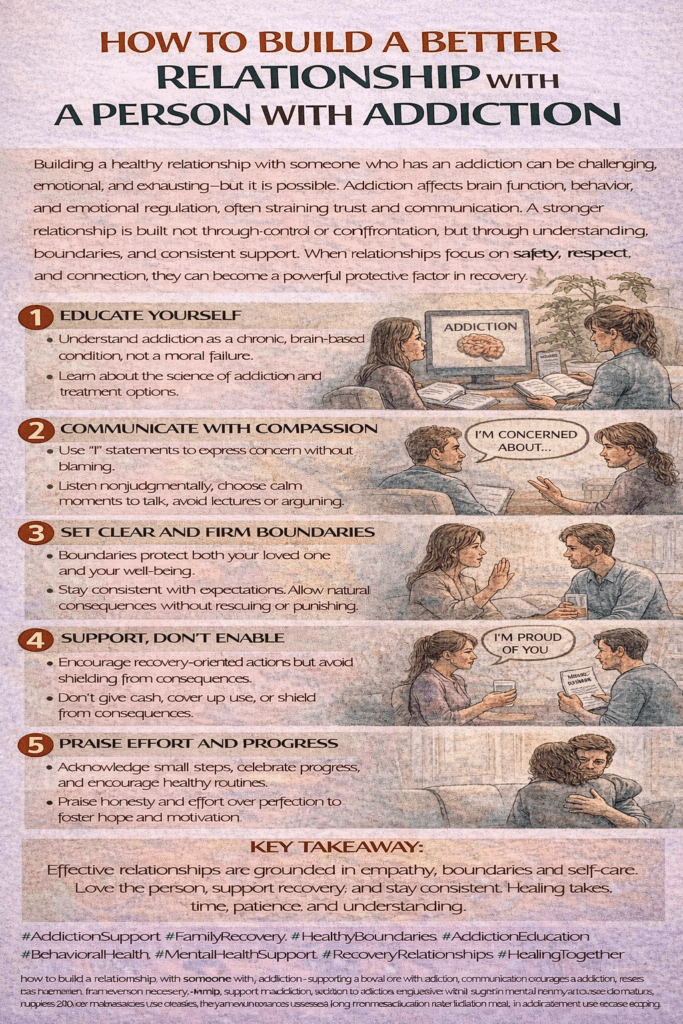
Building a better relationship with someone who is struggling with addiction is rarely simple, but it can be one of the most meaningful factors in supporting long-term change and emotional well-being for everyone involved. Addiction—whether related to alcohol, drugs, gambling, or other behaviors—often disrupts trust, communication, and emotional safety within relationships. Without guidance, even well-intentioned support can unintentionally increase conflict or burnout. In this guide, I share practical strategies, real-life examples, and insights drawn from experience to help navigate these challenges. The focus is on improving communication, setting healthy boundaries, reducing blame, and strengthening connection in ways that support recovery while also protecting your own well-being.
Understanding Addiction and Its Impact on Relationships
Addiction can affect almost every aspect of a person’s life, including their closest relationships. I’ve seen firsthand how addiction causes strain, misunderstandings, and even emotional distance. The science behind addiction shows it’s not just a matter of willpower. Substances and behaviors can literally change how the brain works, making it tough to simply “stop.” Recognizing addiction as a medical and emotional challenge often helps mix it up with how you approach your relationship.
The impact goes further than the individual. Partners, family members, and friends may experience frustration, stress, or heartbreak. Sometimes, daily routines and communication habits get all mixed up. It’s pretty common for boundaries to get blurred and trust to be tested as well. Leaning into understanding, rather than judgment, is really important for making progress together. Resources from organizations like SAMHSA and Al-Anon offer even more insight, if you’d like to check out deeper info and different perspectives.
Also, recognizing your own feelings can help. It’s normal to feel sadness, anger, or even guilt. Understanding addiction’s hold on someone isn’t always enough to prevent those emotions. Joining a support group or reading others’ stories can help you track down a sense of connection so you don’t feel alone in your experience.
Steps for Building a Stronger Relationship with a Person Facing Addiction
Supporting someone with addiction doesn’t mean taking on the role of therapist or fixer. Small, steady changes in your approach can go a long way. Here are some steps I’ve found useful and reliable:
- Learn about addiction: Even a basic understanding of how addiction works gives you more patience and empathy. Books, podcasts, and support groups can clear up common myths and get you ready for more supportive conversations.
- Practice active listening: Really hearing your loved one means more than just offering advice. I like to repeat back what I hear and let them know their feelings matter, even if I don’t always agree.
- Communicate clearly and honestly: Keeping calm and using “I” statements (“I feel worried when…”) helps everyone stay less defensive. If both sides feel heard, it’s easier to connect and make progress.
- Respect boundaries, yours and theirs: Healthy relationships need clear boundaries. You’re allowed to say what feels okay for you and expect others to respect that in return.
- Offer support, not control: Support can mean listening, driving to appointments, or encouraging healthy routines, but avoid taking charge of their actions. Everyone’s recovery ride looks a bit different.
- Check in on your own needs: Remember to watch for burnout or stress. Take time to reflect on what you need to stay balanced and positive within the relationship.
These steps help keep your connection steady through ups and downs, while also taking pressure off you to “fix” everything on your own.
Common Challenges and How to Handle Them
Anyone who loves a person with addiction knows the adventure isn’t all smooth sailing. Some challenges show up often, but they aren’t impossible to work through. Here’s how I handle a few of the most common scenarios:
- Broken trust: Addiction sometimes leads to secrecy or broken promises. Rebuilding trust takes time. I try to acknowledge the hurt while being open to seeing change, one day at a time.
- Unpredictable behaviors: Mood swings or plans falling through can be part of the process. I remind myself that these moments might be symptoms of addiction rather than personal slights, which lets me respond with more patience.
- Handling relapses: Relapses can happen. They don’t wipe out progress made. I focus on encouragement and keep lines of communication open, while also holding onto my own boundaries.
- Balancing care and self-care: Supporting someone else can be exhausting, so making time for my own interests, rest, or therapy is essential. If I’m burned out, I’m not much help to anyone.
Trust and Healthy Boundaries
Trust issues are one of the biggest sticking points I notice in these relationships. Slow progress and consistent action matter more than promises. I set honest, clear boundaries, such as, “I support your recovery, but I’m not comfortable if you use around me,” and make sure to stick with them. It’s fair to protect your own peace, even as you offer support and understanding.
Sometimes, loved ones will test these boundaries. Rather than respond with anger, I calmly restate my position. Consistency lets the other person know where you stand and what you will accept. Over time, this honesty can even make the relationship feel safer for both parties.
Communication Breakdowns
Sometimes, communication gets rocky, especially during tense times. Pausing, taking a breath, and re-centering often helps. I find that asking open-ended questions, rather than pointing fingers, creates better dialogue. For example, “How are you feeling about things lately?” really opens more doors than “Why are you still struggling?” Even a simple “What can I do differently to help?” shows your willingness to work together.
If things escalate, it’s fine to take a break and resume the conversation later. You’re allowed to protect your own mental space.
Self-Care Matters
I can’t say enough about making time for yourself. Whether it’s journaling, going for a walk, or chatting with friends—these are little things that refill my tank. Support groups for loved ones, such as Nar-Anon, can make all the difference by offering a place to vent, gather advice, and share your frustrations and victories.
Getting Extra Help: When and Where to Reach Out
Sometimes, what’s needed goes beyond what a caring friend or family member can give. Knowing when to check in for more support is really important. Here are some options I’ve pointed people to over the years:
- Professional counseling: for both the person with the addiction and for you. A therapist can help sort out complicated feelings and offer helpful new strategies.
- Support groups: There are tons of excellent groups, in-person and online. Peers give advice and perspective in an approachable, real way.
- Hotlines and crisis support: If you ever feel overwhelmed, confidential help is just a call or text away. Services like the 988 Suicide & Crisis Lifeline are available in the US 24/7 for support.
Using expert help doesn’t mean you’re not good enough as a friend or family member; it’s just another way to look after both yourself and your relationship so you both stay as safe, understood, and healthy as possible.
Dealing with Tricky Situations: Real-Life Scenarios
Learning what to do often comes from being in tough spots yourself. Here are a couple of real-life scenarios and what’s worked for me when things got complicated:
- Your loved one denies there’s a problem: I avoid arguments and just keep showing steady concern and compassion. Sometimes, all you can do is plant seeds until they’re truly ready for change.
- You suspect a relapse: Rather than panicking or being harsh, I express care with, “I’m here to listen if you want to talk.” That keeps communication open and safe.
- You need to step back: Sometimes, taking a step away is what’s healthiest for everyone. I make sure to set this up kindly, explain that it’s not a punishment, and check in every now and then to see if it feels safe.
Another common situation is dealing with tough questions from others about your relationship with someone struggling with addiction. It can be tricky to know what to share. I stick with basic, honest replies like, “I’m here to support them, but I’m also looking after myself,” which helps keep conversations straightforward but respectful.
In every tricky scenario, remember you don’t have to have all the answers. Being genuine and caring, even in moments of uncertainty, goes a long way toward building trust and comfort within the relationship.
Frequently Asked Questions
Here are some things people often ask when trying to support a loved one with addiction:
Question: What’s the best thing I can do to support my loved one?
Answer: Be present, listen without judging, and share your concerns honestly. Cheer on their progress with any positive steps they take, even the tiny ones.
Question: How do I set boundaries without feeling guilty?
Answer: Boundaries help you both stay healthy. Remember, you’re allowed to take care of yourself, too. Guilt usually fades as everyone gets used to the new situation.
Question: Should I cover up or make excuses for their behavior?
Answer: Making excuses or enabling doesn’t help in the end. Being honest (with them and others) gives the person more space to step up and seek help when they’re ready.
Question: What if their addiction is putting others at risk?
Answer: If safety is ever an issue (for you, children, or anyone else), put that first and seek help right away. It’s never wrong to call in outside support if someone is in danger.
Key Things to Remember for Ongoing Success
Building a better relationship with someone who has an addiction is all about patience, understanding, and looking after your own well-being, too. Celebrate wins, even the small ones, and be patient with setbacks. Your companionship is a true lifeline; sometimes, your own choice to seek help inspires others to do the same.
Keep yourself informed, hold on to your boundaries, and regularly practice self-care. All these small efforts add up over time, making the road a bit smoother for both you and your loved one. A stronger, kinder relationship really is possible, even when things feel tough; every step counts toward a healthier connection for both of you.
Video: How to Stop Enabling and Start Supporting #AddictionEducation #FamilyRecovery