Methamphetamine addiction affects every dimension of a person’s life — physical health, brain chemistry, emotional stability, relationships, and sense of identity. Traditional treatment methods such as detoxification and psychotherapy are essential, but many individuals require additional support to fully restore balance and resilience. Holistic treatment for methamphetamine addiction addresses recovery from a whole-person perspective, combining evidence-based clinical care with wellness practices that heal the mind, body, and spirit. By integrating medical treatment with nutrition, mindfulness, movement, creative expression, and community connection, holistic recovery helps individuals rebuild health, regain emotional control, and develop a meaningful life that supports long-term sobriety.
Holistic Treatment for Methamphetamine Addiction
Healing the Mind, Body, and Spirit in Recovery
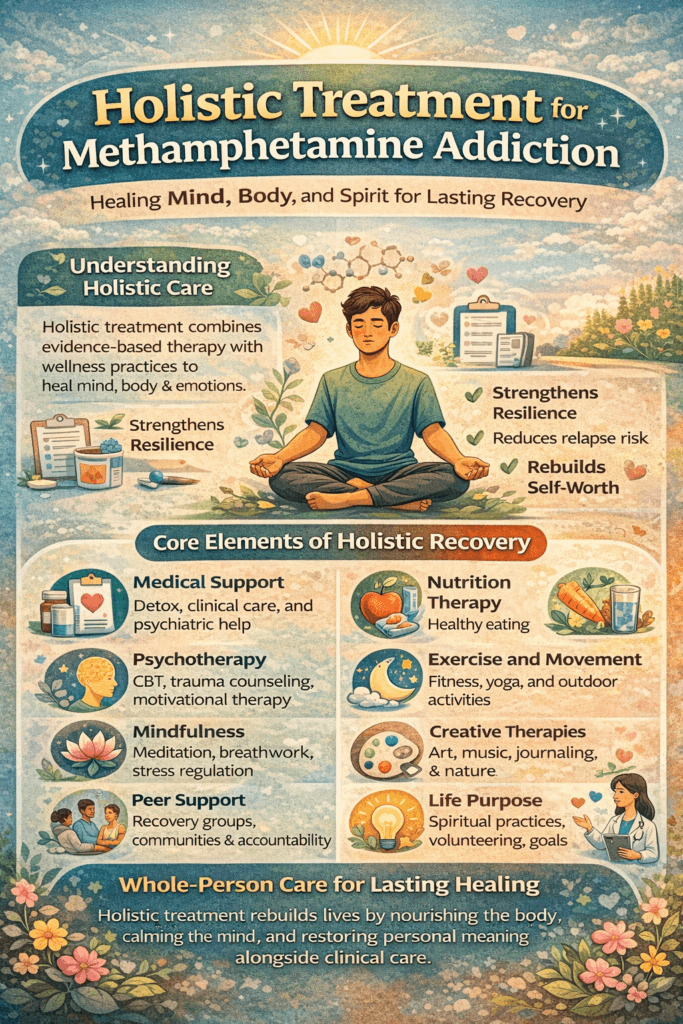
Methamphetamine addiction is one of the most physically and psychologically destructive substance use disorders. Beyond intense cravings, individuals often experience emotional instability, trauma, cognitive impairment, and loss of personal identity. Because meth addiction affects every dimension of a person’s life, effective recovery must address more than just stopping drug use. Holistic treatment focuses on healing the whole person — mind, body, emotions, and social connections — to support long-term recovery and restored well-being.
Understanding Holistic Addiction Treatment
Holistic treatment integrates evidence-based medical and psychological therapies with complementary healing practices. Rather than treating symptoms in isolation, holistic care recognizes that addiction is often rooted in trauma, emotional pain, stress dysregulation, and disrupted physical health. This whole-person approach strengthens resilience, reduces relapse risk, and rebuilds self-worth.
Core Elements of Holistic Meth Recovery
Medical and Clinical Support
Detoxification and medical monitoring manage withdrawal, sleep disruption, depression, and anxiety commonly associated with meth recovery. Clinical therapy provides safety and stabilization in early recovery.
Psychotherapy and Trauma Healing
Cognitive Behavioral Therapy (CBT), trauma-informed counseling, and motivational therapy help individuals understand triggers, rebuild thought patterns, and process emotional wounds that fuel substance use.
Mindfulness and Meditation
Meth addiction overstimulates the brain’s stress and reward systems. Mindfulness practices calm the nervous system, improve impulse control, and strengthen present-moment awareness.
Nutrition and Physical Healing
Meth use depletes nutrients and damages the body. Balanced meals, hydration, and vitamin restoration repair physical health, stabilize mood, and improve brain function.
Exercise and Body Movement
Physical activity naturally increases dopamine and serotonin, replacing the artificial stimulation once produced by meth. Exercise also reduces anxiety and improves sleep.
Sleep Restoration
Rebuilding healthy sleep patterns is essential after meth use. Sleep hygiene practices and relaxation techniques restore cognitive clarity and emotional stability.
Creative and Expressive Therapies
Art, music, journaling, and nature-based therapies help individuals express emotions that may feel difficult to verbalize, promoting emotional release and self-discovery.
Spiritual and Purpose-Based Practices
Many individuals find meaning through spiritual exploration, community service, or purpose-driven activities. A sense of meaning reduces emptiness and strengthens motivation for recovery.
Peer and Community Support
Support groups and recovery communities provide connection, accountability, and shared understanding — powerful antidotes to isolation and shame.
Why Holistic Treatment Works
Meth addiction changes brain chemistry, damages self-esteem, and disrupts emotional regulation. Holistic approaches repair these systems simultaneously. When physical health improves, emotional stability follows. When trauma is addressed, cravings decrease. When purpose is restored, relapse risk falls.
A Path Toward Whole-Person Recovery
Holistic treatment does not replace medical or psychological care — it enhances it. By integrating science-based therapy with wellness practices, individuals gain tools to rebuild their lives from every angle.
Recovery from methamphetamine addiction is challenging, but with comprehensive, compassionate, and whole-person care, lasting healing is absolutely possible.
Differences in Holistic vs. Conventional Meth Treatment
Two Approaches, One Goal: Lasting Recovery
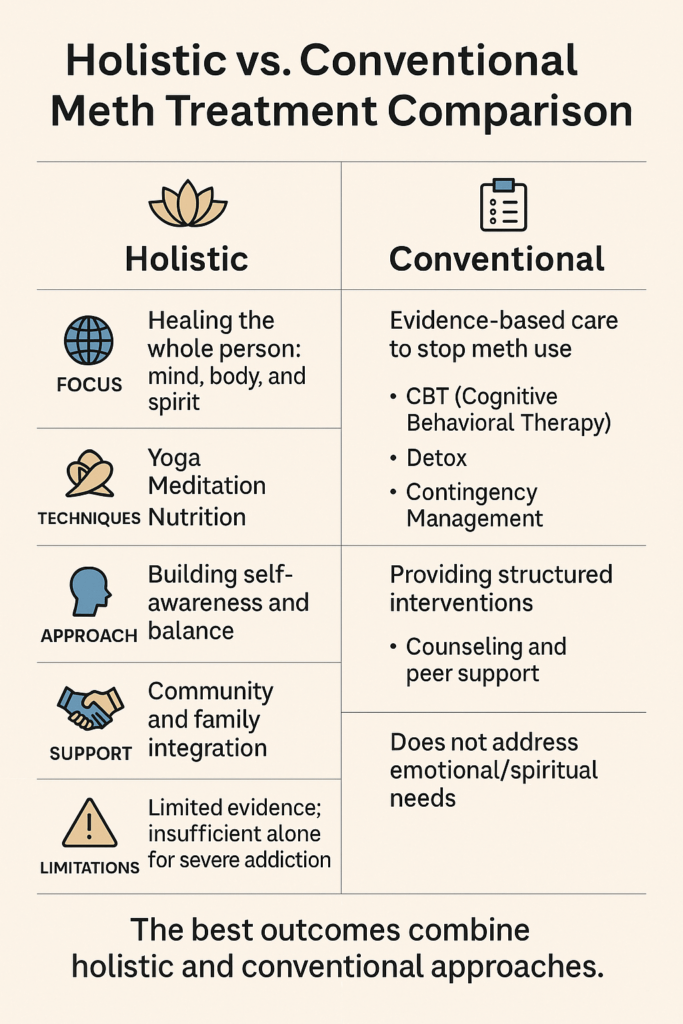
Methamphetamine addiction affects the brain, body, emotions, and behavior. Conventional treatment focuses primarily on medical stabilization and evidence-based psychotherapy, while holistic treatment expands care to include whole-person healing practices. Both approaches aim to stop substance use, but they differ in how recovery is supported.
Conventional Meth Treatment
Conventional treatment is grounded in clinical and medical science. It typically includes:
Medical detoxification to manage withdrawal symptoms
Behavioral therapies such as Cognitive Behavioral Therapy (CBT) and Contingency Management
Psychiatric care for co-occurring disorders like depression or anxiety
Medication management when appropriate
Structured inpatient or outpatient programs
Relapse-prevention planning
This approach focuses on stabilizing the individual, reducing cravings, and changing harmful behaviors using evidence-based clinical methods.
Holistic Meth Treatment
Holistic treatment includes conventional therapies but adds complementary practices that heal the whole person. It commonly includes:
Mindfulness and meditation for emotional regulation
Nutrition therapy to repair physical health
Exercise and movement to restore natural dopamine balance
Creative therapies like art or music for emotional expression
Yoga, breathwork, or nature therapy to reduce stress
Spiritual or purpose-based exploration
Community-based connection and peer support
This approach emphasizes balance, self-awareness, and rebuilding meaning in life alongside sobriety.
Key Differences at a Glance
Focus
Conventional: Symptom reduction and behavior change
Holistic: Whole-person healing and emotional restoration
Primary Tools
Conventional: Medical care and psychotherapy
Holistic: Wellness practices integrated with clinical care
Recovery Goal
Conventional: Stop substance use and prevent relapse
Holistic: Build a balanced, fulfilling life that supports sobriety
Emotional Healing
Conventional: Addresses mental health disorders
Holistic: Also targets trauma, stress, and self-worth
Long-Term Resilience
Conventional: Teaches coping skills
Holistic: Builds lifestyle and purpose-based stability
The Most Effective Approach
Research increasingly supports integrated treatment — combining medical and psychological care with holistic wellness strategies. This blended model improves engagement, emotional healing, and long-term recovery outcomes.
Final Insight
Meth recovery is not just about quitting a drug — it is about rebuilding a life. When conventional science-based treatment and holistic healing work together, individuals gain the strength, clarity, and purpose needed for lasting recovery.
Holistic Self-Management Strategies for Methamphetamine Addiction
Rebuilding the Whole Person in Daily Recovery
Methamphetamine addiction disrupts brain chemistry, emotional stability, physical health, and personal identity. Holistic self-management focuses on restoring balance in the mind, body, and spirit while strengthening relapse-prevention skills. These daily practices support long-term recovery alongside clinical care.
1. Restore Physical Health
Meth use severely depletes the body. Focus on:
Nutritious meals rich in protein, vitamins, and minerals
Hydration to repair organ function
Regular medical checkups
Sleep hygiene to reset the brain and hormone systems
Physical restoration reduces cravings and stabilizes mood.
2. Regulate the Nervous System
Meth overstimulates the brain’s stress response. Calm it through:
Mindfulness meditation
Deep-breathing exercises
Yoga or stretching
Nature exposure
These practices reduce anxiety and impulsivity.
3. Rebuild Brain Chemistry Naturally
Healthy dopamine balance returns through:
Daily physical exercise
Creative hobbies (art, music, writing)
Listening to calming music
Small goal achievement
This replaces artificial drug-induced reward cycles.
4. Manage Emotional Triggers
Track emotions that lead to cravings. Use:
Journaling
Cognitive reframing
Talking with supportive peers
Therapy or recovery groups
Awareness prevents relapse autopilot reactions.
5. Create Structured Daily Routines
Meth addiction thrives in chaos. Build:
Consistent wake and sleep times
Scheduled meals
Planned activities
Recovery meetings
Structure protects against impulsive use.
6. Strengthen Self-Worth
Addiction erodes identity. Restore it by:
Practicing self-compassion
Affirmations and gratitude lists
Service or volunteer work
Setting achievable goals
Self-respect reduces self-destructive urges.
7. Build Healthy Social Connection
Isolation fuels relapse. Seek:
Peer recovery groups
Community activities
Supportive friendships
Family reconnection when safe
Connection replaces loneliness triggers.
8. Explore Meaning and Purpose
Long-term recovery needs motivation. Try:
Spiritual practices
Life-purpose coaching
Vision boards
Personal growth reading
Purpose sustains commitment.
9. Set Environmental Boundaries
Remove high-risk cues:
Avoid former drug-using contacts
Change daily routes if needed
Limit late-night isolation
Create a calming home space
Environmental design supports sobriety.
10. Celebrate Progress
Track growth rather than perfection. Recovery builds confidence through small wins.
Whole-Person Recovery Works
Holistic self-management turns daily life into a healing environment. When individuals nourish the body, calm the mind, rebuild identity, and stay connected to support, long-term meth recovery becomes achievable and sustainable.
Holistic Family Support Strategies for Methamphetamine Addiction
Healing the Family While Supporting Recovery
Methamphetamine addiction impacts the entire family system. Loved ones often experience fear, mistrust, emotional exhaustion, and trauma. Holistic family support focuses on restoring emotional safety, strengthening communication, and promoting healing for everyone — not only the person in recovery.
1. Educate the Family About Addiction
Understanding meth addiction as a brain and trauma-related disorder reduces blame and stigma. Learning about withdrawal, cravings, and recovery expectations helps families respond with knowledge instead of fear.
2. Establish Healthy Boundaries
Boundaries protect emotional and physical safety. Clearly define unacceptable behaviors, financial limits, and household expectations. Boundaries encourage accountability while preventing enabling.
3. Practice Calm, Open Communication
Use respectful “I” statements. Listen without immediate judgment. Schedule regular family check-ins to discuss recovery progress and concerns.
4. Support Whole-Person Healing
Encourage participation in wellness activities such as exercise, meditation, creative outlets, and healthy meal planning. Joining in these activities strengthens family connection and reinforces recovery habits.
5. Attend Family or Group Therapy
Professional family counseling addresses trust repair, trauma healing, and communication patterns. Support groups like Nar-Anon or Al-Anon provide shared understanding.
6. Create a Healing Home Environment
Reduce chaos and stress at home. Maintain consistent routines, peaceful spaces, and predictable expectations that help stabilize early recovery.
7. Promote Emotional Regulation
Teach and model coping skills such as deep breathing, grounding, and mindfulness to handle conflict or stress constructively.
8. Encourage Purpose and Responsibility
Support employment, volunteering, or skill-building activities that rebuild confidence and independence.
9. Prioritize Family Self-Care
Family members need rest, hobbies, social connections, and, if needed, therapy. Strong families support recovery better.
10. Celebrate Progress Together
Recognize effort and honesty rather than perfection. Small victories build long-term motivation.
Family Healing Strengthens Recovery
Holistic family support transforms recovery from an individual struggle into a shared healing journey. When families heal emotionally, rebuild trust, and create balanced environments, long-term meth recovery becomes more stable and sustainable.
Holistic Community Resource Strategies for Methamphetamine Addiction
Recovery Thrives in Connected Communities
Methamphetamine addiction often isolates individuals from healthy relationships and support systems. Holistic community resources provide connection, accountability, healing opportunities, and purpose-based engagement, strengthening long-term recovery.
1. Recovery Support Groups
Community-based peer groups provide shared understanding and accountability. Options include:
Narcotics Anonymous (NA)
SMART Recovery
Meth-specific recovery meetings
Faith-based recovery programs
These groups reduce isolation and offer daily encouragement.
2. Wellness and Mind-Body Programs
Community centers often offer:
Yoga and meditation classes
Fitness groups
Mindfulness workshops
Nature hiking groups
These activities calm stress systems and rebuild physical health.
3. Community Counseling Services
Local mental health clinics provide:
Affordable individual therapy
Group counseling
Trauma-informed care
Family therapy
Sliding-scale options improve access.
4. Employment and Skill-Building Programs
Job training centers, workforce programs, and community colleges help individuals rebuild independence and confidence.
5. Creative and Expressive Spaces
Art studios, music programs, and writing workshops allow emotional expression and identity rebuilding.
6. Volunteer and Service Opportunities
Helping others fosters purpose, connection, and self-esteem — key factors in relapse prevention.
7. Recovery-Friendly Social Spaces
Recovery cafés, sober events, and peer community centers provide safe social environments free of substance triggers.
8. Housing and Transitional Support
Sober living homes and supportive housing programs offer stability during early recovery.
9. Health and Nutrition Services
Community food programs, wellness clinics, and nutrition education support physical restoration.
10. Crisis and Outreach Services
Hotlines, outreach teams, and peer recovery coaches offer immediate support during high-risk moments.
Community Connection Builds Lasting Recovery
Holistic community strategies replace isolation with a sense of belonging. When individuals access wellness, purpose, creativity, and peer connection, recovery becomes sustainable and fulfilling.
Ethical Dilemmas in Holistic Treatment for Methamphetamine Addiction
Balancing Whole-Person Healing With Evidence-Based Care
Holistic treatment has become increasingly popular in methamphetamine recovery because it addresses mind, body, and emotional healing. However, integrating holistic practices into addiction care also raises important ethical questions. Providers, families, and recovery programs must balance compassionate whole-person care with medical responsibility, scientific integrity, and client safety.
1. Evidence vs. Alternative Practices
Not all holistic therapies have strong scientific evidence. Ethical dilemmas arise when programs offer unproven treatments as primary care rather than complementary support. Clients must receive evidence-based medical and psychological treatment alongside holistic services — not instead of them.
Ethical responsibility: Do not replace proven clinical care with alternative practices alone.
2. Informed Consent
Clients must understand what holistic therapies can and cannot do. Some individuals may believe yoga, meditation, or supplements alone will “cure” addiction. Ethical care requires a clear explanation of benefits, limitations, and realistic expectations.
Ethical responsibility: Ensure transparency and avoid misleading claims.
3. Medical Safety
Meth recovery involves depression, psychosis risk, cardiovascular strain, and sleep disruption. Ethical concerns arise if holistic programs lack medical oversight or ignore serious psychiatric symptoms.
Ethical responsibility: Monitor medical and mental health risks and refer when needed.
4. Financial Exploitation
Some holistic rehab programs charge high fees for luxury wellness services with little clinical oversight. This raises ethical issues of profiting from vulnerable individuals seeking help.
Ethical responsibility: Provide fair pricing and clinically appropriate care.
5. Cultural and Spiritual Boundaries
Holistic programs may include spiritual practices. Ethical dilemmas arise when programs impose their beliefs on clients or fail to respect cultural differences.
Ethical responsibility: Offer optional, client-chosen spiritual practices only.
6. Scope of Practice
Yoga instructors, nutrition coaches, or wellness staff may unintentionally provide mental health or medical advice beyond their qualifications.
Ethical responsibility: Ensure all practitioners work within licensed professional boundaries.
7. Confidentiality in Group Settings
Holistic recovery programs often use group sharing or ceremonies. Protecting privacy and confidentiality remains essential.
Ethical responsibility: Maintain confidentiality standards in all settings.
8. False Hope vs. Empowerment
Holistic messaging sometimes promises “total transformation.” While hope is important, exaggerating outcomes can harm trust if relapse occurs.
Ethical responsibility: Promote hope grounded in realistic recovery expectations.
9. Client Autonomy
Ethical care respects a client’s right to choose treatment paths. Pressure to participate in certain holistic activities can violate autonomy.
Ethical responsibility: Offer choices, not coercion.
10. Integration With Clinical Treatment
The greatest ethical challenge is ensuring holistic services enhance — not replace — medical and psychological treatment.
Ethical responsibility: Use holistic care as complementary support within integrated treatment plans.
Ethical Holistic Care Means Responsible Healing
Holistic treatment can be powerful when delivered ethically — with transparency, clinical collaboration, cultural respect, and client safety at the center. When wellness practices and science-based treatment work together, individuals receive care that is both compassionate and responsible.
Frequently Asked Questions
Here are some common questions:
1. What is holistic treatment for methamphetamine addiction?
Holistic treatment is a whole-person approach to recovery that addresses physical health, emotional well-being, mental health, and personal purpose. It combines evidence-based clinical care with complementary practices such as mindfulness, nutrition, exercise, creative therapies, and stress-reduction techniques to support long-term healing.
2. Does holistic treatment replace medical or clinical addiction treatment?
No. Ethical holistic treatment does not replace medical detox, psychotherapy, or psychiatric care. Instead, it enhances conventional treatment by supporting emotional regulation, physical restoration, and relapse-prevention skills.
3. Why is holistic care helpful for meth recovery?
Methamphetamine use damages brain chemistry, sleep patterns, emotional stability, and physical health. Holistic practices help restore natural dopamine balance, reduce stress hormones, improve sleep, rebuild nutrition, and strengthen self-awareness — all of which reduce relapse risk.
4. What holistic therapies are commonly used?
Common holistic therapies include:
Mindfulness and meditation
Yoga or stretching
Exercise and movement therapy
Nutrition and hydration support
Creative arts or journaling
Nature-based activities
Breathwork and relaxation training
These are used alongside clinical therapy.
5. Is holistic treatment scientifically supported?
Many holistic components — such as exercise, mindfulness, nutrition therapy, and trauma-informed care — have strong research support for improving addiction recovery outcomes. However, they work best when integrated with evidence-based clinical treatment.
6. Can holistic treatment help with meth cravings?
Yes. Practices like meditation, breathwork, exercise, and emotional-regulation training calm the nervous system and reduce stress-triggered cravings. They also rebuild natural reward pathways damaged by meth use.
7. How long does holistic meth recovery take?
Recovery timelines vary. Early physical stabilization may take weeks, while emotional and brain healing can take months. Holistic practices support ongoing healing throughout each recovery stage.
8. Is holistic treatment suitable for everyone?
Most people benefit from holistic support, but treatment plans should be individualized. Some may need higher levels of medical or psychiatric care before participating in certain wellness activities.
9. Can families be involved in holistic treatment?
Yes. Many holistic programs include family therapy, mindfulness practice, communication workshops, and wellness activities that rebuild family trust and emotional stability.
10. What if relapse happens during holistic recovery?
Relapse does not mean failure. Holistic treatment teaches self-compassion, accountability, and coping strategies to help individuals return to recovery quickly and learn from setbacks.
11. Are holistic rehab programs expensive?
Costs vary. Some luxury programs charge high fees, while community wellness centers, outpatient clinics, and recovery groups offer affordable or sliding-scale holistic services.
12. What is the biggest benefit of holistic meth treatment?
Holistic treatment helps individuals not only stop using meth, but also rebuild a healthy, meaningful, and balanced life — which is the strongest protection against relapse.
Conclusion
Holistic treatment does not replace medical or psychological care — it strengthens it. Methamphetamine addiction can leave lasting damage to physical health, emotional regulation, and self-worth, but whole-person healing practices restore these systems over time. When clinical therapy, healthy lifestyle habits, emotional growth, and supportive relationships work together, individuals gain powerful tools to prevent relapse and sustain recovery. Through holistic treatment, recovery becomes more than quitting meth — it becomes rebuilding a balanced, purposeful, and healthy life.
Video: The Missing Piece in Meth Recovery #addictionrecovery #treatment