Certain drugs carry a significantly higher risk of triggering psychosis, a serious mental health condition marked by hallucinations, paranoia, delusions, and disorganized thinking. Substances such as methamphetamine, cocaine, non-prescribed stimulants, and high-potency cannabis are strongly linked to substance-induced psychosis, particularly when use is frequent, begins at a young age, or occurs in individuals with underlying mental health vulnerabilities. Because these substances directly disrupt brain systems involved in perception and reality testing, even short-term use can result in severe psychological effects, making awareness and prevention critically important.
Drug With the Highest Risk of Psychosis
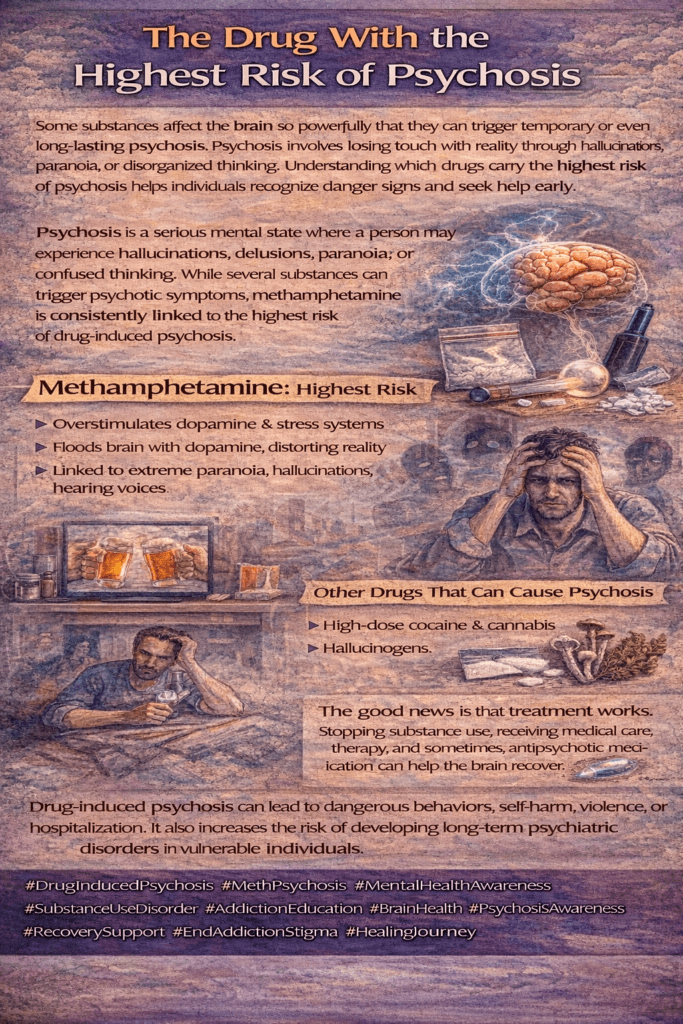
Psychosis is a serious mental health condition marked by hallucinations, delusions, disorganized thinking, and a loss of contact with reality. While psychosis can occur in primary psychiatric disorders, it can also be substance-induced, meaning it is triggered or worsened by drug use. Among commonly misused substances, high-potency cannabis and stimulant drugs—especially methamphetamine—are most strongly associated with the highest risk of psychosis.
Methamphetamine carries one of the highest and most well-documented risks. It powerfully overstimulates dopamine pathways in the brain, which are directly involved in perception, reward, and reality testing. Repeated or heavy meth use can lead to paranoia, auditory hallucinations, violent agitation, and delusional beliefs. In some individuals, psychotic symptoms persist long after drug use stops, resembling chronic psychotic disorders.
High-potency cannabis, particularly products with elevated THC levels, is also strongly linked to psychosis risk. Research shows that frequent use—especially daily use or use beginning in adolescence—significantly increases the likelihood of experiencing psychotic symptoms. Cannabis does not affect everyone the same way, but individuals with a personal or family history of psychosis are especially vulnerable. In these cases, cannabis can act as a trigger for an earlier or more severe onset of psychotic illness.
Other substances, including cocaine, prescription stimulants taken non-medically, hallucinogens, and certain sedatives, can also induce psychosis, particularly at high doses or when mixed with other drugs. Alcohol withdrawal, rather than intoxication itself, can also cause severe psychotic symptoms in dependent individuals.
What makes substance-induced psychosis especially concerning is that it is often misinterpreted as temporary or harmless, delaying treatment. Early recognition, reducing or stopping substance use, and accessing mental health care are critical steps in preventing long-term consequences.
Understanding which drugs carry the highest risk of psychosis helps shift prevention efforts toward education, early intervention, and harm reduction. Substance-related psychosis is a serious medical condition—not a moral failure—and timely support can make a lasting difference in outcomes.
Self-Management Strategies to Avoid Drugs With the Highest Risk of Psychosis
Certain substances—most notably high-potency cannabis, methamphetamine, cocaine, and other stimulants—carry a significantly increased risk of triggering psychosis. Psychosis can involve hallucinations, paranoia, delusions, and disorganized thinking, and in some cases, these symptoms can persist long after substance use stops. Self-management strategies are essential tools for reducing exposure to these high-risk drugs and protecting long-term mental health.
A critical first step is understanding personal risk factors. Individuals with a history of anxiety, depression, trauma, or a personal or family history of psychosis are especially vulnerable. Awareness of this risk can guide safer decisions and reinforce the importance of avoiding substances known to affect dopamine and perception.
Avoiding high-risk substances entirely is the most effective preventive strategy. This includes methamphetamine, cocaine, non-prescribed stimulants, and high-THC cannabis products. For individuals who already use substances, gradual reduction with professional guidance may be safer than abrupt changes, particularly when dependence is present.
Stress management plays a major protective role. Chronic stress increases vulnerability to both substance use and psychosis. Healthy coping strategies—such as regular exercise, mindfulness practices, adequate sleep, structured routines, and creative outlets—reduce reliance on substances to regulate emotions.
Another key strategy is monitoring early warning signs. Changes in sleep, increased paranoia, heightened anxiety, racing thoughts, or perceptual disturbances may signal increased risk. Recognizing these signs early and responding by reducing substance exposure and seeking support can prevent escalation.
Maintaining strong social support is also essential. Isolation increases the likelihood of risky substance use and delays intervention. Staying connected to trusted family members, friends, or peer-support networks provides accountability and early feedback when behavior or thinking begins to change.
Finally, seeking professional support early is a powerful form of self-management. Primary care providers, mental health clinicians, and substance-use counselors can help assess risk, provide education, and support safer choices. Early intervention significantly lowers the risk of long-term psychotic disorders.
Self-management is about prevention through awareness, structure, and support. By understanding risks, avoiding high-impact substances, managing stress, monitoring mental health changes, and seeking help early, individuals can greatly reduce the likelihood of drug-induced psychosis and protect their long-term well-being.
Family Support Strategies to Avoid Drugs With the Highest Risk of Psychosis
Drugs with a high risk of triggering psychosis—such as methamphetamine, cocaine, non-prescribed stimulants, and high-potency cannabis—pose serious threats to mental health, particularly for individuals with underlying vulnerabilities. Families play a crucial protective role in reducing exposure to these substances and identifying early warning signs before long-term harm occurs.
One of the most important family strategies is open, informed communication. Families that talk honestly about drugs and mental health—without judgment or fear-based messaging—create safe spaces for discussion. Conversations should include clear information about how certain substances can trigger paranoia, hallucinations, or psychotic episodes, especially in adolescents and young adults whose brains are still developing.
Recognizing early warning signs is another critical responsibility. Families are often the first to notice changes such as sleep disruption, social withdrawal, increased suspicion, unusual beliefs, mood instability, or changes in speech and thinking. Addressing these signs early—rather than dismissing them as “phases”—can prevent escalation into full psychotic episodes.
Families also reduce risk by setting clear expectations and boundaries around substance use. Consistent rules, supervision when appropriate, and shared values around mental health protection help establish structure. Boundaries are most effective when paired with warmth, support, and explanation rather than punishment.
Modeling healthy coping behaviors strongly influences prevention. When families demonstrate constructive ways to manage stress—such as exercise, communication, problem-solving, and seeking professional help—they reduce the likelihood that substances will be used as tools for emotional regulation.
Equally important is the support for early professional intervention. Families should feel empowered to involve healthcare providers, mental health professionals, or substance-use specialists at the first signs of concern. Early evaluation and treatment significantly lowers the risk that substance-induced psychosis will become persistent or recurrent.
Family support strategies are not about control—they are about protection, connection, and early action. By fostering communication, monitoring changes, setting healthy boundaries, modeling positive coping, and seeking help early, families create a powerful defense against drugs that carry the highest risk of psychosis and help safeguard long-term mental well-being.
Community Resource Strategies to Avoid Drugs With the Highest Risk of Psychosis
Drugs associated with a high risk of psychosis—such as methamphetamine, cocaine, non-prescribed stimulants, and high-potency cannabis—pose serious challenges not only to individuals and families, but to entire communities. Community resources are essential for prevention because they shape access to care, social norms, and early intervention systems that can stop substance-induced psychosis before it becomes chronic.
One of the most effective strategies is community-based education and awareness. Schools, colleges, workplaces, and community organizations can provide accurate information about how certain drugs affect brain chemistry and increase the risk of hallucinations, paranoia, and long-term psychotic disorders. Education that emphasizes mental health—not fear or punishment—helps people make informed decisions and reduces stigma around seeking help.
Early intervention and mental health services are critical community protections. Community clinics, crisis centers, and early-psychosis programs allow individuals to receive assessment and support at the first signs of symptoms. Early treatment has been shown to significantly reduce the severity and duration of psychosis, especially when substance use is addressed promptly.
Communities also play a key role in ensuring access to substance-use treatment and harm-reduction services. Counseling, peer-support programs, outpatient treatment, and recovery-oriented services help individuals reduce or stop use of high-risk substances. When these services are affordable, local, and culturally responsive, people are more likely to engage before severe symptoms develop.
Policy and environmental strategies further strengthen prevention. Responsible prescribing practices, monitoring of stimulant medications, regulation of high-potency cannabis products, and community drug-take-back programs all reduce exposure to substances most strongly linked to psychosis. These approaches protect public health while supporting early help rather than punishment.
Finally, strong community connections and recovery-friendly environments act as powerful protective factors. Youth programs, support groups, employment initiatives, and social-connection spaces reduce isolation—a major risk factor for both substance use and psychosis. Communities that foster belonging and purpose reduce reliance on substances as coping tools.
Preventing drug-induced psychosis is a shared responsibility. By investing in education, early mental health intervention, accessible treatment, protective policies, and strong social networks, communities can significantly reduce exposure to high-risk drugs and protect long-term mental well-being for individuals and families alike.
Frequently Asked Questions
Here are some common questions:
What is drug-induced psychosis?
Drug-induced psychosis occurs when substance use triggers hallucinations, delusions, paranoia, or disorganized thinking. Symptoms can happen during intoxication, withdrawal, or after repeated use.
Which drugs have the highest risk of causing psychosis?
Stimulants such as methamphetamine and cocaine, high-THC cannabis, hallucinogens, synthetic drugs, and some prescription medications carry the highest risk.
Can cannabis really cause psychosis?
Yes. High-potency or frequent cannabis use, especially in adolescents or people with genetic vulnerability, is linked to psychotic symptoms and earlier onset of schizophrenia-spectrum disorders.
Why do stimulants increase psychosis risk?
Stimulants sharply raise dopamine levels in the brain. Excess dopamine disrupts perception and reality testing, leading to paranoia and hallucinations.
Is drug-induced psychosis always temporary?
No. Some cases resolve after stopping the drug, but repeated use can lead to long-lasting or permanent psychotic disorders.
Who is most at risk for substance-induced psychosis?
People with a family history of psychosis, early substance use, trauma exposure, sleep deprivation, high stress, or co-occurring mental health conditions face a higher risk.
Can prescription drugs cause psychosis?
Yes. Prescription stimulants, steroids, and high-dose opioids can trigger psychosis when misused or taken at excessive doses.
What are the early warning signs of drug-induced psychosis?
Common signs include intense paranoia, hallucinations, confusion, agitation, disorganized speech, insomnia, and sudden behavior changes.
Does repeated drug use increase psychosis risk?
Yes. Risk increases with higher doses, greater potency, more frequent use, and longer exposure duration.
How is drug-induced psychosis treated?
Treatment often includes stopping substance use, medical detox, antipsychotic medication, therapy, and ongoing addiction treatment.
Can psychosis return after stopping drugs?
Yes. Some individuals experience recurring episodes even after abstinence, especially if there is an underlying vulnerability.
Why is early intervention important?
Early treatment improves recovery outcomes, reduces long-term brain changes, and lowers the risk of chronic psychotic disorders.
Conclusion
Preventing psychosis related to high-risk drugs requires early awareness, informed decision-making, and coordinated support across individual, family, and community levels. Avoiding substances most strongly associated with psychosis, recognizing early warning signs, and accessing mental health and substance-use services promptly can significantly reduce long-term harm. When prevention strategies emphasize education, early intervention, and compassionate support rather than stigma or punishment, individuals are better protected from drug-induced psychosis and its lasting impact on mental health and quality of life.
Video: Paranoia, Hallucinations, Shattered Thoughts #psychosisawareness #substanceabuse #recovery