The reality for many gifted individuals isn’t always the storybook version you might expect. While being highly intelligent or talented brings plenty of cool advantages, there’s a tougher side to this coin that doesn’t get talked about nearly enough. Growing up as a high achiever usually comes with big expectations, some internal, some from family, teachers, and society in general. Sometimes, these pressures end up creating emotional struggles and even fueling issues like substance use or addiction. I want to paint a clear and honest picture of what can really happen and how to spot the signs early on.
The Hidden Struggles of Gifted High Achievers
Gifted kids and adults often get described as lucky or privileged, but there’s a lot more happening beneath the surface. People with above-average intelligence or talents tend to stand out. While that earns praise, it can also bring a load of pressure. The drive to achieve and the fear of not living up to their own or others’ expectations can become a heavy weight.
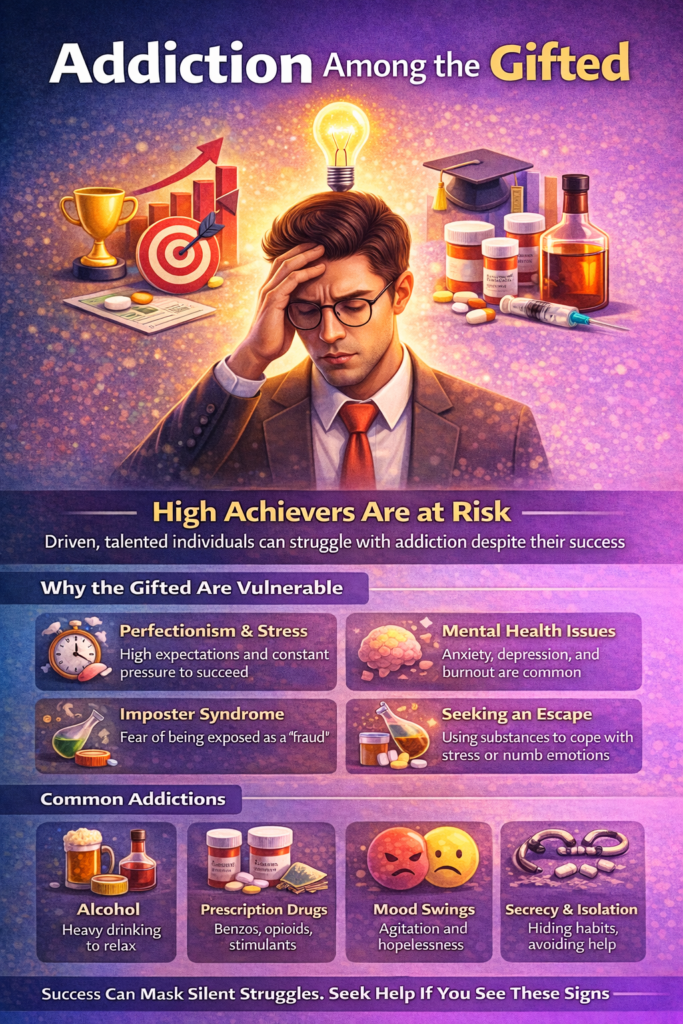
High achievers are sometimes perfectionists, always aiming for the next level, or scared to make mistakes. This drive can create a shaky foundation for mental health issues like anxiety, depression, or a constant sense of never being “enough.” When those negative feelings go unchecked, some look for an escape. That’s where addiction can start to slide in, often unnoticed.
The link between giftedness and addiction is backed by studies. One example comes from research published in the journal Substance Abuse: Research and Treatment. It found that gifted adolescents might use substances to cope with stress, social challenges, or emotional overload. This pattern doesn’t mean every gifted kid is fated to struggle, but it does show the importance of support and awareness.
What Makes Gifted Individuals Vulnerable?
The challenges high achievers face aren’t always visible from the outside. Here are some common ways these pressures show up in real life:
- Social Isolation: Feeling misunderstood or out of sync with peers can leave gifted people lonely or alienated. It’s easy to feel like nobody “gets” you, especially if you think differently or have quirky interests.
- Perfectionism: The fear of letting someone down, or of making even a tiny mistake, can leave a person feeling trapped or chronically anxious. Perfectionism often means people set impossible standards for themselves.
- Imposter Syndrome: Even with success, some high achievers feel like a fraud, worrying that any moment now someone will “find them out.” The sense that personal achievements are just lucky accidents can gnaw away at self-worth.
- Emotional Intensity: Gifted individuals often experience emotions more intensely. Joy is higher, but so is sadness or frustration. Without a way to process these feelings, some try to dull the pain with substances or risky behaviors.
This stuff adds up, and for some, alcohol, drugs, or behaviors like gaming or social media become an easy escape from pressure, loneliness, or emotional turbulence. When stress relief turns into a coping tool, the line to addiction gets very thin.
On top of these, social expectations can make things worse. High achievers are often expected to be role models or lead the way, which means any struggle feels like a bigger failure. Parents and teachers may unintentionally pile on pressure, even with good intentions. For teens, the weight of college admissions, scholarships, or performance can strip the joy out of learning and turn life into a constant competition. For adults, workplace responsibilities, leadership roles, or family demands can all stack up. And for both, there’s sometimes this unspoken rule that being gifted means “having it all together” all the time.
Without outlets for creativity, connection, or stress relief, these internal and external pressures can push someone toward risky coping mechanisms. Small habits, like excessive internet use or drinking on weekends, might start out as just “blowing off steam,” but easily spiral into something more serious over time.
Signs of Struggle: What to Watch For
It can be tricky to spot when a gifted person is heading down a rough path. These signs might help families, educators, and even high achievers themselves recognize something’s off before things spiral:
- Sudden drop in academic performance or workplace productivity.
- Withdrawal from friends or activities that once brought joy.
- Unusual irritability, mood swings, or anger over minor things.
- Physical changes like fatigue or neglecting appearance.
- Riskier behavior, secretiveness, or lying to cover up actions.
It’s not always about grades slipping. Sometimes these changes are really subtle. Someone who was always social might become quiet and withdrawn, or a perfectionist might suddenly seem to give up on goals they once obsessed over. When you spot these shifts, honesty and gentle questions from people who care can help them open up. Open-door conversations and listening without judgment go a long way toward helping someone feel seen and heard.
Practical Steps for Preventing or Managing Addiction
Tackling these challenges before they grow is really important. These strategies have worked for me and many others I’ve worked with in counseling:
- Build a Support Network: Encourage open connections not only with family but also with teachers, coaches, peers, and support groups. Support networks help manage the “pressure cooker” feeling and provide safe spaces to vent.
- Promote Balance: Finding fulfillment beyond achievement, such as through sports, art, or hobbies that aren’t centered on competing or winning, creates breathing room and allows gifted individuals to recharge.
- Teach Coping Skills: Mindfulness, guided breathing, or simple time-outs are underrated tools for managing stress. If possible, work with therapists trained to help high achievers steer through unique stressors.
- Mix Up the Focus: Praising effort, resilience, and creativity over just results or high scores changes the mindset from “never enough” to “personal growth matters.”
- Watch for Warning Signs: Training family and educators to spot early red flags makes it easier to act before things get overwhelming.
If things are already feeling out of control, getting help sooner rather than later makes a big difference. Reaching out to a school counselor, a mental health professional, or an addiction specialist can put someone on the path to recovery and healing.
Common Myths About Giftedness and Addiction
Some old-school myths around high achievers and substance use keep people from spotting warning signs or getting real help. Here are a few I hear all the time:
- “Gifted kids are too smart to get involved in risky stuff.” Intelligence doesn’t equal immunity. All sorts of people use substances as a way to cope with stress or difficult emotions.
- “If grades are good, everything must be fine.” Academic or career success can mask inner trouble. Some people pour themselves into achievement to avoid facing what’s bothering them.
- “Addiction only hits people from troubled backgrounds.” Addiction affects people from every walk of life and every ability level.
Busting these myths makes it safer for gifted and high-achieving people to ask for support rather than hiding what they’re struggling with.
Personal Experience: Why This Topic Matters to Me
As someone who has worked with both gifted adolescents and adults facing mental health and addiction issues, I’ve seen the toll it takes up close. There’s one story that stays with me. A teenager who won national math contests year after year turned to alcohol in college to deal with isolation and pressure to never fail. Once their teachers and family understood what was happening, support and counseling helped break the spiral. Getting past the myth that “smart kids have it easy” turned out to be the most important step.
You never know what someone is carrying on the inside, even if everything looks perfect on the outside. That’s why paying attention, being open, and stepping in early makes a real difference in someone’s life.
Frequently Asked Questions
Here are a few common questions I get from families, teachers, and gifted folks themselves:
Question: Is being highly gifted or talented directly linked to a higher risk of addiction?
Answer: Not directly. Gifted individuals often deal with pressures and emotional intensity that can increase the risk of using substances or behaviors as coping tools, but support systems and self-awareness can reduce that risk.
Question: What’s the best way to support a gifted person who might be struggling?
Answer: Listen without judgment. Create safe spaces to talk about feelings and stressors. Encouraging professional help and letting them know they’re valued outside of achievements is huge.
Question: Are there specific programs for gifted individuals dealing with addiction?
Answer: Some counseling centers and therapists specialize in working with gifted and twice exceptional individuals. It’s worth checking for local or online resources that tailor support to these needs.
Resources and Next Steps
If you or someone you know might be facing these challenges, you’re not alone. There are plenty of organizations, local counseling centers, and online communities focused on supporting gifted people through tough times, especially when it comes to mental health or addiction concerns.
- SENG (Supporting Emotional Needs of the Gifted): Great information for families and professionals.
- NAMI (National Alliance on Mental Illness): Offers support and crisis help for mental health and substance use challenges.
- SAMHSA Treatment Locator: For finding local addiction treatment resources.
Small steps start big changes. Asking for help or learning more about these unique struggles can be one of the bravest things anyone does. Realizing there’s a path forward and that gifted people deserve just as much empathy and support as anyone else makes all the difference. Nobody should have to go it alone, gifted or not.
Video: Brilliant Minds Break First #Psychology #AddictionEducation