Relationships affected by addiction often involve complex emotional challenges and patterns of communication that can be confusing and harmful. One behavior that may appear in these relationships is ghostlighting, a combination of ghosting and gaslighting. Ghostlighting occurs when a person suddenly disappears from communication and later returns while denying the impact of their absence or making the other person question their reactions. In addiction relationships, this behavior can be linked to cycles of avoidance, denial, and emotional instability that often accompany substance use. As a result, partners, family members, and loved ones may experience confusion, anxiety, and self-doubt while trying to support someone struggling with addiction.
Ghostlighting in Addiction Relationships: When Disappearing and Denial Collide
Addiction often affects more than the person struggling with substance use—it deeply impacts relationships with partners, family members, and close friends. In many addiction-related relationships, communication patterns can become confusing, painful, and emotionally damaging. One pattern that has gained attention in recent discussions about unhealthy relationship dynamics is ghostlighting.
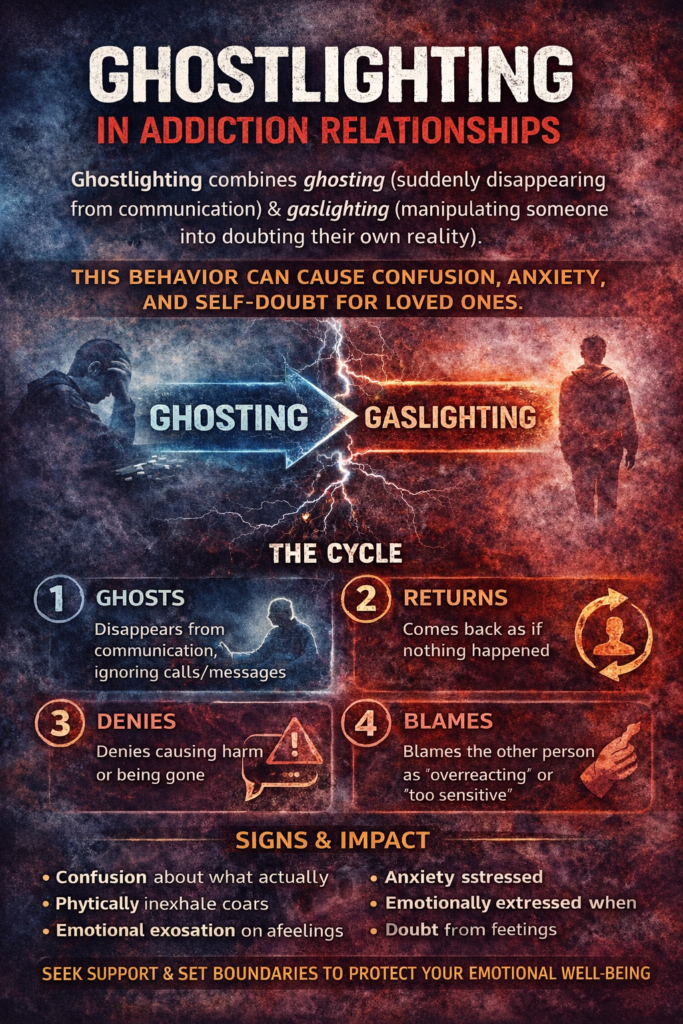
Ghostlighting is a term that blends two harmful behaviors: ghosting (suddenly cutting off communication) and gaslighting (manipulating someone into doubting their own reality). In relationships where addiction is present, ghostlighting can create emotional instability, confusion, and long-term trust issues for loved ones trying to support the person struggling with substance use.
What Is Ghostlighting?
Ghostlighting occurs when a person disappears from communication or responsibility and later returns while denying or minimizing what happened. When they reappear, they may act as though nothing happened or accuse the other person of overreacting.
In addiction-related relationships, ghostlighting may look like:
- Ignoring calls or messages for days or weeks during substance use periods
- Suddenly reappearing without explanation
- Denying the absence or blaming the other person for being “too dramatic.”
- Minimizing the emotional impact on partners or family members
This pattern can make loved ones question their own experiences and feelings, which is a hallmark of emotionally manipulative communication.
Why Ghostlighting Often Appears in Addiction Relationships
Addiction can involve cycles of secrecy, avoidance, and denial. These behaviors sometimes contribute to ghostlighting dynamics.
Several factors may contribute:
Avoidance of accountability
People struggling with addiction may avoid conversations about their behavior, responsibilities, or substance use.
Shame and guilt
Feelings of shame may cause someone to withdraw or disappear rather than face difficult conversations.
Denial mechanisms
Addiction often involves psychological denial, where the person minimizes or refuses to acknowledge the consequences of their actions.
Emotional instability
Substance use can affect mood regulation, communication, and impulse control, leading to unpredictable relationship patterns.
While these factors may help explain the behavior, they do not justify emotional harm to others.
Emotional Impact on Partners and Families
Ghostlighting can create serious emotional consequences for the people on the receiving end. Loved ones may experience:
- confusion about what is real or exaggerated
- anxiety while waiting for communication
- loss of trust
- emotional exhaustion
- self-doubt and lowered self-esteem
Over time, these experiences may contribute to codependency patterns, where a person becomes overly focused on trying to manage or rescue the individual struggling with addiction.
Recognizing the Signs
Understanding the signs of ghostlighting can help individuals protect their emotional well-being. Warning signs may include:
- Repeated unexplained disappearances
- denial that the absence caused harm
- shifting blame to the other person
- refusing to discuss patterns of behavior
- returning only when they need support, money, or assistance
Recognizing these behaviors is often the first step toward setting healthier boundaries.
Healthy Responses and Boundaries
People in relationships affected by addiction may benefit from strategies that support emotional safety and self-care.
Helpful approaches can include:
Setting communication boundaries
Clearly expressing expectations about honesty and accountability.
Seeking outside support
Therapists, support groups, or addiction counseling can help individuals process their experiences.
Focusing on personal well-being
Maintaining personal interests, friendships, and emotional independence.
Learning about addiction dynamics
Education can help individuals understand behaviors without internalizing blame.
Boundaries do not mean abandoning someone struggling with addiction; rather, they protect the emotional health of everyone involved.
Conclusion
Ghostlighting is a complex and painful dynamic that can occur in relationships affected by addiction. When disappearing behaviors are combined with denial or emotional manipulation, loved ones may feel confused, hurt, and unsure of their own perceptions. Understanding this pattern can empower individuals to recognize unhealthy communication, set boundaries, and seek support.
Addiction recovery often requires honesty, accountability, and open communication. While addiction can explain certain behaviors, healthy relationships must be built on respect, trust, and emotional responsibility for both partners.
Self-Management Strategies for Coping with Ghostlighting in Addiction Relationships
Relationships affected by addiction often involve complex emotional dynamics, including communication breakdowns, denial, and inconsistent behavior. One harmful pattern that can appear in these situations is ghostlighting, a combination of ghosting and gaslighting. Ghostlighting occurs when a person repeatedly disappears from communication and later returns while denying the impact of their absence or making the other person question their feelings. In relationships where addiction is present, this pattern can create confusion, emotional stress, and difficulty maintaining trust. Developing self-management strategies can help individuals recognize these behaviors, protect their emotional health, and respond in healthier ways.
Understanding Ghostlighting in Addiction Relationships
Ghostlighting often occurs when someone struggling with addiction withdraws from communication during periods of substance use or emotional distress. When they return, they may minimize the situation, deny their absence, or accuse the other person of overreacting. This behavior can make loved ones feel uncertain about what really happened.
Addiction can contribute to this pattern because it is often associated with avoidance, shame, and denial. However, understanding the causes does not mean accepting unhealthy behavior. Learning how to manage personal responses and emotions is an important step toward maintaining emotional stability in these relationships.
Strategy 1: Increase Self-Awareness
Self-awareness is the foundation of effective self-management. Individuals should pay attention to how ghostlighting behaviors affect their emotions, thoughts, and reactions.
Helpful questions for reflection include:
- How do I feel when communication suddenly stops?
- Do I find myself doubting my own experiences or emotions?
- Am I making excuses for behavior that repeatedly hurts me?
Recognizing emotional responses can help individuals identify patterns and avoid internalizing blame for another person’s actions.
Strategy 2: Set Clear Personal Boundaries
Boundaries are essential when dealing with unpredictable communication patterns. Establishing limits helps protect emotional well-being and clarifies what behaviors are acceptable in the relationship.
Examples of boundaries might include:
- Communicating expectations about honesty and consistency
- Refusing to engage in conversations that involve blame or denial
- Taking space when communication becomes emotionally harmful
Healthy boundaries are not about controlling the other person; they are about protecting one’s own mental and emotional health.
Strategy 3: Focus on Emotional Regulation
Ghostlighting can trigger strong emotional reactions such as anxiety, anger, or confusion. Developing emotional regulation strategies can help individuals respond calmly instead of reacting impulsively.
Techniques may include:
- deep breathing or mindfulness exercises
- journaling to process emotions
- stepping away from stressful conversations
- practicing self-compassion
These approaches help maintain emotional balance during difficult interactions in relationships.
Strategy 4: Seek Support Systems
Managing the stress of an addiction-affected relationship alone can be overwhelming. Support systems provide guidance, validation, and perspective.
Helpful sources of support include:
- trusted friends or family members
- professional therapists or counselors
- support groups for families affected by addiction
- educational resources about addiction and relationship dynamics
Talking with others can help individuals confirm their experiences and reduce feelings of isolation.
Strategy 5: Prioritize Personal Well-Being
Self-management also involves maintaining personal health and independence outside the relationship. When people focus entirely on managing someone else’s addiction, they may neglect their own needs.
Important aspects of self-care include:
- maintaining hobbies and personal interests
- nurturing friendships and social connections
- getting adequate sleep and exercise
- setting time aside for relaxation and mental health
Prioritizing well-being strengthens emotional resilience and reduces the impact of unhealthy relationship patterns.
Conclusion
Ghostlighting can create confusion and emotional strain in relationships affected by addiction. When someone disappears and later denies the harm caused, loved ones may begin to question their own experiences and feelings. By developing self-management strategies—such as increasing self-awareness, setting boundaries, regulating emotions, seeking support, and prioritizing personal well-being—individuals can better protect their mental health while navigating these complex situations. Although addiction can complicate communication and behavior, maintaining healthy self-management practices empowers individuals to respond with clarity, confidence, and emotional strength.
Family Support Strategies for Addressing Ghostlighting in Addiction Relationships
Addiction can place significant strain on families and relationships, often leading to patterns of unhealthy communication and emotional distress. One challenging behavior that may appear in addiction-affected relationships is ghostlighting, a combination of ghosting and gaslighting. Ghostlighting occurs when a person disappears from communication for a period of time and later returns while denying the impact of their absence or making others question their reactions. In families dealing with addiction, this behavior can create confusion, mistrust, and emotional exhaustion. Implementing family support strategies can help loved ones understand these patterns, strengthen communication, and maintain healthier emotional boundaries.
Understanding Ghostlighting Within Families
In addiction relationships, ghostlighting often appears during cycles of substance use, relapse, or avoidance of responsibility. A family member struggling with addiction may withdraw or stop communicating during difficult periods. When they return, they might minimize the situation or claim that others are exaggerating the problem.
This pattern can leave family members feeling uncertain about their own perceptions. Over time, it may erode trust and make family members feel responsible for maintaining the relationship’s stability. Understanding ghostlighting as a harmful communication pattern helps families respond with greater awareness and support.
Strategy 1: Promote Open and Honest Communication
Families can address ghostlighting by encouraging open and respectful conversations about behaviors and expectations. Honest communication allows family members to express how the disappearing-and-denying behavior affects them emotionally.
Effective communication strategies include:
- speaking calmly and clearly about concerns
- using “I” statements to express feelings
- avoiding blame while still addressing harmful behaviors
- encouraging accountability and honesty
These conversations may be difficult, but they help establish a healthier environment where issues can be discussed rather than ignored.
Strategy 2: Educate the Family About Addiction Dynamics
Understanding addiction can help families recognize why certain behaviors occur without excusing harmful actions. Education about addiction can clarify how denial, avoidance, and emotional instability may influence communication patterns.
Families can learn through:
- addiction education programs
- books and educational resources
- counseling sessions with addiction specialists
- family therapy
When family members understand addiction dynamics, they are better prepared to respond thoughtfully instead of reacting only with frustration or confusion.
Strategy 3: Establish Healthy Family Boundaries
Boundaries are essential for protecting the emotional well-being of everyone involved. Families may need to set clear expectations about communication, honesty, and respect.
Examples of healthy boundaries include:
- requiring honest explanations for extended disappearances
- refusing to accept blame for another person’s behavior
- limiting support if communication becomes manipulative or harmful
Boundaries are not punishments; they are guidelines that help maintain safety and respect within relationships.
Strategy 4: Encourage Professional and Peer Support
Addiction and relationship dynamics can be extremely difficult for families to manage alone. Professional support can provide guidance and structure for healthier communication.
Helpful resources may include:
- family counseling or therapy
- addiction treatment programs
- peer support groups for families affected by addiction
- mental health services
These resources allow family members to share experiences, gain coping strategies, and receive emotional support from people who understand similar challenges.
Strategy 5: Prioritize Family Well-Being
Families often become so focused on helping the person struggling with addiction that they neglect their own emotional health. Prioritizing family well-being is an important support strategy.
This can include:
- maintaining healthy routines and personal interests
- supporting each other emotionally
- practicing stress-management techniques
- encouraging positive family activities that strengthen relationships
When families take care of their own well-being, they are better equipped to navigate the challenges associated with addiction-related behaviors.
Conclusion
Ghostlighting can create confusion and emotional strain within families affected by addiction. When a person repeatedly disappears and later denies the impact of their actions, loved ones may struggle with trust and self-doubt. However, through supportive strategies such as open communication, education about addiction, healthy boundaries, professional support, and prioritizing family well-being, families can respond in healthier and more constructive ways. These strategies not only help families understand ghostlighting behaviors but also strengthen resilience and encourage healthier relationship dynamics during the recovery process.
Community Resource Strategies for Addressing Ghostlighting in Addiction Relationships
Addiction can create complicated and emotionally challenging relationship dynamics, not only for the individual struggling with substance use but also for their families, partners, and communities. One harmful pattern that may emerge in these situations is ghostlighting, a combination of ghosting and gaslighting. Ghostlighting occurs when a person repeatedly disappears from communication and later returns while denying the emotional impact of their absence or making others question their reactions. In addiction relationships, this behavior can create confusion, mistrust, and emotional strain for loved ones. Community resource strategies can play an important role in helping individuals and families understand these patterns, access support services, and develop healthier coping strategies.
Understanding the Role of Community Support
Communities provide valuable resources that help individuals and families navigate difficult situations related to addiction and relationship challenges. When people are dealing with behaviors like ghostlighting, they often benefit from guidance outside the immediate relationship.
Community resources can help by:
- Providing education about addiction and relationship dynamics
- Offering emotional and mental health support
- Creating safe spaces for discussion and shared experiences
- Connecting individuals with professional counseling or recovery services
Accessing these resources can reduce feelings of isolation and help individuals better understand the behaviors they are experiencing.
Strategy 1: Access Community Education Programs
Community organizations often offer educational programs that focus on addiction awareness, healthy relationships, and communication strategies. These programs may be offered through local health departments, community centers, nonprofit organizations, or educational institutions.
Educational programs can help individuals:
- understand addiction and its psychological effects
- recognize harmful communication patterns like ghostlighting
- learn strategies for responding to emotional manipulation
- build healthier relationship skills
Increasing knowledge helps individuals make more informed decisions about how to respond to difficult relationship dynamics.
Strategy 2: Utilize Support Groups
Support groups provide a valuable environment where individuals can share experiences and receive encouragement from others who understand similar challenges. Many communities offer peer support groups for families and partners of people struggling with addiction.
Support groups can help participants:
- feel validated in their experiences
- learn coping strategies from others
- gain emotional support and encouragement
- reduce feelings of isolation
Hearing others discuss similar situations can help individuals recognize that ghostlighting behaviors are not unique to their experience.
Strategy 3: Seek Community Mental Health Services
Mental health professionals within community clinics or counseling centers can provide guidance for individuals affected by addiction-related relationship stress. Therapists can help people process emotions, build coping skills, and establish healthy boundaries.
Community mental health services may offer:
- individual counseling
- family therapy
- addiction education sessions
- crisis support services
Professional support can help individuals better understand the emotional impact of ghostlighting and develop strategies for protecting their well-being.
Strategy 4: Encourage Community Awareness and Advocacy
Community awareness programs can help educate the public about addiction and the challenges it creates within relationships. Advocacy groups, public health organizations, and community leaders may organize campaigns, workshops, or informational events that focus on addiction recovery and relationship health.
These initiatives can help communities:
- reduce stigma around addiction and mental health
- promote healthy communication and support systems
- encourage people to seek help when needed
- strengthen local support networks
Greater awareness helps communities respond more effectively to the challenges associated with addiction relationships.
Strategy 5: Build Strong Community Networks
Strong community connections can provide ongoing emotional support for individuals affected by addiction-related relationship challenges. Faith-based groups, community organizations, and volunteer programs often provide opportunities for connection and encouragement.
Community networks can offer:
- mentorship and guidance
- social support and companionship
- opportunities for positive activities and engagement
- safe spaces for discussing personal challenges
These networks help individuals feel supported and less alone as they navigate complex relationship dynamics.
Conclusion
Ghostlighting in addiction relationships can create emotional confusion, stress, and mistrust for those involved. While individuals and families may struggle to manage these challenges on their own, community resource strategies provide valuable support. Through education programs, peer support groups, mental health services, advocacy efforts, and strong community networks, individuals can gain the knowledge and assistance needed to respond to unhealthy behaviors more effectively. By utilizing community resources, people can strengthen their resilience, promote healthier relationships, and support recovery for both individuals and families affected by addiction.
Frequently Asked Questions
Here are some common questions:
1. What is ghostlighting in addiction relationships?
Ghostlighting is a behavior that combines ghosting and gaslighting. It occurs when someone disappears from communication for a period and later returns, denying the impact of their absence or making the other person question their feelings or reactions. In addiction relationships, this behavior may happen during cycles of substance use or emotional avoidance.
2. Why does ghostlighting happen in relationships affected by addiction?
Ghostlighting may occur because addiction is often linked to avoidance, denial, shame, and emotional instability. A person struggling with addiction may disappear to avoid accountability or difficult conversations. When they return, they may minimize the situation or shift blame to protect themselves from guilt or responsibility.
3. What are common signs of ghostlighting?
Some common signs include:
- Repeatedly disappearing without explanation
- Ignoring calls or messages for long periods
- Returning and acting as if nothing had happened
- Denying that their absence caused harm
- Blaming the other person for being “too sensitive” or “overreacting.”
Recognizing these patterns can help individuals better understand unhealthy communication dynamics.
4. How does ghostlighting affect partners and family members?
Ghostlighting can have serious emotional effects on loved ones. People experiencing it may feel:
- confused about what actually happened
- anxious or stressed while waiting for communication
- emotionally exhausted from repeated cycles
- doubtful about their own feelings or perceptions
Over time, this can damage trust and emotional security within the relationship.
5. Is ghostlighting always intentional?
Not always. In some cases, a person struggling with addiction may not fully realize how their behavior affects others. Substance use, emotional avoidance, and denial can influence how they communicate. However, even if it is not intentional, the behavior can still be harmful and should be addressed.
6. How can someone respond to ghostlighting in a healthy way?
Healthy responses may include:
- setting clear communication boundaries
- expressing how the behavior affects you
- avoiding arguments about your own feelings or experiences
- seeking support from trusted friends, family, or professionals
These strategies help protect emotional well-being while addressing the behavior.
7. Can ghostlighting be addressed in recovery?
Yes. During addiction recovery, individuals often work on accountability, honesty, and improved communication. Counseling, therapy, and recovery programs can help individuals recognize harmful relationship patterns and develop healthier ways of interacting with loved ones.
8. Should someone stay in a relationship where ghostlighting happens?
This decision depends on many personal factors, including safety, emotional health, and whether the person is willing to work toward change. Some individuals choose to stay and seek counseling or support, while others decide that maintaining distance is healthier. Professional guidance can help people make informed decisions.
9. What kind of support is available for people experiencing this?
Support may come from:
- therapists or counselors
- addiction recovery programs
- family support groups
- trusted community or peer networks
These resources can provide emotional support and practical coping strategies.
10. Why is it important to understand ghostlighting in addiction relationships?
Understanding ghostlighting helps individuals recognize unhealthy communication patterns and protect their emotional well-being. Awareness can empower people to set boundaries, seek support, and encourage healthier relationship dynamics while navigating the challenges associated with addiction.
Conclusion
Ghostlighting can create significant emotional strain in relationships already affected by addiction. When someone repeatedly withdraws from communication and later dismisses the emotional impact of their actions, trust and stability within the relationship can be severely damaged. Recognizing this pattern is an important step for individuals and families seeking to protect their emotional well-being. By understanding the dynamics of ghostlighting and the challenges associated with addiction, loved ones can begin to establish healthier boundaries, seek support, and focus on building relationships based on honesty, accountability, and mutual respect.
Video: He’s Gone Then Says He Was Never Gone #RedFlag #EmotionalAbuse #WakeUpCall