Gambling disorder is a serious behavioral addiction that can profoundly affect emotional well-being, finances, and relationships. Over time, mounting debt, secrecy, guilt, and social isolation can create intense psychological distress. When these pressures combine with depression, anxiety, or impulsivity, individuals may begin to feel trapped and hopeless—states strongly associated with suicidal thoughts. Understanding how gambling disorder can lead to suicide is essential for recognizing warning signs early, reducing stigma, and encouraging timely intervention. Awareness allows families, clinicians, and communities to respond with empathy and support rather than judgment.
Gambling Disorder and Suicide: Understanding the Hidden Mental Health Crisis
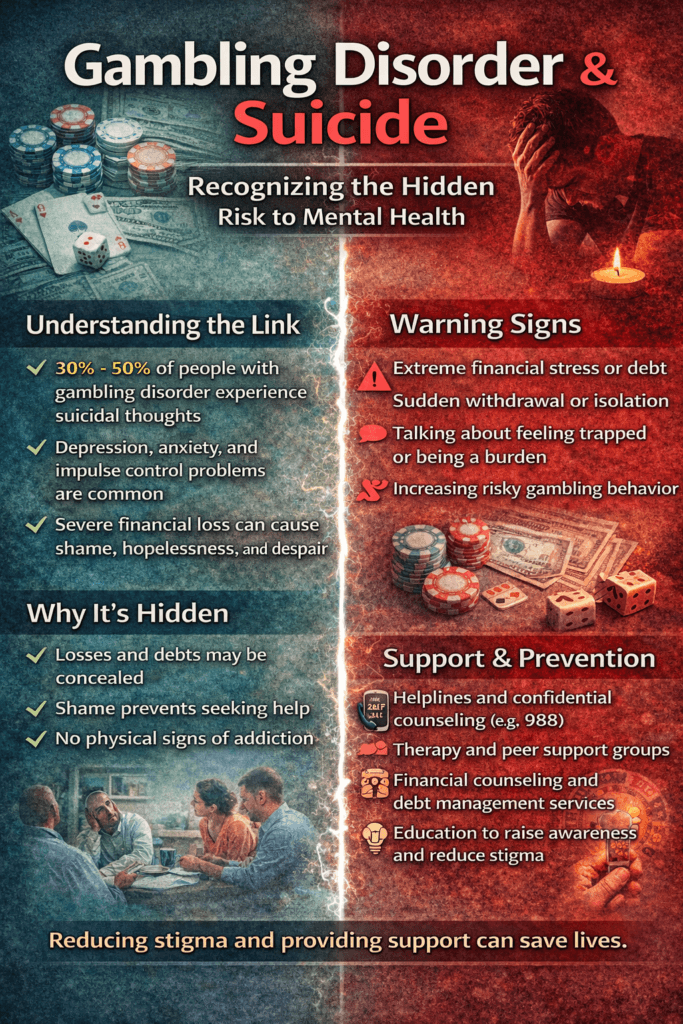
Gambling disorder is more than a financial or behavioral problem—it is a serious mental health condition strongly linked to emotional distress, depression, and increased suicide risk. Recognized by the American Psychiatric Association as a behavioral addiction, gambling disorder shares many neurological and psychological features with substance use disorders, including cravings, loss of control, and continued behavior despite harmful consequences. When financial loss, shame, secrecy, and hopelessness accumulate, individuals may feel trapped, which can significantly elevate suicide risk.
One of the most dangerous aspects of gambling disorder is its hidden nature. Unlike substance misuse, it often leaves no physical signs, allowing individuals to struggle silently for years. Mounting debts, relationship strain, legal trouble, and declining mental health can create overwhelming pressure. Research consistently shows that people with gambling disorder have higher rates of suicidal thoughts and attempts than the general population. The combination of impulsivity, financial crisis, and emotional despair can intensify feelings of worthlessness or perceived burdensomeness—key psychological drivers associated with suicide risk.
Shame and stigma frequently prevent individuals from seeking help. Many feel they should be able to “stop on their own,” or they fear judgment from loved ones. This silence delays intervention and can deepen isolation. Yet gambling disorder is treatable. Evidence-based approaches such as cognitive behavioral therapy, financial counseling, peer support groups, and medication for co-occurring depression or anxiety can significantly reduce symptoms and restore stability. Organizations such as the National Council on Problem Gambling provide confidential resources, helplines, and referral services to connect individuals with professional support.
Prevention and early recognition are critical. Warning signs may include chasing losses, lying about gambling, borrowing money frequently, mood swings tied to wins or losses, or expressing hopelessness about finances or life circumstances. Families, clinicians, and communities can help by promoting open conversations, reducing stigma, and encouraging treatment as early as possible.
Ultimately, gambling disorder is not a moral failing—it is a treatable mental health condition. When individuals receive compassionate support, practical assistance, and access to care, recovery is possible, and suicide risk can be reduced. Raising awareness about this connection is not about fear; it is about understanding, early intervention, and saving lives.
Self-Management Strategies: Preventing Suicide Risk in Gambling Disorder
Gambling disorder is a behavioral addiction recognized by the American Psychiatric Association that can significantly affect emotional stability, finances, relationships, and self-worth. When losses accumulate, and secrecy grows, individuals may experience intense shame, hopelessness, or despair—emotions strongly linked to suicidal thoughts. Understanding how gambling disorder can lead to suicide risk is not meant to alarm but to empower individuals with practical self-management strategies that protect mental health and promote recovery.
One of the most important steps is emotional awareness. Many people gamble to escape stress, anxiety, loneliness, or depression. Learning to recognize emotional triggers—such as boredom, anger, or financial panic—helps interrupt the cycle before it escalates. Techniques like journaling, mood tracking, or mindfulness exercises can help individuals identify patterns between emotional states and gambling urges.
Financial self-protection is another critical strategy. Setting strict spending limits, restricting access to credit, or using accountability tools such as financial monitoring apps can reduce impulsive betting. Some individuals benefit from voluntarily blocking access to gambling platforms or entrusting finances to a trusted family member during recovery. These steps reduce immediate risk and create breathing room for emotional stabilization.
Cognitive reframing also plays a powerful role. Gambling disorder often distorts thinking, leading to beliefs like “I can win it back” or “This is my last chance.” Challenging these thoughts with evidence-based reasoning—such as reminding oneself that losses statistically increase with continued play—can weaken urges. Cognitive behavioral strategies, often used in therapy, can also be practiced independently through guided worksheets or recovery workbooks.
Crisis planning is essential for anyone experiencing severe distress. Creating a personal safety plan that lists warning signs, coping tools, emergency contacts, and crisis resources can be lifesaving during emotional lows. Organizations such as the National Council on Problem Gambling provide confidential helplines and support networks that individuals can access at any time. Having these resources prepared in advance ensures support is available when it is most needed.
Finally, connection is protective. Isolation fuels both addiction and suicidal thinking, while support reduces risk. Scheduling regular check-ins with supportive friends, joining peer recovery groups, or participating in community activities can rebuild a sense of belonging and purpose. Even small daily interactions can counter feelings of hopelessness and reinforce resilience.
In the end, gambling disorder does not cause suicide on its own—rather, it creates conditions that can intensify emotional pain and hopelessness. Self-management strategies work by restoring control, strengthening coping skills, and reconnecting individuals to support systems. With awareness, structure, and compassion toward oneself, it is possible to interrupt the downward spiral and move toward stability, recovery, and renewed hope.
Family Support Strategies: Preventing Suicide Risk in Gambling Disorder
Gambling disorder is a serious behavioral addiction that can deeply affect emotional health, finances, and relationships. Recognized by the American Psychiatric Association, it is associated with elevated risks of depression, anxiety, and suicidal thoughts—especially when losses, shame, and isolation accumulate. Families often witness these struggles firsthand, and their response can significantly influence whether a loved one spirals deeper into distress or begins moving toward recovery. Supportive family strategies can reduce suicide risk by strengthening connections, promoting accountability, and encouraging professional help.
One of the most powerful tools families have is compassionate communication. Individuals with a gambling disorder frequently feel guilt and embarrassment, which can make them withdraw or hide their behavior. Approaching conversations calmly and without blame helps maintain trust. Instead of accusations, statements such as “I’m worried about you” or “I want to help” create a sense of emotional safety and make it easier for the person to open up about their struggles.
Families can also provide structured support. This may include helping create financial safeguards, such as monitoring joint accounts, limiting access to credit, or assisting with budgeting. These steps are not about punishment; they are protective measures that reduce opportunities for impulsive gambling while stability is being rebuilt. Structure helps individuals regain a sense of control that addiction often erodes.
Another crucial strategy is recognizing warning signs of suicide risk. Sudden withdrawal, expressions of hopelessness, giving away possessions, or statements suggesting life is not worth living should always be taken seriously. If warning signs appear, families should seek immediate professional help. Resources like the National Council on Problem Gambling can connect individuals and families to confidential support, counseling, and treatment referrals.
Encouraging treatment participation is equally important. Therapy, peer support groups, and treatment for co-occurring mental health conditions can significantly improve outcomes. Families can support this process by offering transportation, attending educational sessions, or simply expressing pride in their loved one’s efforts. Positive reinforcement strengthens motivation and reduces shame.
Finally, families should remember to care for themselves as well. Supporting someone with a gambling disorder can be emotionally exhausting, and burnout can reduce effectiveness. Seeking counseling, joining family support groups, or learning about addiction science helps relatives stay grounded and resilient. When families remain emotionally stable, they are better equipped to provide consistent support.
In the end, gambling disorder does not just affect the individual—it affects the entire support system. But families also have the power to be one of the strongest protective factors against suicide risk. Through empathy, structure, education, and encouragement, loved ones can help interrupt cycles of despair and guide the person toward treatment, healing, and renewed hope.
Community Resource Strategies: Reducing Suicide Risk Linked to Gambling Disorder
Gambling disorder is a serious behavioral addiction that can contribute to emotional distress, financial crisis, and increased suicide risk when left unaddressed. Recognized by the American Psychiatric Association, this condition affects brain reward systems similarly to substance addictions, often leading to compulsive behavior despite harmful consequences. When individuals feel trapped by debt, shame, or secrecy, hopelessness can intensify. Community-level strategies are essential because prevention, early identification, and intervention often depend on accessible public resources rather than individual willpower alone.
One of the most effective community strategies is expanding accessible mental health and addiction services. Local clinics, crisis centers, and behavioral health programs provide early screening, counseling, and treatment referrals. When communities ensure services are affordable, culturally responsive, and widely available, individuals are more likely to seek help before distress escalates to suicidal thinking. Mobile outreach teams and telehealth options further reduce barriers for those hesitant to visit clinics in person.
Public education campaigns also play a major role in prevention. Workshops, school programs, and workplace trainings can teach residents how gambling addiction develops, what warning signs look like, and how to respond compassionately. Education reduces stigma, one of the biggest barriers to seeking help. When communities normalize conversations about behavioral addiction and mental health, individuals are more likely to reach out during the early stages of distress.
Another crucial resource is crisis-response infrastructure. Suicide prevention hotlines, emergency counseling services, and peer support lines provide immediate assistance during moments of acute emotional pain. Organizations such as the National Council on Problem Gambling help connect individuals with confidential support, treatment providers, and financial counseling resources. Rapid access to help can interrupt impulsive decisions and provide stabilization when someone feels overwhelmed.
Financial and legal support services are often overlooked but highly protective. Many individuals with gambling disorder face debt, legal concerns, or employment instability, all of which can intensify despair. Community programs that offer debt counseling, employment assistance, or legal aid directly address these stressors. By reducing external pressures, these services lower emotional burden and help restore hope.
Finally, peer recovery networks foster a sense of belonging and accountability. Support groups, mentorship programs, and recovery communities allow individuals to connect with others who understand their experience. Social connection is a powerful buffer against suicide risk, while isolation increases vulnerability. Communities that foster inclusive, judgment-free environments encourage people to seek support without fear of shame.
In summary, gambling disorder can increase suicide risk when individuals feel isolated, overwhelmed, and without solutions—but strong community resources can change that trajectory. When communities invest in accessible treatment, education, crisis support, financial assistance, and peer networks, they build a safety net that protects vulnerable individuals and promotes recovery. Collective action transforms communities into protective environments where hope, support, and healing are always within reach.
Frequently Asked Questions
Here are some common questions:
1. What is a gambling disorder?
Gambling disorder is a behavioral addiction characterized by persistent, uncontrollable urges to gamble despite harmful consequences. It is recognized as a mental health condition by the American Psychiatric Association and shares similarities with substance addictions in brain reward pathways.
2. Is there really a link between gambling disorder and suicide?
Yes. Studies consistently show that individuals with gambling disorder have significantly higher rates of suicidal thoughts and attempts than the general population. Financial stress, shame, impulsivity, and co-occurring depression all contribute to this elevated risk.
3. Why does gambling increase suicide risk?
Gambling can create a cycle of loss, secrecy, and hopelessness. Mounting debts, relationship strain, and guilt may lead individuals to feel trapped, or like they have no way out, which can intensify suicidal thinking.
4. What warning signs should families watch for?
Warning signs may include sudden withdrawal, drastic mood changes, lying about finances, borrowing money urgently, expressing hopelessness, giving away possessions, or talking about feeling like a burden.
5. Can a gambling disorder be treated?
Yes. Effective treatments include cognitive behavioral therapy, financial counseling, peer recovery groups, and treatment for co-occurring conditions like depression or anxiety. Many people recover with the right support.
6. Does asking someone about suicide make things worse?
No. Research shows that asking directly and compassionately about suicidal thoughts does not increase risk. Instead, it often helps people feel heard and more willing to seek help.
7. What should someone do if they feel overwhelmed or hopeless because of gambling?
They should seek help immediately. Talking with a mental health professional, contacting a crisis hotline, or reaching out to a trusted person can provide immediate support and reduce risk.
8. Are there organizations that help people struggling with gambling problems?
Yes. Groups such as the National Council on Problem Gambling offer confidential helplines, educational resources, and referrals to treatment programs and support groups.
9. Can recovery reduce suicide risk?
Absolutely. As financial stability improves, shame decreases, and emotional support increases, suicidal thoughts often lessen. Recovery builds coping skills, restores hope, and strengthens protective factors.
10. When is it an emergency?
It is an emergency if someone talks about wanting to die, has a plan, is giving away belongings, or shows drastic behavioral changes. Immediate professional help should be sought.
Conclusion
Although gambling disorder can increase suicide risk, it is important to remember that this outcome is preventable and the condition is treatable. Early recognition, access to mental health care, financial counseling, peer support, and compassionate relationships can interrupt the downward spiral and restore hope. When individuals receive understanding rather than shame and practical help rather than criticism, recovery becomes far more attainable. By promoting education, open dialogue, and supportive resources, society can reduce suicide risk and help those affected by gambling disorder move toward stability, healing, and renewed purpose.
Video: Gambling Disorder Escalates Into This #suicideprevention #mentalhealthmatters #help