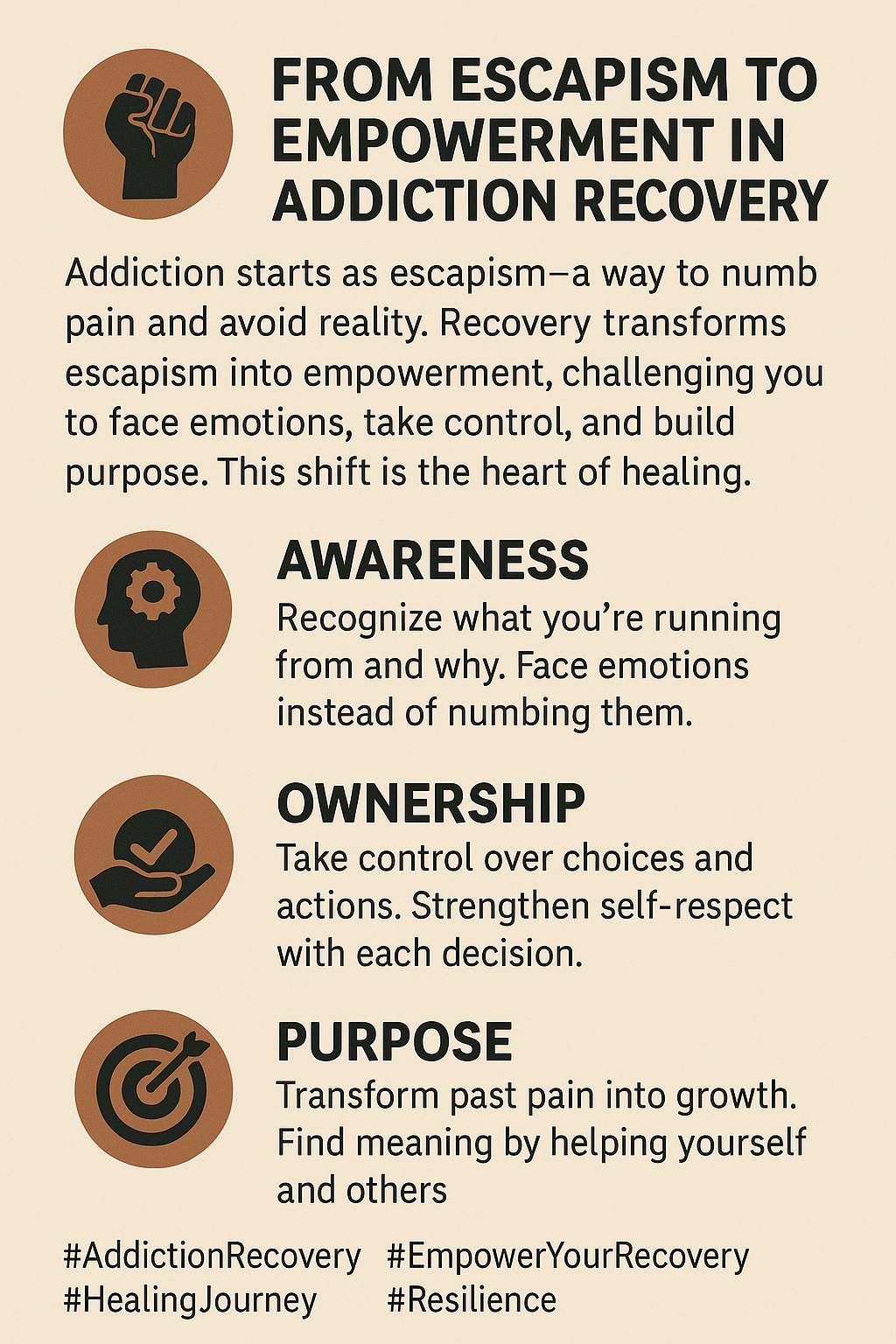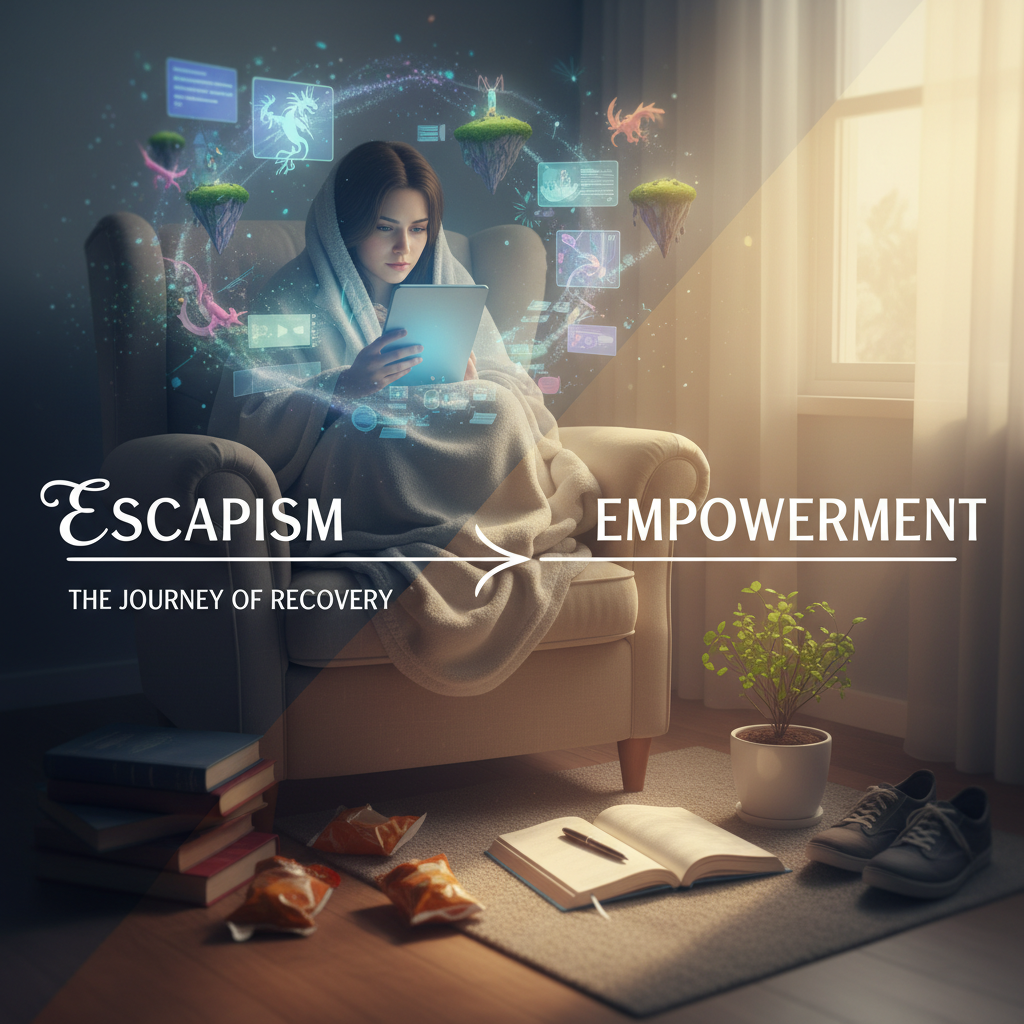
Shifting from using substances to escape pain to finding empowerment in daily life is one of the most challenging but most rewarding journeys. Addiction often numbs emotions and erodes self-worth, making life feel like a cycle of survival. But recovery isn’t about perfection—it’s about rediscovering strength and learning to face life with courage. Over time, you rebuild trust in yourself and find hope, meeting challenges with resilience and peace. That’s what it means to move from escapism to empowerment—reclaiming your life, one choice at a time.
Why Escapism Feels So Comfortable (and Risky)
For a lot of people, substance abuse starts as a way to cope with inner struggles, stress, or trauma. It’s an easy shortcut to numb pain or get away from situations that feel way too heavy to handle. Escapism isn’t only about using substances—sometimes it means getting lost in endless TV shows, always staying packed with things to do, or even digging into work to avoid facing difficult emotions.
The trouble is, while escaping provides quick relief, it doesn’t address the underlying issues. Over time, depending on substances makes life more difficult, drains your energy, and shrinks what you think you’re capable of accomplishing on your own.
Using escape as your coping tool also blocks you from facing real issues—like grief, anxiety, or conflict. Handling these things directly can be intimidating, but it opens space for genuine healing, emotional growth, and independence. Recognizing how escapism creates a barrier is the first crucial step in moving forward.
Understanding the Roots of Substance Abuse
Substance misuse doesn’t show up out of thin air. In my experience, most stories of addiction weave together tough life events, mental health challenges, complicated family dynamics, and often genetics. It’s not a straightforward issue, and for many people it’s not simply a matter of willpower or discipline.
Here’s what can make someone more vulnerable to substance use problems:
- Trauma or Unresolved Grief: Going through tough events, whether as a kid or later in life, often leaves behind feelings you’re not sure how to process. Substances can seem like a way to dull that pain.
- Mental Health Struggles: Anxiety, depression, and PTSD can all go hand-in-hand with addiction. Sometimes, people rely on substances instead of looking for support for their emotional well-being, not realizing help is available.
- Social Environment: Being surrounded by people or communities where substance use is the norm can normalize it, making it feel nearly impossible to step away without feeling isolated.
- Genetics and Family History: There’s evidence out there that addiction can run in families, making some people more prone to it than others, regardless of intentions or personal goals.
It’s crucial to tackle these root causes as much as the symptoms themselves. Therapy, supportive circles, and healthier routines all play a vital role in long-term recovery and breaking free from the shadow of escapism.
First Steps Toward Hope: Breaking the Cycle
Turning your life around isn’t about flipping a switch; it takes building new habits, one day at a time. Through my own journey and what I’ve seen in others, here are a handful of things that really help:
- Reach Out for Support: Connecting to friends, family, or a support group brings a new perspective and relief from the isolation that accompanies addiction. Realizing you’re not fighting this alone is a massive weight off your shoulders.
- Set Manageable Goals: Instead of focusing only on a future where you’re completely substance-free, break your goals into doable steps. Some days, that could mean getting through breakfast without using it, while on other days, it’s enough to make it to a counseling appointment. Celebrate every win, no matter the size.
- Learn Healthier Tools for Coping: Swapping out old habits for new ones, such as taking a walk, practicing mindfulness, or journaling, equips you with practical ways to manage sadness or stress without resorting to substances. Sometimes, the simplest healthy changes, such as listening to music or practicing breathing exercises, can offer a reset in challenging moments.
- Build a Relapse Plan: Prepare for those days when cravings threaten to overtake you. Make a list of who you can call, places to avoid, and healthy distractions to turn to. Planning adds a layer of support and helps you avoid feeling lost if urges arise.
And don’t be afraid to look for resources in unexpected places. Local community centers, faith-based groups, or even online chats can provide tools you haven’t tried before. Mixing up your sources of support keeps things fresh and brings in new ideas.
Building Empowerment One Choice at a Time
Control and confidence start to grow once you spot how your decisions matter, even if they’re small. Here’s what helps make that push from escape to real empowerment last:
- Cultivate Self-Awareness: Regularly check in with yourself to notice triggers or patterns. This might be as simple as pausing to ask, “How am I feeling right now?” or as simple as keeping a journal to track your emotions. Over time, you get better at predicting challenging moments and handling them before they snowball.
- Strengthen Your Why: Have crystal-clear reasons for your recovery and keep a physical reminder handy. Whether it’s about relationships, health, or personal pride, having your motivation front and center when temptation comes up makes a real difference.
- Practice Kindness With Yourself: Everyone faces slip-ups. When they happen, remember to be gentle and learn from the moment, rather than using it as a reason to give up. Mistakes are proof that you’re working toward something better, not a reason to quit.
- Connect With Others: Sharing your story, listening to similar journeys, and finding encouragement (whether on discussion boards or in regular meet-ups) boosts hope and helps combat the loneliness that often accompanies recovery.
Changing Your Story: Everyday Adjustments
Real change doesn’t come from one grand gesture; instead, it grows out of lots of ordinary decisions. For some people, this means swapping out old weekend routines for new adventures, dusting off a forgotten hobby, volunteering, or adopting a pet. Trying out a creative class or helping someone else can spark a sense of capability and self-worth that extends beyond the realm of addiction.
Recognize each win—however small—as a building block of your new life. Whether it’s marking days of sobriety, noting when you healthily handled emotions, or simply making it out for a walk, each step is proof you’re building forward. Before you know it, those moments start to add up and fuel further progress.
Common Roadblocks (And How to Steer Through Them)
No adventure is smooth from start to finish. Some of the most common obstacles I’ve seen include:
- Lack of Support: If friends or family aren’t encouraging, it can be discouraging. Don’t hesitate to find community in online forums, helplines, or nearby support groups. The right kind of support makes a world of difference.
- Mental Health Triggers: Anxiety or depression can ramp up cravings and make recovery feel out of reach. Regularly checking in with a professional, friend, or peer can help catch these moments early, keeping problems from building in the background.
- Social Pressure: Environments and friendships tied to your substance use in the past can sabotage your progress. Setting new boundaries, skipping certain outings, or inviting a supportive friend along can help alleviate the stress. Your comfort and health come first.
- Stigma: Judgment around addiction is harsh to handle. Remember, your path is yours alone. Seek out allies who understand and respect your effort. Practice self-compassion and maintain a balanced perspective when facing outside criticism.
What to Do When You Hit a Wall
No one has a recovery without bumps. If you slip, don’t let shame or discouragement take over. Reach out—call someone you trust, revisit your coping tools, and reflect on what led to the setback so you can make a game plan for the next challenge. Every tough moment has something to teach, helping you grow stronger each time.
Simple Ways to Stay Empowered Every Day
Consistent routines and small choices keep empowerment alive. Some simple but powerful daily practices include:
- Maintain a Routine: Establishing predictable daily habits stabilizes both your mood and mind. This could involve meal times, tidying up in the morning, or carving out space for a hobby you enjoy.
- Nourish Your Body: Healthy food, regular exercise, and quality sleep combine to provide your mind and body with a solid foundation for facing challenges and achieving success.
- Feed Your Mind: Books, podcasts, or inspiring documentaries about recovery and strength can spark insights, provide comfort, and bring new coping strategies to your attention.
- Celebrate Each Win: Track your progress, even if only you notice. Each step forward builds confidence, showing just how far you’ve come—even if there’s a long way to go.
Frequently Asked Questions
These are questions I hear the most from folks moving from substance use to hope:
Question: If I make a mistake, does that mean I’ve failed?
Answer: Not at all. Everyone in recovery faces a few stumbles along the way. What counts is getting up, taking notes from what happened, and asking for support if you need it. The path to recovery is winding, not a straight highway.
Question: How can I talk to others about my experience if I’m worried about judgment?
Answer: Start with sharing only what feels comfortable to you. Sometimes, simply acknowledging that you’re making changes or need support is all that’s required. With practice, sharing gets easier, but you’re the only one who decides what to disclose.
Question: Are there any free resources if I don’t have access to professional counseling?
Answer: Absolutely. Groups like Alcoholics Anonymous (AA), Narcotics Anonymous (NA), and many online support communities offer connection, encouragement, and practical advice. Hotlines and text services are there too, especially if you need someone to talk to in the moment.
How Hope Grows After Addiction
Hope isn’t a static feeling—it grows over time, rooted in new routines and deepened by genuine connections. On some days, there’s a breakthrough, while on others, it builds slowly, almost unnoticed. What matters is that you keep stepping forward, creating habits and relationships that foster courage and self-belief.
Choosing recovery doesn’t guarantee all struggles vanish, but it opens the door to genuine peace, moments of happiness, and lasting pride that substance abuse can’t provide. Each intentional step, no matter how small, helps shape a life worth looking forward to. That’s worth holding onto—one step, one day at a time.
Video: Can You Really Escape Addiction For Good?