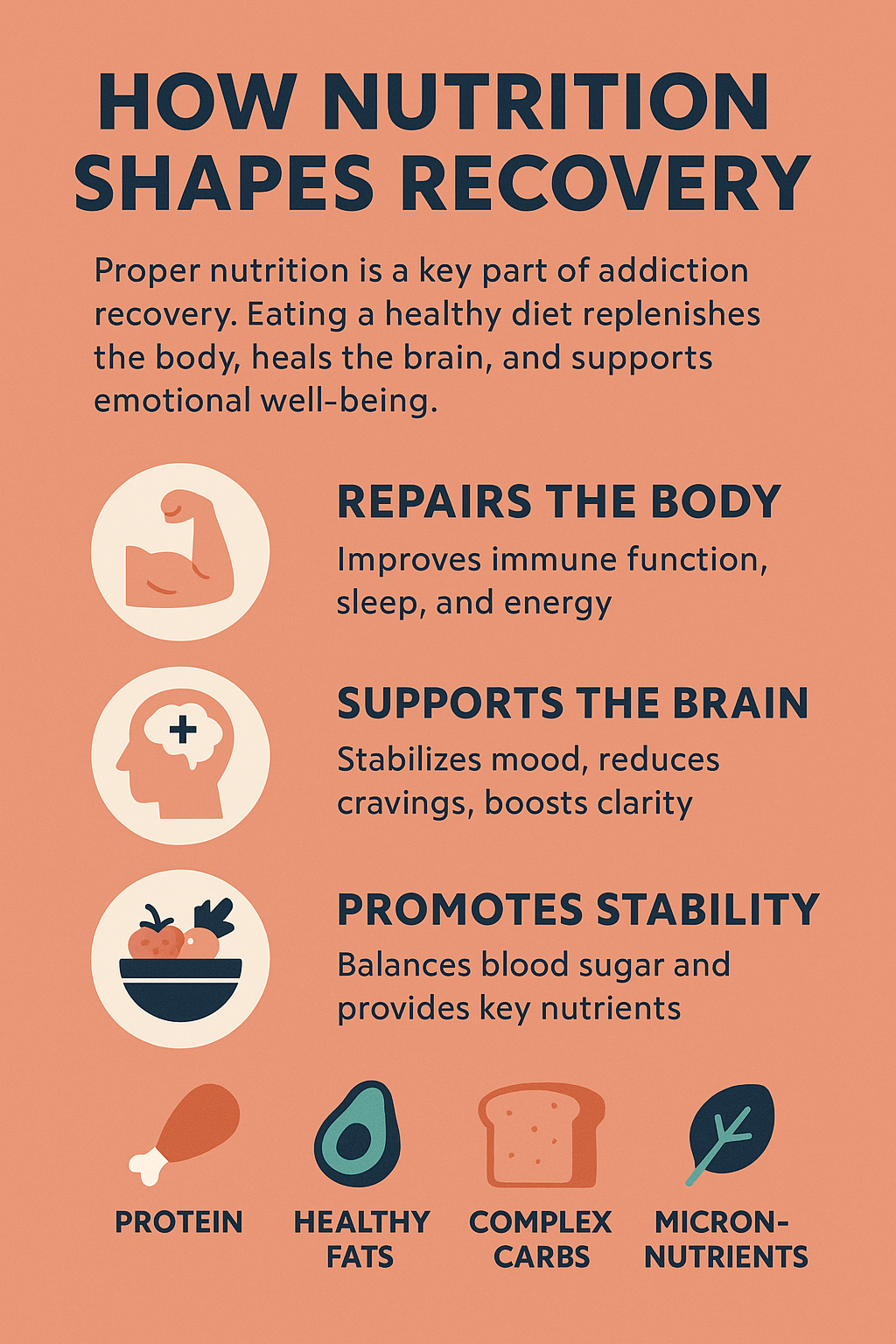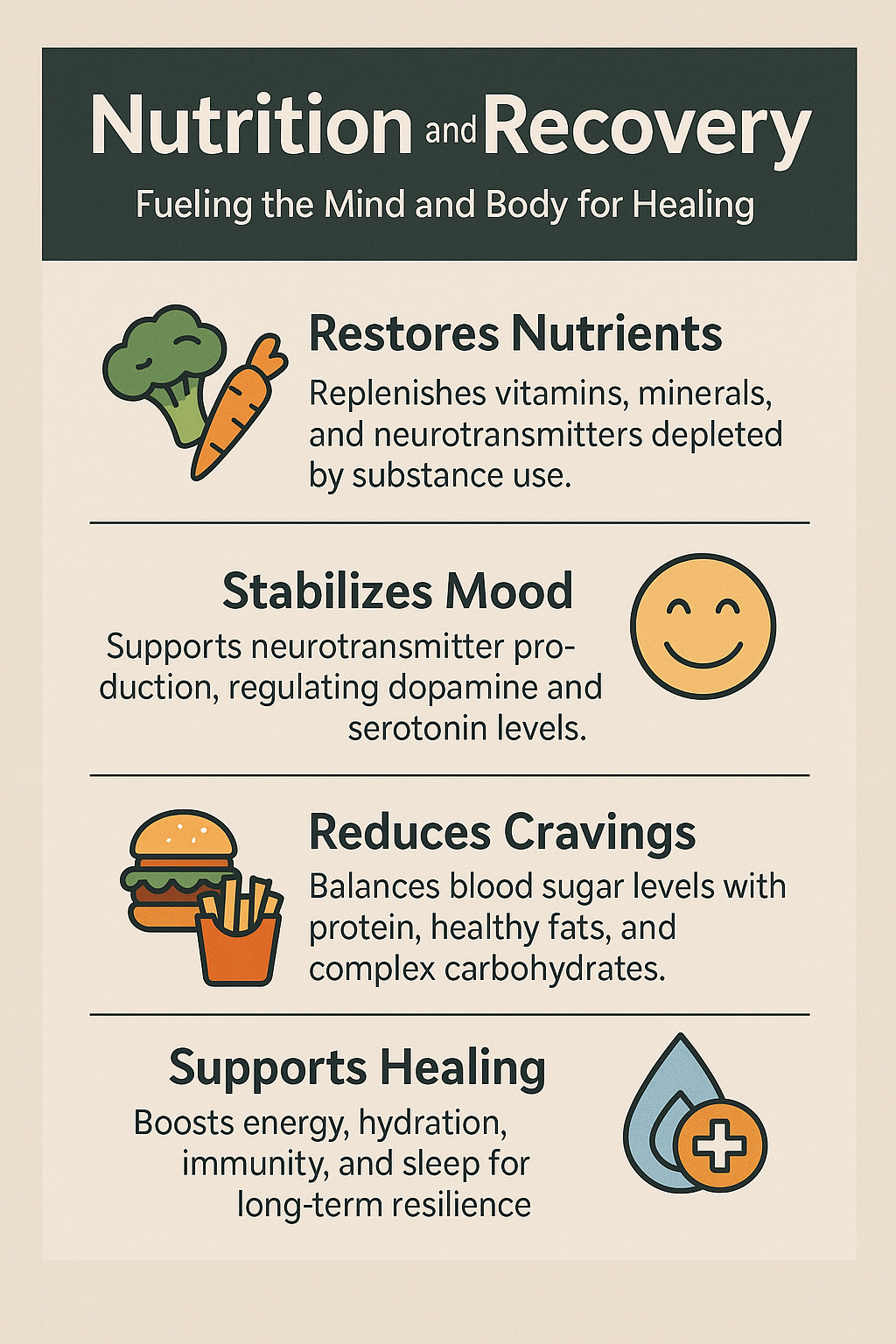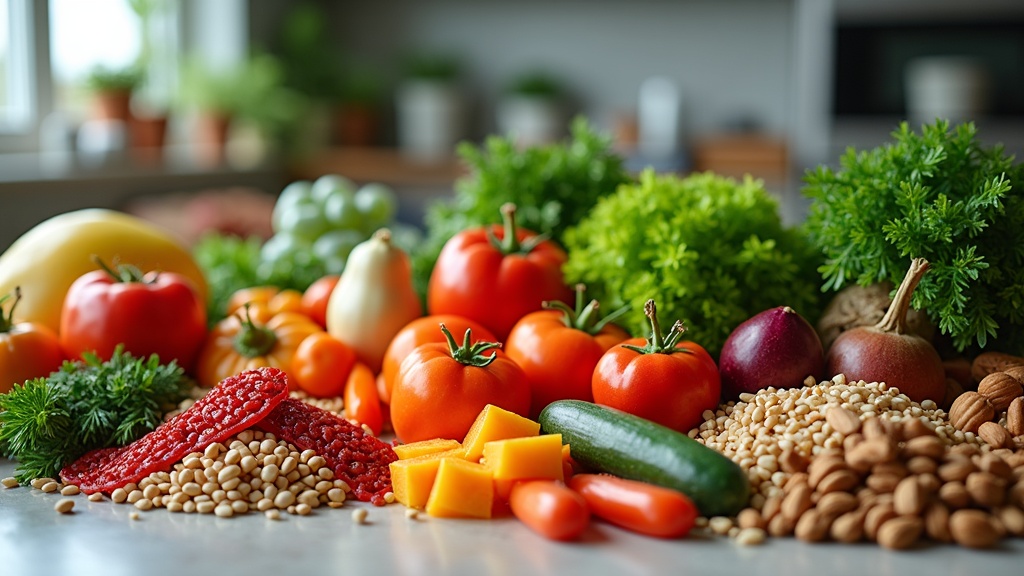
Food and mood are deeply connected, especially during addiction recovery. What you eat can have a powerful effect on your energy, focus, and emotional balance—and yet, it’s one of the most overlooked parts of healing. During recovery, your body is working hard to repair itself and rebalance brain chemistry that’s often been disrupted by substance use. The proper nutrients can help stabilize blood sugar, reduce cravings, and even improve mood by supporting the production of feel-good chemicals, such as serotonin and dopamine. On the other hand, skipping meals or relying on processed foods can lead to irritability, fatigue, and increased cravings for substances. I’ve found that small changes—such as eating more whole foods, staying hydrated, and incorporating protein and healthy fats—can make a noticeable difference. In this post, we’ll explore how simple nutrition shifts can strengthen both your body and mind, making the path of recovery a little steadier and brighter.
Why Food Matters in Addiction Recovery
When you’re actively struggling with addiction, your body and brain can get knocked out of balance. Nutrient levels often take a hit, sleep habits slide, and energy tanks. I’ve seen folks bounce back much more smoothly when they pay attention to eating as part of their recovery; it makes a noticeable difference.
Recovery isn’t just about breaking the habit of using a substance. It’s also about rebuilding your physical and emotional strength, and food plays a bigger role than many realize. According to research published in Current Psychiatry Reports, nutrition can improve mood, reduce the risk of relapse, and make the experience more manageable.
If you’ve ever noticed mood swings, brain fog, or a lack of drive in the early days of sobriety, you’re definitely not alone. Many of those symptoms go back to how addiction drains essential nutrients. Replenishing them can really boost your mood and help curb cravings.
Key Nutrients That Influence Mood and Recovery
Specific vitamins, minerals, and amino acids support brain chemicals that help stabilize mood and energy levels. Here are the top ones to keep an eye on:
- Protein: The brain makes neurotransmitters like dopamine and serotonin from amino acids found in protein foods. Eggs, lean meats, beans, and nuts keep your mind level.
- Complex Carbs: Whole grains and starchy veggies deliver steady fuel and aid serotonin production to lift your mood.
- Omega-3 Fatty Acids: Found in fish, walnuts, and flaxseed, omega-3 fatty acids can help ease anxiety and support brain repair.
- Vitamins B and C: B vitamins aid in mental clarity and stress relief, while vitamin C repairs tissues and boosts your immune system.
- Magnesium and Zinc: These minerals help with stress and mood. Magnesium is found in leafy greens and seeds, while zinc comes from oysters, beef, and lentils.
It’s not just about getting every single nutrient, but absorbing a mix of nourishing foods, especially after a poor diet or neglect during addiction. That balanced approach lays the foundation for your recovery.
Adding fermented foods, such as yogurt or kimchi, can also support digestive health. A healthy gut can improve the absorption of vital nutrients, which in turn enhances mood regulation and immunity. Probiotics from these foods help rebalance the gut after the stress of addiction.
How Diet Affects Cravings and Triggers
Unstable blood sugar can set off food cravings and even ramp up substance urges. I’ve met many people who didn’t realize irregular meals made them feel jumpy, exhausted, or anxious, especially while getting sober. Steady meals with plenty of fiber and protein help keep those spikes and dips at bay.
Sometimes, a craving for sweets or greasy foods can be a stand-in for old habits, as certain foods activate the same brain reward centers. Swapping sugary snacks for fruit, yogurt, or nuts can offer comfort while keeping your energy steady and your mood more even.
Don’t forget to drink water. Thirst can feel just like hunger or cravings, and when you’re freshly sober, it helps to keep a water bottle handy. Sparkling water with lime or herbal teas are good options if plain water doesn’t grab you. Hydration supports every system in your recovery, from improved focus to better cravings control.
Smart Tips for Structuring Meals in Recovery
Rebuilding your relationship with food is most effective when you establish basic habits and a plan. Here are strategies I find really helpful:
- Stick to regular mealtimes: Eating three meals and a couple of snacks each day keeps your energy and mood more stable.
- Balance your plate: Try for half veggies, one quarter protein, and one quarter whole grains or starchy vegetables for each meal.
- Make smart swaps: Choose brown rice over white, and opt for roasted foods over fried ones. You’ll get better nutrition without losing taste.
- Snacking made simple: Having nuts, seeds, fruit, or yogurt within reach makes it easier to eat healthy and avoid cravings.
- Cut back on caffeine and sugar: These can cause crashes and keep you up at night. Tapering off can help even things out and may boost your sleep.
Another tip: plan meals. If you know what’s coming for dinner or have a simple grocery list, you won’t be caught off-guard and tempted by less nourishing choices. Try batch-cooking, prepping veggies for a few days, or making overnight oats for quick breakfasts.
Challenges You Might Face and How to Handle Them
Switching old eating habits isn’t always simple. Common hurdles include a low appetite, nausea, or big cravings for junk food, especially in the early days of recovery.
Nutrient Deficiencies
Alcohol and other drugs can mess with nutrient absorption and sometimes cause long-term deficiencies. Issues like anemia or low B vitamins are pretty standard. Chronic stress can deplete magnesium and zinc levels. It’s a great idea to consult with your doctor or a nutritionist for a checkup and blood work. They can help guide you to the foods or supplements that’ll give you what you need.
Poor Appetite or Digestive Issues
Your appetite may take a while to return. Sipping on shakes, smoothies, or broth-based soups, eating small amounts often, and adding easy protein sources like eggs or tofu can help keep you nourished as your body readjusts.
Emotional Eating
It’s normal to crave comfort foods when you feel stressed or down. One thing that has worked for me is making healthier comfort foods, such as baked sweet potato fries or oatmeal with peanut butter and banana, and being kind to myself. Pair meals with supportive actions, such as chatting with a friend or taking a walk, to help balance food and feelings.
Trigger Foods
Some things you eat or drink can remind you of using substances. Beer and salty snacks might take someone back to their drinking days, while coffee might take them back to late-night parties. Swap those out for entirely new snacks or drinks so you can build new recovery routines.
More Ways Diet Supports Recovery and Emotional Health
Eating well as you recover isn’t just about crushing cravings. Healthy foods act as building blocks for:
- Better sleep: Magnesium, B vitamins, and balanced meals support good sleep, which is key in recovery.
- Brain repair: Addictions can damage brain cells and their networks. Antioxidant-rich foods, such as berries, greens, and colorful vegetables, along with omega-3 fatty acids, can aid in repair and protection.
- Stress management: Eating regularly keeps your stress hormone (cortisol) in check. Herbal teas, whole grains, and a square of dark chocolate all help soothe the system.
- Energizing your days: Whole, unprocessed foods provide lasting energy and help prevent the exhausted feeling that can sap motivation during sobriety.
It’s good to remember that food won’t fix everything, but even small, positive changes in your eating habits can mean feeling much better every day.
Fundamental Life Food Strategies for Recovery
I’ve picked up some practical strategies that make healthy eating way more doable during recovery:
- Batch-cook a pot of soup, chili, or oven-roasted vegetables so there’s always something to reheat on busy days.
- Try a simple meal planning app or jot down a few favorite quick recipes on your fridge.
- Stock up on frozen vegetables; they’re a convenient and nutritious addition when you’re short on time.
- Blenders are your friend for fruit-and-greens smoothies packed with yogurt or nut butter.
- Find takeout places that have better-for-you options—sometimes you need that convenience when life gets hectic.
Also, invite others to join you for a meal or swap recipes—cooking and eating in good company can make the whole process less daunting and more enjoyable.
Common Questions About Diet and Mood in Recovery
- Question: What’s the best first step to eating better in recovery? Answer: Start with small steps—add one or two more whole foods, such as fruits, vegetables, or whole grains, to your meals. Being consistent is more important.
- Question: How does diet affect my mood in recovery? Answer: Nutrition directly impacts brain chemicals like serotonin and dopamine. Eating balanced meals helps stabilize mood, reduces irritability, and aids in rebuilding emotional resilience.
- Why do I crave sugar or junk food after quitting substances? Answer: Substance use depletes dopamine. Sugar provides a quick dopamine spike, so cravings often increase early in recovery. Balanced meals and protein help reduce these urges.
- Can certain foods help reduce anxiety or depression? Answer: Yes. Omega-3 fats, B vitamins, magnesium, and foods rich in amino acids support mood regulation and help calm the nervous system.
- Should I eat on a schedule? Answer: Absolutely. Regular meals prevent blood sugar crashes that can trigger cravings, anxiety, and emotional swings.
- Can dehydration affect my mood? Answer: Yes. Even mild dehydration increases irritability, fatigue, and difficulty concentrating—common triggers for relapse.
- What foods help with emotional stability? Answer: Whole grains, lean proteins, nuts, seeds, leafy greens, berries, and fermented foods support stable energy, gut health, and improved mood.
- Can poor nutrition lead to relapse? Answer: It can contribute. Low blood sugar, nutrient deficiencies, and fatigue increase cravings and emotional dysregulation, making relapse more likely.
- Is caffeine helpful or harmful in recovery? Answer: Moderate caffeine is OK for most people, but too much can increase anxiety, cravings, and sleep problems.
- Do supplements help? Answer: They can, but they shouldn’t replace whole foods. Always consult a healthcare provider before taking vitamins, such as B-complex, magnesium, or omega-3 fatty acids, to ensure they are suitable for your specific needs and health condition.
- How long will it take for my mood to improve with better nutrition? Answer: Many people notice improvements within a few days to a few weeks. Over time, consistent nutrition helps restore long-term emotional balance.
Video: What Happens When You Eat Healthy After Addiction?