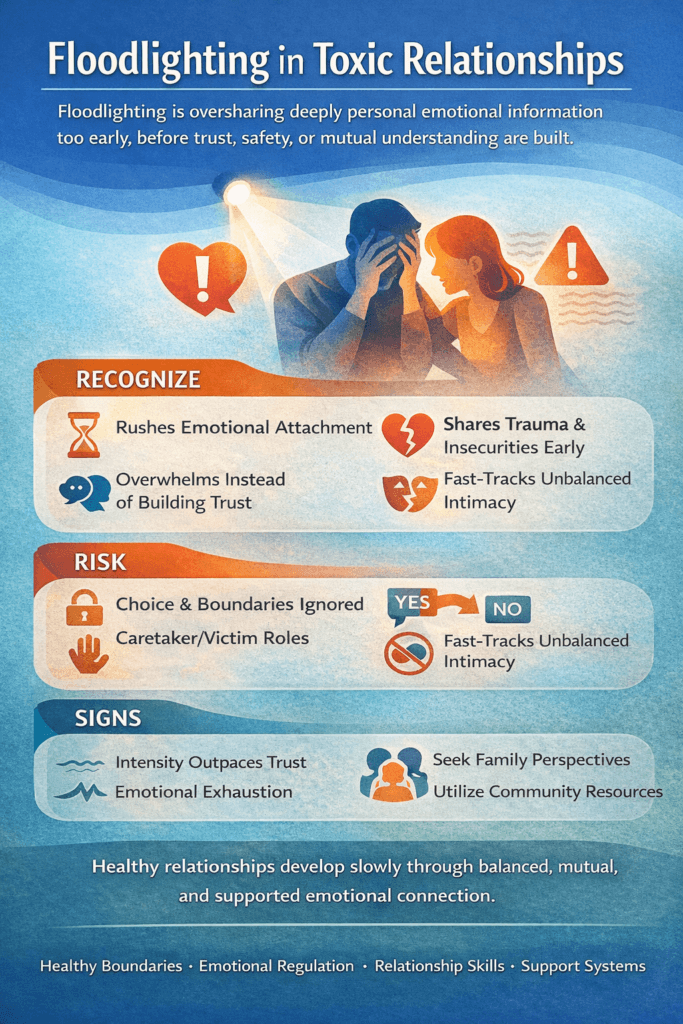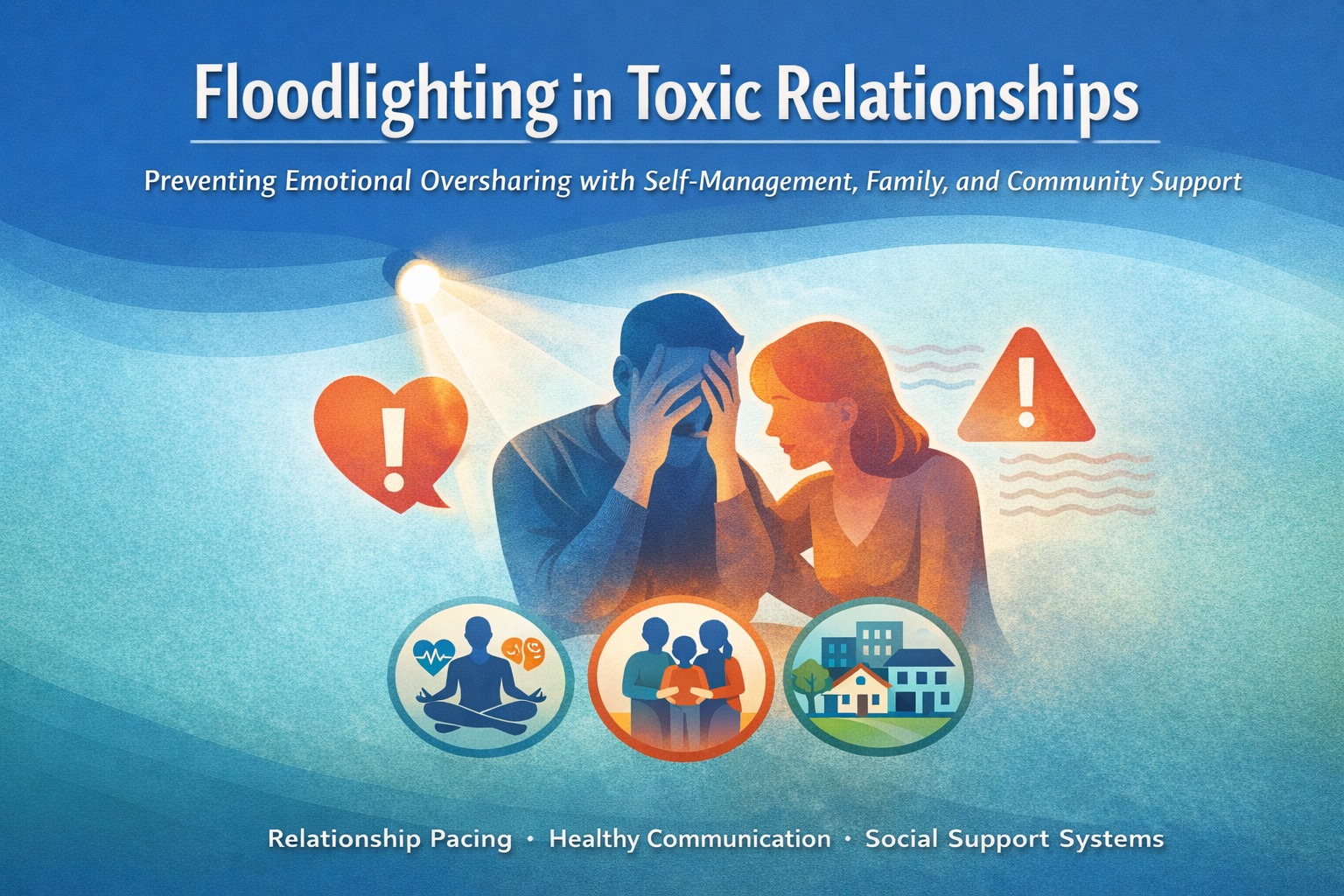
Floodlighting is a relationship pattern in which deeply personal emotions, trauma, or life experiences are shared too early, before trust, safety, and mutual understanding are established. While often mistaken for honesty or emotional maturity, floodlighting can fast-track intimacy in ways that create imbalance, emotional pressure, and vulnerability to toxic dynamics. Preventing these outcomes requires more than individual insight alone. Research and clinical experience show that healthy relationships are best supported through a combination of self-management skills, family support, and accessible community resources. Together, these strategies help individuals pace vulnerability, regulate emotions, and build connection based on stability rather than emotional urgency.
Floodlighting in Dating: How Oversharing Can Lead to Toxic Relationships
Floodlighting is a growing dating trend where someone shares deeply personal, emotionally intense information very early in a relationship. This might include trauma histories, past abuse, mental health struggles, or unresolved emotional pain—often within the first few conversations or dates. While vulnerability is often praised in modern dating culture, floodlighting is not the same as healthy emotional openness. When vulnerability happens without trust, boundaries, or mutual pacing, it can create unhealthy relationship dynamics.
Why Floodlighting Happens
Floodlighting is often driven by a desire for rapid intimacy and emotional validation. People may overshare to feel seen, accepted, or reassured, especially if they fear abandonment or rejection. In some cases, it reflects unresolved trauma, anxious attachment, loneliness, or burnout from repeated failed relationships. Dating apps and fast-paced communication can unintentionally encourage this behavior by rewarding immediate emotional intensity over gradual connection.
How Floodlighting Can Create Toxic Dynamics
When one person floods with attention, it can overwhelm the other and create a false sense of closeness. The listener may feel pressured to provide emotional caretaking rather than engage as an equal partner. This imbalance can quickly shift the relationship into a rescuer–victim dynamic, where emotional responsibility is unevenly distributed. Over time, this can lead to codependency, emotional exhaustion, and blurred boundaries.
Floodlighting can also attract partners who are drawn to control, manipulation, or emotional enmeshment. Intense early disclosure may fast-track attachment before compatibility, values, or safety are fully established, increasing the risk of staying in unhealthy or abusive relationships.
Vulnerability vs. Floodlighting
Healthy vulnerability is mutual, paced, and responsive. It unfolds as trust is built and is shared in appropriate depth over time. Floodlighting, by contrast, is one-sided, premature, and often disconnected from the current level of emotional safety. While it may feel honest, it can bypass the natural process of getting to know someone and replace curiosity with emotional urgency.
Long-Term Consequences
Relationships built on floodlighting often struggle with boundaries, emotional regulation, and stability. Early intensity can fade into resentment, emotional dependence, or burnout. When emotional disclosure outpaces relational trust, partners may feel trapped in roles they did not choose, increasing conflict and dissatisfaction.
Healthier Alternatives
Preventing floodlighting starts with pacing. Sharing personal experiences gradually, checking in with how the other person responds, and allowing intimacy to develop naturally support healthier relationships. Emotional depth is most meaningful when it is reciprocal and grounded in trust, consistency, and respect.
Closing Thoughts
Floodlighting is not a sign of emotional maturity—it is often a signal that emotional needs are being rushed rather than supported. While vulnerability is essential for connection, relationships thrive when honesty is balanced with boundaries and timing. Slowing emotional disclosure protects both partners and creates space for secure, mutually beneficial, and emotionally healthy relationships.
Self-Management Strategies to Prevent Floodlighting and Avoid Toxic Relationships
Floodlighting—sharing deeply personal, emotionally intense details too early in a relationship—can feel like honesty or vulnerability, but it often bypasses healthy pacing and boundaries. When unmanaged, it can create imbalance, emotional pressure, and fast-tracked attachment that increases the risk of toxic dynamics. Self-management strategies help individuals slow down, regulate emotions, and build intimacy in a mutually beneficial, safe, and sustainable way.
Build Awareness of Emotional Triggers
Self-management begins with noticing why the urge to overshare appears. Floodlighting is often triggered by anxiety, fear of rejection, loneliness, or a desire for rapid validation. Pausing to ask, “What am I hoping this disclosure will give me right now?” helps separate emotional needs from relationship readiness. Awareness fosters choice rather than impulsive sharing.
Practice Emotional Regulation Before Disclosure
Strong emotions can drive premature vulnerability. Using regulatory tools—deep breathing, grounding exercises, journaling, or physical movement—helps reduce urgency prior to conversations. When emotions are regulated, disclosures are more intentional and less likely to overwhelm the other person or create a sense of dependency.
Pace Vulnerability Intentionally
Healthy vulnerability unfolds gradually. A useful self-check is to match depth with time and trust: early dating focuses on values, interests, and boundaries, while deeper personal history is shared once consistency and safety are established. Pacing protects both partners from emotional overload and false intimacy.
Set Internal Boundaries
Self-management includes deciding what stays private for now. Not every truth needs to be shared immediately. Some experiences are better processed individually or with trusted friends or professionals. Internal boundaries prevent the use of a romantic partner as a primary emotional regulator too early.
Maintain a Full Support System
Relying solely on a new relationship for emotional support increases the risk of flooding. Maintaining friendships, hobbies, routines, and mental health supports distribute emotional needs across a healthy network. When support is balanced, relationships can grow without pressure or emotional enmeshment.
Reflect After Conversations
After emotionally meaningful conversations, reflection matters. Asking “Did this feel mutual?” and “Do I feel calmer or more anxious now?” helps determine whether the sharing was healthy or rushed. Reflection strengthens self-trust and guides more effective pacing going forward.
Choose Connection Over Intensity
Self-management shifts the goal from fast intimacy to steady connection. Trust is built through consistency, respect, and shared experiences—not emotional urgency. Slowing down allows compatibility, safety, and mutual care to emerge naturally.
Final Thoughts
Preventing floodlighting is not about suppressing honesty; it is about aligning vulnerability with emotional readiness and relational safety. Through self-awareness, regulation, boundaries, and balanced support, individuals can protect themselves from toxic relationship patterns and create space for healthier, more secure connections built on mutual trust rather than emotional overwhelm.
Family Support Strategies to Address Floodlighting and Prevent Toxic Relationships
Floodlighting—sharing deeply personal emotional experiences too early in a relationship—can unintentionally create unhealthy attachment, imbalance, and vulnerability to toxic dynamics. While this behavior often stems from a desire for connection, family support plays an important role in helping individuals pace emotional disclosure, strengthen boundaries, and develop healthier relationship patterns. Families that provide guidance without judgment can help protect loved ones from emotional burnout and harmful relationships.
Creating Safe, Nonjudgmental Conversations
Families can support healthier relationships by providing safe spaces to discuss dating experiences without criticism or alarm. When individuals feel they can share concerns openly, they are more likely to reflect on their behavior and relationship dynamics. Calm, curious conversations facilitate the identification of floodlighting patterns without triggering shame or defensiveness.
Modeling Healthy Emotional Boundaries
Family members teach relationship norms through example. When families demonstrate balanced emotional sharing—expressing feelings while maintaining boundaries—they model what healthy vulnerability looks like. This modeling reinforces the idea that emotional closeness develops over time and does not require immediate disclosure of deeply personal experiences.
Encouraging Emotional Processing Outside Romantic Relationships
Families can gently remind loved ones that not all emotional processing belongs in a new romantic relationship. Encouraging journaling, counseling, or trusted family discussions helps prevent using a partner as the primary outlet for unresolved emotional pain. This support reduces emotional pressure on relationships and lowers the risk of codependency.
Helping Recognize Red Flags Early
Family members often notice changes that individuals may overlook, such as rapid emotional attachment, loss of boundaries, or emotional exhaustion. When shared respectfully, these observations can prompt reflection rather than conflict. Early awareness allows individuals to slow down or reassess before toxic patterns take hold.
Supporting Balanced Attachment and Independence
Healthy families encourage independence alongside connection. Supporting education, friendships, hobbies, and personal goals reinforces identity beyond the relationship. When individuals feel secure in their broader support system, they are less likely to rush into emotional intimacy to meet unmet needs.
Responding With Guidance, Not Control
Family support is most effective when it avoids ultimatums or control. Advising rather than directing preserves trust and autonomy. Offering perspective, asking reflective questions, and affirming self-worth help individuals make healthier choices without feeling coerced.
Family Support as a Protective Factor
Preventing floodlighting and toxic relationships is not about restricting emotional expression—it is about supporting emotional maturity, pacing, and safety. Families that lead with empathy, boundaries, and open communication create a protective environment where healthier, more secure relationships can develop.
Community Resource Strategies to Address Floodlighting and Prevent Toxic Relationships
Floodlighting—intense emotional oversharing early in a relationship—has become increasingly common in modern dating culture. While often rooted in a desire for authenticity and connection, floodlighting can accelerate emotional attachment before trust and safety are established, increasing the risk of toxic or codependent relationships. Community resources play a vital role in prevention by providing education, support, and healthy alternatives for emotional processing outside romantic partnerships.
Relationship Education and Skill-Building Programs
Community-based relationship education helps individuals understand healthy pacing, boundaries, and communication. Workshops offered through community centers, colleges, faith-based organizations, or nonprofits can normalize discussions about vulnerability, attachment styles, and emotional regulation. Learning these skills in group settings reduces reliance on romantic partners for emotional validation too early.
Accessible Mental Health Services
Floodlighting often reflects unmet emotional needs, unresolved trauma, or anxiety about abandonment. Communities that expand access to counseling, therapy, and low-cost mental health services provide safer outlets for emotional processing. When individuals have professional support, they are less likely to use new relationships as primary spaces for emotional release.
Peer Support and Discussion Groups
Peer-led support groups create spaces where people can share experiences, gain perspective, and learn from others without feeling emotionally overwhelmed. These groups help individuals recognize patterns like floodlighting, normalize slower relationship pacing, and practice reflective listening. Shared learning reduces isolation and improves relational awareness.
Public Education and Awareness Campaigns
Community education campaigns that promote healthy relationships, emotional boundaries, and dating wellness can shift social norms. When floodlighting is recognized as a pattern—not a flaw—individuals are more empowered to self-correct without shame. Public messaging that emphasizes pacing and mutual vulnerability supports healthier dating cultures.
Safe Spaces for Emotional Expression
Community resources, such as wellness centers, creative programs, volunteer opportunities, and mindfulness groups, provide healthy emotional outlets. These spaces allow individuals to process emotions, build identity, and develop confidence without relying solely on romantic relationships for meaning or support.
Early Intervention and Referral Networks
Community professionals—educators, coaches, counselors, and healthcare providers—can identify early signs of relational distress and guide individuals toward appropriate resources. Early intervention helps interrupt floodlighting-driven dynamics before they evolve into emotional dependency or harm.
Community Support as Prevention
Preventing floodlighting and toxic relationships is not solely an individual responsibility. Communities that invest in education, access to mental health care, peer support, and emotional wellness create environments where healthy relationships can develop naturally. When emotional needs are broadly supported, romantic relationships are less likely to carry unhealthy emotional burdens.
Frequently Asked Questions
Here are some common questions:
What is floodlighting in a relationship?
Floodlighting is the practice of sharing deeply personal information—such as trauma, insecurities, or intense emotions—very early in a relationship, before trust, safety, and mutual understanding are established. It often creates a false sense of intimacy and emotional pressure rather than a healthy connection.
Is floodlighting the same as being emotionally open?
No. Healthy emotional openness is mutual, paced, and responsive to the level of trust in the relationship. Floodlighting is typically one-sided, premature, and driven by emotional urgency rather than relational safety.
Why do people floodlight?
Floodlighting often stems from anxiety, fear of rejection, unmet emotional needs, past trauma, loneliness, or attachment insecurity. It may also be reinforced by modern dating culture, which can reward emotional intensity over gradual connection.
How can floodlighting lead to toxic relationships?
Floodlighting can create power imbalances, caretaker–rescuer dynamics, and emotional dependency. It may pressure the other person into a therapeutic role or fast-track attachment before compatibility and boundaries are established, increasing the risk of manipulation or burnout.
What are common warning signs of floodlighting?
Signs include oversharing trauma early, rapid emotional attachment, feeling “too close too fast,” emotional exhaustion, blurred boundaries, and discomfort after conversations that were emotionally intense but premature.
Can floodlighting attract unhealthy partners?
Yes. Early emotional exposure can attract individuals who seek control, emotional dominance, or enmeshment. It may also discourage emotionally healthy partners who prefer gradual, balanced intimacy.
How can someone prevent floodlighting through self-management?
Self-management strategies include emotional regulation, pausing before disclosure, journaling, pacing vulnerability, maintaining independent support systems, and checking whether sharing is driven by connection or emotional urgency.
What role do family and friends play in prevention?
Family and trusted friends can provide perspective, reflect patterns, model healthy boundaries, and encourage balanced emotional expression. Their outside view often helps identify floodlighting before toxic dynamics develop.
How do community resources help prevent floodlighting-related toxicity?
Community resources such as counseling, support groups, relationship education programs, and mental health services provide safe spaces for emotional processing outside romantic relationships. This reduces emotional pressure and dependency within dating relationships.
Does avoiding floodlighting mean hiding emotions?
No. Avoiding floodlighting does not mean suppressing emotions or being dishonest. It entails sharing emotional depth at a pace that aligns with trust, safety, and mutual readiness.
Can floodlighting patterns be changed?
Yes. With awareness, emotional regulation skills, supportive relationships, and access to mental health resources, floodlighting behaviors can be replaced with healthier communication and attachment patterns.
Conclusion
Avoiding toxic relationships linked to floodlighting is most effective when emotional responsibility is shared across personal, relational, and community levels. Self-management strategies empower individuals to regulate emotions, establish boundaries, and intentionally slow disclosure. Family support provides guidance, modeling, and early feedback that reinforces healthy pacing and self-worth. Community resources—such as mental health services, relationship education, and peer support—offer safe outlets for emotional processing outside romantic partnerships. When these systems work together, vulnerability becomes balanced rather than overwhelming, and relationships are more likely to grow with trust, mutual respect, and long-term emotional health.
Video: Sharing Too Much Too Soon Is Ruining Your Love Life #dating #boundaries #toxic