If you’ve ever wondered why some people seem more likely than others to struggle with addiction, you’re not alone. Addiction isn’t just about personal choices; it can be shaped by a mix of background, environment, and even biology. By spotting the key risk factors, it gets easier to understand how addiction shows up in real life and why some people need more support than others. Whether you’re looking out for yourself, a friend, or a loved one, it’s helpful to know what can tip the scales toward risk.
What Is Addiction? A Down-to-Earth Overview
Addiction happens when a person can’t stop using a substance or engaging in a behavior, even though it causes harm. This could mean alcohol, drugs, gambling, or even things like gaming or shopping. The urge is strong, and it’s tough to control. People battling addiction often know about the negative consequences, but quitting feels almost impossible without help.
According to the National Institute on Drug Abuse, addiction is seen as a chronic brain disorder, one that mixes physical, emotional, and mental parts all together. Understanding how someone ends up struggling with addiction can shed light on what they’re dealing with and highlight why support is so important.
Five Key Risk Factors for Addiction
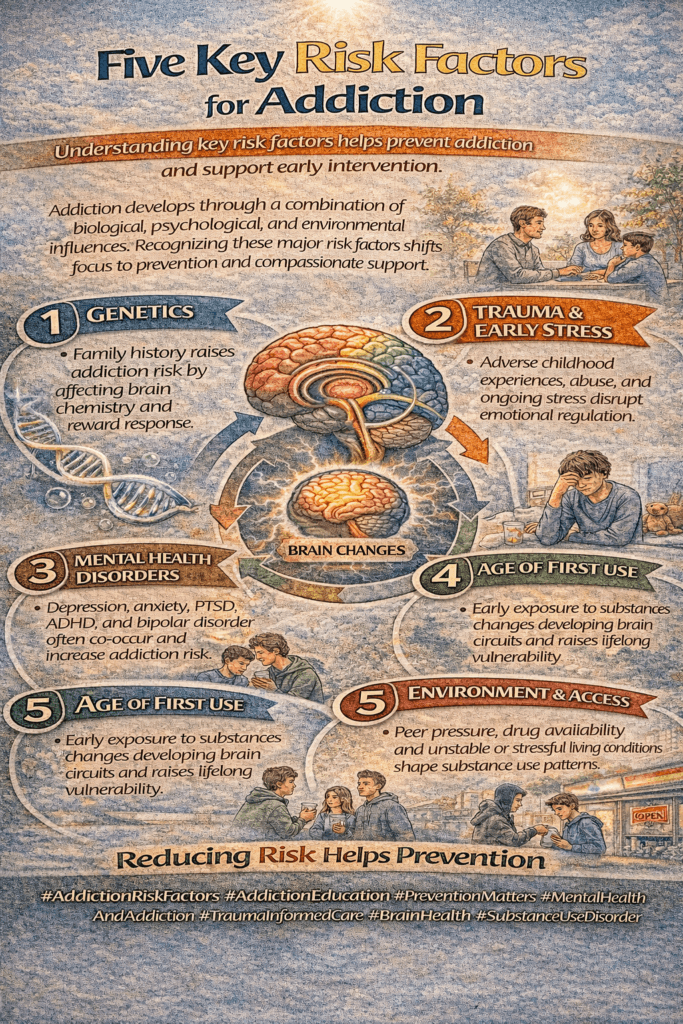
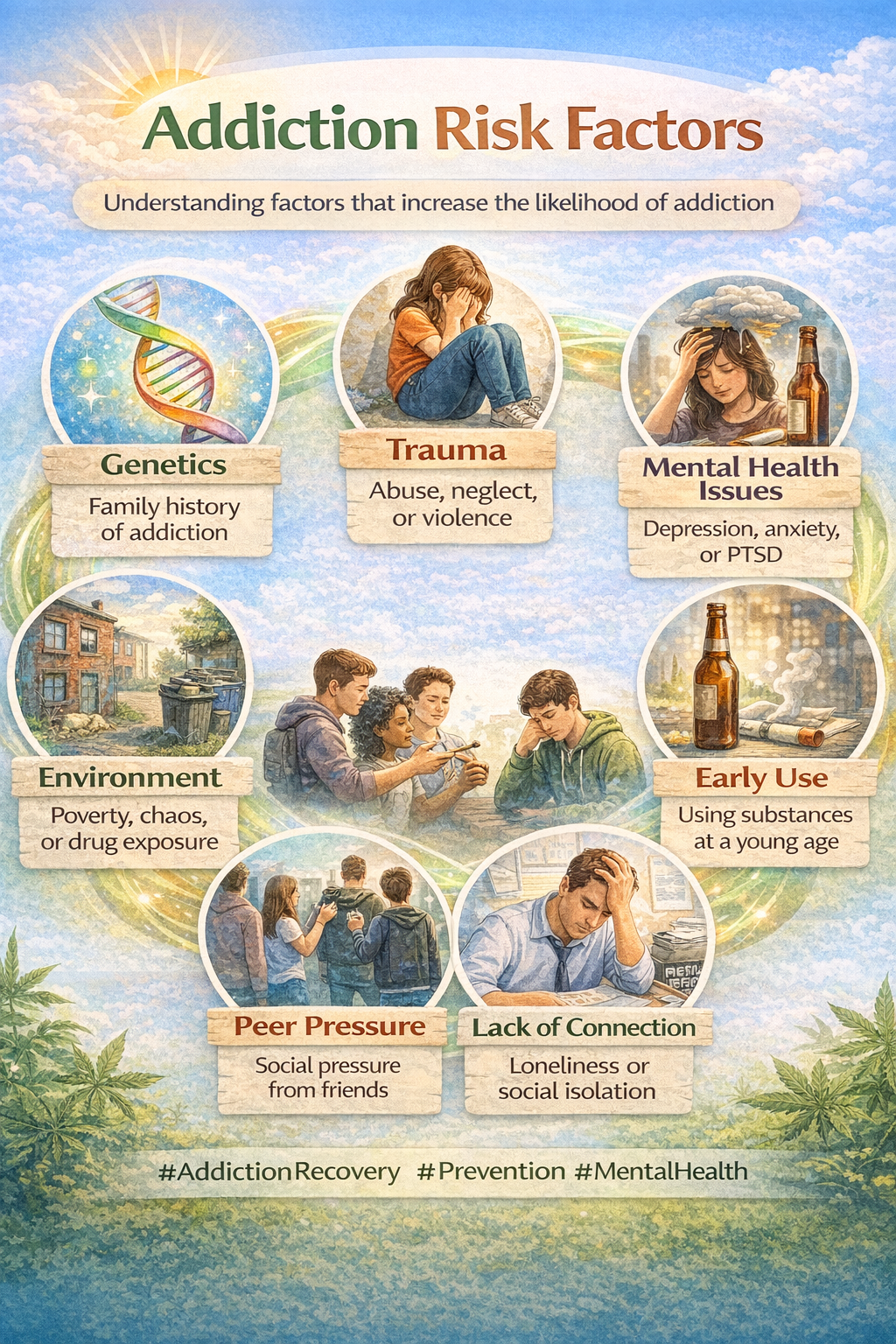
Most people who end up with addiction have a mix of risk factors stacking up in their lives. There’s never just one cause. Knowing the main risk factors helps explain why some people are more affected than others.
- Genetics and Family History
- Early Exposure and Environment
- Mental Health Conditions
- Social Connections (or Lack Thereof)
- Trauma and Stressful Life Events
1. Genetics and Family History
Genetics can play a pretty big part in addiction risk. If there’s someone in your family, like a parent, grandparent, or sibling, who has struggled with addiction, that can increase your own chances. Researchers estimate that genetics might make up about half of a person’s risk for addiction. This doesn’t mean anyone is “doomed” if addiction runs in their family, but it does mean the odds are a bit higher.
Several studies, like those from the American Psychological Association, suggest that genes influence how our brains respond to different substances. Some people’s brains light up more when exposed to certain drugs, making them want to keep using. But it’s not all about genes; they interact with the environment, meaning that background and experiences play a role too. This interaction is where people can sometimes shift the odds by focusing on healthy choices and supportive social connections, even if their genetic risk is high.
2. Early Exposure and Environment
The environment is a really important piece. Where someone grows up, the behaviors and attitudes they’re surrounded by, and whether there’s easy access to drugs or alcohol, all can increase risk. Kids and teens who try drugs or alcohol early are more likely to face addiction problems down the road.
Peer pressure is a powerful force, especially during teenage years. Friends and classmates using substances can make it feel normal to try these things out, making it much harder to say no. Living in an environment with high stress, neglect, or abuse can make early experimentation with substances more likely. Sometimes, even just being exposed to secondhand substance use, such as seeing adults in the house drink or use drugs regularly, can set the stage for trying these substances later.
How Community and School Influence the Risk
School settings, community programs, and neighborhood activities play larger roles than most people realize. Areas with limited social activities or a lack of positive adult role models often see higher rates of substance use. Supportive schools and community groups can make a real difference in keeping kids engaged and lowering the risk. Access to after-school programs, sports teams, or music groups provides kids with positive spaces and keeps them from boredom or risky situations. Sometimes, even a single teacher or neighbor showing interest can make a solid difference by giving a young person a place to feel valued and safe.
3. Mental Health Conditions
People managing anxiety, depression, bipolar disorder, ADHD, or other mental health struggles face additional risk. Sometimes substances seem to offer relief by numbing pain or making things feel lighter, but over time, this coping strategy can spiral into addiction.
This pattern is called “self-medication.” When someone uses alcohol or drugs to manage symptoms instead of getting professional help, they can quickly end up in a tough cycle. Getting treatment for mental health challenges early on helps reduce this risk. There’s a lot of overlap between mental health issues and addiction, and experts in treatment centers often address both at the same time for better results. Therapy, medication, and lifestyle changes like regular exercise and connecting with supportive friends all help form a strong foundation for health.
Warning Signs That Point to a Need for Support
- Sudden changes in mood or personality
- Withdrawing from friends, family, or activities
- Using substances more often or in larger amounts
- Trouble at school or work
If you spot several of these warning signs, it could be helpful to talk with a professional. Getting ahead of the issue is key; the earlier someone finds support, the better.
4. Social Connections (or Lack Thereof)
Feeling alone or disconnected puts people at greater risk for addiction. Positive social networks offer protection, while social isolation or relationships where substance use is encouraged increase the chances of addiction. Support from friends, family, and community is a key tool for resilience. Human beings are social at the core, so having connections helps with health in all areas—including avoiding addiction.
Social groups that support healthy behaviors, like team sports, faith groups, or clubs, can offer something to look forward to and reduce the temptation to use substances as a way to escape boredom or loneliness. Making the effort to connect, even if it feels difficult, can be a turning point.
How Support Networks Help
Staying connected isn’t just about having a big social circle. Even one trusted adult or friend can offer meaningful support. Reaching out, joining interest groups, or talking to a mentor can help build positive influences. It’s these connections that make challenges feel lighter and give people a sense of belonging and hope.
5. Trauma and Stressful Life Events
People who have experienced trauma, including abuse, death of a loved one, serious accidents, or major life upheavals, are at higher risk for addiction. When things get overwhelming, using drugs or alcohol can look like a shortcut to numb pain or forget tough experiences.
Trauma isn’t always obvious. Sometimes the impact builds up after several small events, or it comes from things outside of a person’s control. Therapists and counselors often help people recognize links between trauma and unhealthy coping patterns, so they can start making positive changes. Recognizing and accepting past pain is a key part of breaking out of cycles that lead to addiction.
Practical Strategies When Facing High Stress
- Reconnect with trusted friends, family, or professionals
- Find calming activities, like exercise, meditation, or creative hobbies
- Reach out for help if substance use starts to be the go-to solution
Sometimes adding just one positive routine, like journaling or walking, can slowly help replace unhealthy habits.
Other Factors Worth Knowing About
The five risk factors above are the big ones, but there are a few other things that make a difference:
- Age: Young brains are more easily influenced and more vulnerable to developing habits.
- Accessibility: If drugs or alcohol are easy to get, people may try them out of curiosity or boredom.
- Stigma: Fear of judgment can keep people from seeking help, making things worse over time.
It’s also helpful to look at cultural influences, media portrayals, and even advertising, which can both glamorize and normalize certain addictive behaviors. Being aware of these outside pressures helps you think more clearly about personal choices and recognize when you or others might need support.
How People Can Lower Their Addiction Risk
It’s not possible to control every risk, but there are ways to lower the chances of addiction:
- Stay informed: Understanding how addiction works makes it easier to spot risks early on. Keep learning and talk with others about what you learn.
- Build a support network: Friends, family, and community groups offer a safety net when things get tough. It’s worth taking the time to nurture these relationships.
- Check in with mental health: Getting help for anxiety, depression, or trauma protects against risky coping strategies.
- Ask for advice: Trusted adults, counselors, or doctors can offer useful insights and guidance.
- Find healthy outlets: Hobbies, exercise, and creative activities offer better ways to manage stress or boredom than substance use. Try exploring a new activity—sometimes the process of learning something unfamiliar can boost confidence and lower stress.
Small steps can add up to a more resilient response when faced with stress or temptation. It could start with just one conversation or signing up for a new class and gradually build on that with further positive changes.
Frequently Asked Questions
Question: What if addiction runs in my family—am I guaranteed to struggle with it too?
Answer: Not at all. Genetics do raise the risk, but making informed choices, building positive habits, and surrounding yourself with supportive people can make a big difference.
Question: Can mental health treatment lower my risk of addiction?
Answer: Yes, definitely. Managing mental health with the help of professionals instead of self-medicating with drugs or alcohol helps keep addiction at bay.
Question: Are some drugs more addictive than others?
Answer: Yes. Some drugs, like heroin or nicotine, have higher addictive potential, while others might take longer to cause dependence. But any substance can lead to addiction under the right circumstances.
Question: What’s the best first step if I’m worried about someone else’s risk?
Answer: Start a conversation in a calm, non-judgmental way. Offer your support and encourage reaching out to a professional if needed. Stay patient and let them know you care either way.
Why Knowing These Risk Factors Matters
Being aware of what can increase the risk of addiction helps people take better care of themselves and each other. Addiction doesn’t discriminate, but understanding the risk factors can put people in a stronger position to avoid trouble or reach out for help early. If you or someone you care about is worried about addiction, getting information and connecting with support services is always worth it. There’s no shame in asking for help; it’s a sign of strength and a good first move toward better health.
Video: 5 Things Making You Vulnerable to Addiction #BrainScience #AddictionRiskFactors