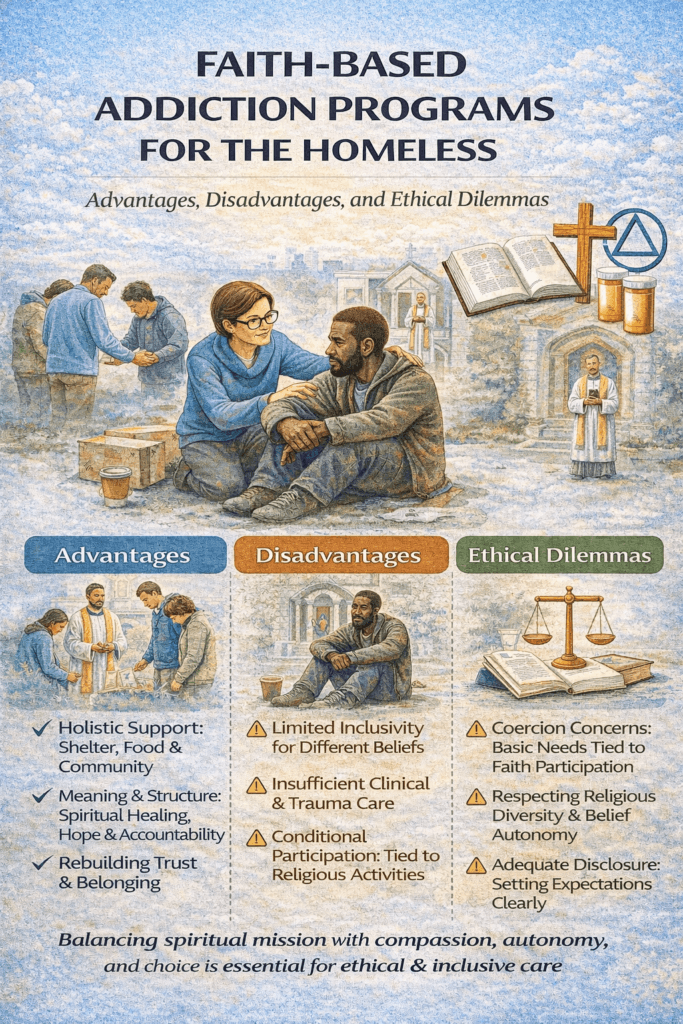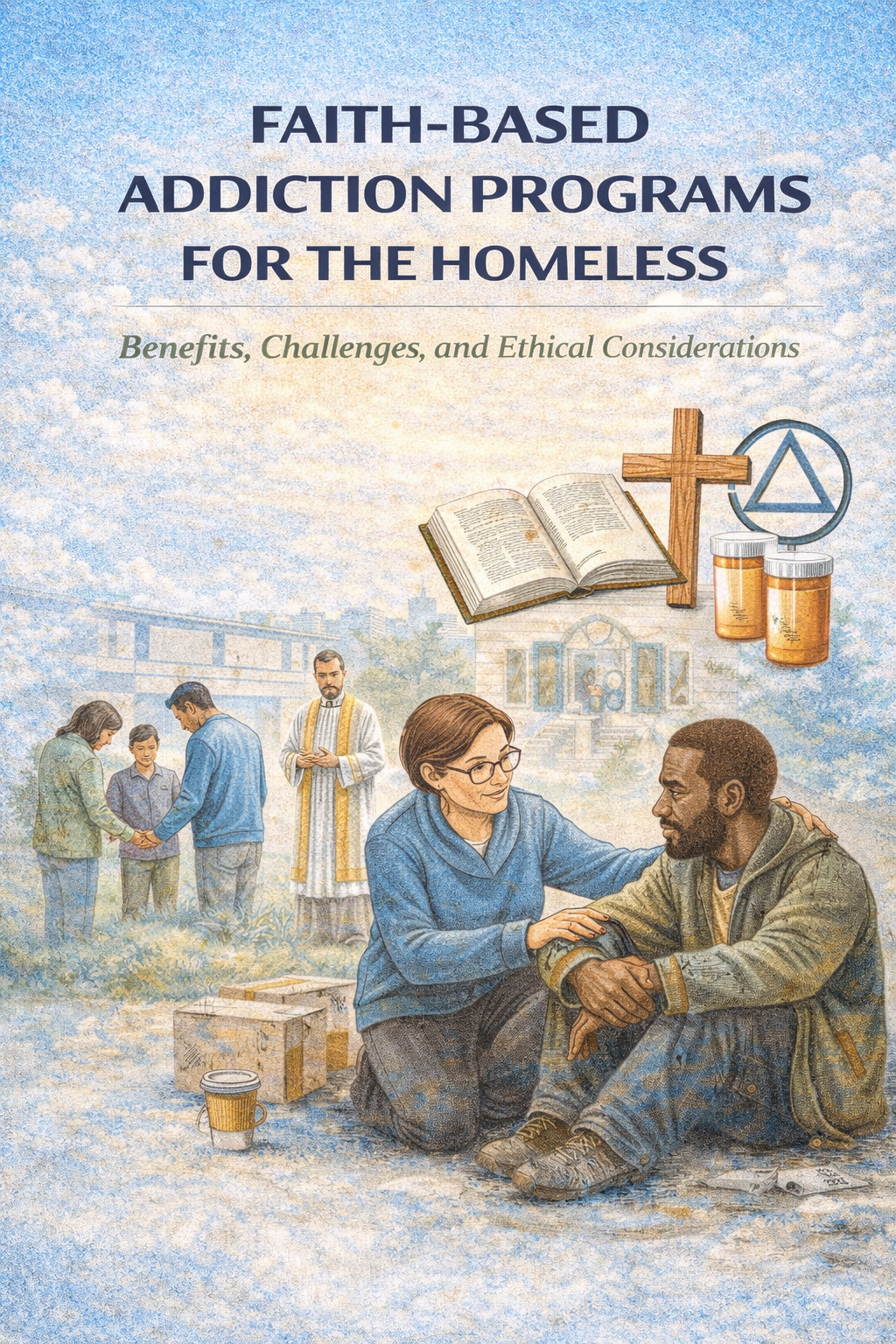
Faith-based addiction programs for the homeless play a significant role in addressing the complex intersection of substance use, homelessness, trauma, and social exclusion. These programs often provide shelter, food, community, and recovery support grounded in spiritual values such as compassion, hope, accountability, and service. For many individuals, faith-based approaches offer meaning, belonging, and moral structure that support recovery and personal transformation. At the same time, these programs present notable disadvantages and ethical dilemmas, particularly related to inclusivity, clinical integration, autonomy, and power dynamics. Examining both the benefits and challenges of faith-based addiction programs is essential to understanding their place within a broader, ethical, and effective system of care for people experiencing homelessness.
Faith-Based Addiction Programs for the Homeless: Healing Through Hope, Dignity, and Community
Homelessness and addiction are deeply intertwined, often reinforced by trauma, mental illness, poverty, and social isolation. Faith-based addiction programs for the homeless address these challenges by offering recovery support that meets both practical needs and spiritual well-being. These programs combine compassion, structure, and purpose to help individuals move from survival toward stability and healing.
At the heart of faith-based recovery programs is the belief in inherent human dignity. Regardless of past substance use, incarceration, or homelessness, individuals are welcomed without judgment. This unconditional acceptance helps rebuild self-worth, which is often severely damaged by addiction and life on the streets. Feeling valued and seen is a powerful motivator for change.
Faith-based programs often provide integrated services that address immediate needs alongside recovery support. Shelter, meals, clothing, hygiene services, and medical referrals are commonly paired with addiction counseling, peer support groups, and case management. By first stabilizing basic needs, individuals are better able to focus on recovery and long-term goals.
A key feature of these programs is the spiritual support that serves as a foundation for recovery. Prayer, meditation, scripture study, pastoral counseling, and faith-centered group discussions offer meaning, hope, and moral guidance. Spiritual practices help individuals process guilt, shame, and trauma while fostering forgiveness, accountability, and inner strength. For many, reconnecting with faith becomes a source of resilience during relapse risk or hardship.
Community and belonging are also central to faith-based addiction programs. Homelessness often isolates individuals from family and society. Faith communities offer consistent relationships, mentorship, and social connection. Shared meals, worship services, volunteer opportunities, and group activities help individuals rebuild trust and learn healthy relationship skills.
Faith-based programs also emphasize personal responsibility and life skills. Participants are encouraged to develop routines, pursue education or job training, maintain sobriety, and engage in service to others. Many programs incorporate work opportunities, transitional housing, and reentry support to help individuals regain independence and purpose.
Importantly, faith-based addiction programs often collaborate with secular healthcare and social services. Referrals for detox, mental health treatment, medication-assisted treatment, and housing programs ensure that participants receive comprehensive care. This collaborative approach recognizes addiction as both a spiritual and medical condition.
Faith-based addiction programs for the homeless offer more than shelter or sobriety—they offer hope, structure, and a renewed sense of purpose. By addressing spiritual healing alongside physical recovery and social reintegration, these programs create pathways out of homelessness and addiction. For many individuals, faith becomes not only a belief system but a lifeline that supports lasting recovery and a return to meaningful community life.
Limitations and Challenges of Faith-Based Addiction Programs for the Homeless
Faith-based addiction programs for the homeless provide vital support for many individuals, offering shelter, community, and hope during periods of extreme vulnerability. However, despite their strengths, these programs also present important disadvantages and limitations that should be carefully considered when designing inclusive and effective recovery systems. Understanding these challenges helps ensure that individuals receive care that truly meets their diverse needs.
One significant limitation is the lack of inclusivity for differing beliefs. Faith-based programs are often rooted in specific religious doctrines, practices, or worldviews. Individuals who do not share the same beliefs—or who have experienced religious trauma—may feel uncomfortable, excluded, or pressured to participate in spiritual activities. This can reduce engagement or cause individuals to leave programs prematurely, even when other supports are needed.
Another challenge is limited clinical integration. Some faith-based programs rely heavily on spiritual counseling while offering minimal access to evidence-based addiction treatment, such as medication-assisted treatment, licensed mental health care, or trauma-informed therapy. For individuals with severe substance use disorders, co-occurring mental illness, or complex medical needs, the absence of clinical services can limit recovery outcomes.
Conditional participation can also be a concern. In some programs, access to housing, meals, or services may be tied to attendance at religious services, prayer, or faith-based counseling. While this structure may benefit some participants, it can feel coercive to others, particularly when basic survival needs are at stake. This dynamic may undermine personal autonomy and informed choice.
Faith-based programs may also face resource and funding constraints. Many rely on donations, volunteers, or limited grants, which can affect program consistency, staffing, and long-term sustainability. As a result, services such as long-term housing support, employment placement, or comprehensive case management may be limited or unavailable.
Another disadvantage involves variability in program quality and oversight. Faith-based programs differ widely in training standards, accountability, and outcome monitoring. Without standardized regulations, some programs may lack safeguards for ethical care, confidentiality, and evidence-based practices, increasing the risk of inconsistent or ineffective support.
Finally, there can be challenges related to boundary clarity and power dynamics. When spiritual authority figures also control housing, discipline, or access to services, participants may feel hesitant to voice concerns or advocate for themselves. This imbalance can undermine trust and personal empowerment, both essential for recovery.
Faith-based addiction programs for the homeless can be deeply impactful for individuals who align with their spiritual approach. However, they are not universally appropriate or sufficient on their own. A balanced recovery system recognizes these limitations and emphasizes choice, inclusivity, clinical integration, and collaboration with secular services. By acknowledging both the strengths and disadvantages of faith-based programs, communities can build more comprehensive, ethical, and effective responses to homelessness and addiction.
Ethical Dilemmas in Faith-Based Addiction Programs for the Homeless
Faith-based addiction programs for the homeless often operate with strong intentions of compassion, service, and healing. They frequently provide shelter, meals, community, and recovery support to individuals who may otherwise lack access to care. However, alongside these benefits, ethical dilemmas arise that deserve careful examination to ensure that support is delivered in a manner that respects autonomy, dignity, and equity.
One of the central ethical concerns involves voluntary participation versus coercion. Homeless individuals often depend on programs for basic survival needs such as food, shelter, and safety. When access to these essentials is tied to participation in religious activities, prayer, or faith instruction, individuals may feel compelled to engage, regardless of their personal beliefs. This raises ethical questions about freedom of choice and whether consent can truly be considered voluntary when individuals are vulnerable.
Another ethical dilemma relates to respect for religious diversity and belief autonomy. Faith-based programs are typically rooted in specific religious traditions. While this can be meaningful for some participants, it may marginalize those who hold different beliefs, no religious beliefs, or who have experienced past religious trauma. Ethical service provision requires sensitivity to diversity and avoidance of exclusion or spiritual pressure.
Clinical adequacy and standard of care also present ethical challenges. Some faith-based programs emphasize spiritual transformation as the primary path to recovery while offering limited access to evidence-based medical and mental health treatment. For individuals with severe substance use disorders or co-occurring psychiatric conditions, reliance on spiritual counseling alone may fall short of accepted standards of care, raising concerns about potential harm or neglect.
Issues of power dynamics and authority further complicate ethical considerations. In many faith-based settings, spiritual leaders or staff may also control housing, discipline, and program progression. This dual authority can discourage participants from voicing concerns, reporting misconduct, or advocating for their needs, creating ethical risks related to accountability and participant safety.
Transparency and informed consent are additional ethical considerations. Participants should clearly understand program expectations, religious components, available services, and limitations before enrolling. When program requirements or belief-based practices are not fully disclosed, individuals may unknowingly enter arrangements that conflict with their values or needs.
Finally, there is an ethical responsibility to ensure equitable access to services. When faith-based organizations serve as primary providers in a community, individuals who opt out for religious or personal reasons may be left without alternatives. Ethical systems of care require a range of options to ensure that no one is denied support on the basis of their beliefs.
Faith-based addiction programs for the homeless can offer profound hope and transformation for many individuals. However, ethical practice demands careful balance—honoring spiritual missions while safeguarding autonomy, inclusivity, clinical integrity, and human rights. Addressing these ethical dilemmas openly allows faith-based and secular providers alike to collaborate more effectively, ensuring that recovery support remains compassionate, ethical, and accessible to all.
Frequently Asked Questions
Here are some common questions:
What are faith-based addiction programs for the homeless?
Faith-based addiction programs for the homeless are recovery and support services offered by religious organizations. They often combine shelter, meals, spiritual guidance, and addiction recovery support to help individuals address substance use while rebuilding stability and purpose.
How do faith-based programs differ from secular addiction programs?
Faith-based programs integrate spiritual or religious practices—such as prayer, worship, or scripture study—into recovery support. Secular programs typically focus solely on clinical, behavioral, and medical approaches without religious components.
What are the main benefits of faith-based addiction programs?
Benefits include a strong sense of community, moral and spiritual support, consistent mentorship, and holistic care that addresses emotional, social, and spiritual needs alongside addiction recovery.
Are faith-based programs effective for addiction recovery?
They can be effective for individuals who resonate with a spiritual approach. Faith, meaning, and community support may strengthen motivation and resilience, particularly for those who value religious beliefs.
Do participants have to follow a specific religion?
Program requirements vary. Some faith-based programs are inclusive and voluntary, while others may require participation in religious activities. It is important for participants to understand expectations before enrolling.
Are faith-based programs inclusive of different beliefs?
Inclusivity varies widely. Some programs welcome people of all beliefs, while others may feel less accessible to individuals with different faiths or no religious affiliation.
Do faith-based programs offer medical or clinical addiction treatment?
Some do, especially those that partner with healthcare providers. Others rely primarily on spiritual counseling. Access to evidence-based treatment varies by program and should be evaluated on a case-by-case basis.
What ethical concerns are associated with these programs?
Ethical concerns include potential coercion, limited choice, lack of informed consent, power imbalances, and insufficient access to clinical care for complex addiction or mental health needs.
Can participation feel coercive for homeless individuals?
It can, particularly if access to food, shelter, or safety is tied to religious participation. This raises ethical questions about autonomy and voluntary consent.
How do faith-based programs address trauma?
Some programs incorporate trauma-informed care and counseling, while others focus primarily on spiritual healing. Trauma-sensitive approaches vary significantly by program.
Are faith-based programs regulated or standardized?
Regulation and oversight vary by location and organization. Many faith-based programs are not held to the same standards as licensed treatment facilities, which can result in inconsistent quality.
Can faith-based and secular programs work together?
Yes. Collaboration between faith-based organizations and secular healthcare or social services can provide more comprehensive, ethical, and effective support for homeless individuals.
What should individuals consider before entering a faith-based program?
Individuals should consider their comfort with religious content, program expectations, access to medical and mental health care, rules and boundaries, and availability of alternative services.
What role do faith-based programs play in the broader homelessness and addiction response?
They often fill critical service gaps, especially in underserved areas. When operated ethically and collaboratively, they can be valuable components of a diverse support system.
What is the ideal approach to faith-based addiction programs for the homeless?
The ideal approach balances spiritual support with respect for autonomy, inclusivity, transparency, and access to evidence-based treatment, ensuring dignity and choice for every participant.
Conclusion
Faith-based addiction programs for the homeless offer meaningful advantages, including holistic support, community connection, and spiritual healing that can be life-changing for individuals who align with their approach. However, they also raise important concerns regarding access, informed choice, reliance on spiritual methods rather than evidence-based care, and ethical responsibilities toward vulnerable populations. Recognizing these advantages, disadvantages, and ethical dilemmas allows communities and policymakers to move beyond polarized views and toward balanced solutions. When faith-based programs operate transparently, respect individual autonomy, collaborate with clinical and secular services, and prioritize dignity and choice, they can serve as valuable components of a comprehensive response to homelessness and addiction—one that is compassionate, ethical, and inclusive.
Video: Homeless Man Gets Second Chance Through Faith… Watch What Changes #Inspiration #Humanity