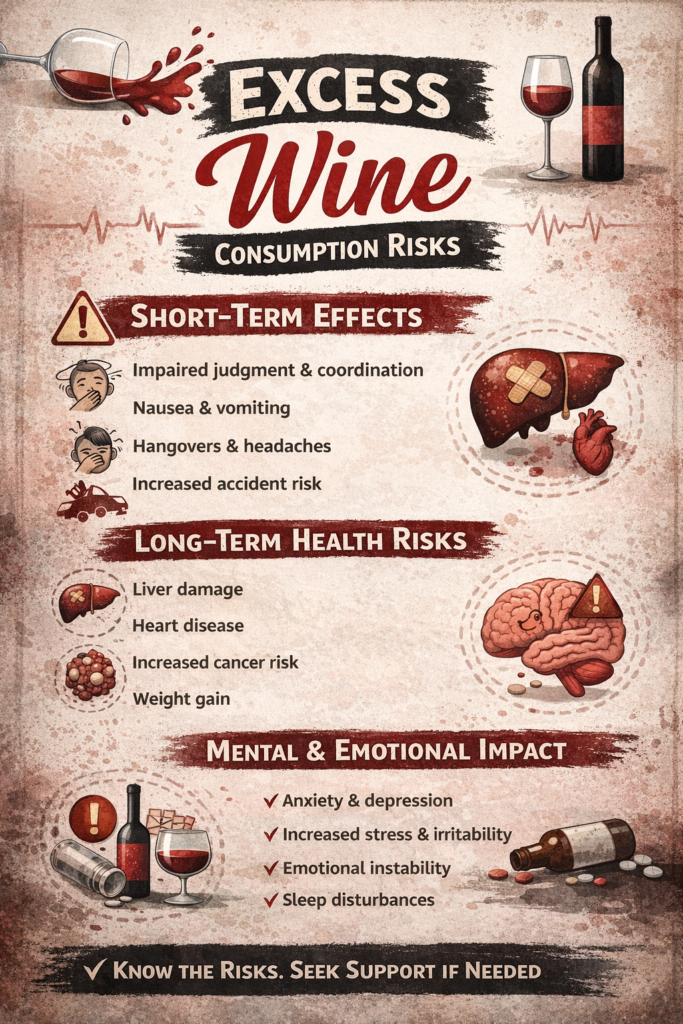
Wine is often linked to relaxation and celebration, but the line between moderate and excessive drinking can blur—especially when it becomes a way to cope. Over time, excessive wine consumption can affect physical health, mental well-being, relationships, and daily life. Recognizing these risks helps support healthier, more balanced choices.
🍷 When Wine Goes Too Far: Understanding the Risks of Excess Consumption
Wine is often associated with relaxation, celebration, and even health benefits when consumed in moderation. But when “just one glass” turns into several, the effects can quickly shift from enjoyable to harmful. Understanding the risks of excess wine consumption is key to protecting both your physical and mental health.
⚠️ Short-Term Effects: What Happens Right Away
Drinking too much wine in one sitting can lead to immediate and noticeable effects. Alcohol slows down brain function, which affects judgment, coordination, and reaction time.
Common short-term effects include:
- Impaired decision-making
- Slurred speech and poor coordination
- Nausea and vomiting
- Headaches or hangovers
- Increased risk of accidents or injuries
Even a single night of heavy drinking can disrupt sleep quality and leave your body feeling depleted the next day.
🧠 Mental and Emotional Impact
Excess wine consumption doesn’t just affect your body—it also impacts your mind. Alcohol is a depressant, meaning it can worsen mood over time.
You may experience:
- Increased anxiety or irritability
- Low mood or depressive symptoms
- Heightened intrusive or negative thoughts
- Emotional instability
While wine might feel like it relieves stress in the moment, it often amplifies emotional struggles later.
❤️ Long-Term Health Risks
Regularly drinking too much wine can have serious long-term consequences for your health.
These may include:
- Liver damage (such as fatty liver or cirrhosis)
- Increased risk of heart problems
- Weakened immune system
- Higher risk of certain cancers
- Weight gain and metabolic issues
The cumulative effect over time can significantly impact your overall well-being.
🔁 The Risk of Dependence
One of the more subtle dangers of wine is how easily it can become a habit. Because it’s socially accepted, it may not feel like a risk—but patterns can form quickly.
Warning signs include:
- Needing more wine to feel relaxed
- Drinking more often than intended
- Using wine to cope with stress or emotions
- Difficulty cutting back
Recognizing these patterns early can help prevent long-term dependence.
🌱 Finding Balance
You don’t have to give up wine entirely to protect your health—but awareness and moderation are essential.
Helpful strategies:
- Set limits before you start drinking
- Alternate with water
- Avoid using wine as your primary coping tool
- Take alcohol-free days during the week
If you find it difficult to cut back, reaching out for support—whether from a professional or a trusted person—can make a big difference.
💬 Final Thoughts
Wine can be part of a balanced lifestyle, but excess consumption carries real risks that are often overlooked. Paying attention to how much—and why—you drink can help you make choices that support your long-term health and well-being.
🍷 Staying in Control: Self-Management Strategies to Reduce Excess Wine Consumption Risks
Wine can easily shift from a casual indulgence to a daily habit—especially when it becomes tied to stress relief, routine, or social comfort. The good news is that with intentional self-management strategies, you can stay in control of your drinking and reduce the risks that come with overconsumption.
🧠 Understand Your Triggers
The first step in managing wine consumption is recognizing why you reach for it.
Common triggers include:
- Stress after a long day
- Social situations or peer pressure
- Boredom or loneliness
- Habit (e.g., a nightly glass that turns into several)
Start noticing patterns. Ask yourself: Am I drinking because I want to, or because it’s automatic?
⚖️ Set Clear Limits
Creating boundaries before you start drinking can prevent overdoing it.
Helpful approaches:
- Decide in advance how many glasses you’ll have
- Use smaller wine glasses to naturally limit intake
- Set alcohol-free days each week
- Track your consumption to stay aware
Clear limits remove the guesswork in the moment.
💧 Pace Yourself and Stay Hydrated
Slowing down your drinking helps your body process alcohol more effectively.
Try this:
- Alternate each glass of wine with water
- Sip slowly rather than refilling immediately
- Eat before and while drinking to reduce absorption speed
Pacing gives you time to notice when you’ve had enough.
🔄 Replace the Habit, Not Just the Drink
If wine has become part of your routine, simply cutting it out can feel difficult. Instead, replace it with something that serves a similar purpose.
Examples:
- Herbal tea or sparkling water in the evening
- A relaxing activity (reading, walking, music)
- Stress-relief practices like journaling or deep breathing
This helps break the association without leaving a gap.
🧩 Build Healthier Coping Strategies
If wine is your go-to for managing emotions, it’s important to develop alternatives.
Consider:
- Exercise to release stress
- Talking to someone you trust
- Practicing mindfulness or grounding techniques
- Engaging in hobbies that bring satisfaction
Over time, these strategies become more effective—and sustainable—than alcohol.
🚫 Learn to Say No (Without Guilt)
Social pressure can make it harder to stick to your limits.
You can:
- Politely decline additional drinks
- Offer a simple explanation (“I’m pacing myself tonight”)
- Hold a non-alcoholic drink to avoid repeated offers
Setting boundaries is a form of self-respect, not restriction.
🔍 Check In With Yourself Regularly
Self-awareness is key to long-term change.
Ask yourself:
- How do I feel after drinking?
- Is this helping or hurting my well-being?
- Am I staying within the limits I set?
Regular reflection helps you stay aligned with your goals.
🌱 When to Seek Extra Support
If you find it difficult to manage your wine consumption despite your efforts, you’re not alone—and support can help.
Consider reaching out to:
- A therapist or counselor
- Support groups
- Healthcare professionals
Getting support is a proactive step toward better health.
💬 Final Thoughts
Managing wine consumption isn’t about perfection—it’s about awareness, balance, and intention. By understanding your habits and building healthier alternatives, you can reduce risks and feel more in control of your choices.
👨👩👧👦 Stronger Together: Family Support Strategies to Prevent Excess Wine Consumption Risks
Excess wine consumption doesn’t just affect the individual—it can impact the entire family system. The good news is that families can play a powerful role in prevention and support. With open communication, healthy boundaries, and shared strategies, loved ones can help reduce risks while fostering a supportive environment for change.
🧠 Create a Safe Space for Honest Conversations
Open, non-judgmental communication is the foundation of effective support.
Helpful approaches:
- Express concern without blame (“I’ve noticed you’ve been drinking more lately, and I care about you”)
- Listen actively without interrupting or criticizing
- Avoid shame-based language, which can lead to defensiveness
When people feel safe rather than judged, they’re more likely to be honest and receptive.
⚖️ Encourage Healthy Boundaries
Families can help reinforce limits in a respectful and supportive way.
This might include:
- Not pressuring someone to drink in social settings
- Supporting alcohol-free choices
- Setting expectations around alcohol use in the home
Boundaries protect both the individual and the family dynamic.
🍽️ Model Healthy Behaviors
Family members influence each other more than they may realize.
Ways to model balance:
- Demonstrate moderation in your own drinking habits
- Plan activities that don’t revolve around alcohol
- Normalize choosing non-alcoholic options
Leading by example can be more impactful than direct advice.
🧩 Offer Alternatives to Drinking
Sometimes wine becomes a shared routine—especially in the evenings or at gatherings.
Replace that routine with:
- Game nights or movie nights
- Cooking meals together
- Outdoor activities or walks
- Creative hobbies or shared projects
Creating new traditions helps shift the focus away from alcohol.
❤️ Provide Emotional Support Without Enabling
It’s important to support your loved one without unintentionally reinforcing unhealthy patterns.
Support looks like:
- Encouraging healthier coping strategies
- Being present during stressful times
- Acknowledging progress, even small steps
Avoid enabling behaviors such as:
- Making excuses for excessive drinking
- Covering up consequences
- Ignoring problematic patterns
🔍 Recognize Warning Signs Together
Families can work as a team to notice early signs of problematic drinking.
Watch for:
- Increased frequency or quantity of drinking
- Using wine to cope with emotions
- Changes in mood, behavior, or responsibilities
Early awareness allows for earlier intervention.
🤝 Encourage Professional Help When Needed
Sometimes family support alone isn’t enough—and that’s okay.
You can:
- Gently suggest speaking with a therapist or counselor
- Offer to help find resources or attend appointments
- Normalize seeking help as a strength, not a weakness
Approaching this with care and compassion makes a big difference.
🌱 Take Care of Yourself Too
Supporting someone else can be emotionally taxing. Family members also need support and boundaries.
Remember to:
- Prioritize your own mental health
- Seek support if you feel overwhelmed
- Set limits to protect your well-being
Healthy supporters are more effective supporters.
💬 Final Thoughts
Family support can be a powerful protective factor against excessive wine consumption. Through communication, boundaries, and shared effort, families can create an environment that encourages healthier choices and lasting change.
🌍 Beyond the Individual: Community Resource Strategies to Prevent Excess Wine Consumption Risks
While personal choices and family support are important, community resources play a critical role in preventing excessive wine consumption. Access to education, support systems, and local programs can create an environment that promotes healthier behaviors and reduces the risks associated with alcohol use.
🧠 Increase Awareness Through Community Education
Education is one of the most powerful prevention tools.
Communities can help by:
- Offering workshops on alcohol awareness and health risks
- Providing school-based education programs
- Sharing public health campaigns about safe drinking limits
When people understand the risks, they’re more likely to make informed decisions.
🏥 Improve Access to Support Services
Having accessible, affordable support can make a major difference.
Key resources include:
- Counseling and mental health services
- Substance use treatment programs
- Community health clinics
Reducing barriers—like cost, stigma, or lack of information—encourages people to seek help earlier.
🤝 Support Groups and Peer Networks
Peer support can be incredibly effective in preventing and reducing excessive drinking.
Examples:
- Local recovery or moderation groups
- Peer-led accountability groups
- Community-based wellness programs
These spaces provide connection, understanding, and shared motivation.
🏫 Partner with Schools and Workplaces
Prevention is most effective when it reaches people in their everyday environments.
Communities can:
- Implement workplace wellness programs focused on stress management
- Provide school programs that teach coping skills and emotional regulation
- Encourage alcohol-free social events
This helps address root causes like stress and social pressure.
🎉 Promote Alcohol-Free Social Alternatives
Many social environments revolve around alcohol—but communities can change that.
Ideas include:
- Hosting alcohol-free events and gatherings
- Creating sober social spaces
- Supporting recreational programs (sports leagues, art classes, fitness groups)
When alternatives exist, people feel less pressure to drink.
📢 Reduce Stigma Around Seeking Help
One of the biggest barriers to prevention is stigma.
Communities can:
- Normalize conversations about mental health and substance use
- Share real stories of recovery and support
- Encourage non-judgmental attitudes
Reducing stigma makes it easier for individuals to reach out.
⚖️ Advocate for Public Health Policies
Community-level change often involves policy and advocacy.
Examples include:
- Promoting responsible alcohol sales practices
- Supporting policies that limit overconsumption
- Increasing funding for prevention and treatment programs
These efforts help create safer environments on a larger scale.
🌱 Build a Culture of Support and Balance
Ultimately, prevention is about creating a culture that supports healthy choices.
This looks like:
- Encouraging balance rather than excess
- Valuing mental and physical well-being
- Supporting individuals at every stage—whether they’re preventing, reducing, or recovering
💬 Final Thoughts
Preventing excess wine consumption isn’t just an individual responsibility—it’s a community effort. When education, support, and accessible resources come together, they create a powerful network that helps people make healthier, more sustainable choices.
Frequently Asked Questions
Here are some common questions:
What counts as “too much” wine?
Answer:
Moderate drinking is generally defined as up to one glass per day for women and up to two for men. Drinking more than this regularly—or consuming several drinks in one sitting (binge drinking)—is considered excessive and increases health risks.
Is wine safer than other types of alcohol?
Answer:
Not necessarily. While wine is sometimes associated with health benefits, the alcohol it contains is the same as in beer or spirits. Excess consumption of any type of alcohol carries similar risks.
What are the immediate effects of drinking too much wine?
Answer:
Short-term effects can include:
- Impaired judgment and coordination
- Nausea and vomiting
- Headaches or hangovers
- Increased risk of accidents or injuries
These effects can occur even after a single episode of heavy drinking.
What are the long-term health risks?
Answer:
Chronic overconsumption of wine can lead to:
- Liver damage (e.g., fatty liver, cirrhosis)
- Heart problems
- Increased risk of certain cancers
- Weakened immune system
- Weight gain and metabolic issues
Can drinking too much wine affect mental health?
Answer:
Yes. Alcohol is a depressant and can worsen:
- Anxiety and stress
- Depression
- Mood swings
- Sleep disturbances
Over time, it can also contribute to emotional instability and poor coping skills.
How can I tell if my wine consumption is becoming a problem?
Answer:
Warning signs include:
- Drinking more than intended
- Needing alcohol to relax or cope
- Difficulty cutting back
- Feeling guilty about drinking
- Neglecting responsibilities
If these patterns are present, it may be time to reassess your habits.
Can you become dependent on wine?
Answer:
Yes. Regular excessive drinking can lead to alcohol dependence. Wine’s social acceptance can sometimes make it easier to overlook developing patterns of misuse.
Does wine really help with stress?
Answer:
It may provide temporary relief, but it doesn’t address underlying stress. In fact, it can make stress and anxiety worse over time and create a cycle of reliance.
What are some ways to reduce wine consumption?
Answer:
Helpful strategies include:
- Setting limits before drinking
- Taking alcohol-free days
- Alternating with water
- Finding healthier coping methods (exercise, relaxation techniques)
- Avoiding triggers or high-risk situations
When should someone seek help?
Answer:
Support may be needed if:
- Cutting back feels difficult
- Drinking is affecting health, relationships, or work
- There are signs of dependence
Reaching out to a healthcare provider, therapist, or support group can be an important step.
Conclusion
Excess wine consumption is a common yet often underestimated issue with real and lasting consequences. From short-term impairments to long-term health risks and potential dependence, the effects can accumulate over time. The good news is that awareness, combined with intentional strategies—whether personal, familial, or community-based—can significantly reduce these risks. By recognizing patterns, setting boundaries, and seeking support when needed, individuals can regain control and prioritize their well-being while maintaining a healthier relationship with alcohol.
Video: The Exact Moment Wine Damage Becomes Irreversible #health #warning