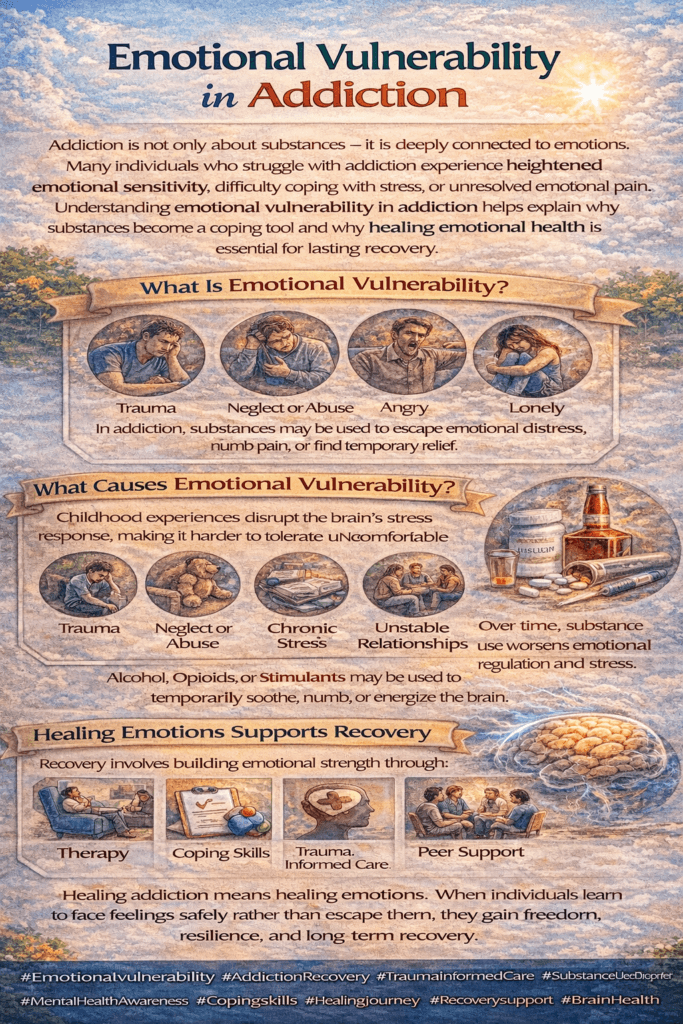
Emotional vulnerability often gets overlooked when talking about addiction, but it plays a pretty big role in both how addiction develops and how recovery unfolds. For anyone dealing with addiction, learning to handle strong emotions is just as important as understanding physical cravings or triggers. I’m going to break down what emotional vulnerability is, why it can get tricky during addiction, and offer some practical ways to work through tough feelings.
Understanding Emotional Vulnerability and Addiction
Emotional vulnerability shows up when someone feels exposed, sensitive, or easily impacted by emotional events. I think of it as that feeling you get when you’re not sure how to keep it together, even if things on the outside look fine. In the context of addiction, emotional vulnerability can be both a root cause and a driving force that keeps addiction going.
Research shows that a lot of people turn to substances or compulsive behaviors as a way to escape or numb emotional pain (source). This might be stress, sadness, anxiety, shame, or even boredom. Over time, the quick relief substances bring can get tied to dealing with these tough feelings, making it much harder to break the cycle. When these patterns repeat, the lines between emotional struggles and substance abuse start to blur, and one feeds the other in a tough loop that’s hard to break without real support. Understanding this cycle is key to creating a foundation for lasting recovery.
Why Emotional Vulnerability Gets Overlooked in Addiction
When folks talk about addiction, the focus tends to switch toward physical symptoms or habits. But a lot of people miss the fact that addiction is often about trying to manage emotional discomfort. If you or someone you know feels especially sensitive or struggles to handle strong emotions, it might be a big part of why substances or risky behaviors became appealing in the first place.
Emotional vulnerability doesn’t mean someone is weak. It just means that their emotional armor is a bit thinner. Stressful events, trauma, long-term anxiety, or even genetics can make people feel more emotionally exposed. And when those tough emotions come up, it’s tempting to reach for something that promises instant relief, even if it’s only temporary. Sometimes, this urge to seek quick comfort isn’t even conscious—it’s simply what the mind and body have learned to do over time. Recognizing this tendency offers a starting point for making different choices during recovery.
Spotting Emotional Vulnerability in Your Own Life
Recognizing emotional vulnerability isn’t always easy. I’ve noticed some common signs that pop up, especially for people navigating addiction:
- Intense or unpredictable mood changes: Quick shifts from sadness to anger, irritability, or numbness.
- Difficulty expressing feelings: Not wanting to talk about emotions, or struggling to even put words to how you feel.
- Feeling overwhelmed by stress: Small problems can feel huge, or everyday stress seems like too much to handle.
- Isolation or withdrawing from others: Choosing to be alone or feeling like nobody would understand anyway.
These red flags are worth checking in on, especially if they’re getting in the way of daily life or relationships. Sometimes, just giving these patterns a name can be the first step toward switching them up. Gently acknowledging these feelings makes it easier to face them and begin the healing process. Working through old emotional habits happens little by little, and that’s completely okay.
How Emotional Vulnerability Fuels Addiction
Getting honest about emotional vulnerability can be uncomfortable. I’ve seen it with friends, loved ones, and even in myself. But ignoring or burying these feelings actually gives addiction more power.
Addiction tends to create a cycle, and emotional vulnerability sits right at the center. Stress or pain triggers overwhelming emotion. Substances or compulsive behaviors offer relief for a little while. Then, guilt, shame, or regret kicks in, often making emotional vulnerability worse. Rinse and repeat, and it’s easy to see how the whole thing can spiral fast. Breaking this pattern takes support and a willingness to notice when it’s happening, even on rough days.
Breaking the Cycle: Building Emotional Strength in Recovery
Learning to handle emotional vulnerability is a game-changer for anyone in addiction recovery. It’s not about toughing it out or ignoring feelings. Instead, it’s about becoming better at recognizing emotions and responding to them in healthier ways.
- Getting comfortable with emotions: Allowing yourself to notice what you’re feeling, even when it’s tough. Mindfulness, journaling, or just sitting with a feeling for a few minutes can make a big difference. Taking a moment at the end of each day to ask yourself, “How am I doing, really?” can be a gentle way to start building self-awareness.
- Building support systems: Staying connected with people who get what you’re going through—whether it’s friends, support groups, or therapists—can help cut down isolation. Sometimes, sending a short message or attending a group meeting is enough to remind you that you’re not alone. Support can come from the most unexpected places, so keep an open mind about who might be willing to listen.
- Replacing old habits with new tools: Finding something that helps you cope, like exercise, art, deep breathing, or meditation, gives you other options when emotions run high. Over time, these supportive activities gradually become go-to choices instead of harmful substances or behaviors.
- Learning to ask for help: Being vulnerable sometimes means saying you need support. It’s not always easy, but it’s definitely not a sign of weakness. In fact, reaching out is one of the bravest steps you can take in recovery. It takes practice, but over time, asking for help starts to feel more natural and less intimidating.
Common Challenges with Emotional Vulnerability in Recovery
No one said this stuff is simple. I’ve noticed a few obstacles tend to pop up for people trying to handle their emotions without leaning on old habits:
- Fear of Judgment: Worrying about what others will think can keep people from opening up. This fear can be tough to shake, but focusing on supportive relationships can make it easier.
- Old Patterns: If you’ve been numbing out for a long time, feeling anything at all can seem scary at first. Remember that being uncomfortable at the beginning is perfectly normal—it won’t last forever.
- Lack of Skills: Not everyone was taught how to process emotions or talk about what they’re feeling. You can learn these skills at any age. Books, podcasts, and group sessions are great tools for learning new ways to handle emotions.
- Triggers: Certain places, people, or memories can quickly flood someone with emotion, sometimes leading to a slip or relapse. Recognizing triggers is a huge part of staying steady. Writing down a list of known triggers helps prepare strategies for handling them if they arise.
Being patient with yourself through these bumps is key. Progress may feel slow, but every step forward matters. Remember, setbacks are normal. The important thing is to pick yourself up, reflect on what happened, and keep moving.
Practical Tools for Navigating Emotional Vulnerability
I want to share some basic strategies that are worth trying if you’re working on getting more comfortable with vulnerability during recovery:
- Mindfulness: Try spending just five minutes a day checking in with yourself—what are you feeling physically and emotionally right now?
- Grounding Techniques: Use your senses to bring yourself back to the present moment. Touch, taste, sound, sight, and smell can help anchor you and break cycles of worry.
- Creative Outlets: Drawing, writing, or making music can help process feelings you can’t put into words. Even doodling or coloring can help let emotions out in a safe and gentle way.
- Movement: Even a quick walk or stretching break can help calm intense emotions. Yoga, gardening, or any physical activity counts too; the important thing is to choose something you actually enjoy.
- Reaching Out: Whether it’s a friend, group, or professional, talking things out gives you perspective and reduces shame. Try setting a weekly check-in with someone you trust, even if it’s a short chat.
Why Facing Emotional Vulnerability Helps in the Long Run
Facing emotional vulnerability isn’t just about feeling better. It’s actually super important for longterm recovery. People who learn to recognize and accept their emotions are less likely to fall back into old patterns. They’re better equipped to spot warning signs of relapse and respond to stress in healthier ways.
More than that, being open with yourself and others can help rebuild relationships that may have been affected by addiction. When you admit that things are tough, those around you know how to support you. Over time, this process can help replace old habits with new, meaningful connections and coping strategies. Vulnerability can become a source of strength, guiding healthier, more positive choices.
Frequently Asked Questions
I get a lot of questions about how emotional vulnerability and addiction interact. Here are a few that come up pretty often:
Question: Can emotional vulnerability actually cause addiction?
Answer: Emotional vulnerability itself doesn’t cause addiction, but it makes someone more likely to look for relief in unhealthy ways. Tackling those feelings head-on can make recovery smoother and reduce the risk of relapse.
Question: Is it normal to feel more emotional during early recovery?
Answer: Absolutely. Once you remove substances, emotions that you’ve been numbing often resurface. This is a normal part of recovery and gets easier with support and new coping skills.
Question: How can I tell the difference between vulnerability and weakness?
Answer: Vulnerability means you’re allowing yourself to feel and be honest about those feelings. It’s actually a sign of strength and courage, not weakness.
Question: What happens if I relapse after feeling overwhelmed?
Answer: Relapse happens to many people, especially when strong emotions hit. Instead of focusing on guilt, use it as a chance to figure out what you can do differently next time. Talk to someone you trust and keep moving forward.
Living with Emotional Vulnerability: Building Resilience
Living with emotional vulnerability doesn’t mean life has to be overwhelming. As you gain more tools and support, those raw emotions can become valuable guides rather than obstacles. The goal isn’t to avoid feeling things; it’s to learn how to take care of yourself when big feelings hit. Every step you take makes a difference, whether it’s day one or year five into recovery. Real change happens when you give yourself permission to be honest and reach out for help when you need it. You are not alone, and with patience, compassion, and steady effort, building resilience becomes possible one day at a time.
Video: The Emotional Root of Every Addiction #Psychology #MentalWellness #Healing