Mind-altering drugs affect more than temporary mood or perception—they alter how the brain regulates emotions, decision-making, memory, and reality interpretation. By disrupting neurotransmitters such as dopamine and serotonin, these substances can influence personality, behavior, and judgment. Early changes may be subtle, appearing as mild irritability, reduced motivation, or increased risk-taking, and often go unnoticed at first.
With repeated use, the brain adapts. Reward pathways become overstimulated while areas responsible for impulse control and reasoning weaken. Over time, this imbalance can lead to emotional instability, impaired judgment, memory problems, and shifts in social behavior that affect relationships, work performance, and mental health. Recognizing these effects as neurobiological—not moral—changes is essential for identifying early warning signs, preventing long-term consequences, and supporting informed, healthy choices.
Drugs That Can Change Personalities: Understanding the Mind-Altering Effects
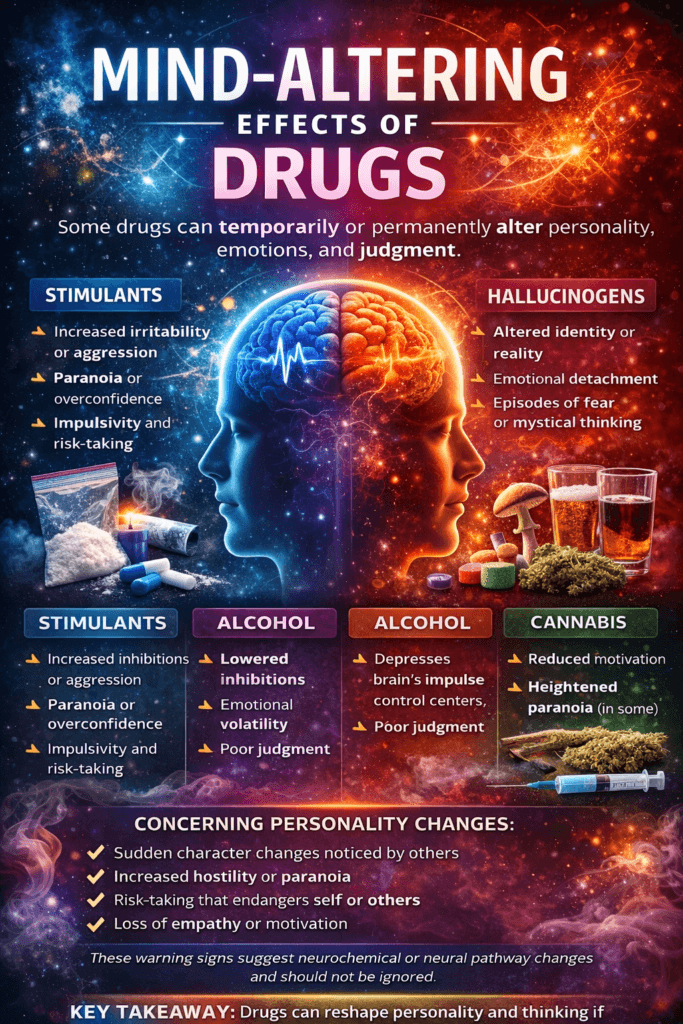
Certain substances don’t just affect mood or perception—they can temporarily or permanently alter personality traits, behavior patterns, emotional responses, and decision-making. These changes may include increased aggression, paranoia, impulsivity, emotional detachment, or even shifts in moral judgment. While some drugs produce short-term personality shifts during intoxication, others can create lasting psychological changes by altering brain chemistry, neural pathways, and emotional regulation systems. Understanding which substances can influence personality—and how they do it—helps individuals, families, and clinicians recognize warning signs early and intervene effectively.
Stimulants (Cocaine, Methamphetamine, Amphetamines)
Personality effects:
- Increased irritability or aggression
- Inflated confidence or grandiosity
- Paranoia or suspiciousness
- Impulsivity and risk-taking
Why does it happen?
Stimulants flood the brain with dopamine and norepinephrine, overstimulating reward and alertness circuits. Chronic use can damage emotional regulation centers, making personality changes persist even when not intoxicated.
Hallucinogens (LSD, Psilocybin, PCP)
Personality effects:
- Altered sense of identity or reality
- Emotional detachment
- Heightened suggestibility
- Episodes of fear or mystical thinking
Why does it happen?
These drugs disrupt serotonin signaling and sensory processing networks, temporarily changing how individuals interpret reality, self-concept, and emotional meaning.
Alcohol
Personality effects:
- Lowered inhibitions
- Increased sociability—or aggression
- Emotional volatility
- Poor judgment
Why does it happen:
Alcohol suppresses the prefrontal cortex, the brain region responsible for impulse control and rational decision-making. This can reveal behaviors a person would normally regulate.
Cannabis (High-THC Products)
Personality effects:
- Social withdrawal
- Reduced motivation
- Heightened anxiety or suspicion (in some users)
- Altered perception of time and priorities
Why does it happen?
THC interacts with the brain’s endocannabinoid system, which regulates mood, motivation, and stress responses.
Anabolic Steroids
Personality effects:
- Extreme irritability (“roid rage”)
- Aggression or hostility
- Mood swings
- Increased dominance behavior
Why does it happen?
Steroids alter hormone levels—especially testosterone—which strongly influences mood regulation and aggression circuits.
When Personality Changes Become Concerning
Warning signs that substance-related personality shifts may be harmful include:
- Sudden character changes noticed by others
- Loss of empathy or moral judgment
- Persistent paranoia or hostility
- Risk-taking that endangers oneself or others
- Social withdrawal or loss of motivation
These signs may indicate neurochemical changes, dependency, or emerging mental health complications.
Long-Term Brain Impact
Repeated substance exposure can reshape neural pathways through neuroadaptation, meaning the brain rewires itself to function around the drug. Over time, this can:
- Reduce emotional stability
- Alter stress responses
- Change decision-making patterns
- Affect empathy and social behavior
Some changes reverse with sobriety, but others—especially after long-term heavy use—can persist for months or years.
Recovery Insight
Personality changes caused by drugs are not moral failures—they are neurobiological effects. With abstinence, therapy, and support, many individuals gradually regain their baseline personality traits. Early intervention significantly improves outcomes because the brain retains greater capacity for recovery before long-term damage occurs.
✅ Key Takeaway:
Drugs don’t just change how someone feels—they can change who someone appears to be. Recognizing substance-related personality shifts early can protect relationships, mental health, and long-term brain function.
Self-Management Strategies to Recognize and Prevent Mind-Altering Effects of Drugs
Mind-altering substances can quietly change perception, emotions, judgment, and behavior long before a person realizes what is happening. These shifts may appear as mood swings, impulsive decisions, paranoia, or personality changes that affect relationships, work, and mental health. Self-management is a powerful prevention tool because early awareness allows individuals to recognize subtle warning signs and intervene before neurological and psychological effects deepen. By developing insight, tracking patterns, and strengthening protective habits, people can maintain cognitive clarity and emotional stability even in environments where substance exposure is common.
Understanding Early Warning Signs
Recognizing early mental changes is the first defense. Common early indicators include:
- Sudden mood instability
- Decreased motivation
- Increased risk-taking
- Social withdrawal
- Sleep disruption
These symptoms often appear before physical signs of substance problems. Tracking emotional patterns in a journal or a mood-tracking app can reveal trends that might otherwise go unnoticed.
Strengthening Mental Awareness
Self-monitoring practices help individuals notice shifts in thinking and behavior. Techniques include:
- Daily reflection check-ins
- Mindfulness meditation
- Cognitive behavioral self-questioning (“Would I normally act this way?”)
- Reality testing with trusted people
These strategies reinforce metacognition—the ability to observe one’s own thoughts—which is often impaired when substances affect brain chemistry.
Lifestyle Habits That Protect Brain Function
Healthy routines strengthen brain resilience and reduce vulnerability to mind-altering effects:
- Consistent sleep schedule
- Balanced nutrition
- Physical activity
- Stress-management practices
- Limiting exposure to high-risk environments
When the nervous system is regulated, individuals are less likely to seek chemical shortcuts for relief or stimulation.
Building Personal Boundaries Around Substances
Clear boundaries reduce impulsive decisions. Effective boundary strategies include:
- Predetermining limits before social situations
- Practicing refusal skills
- Avoiding environments where substance pressure is high
- Carrying non-alcoholic alternatives
Pre-commitment strategies work because they engage rational decision-making before judgment is impaired.
Emotional Regulation Skills
Many people turn to substances to manage distress. Learning alternative coping tools reduces this risk:
- Deep breathing and grounding techniques
- Structured problem-solving
- Physical release activities (exercise, stretching)
- Creative outlets like music or art
Developing these skills provides natural emotional relief without chemical interference.
Social Accountability and Support
External feedback is critical because personality and perception changes are often easier for others to see than for the individual experiencing them. Protective supports include:
- Trusted friends or family who can give honest feedback
- Support groups or recovery communities
- Mentors or counselors
Regular check-ins with supportive people create an early-warning system for behavioral changes.
When to Seek Professional Guidance
Professional support may be needed if:
- Personality changes feel uncontrollable
- Thoughts or behavior seem unfamiliar or distressing
- Substance use increases despite negative consequences
- Memory, mood, or perception changes occur
Early clinical evaluation can prevent long-term neurological or psychiatric complications.
Long-Term Prevention Mindset
Preventing drug-related personality changes is not about perfection—it’s about awareness and proactive care. Individuals who cultivate insight, structure, and support systems develop stronger psychological resilience. Over time, these habits form a protective framework that preserves identity, judgment, and emotional balance even under stress.
✅ Key Takeaway:
Self-management is the strongest safeguard against mind-altering drug effects. When individuals learn to monitor their thoughts, regulate their emotions, and set boundaries, they protect not just their sobriety—but also their sense of self.
Family Support Strategies to Recognize and Prevent Mind-Altering Effects of Drugs
Families are often the first to notice subtle mental and behavioral changes caused by substance use. Mood shifts, personality changes, poor judgment, or withdrawal from relationships can develop gradually, making them easy to overlook or misinterpret as stress or normal life challenges. When families understand how mind-altering substances affect the brain and behavior, they become a powerful early-intervention system. Supportive, informed family involvement can help identify warning signs early, prevent escalation, and protect a loved one’s emotional health, identity, and long-term well-being.
Learn the Early Behavioral Red Flags
Families should watch for patterns rather than isolated incidents. Concerning changes may include:
- Sudden personality shifts
- Increased secrecy or defensiveness
- Declining motivation or responsibility
- Unusual irritability or emotional numbness
- Changes in sleep, appetite, or social habits
Early recognition allows families to intervene before neurological and psychological effects deepen.
Foster Open, Nonjudgmental Communication
A safe emotional environment makes it easier for loved ones to admit struggles before they worsen. Effective communication includes:
- Asking curious—not accusatory—questions
- Listening without interrupting
- Avoiding lectures or threats
- Using “I notice” instead of “You always” statements
When individuals feel understood rather than judged, they are more likely to share honestly about substance exposure or mental changes.
Establish Family Awareness Check-Ins
Regular conversations about stress, mood, and coping normalize emotional discussions and reduce stigma. Weekly check-ins or shared reflection time can help families:
- Track behavioral changes early
- Reinforce healthy coping strategies
- Strengthen emotional trust
- Identify stressors that increase risk
These check-ins act as preventive maintenance for mental health.
Strengthen Protective Routines at Home
Stable routines support brain regulation and reduce vulnerability to mind-altering substances. Families can help by encouraging:
- Consistent sleep schedules
- Nutritious meals
- Physical activity
- Structured daily responsibilities
- Relaxation or mindfulness practices
Predictable environments lower impulsivity and improve emotional stability, making substance use less appealing as a coping method.
Model Healthy Coping Skills
Family behavior strongly influences individual choices. Demonstrating healthy stress management teaches by example. Helpful modeling includes:
- Managing frustration calmly
- Expressing emotions appropriately
- Using problem-solving strategies
- Seeking help when needed
When healthy coping is visible at home, it becomes the default template for handling distress.
Create Clear Boundaries Around Substances
Preventive family rules should be consistent, clearly explained, and enforced calmly. Effective boundaries may include:
- No substance use in the home
- Clear consequences for unsafe behavior
- Monitoring medications and alcohol access
- Discussing risks of experimentation
Boundaries work best when paired with explanation rather than punishment alone.
Build a Support Network Beyond the Family
Families do not have to manage concerns alone. Protective external supports include:
- Counselors or therapists
- School or workplace wellness programs
- Peer support groups
- Faith or community mentors
A broader support system increases monitoring, encouragement, and accountability.
Respond Early, Not Perfectly
Many families delay action because they fear overreacting. In reality, early conversations are preventive, not punitive. Addressing small changes early is far easier than reversing severe personality or cognitive effects later. Imperfect support delivered early is more effective than perfect support delivered too late.
Conclusion
Families play a critical role in protecting loved ones from the mind-altering effects of drugs. By staying observant, communicating openly, modeling healthy coping, and maintaining structured environments, families become a stabilizing force that helps preserve identity, judgment, and emotional balance. Prevention is strongest when it is relational—built on trust, awareness, and consistent support.
Key Insight: The earlier families recognize subtle mental changes, the greater their ability to prevent long-term harm and guide loved ones toward healthy, substance-free coping.
Community Resource Strategies to Recognize and Prevent Mind-Altering Effects of Drugs
Communities play a vital role in protecting individuals from the cognitive, emotional, and behavioral effects of mind-altering substances. While personal awareness and family support are important, community systems—schools, healthcare settings, workplaces, faith organizations, and public health programs—serve as early-detection networks that can identify warning signs before substance use becomes severe. When communities provide education, screening, prevention programs, and accessible support services, they create a protective environment that promotes mental clarity, resilience, and informed decision-making.
Build Community Education Initiatives
Public education reduces stigma and improves recognition of substance-related mental changes. Effective initiatives include:
- School-based prevention programs
- Public workshops on substance effects and brain health
- Awareness campaigns about behavioral warning signs
- Youth mentorship programs
Education empowers people to recognize subtle shifts in thinking, mood, or personality that may signal early drug effects.
Expand Screening and Early Intervention Programs
Routine screenings in community settings help detect early cognitive or emotional changes. Screening can occur in:
- Primary care clinics
- Emergency departments
- School counseling offices
- Workplace wellness programs
Early identification allows professionals to intervene before neurological effects or dependency patterns develop.
Increase Access to Behavioral Health Resources
Accessible mental health care reduces reliance on substances for coping. Communities can strengthen prevention by supporting:
- Affordable counseling services
- Crisis hotlines and mobile response teams
- Peer support programs
- Trauma-informed care centers
When emotional support is readily available, individuals are less likely to self-medicate with mind-altering substances.
Train Community Gatekeepers
Gatekeepers are individuals who regularly interact with the public and can recognize behavioral changes early. Training programs for teachers, coaches, clergy, law enforcement, and employers can help them identify:
- Sudden personality shifts
- Confusion or unusual thinking patterns
- Risk-taking behaviors
- Withdrawal or apathy
Gatekeeper training increases the likelihood that someone will notice and respond to early warning signs.
Promote Safe Environment Policies
Community policies shape behavior. Protective measures include:
- Safe medication disposal programs
- Limits on underage access to substances
- Responsible alcohol service training
- Drug-free workplace initiatives
These strategies reduce exposure opportunities and reinforce social norms that support brain health.
Strengthen Youth Engagement Programs
Youth are particularly vulnerable to mind-altering substances because the brain is still developing. Communities can reduce risk by offering:
- After-school activities
- Sports and arts programs
- Volunteer opportunities
- Skill-building workshops
Engagement in meaningful activities strengthens identity, confidence, and decision-making skills—protective factors against substance use.
Encourage Cross-System Collaboration
The strongest prevention networks occur when organizations share information and coordinate support. Collaboration may involve:
- Partnerships between schools and healthcare providers
- Community coalitions addressing substance prevention
- Data-sharing for early trend detection
- Coordinated referral systems
Integrated systems ensure individuals receive timely help rather than falling through care gaps.
Respond Early to Behavioral Changes
Communities should promote a culture in which noticing and responding to mental or behavioral shifts is seen as support—not punishment. Encouraging early conversations, offering confidential help, and removing stigma allows individuals to seek assistance before substance effects escalate.
Conclusion
Preventing the mind-altering effects of drugs is most effective when communities act collectively. Education, screening, accessible care, trained observers, and collaborative systems create a safety net that identifies risks early and supports individuals before lasting cognitive or personality changes occur.
Key Takeaway: Strong communities don’t just react to substance problems—they build environments that prevent them. Awareness, access, and connection form the foundation of effective community protection against drug-related mental changes.
Frequently Asked Questions
Here are some common questions:
1. What does “mind-altering” mean?
Mind-altering substances are those that change how the brain processes thoughts, emotions, perception, judgment, or behavior. These changes may be temporary during intoxication or longer-lasting with repeated use.
2. Can drugs really change someone’s personality?
Yes. Certain substances can affect brain regions responsible for impulse control, mood regulation, and decision-making. This may lead to increased aggression, emotional instability, apathy, paranoia, or risk-taking behavior.
3. Are the changes permanent?
Not always. Many mental and behavioral effects improve after stopping substance use, especially with early intervention. However, long-term or heavy use can cause persistent cognitive or emotional changes in some individuals.
4. Which types of drugs most commonly affect personality or thinking?
Substances most associated with noticeable mental or behavioral changes include:
- Stimulants
- Alcohol
- Hallucinogens
- Cannabis (high-THC products)
- Sedatives or misused medications
Each affects different brain pathways, so symptoms vary.
5. What are the early warning signs that a drug is affecting the mind?
Common early indicators include:
- Sudden mood swings
- Unusual irritability or anger
- Poor judgment or impulsive choices
- Withdrawal from friends or activities
- Memory or concentration problems
These signs often appear before physical symptoms.
6. Can occasional use cause mental changes?
Even occasional use can temporarily alter perception, judgment, and emotional reactions. Some people are more sensitive than others due to genetics, stress, trauma history, or underlying mental health conditions.
7. Why do drugs affect thinking and emotions?
Many substances change levels of brain chemicals such as dopamine, serotonin, GABA, and glutamate. These neurotransmitters regulate mood, motivation, reward, fear, and reasoning—so altering them changes mental functioning.
8. Can mind-altering effects increase mental health risks?
Yes. Substance use can worsen anxiety, depression, or psychosis and may trigger symptoms in people who are biologically vulnerable. In some cases, drugs can unmask underlying psychiatric conditions.
9. How can someone tell the difference between stress and drug-related mental changes?
Stress usually improves when the stressor resolves. Drug-related changes tend to:
- Occur after substance use
- Repeat in patterns
- Worsen over time
- Persist despite rest or stress reduction
Tracking timing and triggers can help distinguish the cause.
10. When should someone seek professional help?
Professional evaluation is recommended if:
- Behavior or personality changes feel uncontrollable
- Thinking becomes confused or paranoid
- Mood swings are severe or persistent
- Substance use continues despite consequences
Early care can prevent long-term neurological or psychological harm.
Conclusion
The mind-altering effects of drugs highlight the delicate balance of brain chemistry that shapes thoughts, personality, and behavior. While some effects are temporary, others can persist long after substance use stops, especially when exposure is frequent or prolonged. Awareness, early recognition, and supportive intervention greatly increase the chances of preventing lasting psychological or cognitive harm. By educating individuals, families, and communities about these risks, society can foster prevention, encourage early help-seeking, and protect mental clarity and emotional stability, which form the foundation of overall well-being.