Reducing alcohol consumption and preventing drunk driving requires a coordinated approach that addresses individual behavior, family support, and broad community and government action. While self-management strategies—such as identifying triggers, setting drinking limits, improving coping skills, and using alternative transportation—help individuals protect themselves and others, families also play a powerful role by encouraging healthy routines, setting boundaries, removing alcohol-related triggers, and supporting treatment when needed. At the same time, effective government interventions such as increasing alcohol taxes, enforcing strict DUI laws, limiting alcohol availability, and expanding access to treatment programs help shift societal norms and reduce high-risk drinking on a population level. Together, these interconnected strategies create a safer environment and significantly reduce the harms associated with heavy alcohol use and impaired driving.
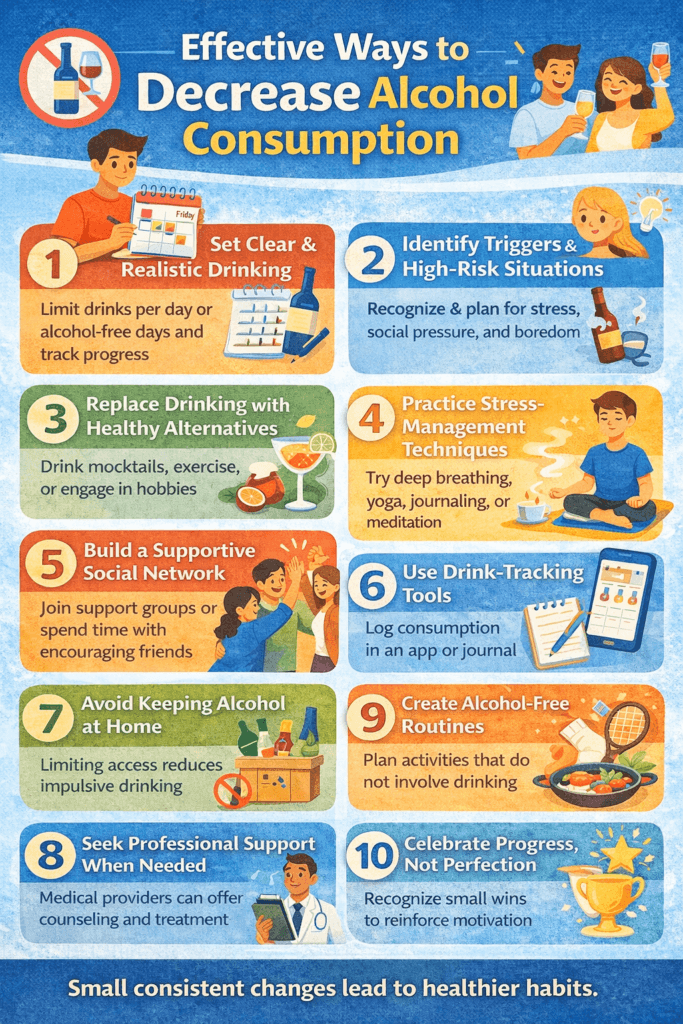
Effective Ways to Decrease Alcohol Consumption
Reducing alcohol consumption is an important step toward improving physical health, mental well-being, and overall quality of life. Whether someone is trying to cut back on occasional drinking or prevent long-term alcohol dependence, making intentional changes can significantly lower health risks, improve relationships, and increase daily functioning. Because alcohol affects brain chemistry, stress responses, and social habits, successful reduction often requires a combination of self-awareness, supportive relationships, and access to helpful resources. The following strategies outline practical and evidence-based ways to decrease alcohol use safely and effectively.
1. Set Clear and Realistic Drinking Limits
Establish specific goals such as limiting drinks per day or choosing alcohol-free days during the week. Writing goals down and tracking progress increases accountability and motivation.
2. Identify Triggers and High-Risk Situations
Recognize situations, emotions, or environments that increase the urge to drink. Common triggers include stress, social pressure, boredom, or certain social settings. Planning alternative coping strategies reduces impulsive drinking.
3. Replace Drinking with Healthy Alternatives
Substitute alcohol with non-alcoholic beverages, herbal teas, flavored water, or mocktails. Engaging in exercise, hobbies, or relaxation activities also provides healthy dopamine release without alcohol.
4. Practice Stress-Management Techniques
Since many people drink to cope with stress, learning healthier coping methods such as deep breathing, mindfulness, yoga, journaling, or talking to a friend can reduce reliance on alcohol.
5. Build a Supportive Social Network
Surround yourself with friends or family who respect your decision to drink less. Joining support groups such as SMART Recovery or moderation-focused programs can provide encouragement and accountability.
6. Avoid Keeping Alcohol at Home
Limiting easy access reduces impulsive drinking. Choosing not to stock alcohol at home makes mindful drinking decisions easier.
7. Use Drink-Tracking Tools
Apps or written logs that track consumption help increase self-awareness and identify patterns that need adjustment.
8. Seek Professional Support When Needed
Healthcare providers can offer screening, counseling, medication options, and referral to treatment programs when alcohol use is difficult to control independently.
9. Create Alcohol-Free Routines
Plan activities that do not involve drinking, such as movie nights, cooking, hiking, or creative projects. New routines break habitual drinking cycles.
10. Celebrate Progress, Not Perfection
Reducing alcohol use is a process. Recognizing small wins reinforces motivation and long-term success.
Summary
Decreasing alcohol consumption is achievable through goal-setting, trigger management, healthy substitutions, stress reduction, and supportive relationships. When self-management strategies are combined with professional guidance and community support, individuals can successfully reduce drinking and improve overall well-being.
Family Support Strategies to Decrease Alcohol Consumption
1. Practice Compassionate, Non-Judgmental Communication
- Avoid blame, lecturing, or shaming, which can increase drinking.
- Use supportive, calm, and empathetic language.
- Try using “I” statements:
- “I care about you and want you to feel better.”
- “I’m worried when I see you drinking more often.”
Why it works: People are more open to change when they feel supported rather than attacked.
2. Encourage Professional Help—Without Forcing It
- Suggest talking to a doctor, therapist, or addiction specialist.
- Offer to help with scheduling appointments.
- Encourage participation in AA, SMART Recovery, or counseling.
Approach:
Frame it as an offer of help, not a demand.
3. Model Healthy Coping Skills
Family can demonstrate alternatives to drinking:
- Exercise
- Hobbies
- Stress-reduction techniques
- Social activities that don’t involve alcohol
Healthy behaviors are contagious within a household.
4. Minimize Alcohol Availability in the Home
- Remove alcohol from the house or store it out of sight.
- Avoid keeping “backup” bottles.
- Replace alcohol-centered activities with sober-friendly activities.
Why this helps: It reduces triggers and impulse drinking.
5. Set Clear, Respectful Boundaries
Family members should respectfully communicate:
- No alcohol in the house
- No drinking around children
- No drinking before driving or caregiving
- No enabling (giving money, covering consequences, lying for them)
Consistent boundaries decrease opportunities to drink.
6. Avoid Enabling Behaviors
Enabling increases alcohol use. Families should avoid:
- Providing money that is used for alcohol
- Calling in to work for them
- Cleaning up after drinking episodes
- Protecting them from consequences
Instead, offer support, not rescues.
7. Offer Practical Support During Cravings
Family can help redirect attention by:
- Going for a walk
- Playing board games
- Watching a show together
- Preparing a meal together
- Driving them to a meeting or support group
These small interventions help disrupt the craving cycle.
8. Encourage Healthy Routines
Families can help set:
- Regular meals
- Sleep schedules
- Exercise or evening walks
- Structured weekly plans
Routine reduces anxiety, boredom, and impulsive drinking.
9. Strengthen Positive Reinforcement
Celebrate progress:
- “I’m proud of you for cutting back this week.”
- “You handled stress without drinking—amazing job.”
- “I can tell you’re really trying.”
Praise boosts motivation and self-efficacy.
10. Offer Emotional Support During Triggers
Many people drink to cope with:
- Stress
- Loneliness
- Depression
- Conflict
- Boredom
Family can help by:
- Listening without judgment
- Offering comfort
- Sitting quietly with them during difficult moments
- Helping them practice grounding or breathing exercises
Emotional safety reduces drinking episodes.
11. Participate in Family Therapy or Support Groups
Family involvement improves outcomes dramatically:
- Al-Anon
- Families Anonymous
- CRAFT (Community Reinforcement and Family Training) – shown to reduce substance use effectively
These programs teach families how to support change without enabling.
12. Ensure Home Safety
Alcohol use increases risks such as:
- Falls
- Violence
- Impaired caregiving
- Unsafe driving
Family can:
- Secure car keys if drinking is ongoing
- Create a “calm zone” in the house
- Remove weapons or dangerous objects
- Call for help if safety is compromised
Safety planning reduces harm while supporting sobriety goals.
13. Promote Meaningful Activities
Family members can encourage involvement in:
- Volunteering
- Faith or spiritual activities
- Outdoor recreation
- Classes or hobbies
- Social events without alcohol
These activities fill time with healthier rewards.
Summary
Family members can decrease alcohol consumption by promoting a compassionate environment, removing alcohol-related triggers, encouraging treatment, modeling healthy coping skills, reinforcing positive progress, and offering practical and emotional support. When families work collaboratively and consistently, individuals are far more likely to reduce drinking and maintain long-term health improvements.
Government Strategies to Decrease Alcohol Consumption, Prevent Alcoholism, and Reduce Drunk Driving
1. Regulate Alcohol Pricing and Taxes
Increase Alcohol Taxes
- Higher prices lead to lower consumption—especially among youth and heavy drinkers.
- Strong evidence shows that alcohol tax increases reduce binge drinking, liver disease, and drunk-driving crashes.
Minimum Unit Pricing
- Sets a floor price per ounce of alcohol.
- Prevents ultra-cheap, high-alcohol products that fuel addiction.
2. Limit Access & Availability
Regulate Hours and Days of Sale
- Restricting late-night sales reduces high-risk drinking and alcohol-involved violence.
Limit Density of Alcohol Outlets
- Fewer liquor stores and bars in neighborhoods lowers overall alcohol use.
Control Sales to Minors
- Strong ID enforcement
- Compliance checks
- Penalties for selling to minors
These reduce early alcohol exposure, a major risk factor for later addiction.
3. Strengthen Drunk Driving Laws
Lower Legal Blood Alcohol Concentration (BAC) Limits
- Many countries use 0.05% instead of 0.08%.
- Reduces alcohol-related fatalities significantly.
Zero-Tolerance Laws for Underage Drivers
- Any measurable alcohol = violation.
Mandatory Ignition Interlock Devices
- Installed after a DUI conviction.
- Prevents the car from starting if alcohol is detected on breath.
Saturation Patrols & Sobriety Checkpoints
- High-visibility enforcement reduces drunk-driving incidents by creating a deterrent effect.
4. Expand Public Education & Awareness Campaigns
The government can fund campaigns about:
- Dangers of binge drinking
- Risks in pregnancy (FASD prevention)
- Drunk driving consequences
- Mixing alcohol with medications
- Alcohol poisoning recognition
Mass media campaigns reduce risky drinking behaviors and increase treatment-seeking.
5. Increase Access to Treatment & Early Intervention
Integrate Alcohol Screening into Primary Care
- Using SBIRT (Screening, Brief Intervention, Referral to Treatment).
- Helps identify hazardous drinking before it becomes addiction.
Strengthen Insurance Coverage
- Require coverage for addiction treatment, counseling, and medications.
Expand Community Treatment Centers
- More detox units, outpatient programs, MAT clinics, and recovery housing options.
6. Regulate Alcohol Marketing
Restrictions on Advertising
- Limit youth-targeted ads, sports sponsorships, and social media alcohol promotions.
- Reduce ads showing alcohol as glamorous or essential for fun.
Warning Labels
- Health risk warnings (similar to tobacco).
- Pregnancy warning icons.
- Drunk driving messages on bottles.
7. Improve Transportation Alternatives
- Subsidize late-night public transit.
- Promote ride-share partnerships during holidays and weekends.
- Increase rural transportation options.
Outcome: Fewer people drive while intoxicated when reliable transportation is available.
8. Strengthen School & Youth Prevention Programs
- Evidence-based curricula (e.g., LifeSkills, Botvin Training, Project Towards No Drug Abuse).
- Parent education programs.
- Community youth coalitions.
Effective youth prevention lowers lifetime alcohol use and future addiction risk.
9. Support Harm-Reduction Strategies
- 24-hour hotlines
- Mobile crisis units
- “Sober ride” programs
- Safe-ride vouchers or designated driver incentives
- Alcohol poisoning education in colleges
Harm-reduction programs reduce deaths and ER visits even if people continue drinking.
10. Improve Data Collection & Surveillance
Government can track:
- Alcohol misuse patterns
- DUI crash hotspots
- Underage drinking rates
- Heavy-use neighborhoods
- Alcohol-related ER visits
Data guides targeted interventions.
Summary
Governments can reduce alcohol consumption and prevent alcoholism and drunk driving through a combination of policy, regulation, public education, treatment expansion, law enforcement, and community-level initiatives. The most effective approaches combine higher pricing, limited access, strong DUI enforcement, and expanded treatment and prevention programs. Together, these strategies create a safer environment and significantly decrease alcohol-related harm across entire populations.
What Society Can Do to Decrease Alcohol Consumption and Prevent Alcoholism & Drunk Driving
1. Change Social Norms Around Drinking
Society can reduce alcohol harm by shifting cultural expectations:
- Promote alcohol-free social events
- Normalize choosing not to drink
- Challenge the idea that heavy drinking is a “rite of passage.”
- Reduce the glorification of alcohol in media, movies, and social media
- Encourage responsible hosting (food, non-alcoholic options, no pressure to drink)
Changing norms lowers peer pressure and reduces risky drinking.
2. Promote Supportive, Alcohol-Free Community Spaces
Communities can create:
- Alcohol-free festivals, parties, and fundraisers
- Sober bars and sober cafés
- Alcohol-free college events
- Family-friendly nighttime activities
When alcohol isn’t the default, people drink less.
3. Strengthen Workplace Alcohol Policies
Workplaces can:
- Provide Employee Assistance Programs (EAPs)
- Offer confidential alcohol screenings
- Have clear policies on substance use and safety
- Provide wellness programs and stress management classes
- Encourage safe commuting options
Work environments have a major influence on drinking habits.
4. Support Colleges and Schools in Prevention Efforts
Schools and universities can:
- Use evidence-based alcohol prevention curricula
- Include alcohol education in health classes
- Promote alcohol-free dorms or houses
- Encourage peer-led prevention groups
- Offer safer transportation after events
School-based prevention reduces early alcohol misuse and future addiction risk.
5. Encourage Peer Intervention & Bystander Support
Friends and community members can:
- Intervene when someone is planning to drive impaired
- Offer rides or call a ride service
- Help friends set drink limits
- Notice early signs of risky drinking
- Practice bystander intervention at parties and bars
Peer involvement is one of the strongest deterrents to drunk driving.
6. Foster Sober Support Networks & Recovery Communities
Communities can strengthen:
- AA and SMART Recovery groups
- Recovery community centers
- Sober living houses
- Peer mentor programs
- Faith-based recovery groups
Visible recovery communities reduce stigma and increase help-seeking.
7. Promote Public Awareness Campaigns
Society can amplify campaigns about:
- Dangers of binge drinking
- Alcohol’s impact on health and mental health
- Drunk driving consequences
- The impact of alcohol on pregnancy (FASDs)
- Signs of alcohol poisoning
Awareness increases responsible decision-making.
8. Encourage Healthy Living & Alternative Activities
When communities promote:
- Sports teams
- Outdoor recreation groups
- Art, music, or hobby programs
- Fitness clubs
- Volunteer activities
People are less likely to rely on alcohol for socializing or stress relief.
9. Reduce Alcohol Use in Social Events and Celebrations
Society can shift traditions by:
- Offering alcohol-free options
- Setting drink limits at parties
- Including non-drink-based activities (games, music, competitions)
- Having designated sober spaces or chill areas
These practices lower total alcohol intake and decrease drinking-and-driving risks.
10. Support Safer Transportation Options
Communities can:
- Promote designated driver programs
- Create volunteer ride programs
- Support ride-share partnerships
- Encourage carpooling or public transit after events
Easy access to safe transportation reduces DUI incidents.
11. Advocate Against Stigma Toward Seeking Help
Society can normalize:
- Going to therapy
- Attending recovery groups
- Talking about mental health
- Taking medication for alcohol cravings
Reducing shame increases treatment access and reduces long-term harm.
12. Encourage Responsible Bar & Restaurant Practices
Businesses can adopt:
- Training for servers on identifying intoxication
- Policies discouraging overserving
- Free non-alcoholic drinks for designated drivers
- Visible taxi/ride-share options
Responsible beverage service directly reduces drunk-driving rates.
Summary
Society plays a powerful role in reducing alcohol problems through community norms, education, peer intervention, sober supports, alternative activities, and responsible social environments. When communities normalize healthier behaviors, support recovery, and make alcohol-free options accessible, the overall alcohol consumption drops—and the risks of alcoholism and drunk driving decline significantly.
Can Smoking Cannabis Acutely Decrease Alcohol Consumption?
The relationship between cannabis and alcohol use has gained increasing attention in addiction research. Some individuals report using cannabis to reduce alcohol intake, believing it helps control cravings or replace drinking behavior. This idea is known as the “substitution effect,” where one substance is used in place of another. While short-term cannabis use may temporarily reduce alcohol consumption for some people, the reality is more complex. Understanding how cannabis affects drinking behavior is important for making informed decisions about substance use and addiction recovery.
The Substitution Effect
Some studies suggest that cannabis may acutely decrease alcohol consumption by reducing the desire to drink. THC, the psychoactive component of cannabis, interacts with the brain’s reward system, which is also involved in alcohol cravings. For certain individuals, cannabis may provide relaxation or mood relief similar to alcohol, leading them to drink less in the short term.
Short-Term vs. Long-Term Effects
While cannabis might temporarily reduce alcohol intake in some users, long-term outcomes vary. Regular cannabis use can lead to tolerance, dependence, and impaired judgment, which may ultimately increase the risk of heavier alcohol use or combined substance use. In some individuals, cannabis may lower inhibitions and actually increase drinking in social settings.
Impact on Addiction Recovery
For individuals in alcohol recovery, substituting cannabis for alcohol remains controversial. Some treatment models view cannabis substitution as harm reduction, while others caution that replacing one addictive substance with another may delay full recovery. The effectiveness depends on the individual’s health, addiction history, and treatment goals.
Health and Safety Considerations
Using cannabis and alcohol together can intensify impairment, increase accident risk, and strain the liver and cardiovascular system. Additionally, cannabis use may affect memory, motivation, and mental health, which can interfere with recovery efforts.
What Research Currently Suggests
Current evidence indicates that cannabis may reduce alcohol consumption in the short term for some individuals, but results are inconsistent. More research is needed to determine who may benefit, who may be harmed, and how cannabis fits into evidence-based addiction treatment.
Summary
Smoking cannabis may acutely decrease alcohol consumption for certain individuals through a short-term substitution effect. However, this is not a reliable or universally safe strategy for reducing drinking. Long-term recovery outcomes are highly individualized, and replacing alcohol with cannabis may introduce new risks. The safest and most effective path to reducing alcohol use remains medical guidance, behavioral therapy, and structured addiction treatment.
Frequently Asked Questions
Here are some common questions:
1. Why should I reduce my alcohol consumption?
Reducing alcohol lowers the risk of liver disease, heart problems, high blood pressure, depression, anxiety, sleep disturbances, and addiction. It also improves relationships, productivity, and overall well-being.
2. How much alcohol is considered “too much”?
Moderate drinking is generally defined as up to one drink per day for women and up to two for men. Drinking more than this regularly increases health risks and the likelihood of dependence.
3. Can I cut back without quitting completely?
Yes. Many people successfully reduce alcohol use without complete abstinence. Setting limits, tracking intake, and avoiding triggers can help moderate drinking safely.
4. What are common signs that I should reduce my drinking?
Signs include drinking more than intended, cravings, using alcohol to cope with stress, blackouts, relationship problems, or difficulty stopping once you start.
5. What are the most effective ways to decrease drinking?
Effective strategies include setting drink limits, avoiding high-risk situations, replacing alcohol with healthier activities, managing stress, and seeking social or professional support.
6. Does replacing alcohol with cannabis help reduce drinking?
Some individuals report a short-term reduction in drinking when using cannabis, but this is not a reliable or risk-free method. Cannabis can also lead to dependence and may interfere with recovery goals.
7. Will I experience withdrawal if I stop drinking?
People who drink heavily or daily may experience withdrawal symptoms such as shaking, anxiety, nausea, or seizures. Medical guidance is recommended before stopping heavy alcohol use suddenly.
8. Can stress cause increased alcohol consumption?
Yes. Many people drink to cope with stress or emotional discomfort. Learning stress-management techniques can reduce reliance on alcohol.
9. Are support groups helpful for cutting back on drinking?
Yes. Groups like SMART Recovery, Moderation Management, and Alcoholics Anonymous provide peer support, accountability, and coping tools.
10. Do medications exist to help reduce alcohol cravings?
Yes. Doctors can prescribe medications such as naltrexone or acamprosate, which reduce cravings and support lower alcohol use.
11. How long does it take to see benefits after reducing drinking?
Some benefits, such as better sleep and improved energy, appear within days. Liver function, mood, and overall health improve over weeks to months.
12. Can family support help me drink less?
Absolutely. Encouragement, accountability, alcohol-free activities, and supportive communication from family greatly improve success.
13. Is occasional binge drinking still harmful?
Yes. Binge drinking increases the risk of accidents, heart problems, brain impairment, and long-term addiction—even if it is not daily.
14. When should I seek professional help?
Seek help if you cannot cut back on your own, experience withdrawal symptoms, or if alcohol use is affecting your health, work, or relationships.
15. Is it possible to fully recover from alcohol dependence?
Yes. With treatment, support, and healthy coping strategies, long-term recovery from alcohol dependence is achievable.
Conclusion
Preventing alcohol-related harm and drunk driving depends on combining personal responsibility, supportive relationships, and strong public policy. When individuals practice self-management through responsible drinking habits, stress reduction, and healthier alternatives, they lower their own risk of addiction and impaired driving. When families create a stable, alcohol-aware environment—offering encouragement, practical help, and early intervention—they strengthen motivation for safer decisions. Government actions amplify these efforts by shaping environments where harmful drinking behaviors are less accessible, less glamorous, and more strongly discouraged through regulation, education, and enforcement. By aligning self-management, family involvement, and governmental policy, society can reduce alcohol misuse, save lives, and build healthier communities.
Video: Small Changes That Save Your Life From Alcohol #health #wellness #tips