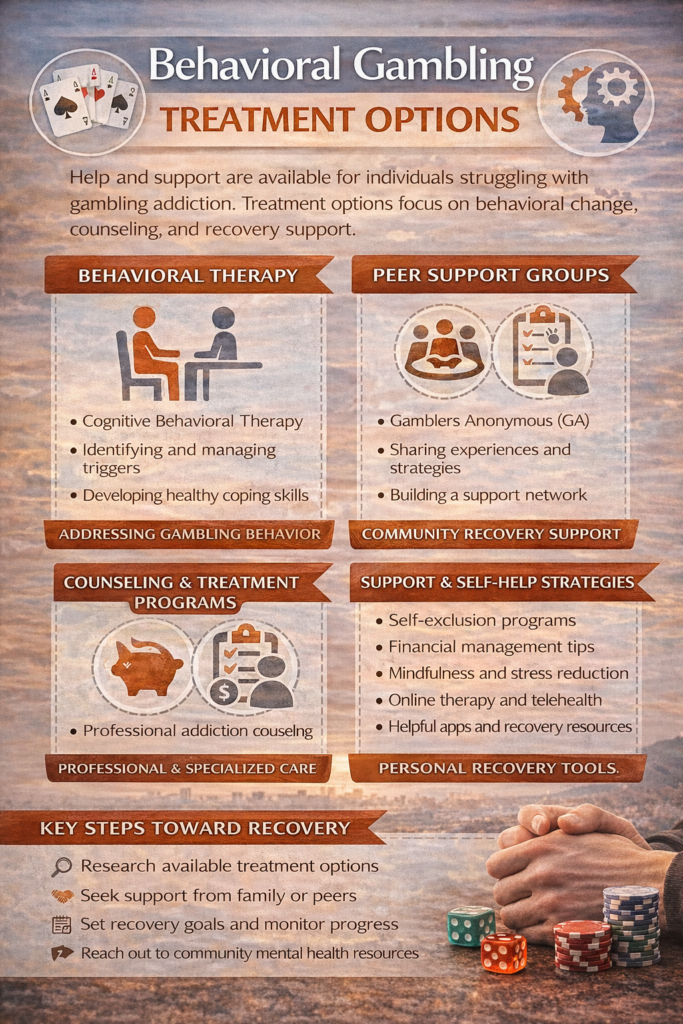
Behavioral gambling disorder is a growing public health concern that can significantly affect an individual’s financial stability, mental health, and personal relationships. Unlike substance-related addictions, gambling addiction is a behavioral condition, which can make it more difficult for individuals to recognize when their gambling has become problematic. As a result, many people delay seeking help or struggle to find appropriate treatment options. Behavioral gambling treatment often includes counseling, behavioral therapy, peer support programs, and financial recovery planning. Understanding the available treatment options and improving awareness of support services can help individuals take important steps toward recovery and rebuilding stability in their lives.
The Difficulty of Behavioral Gambling Treatment Options
Behavioral gambling, often referred to as a gambling disorder, is a serious behavioral addiction that can affect an individual’s financial stability, relationships, mental health, and overall well-being. Despite the significant impact gambling addiction can have on individuals and communities, accessing effective treatment options can be challenging. Many people struggling with gambling problems face barriers that make it difficult to seek or receive the support they need for recovery.
Limited Awareness of Gambling Addiction
One of the primary difficulties surrounding gambling treatment is the lack of awareness about the seriousness of behavioral gambling disorders. Unlike substance-related addictions, gambling addiction does not involve a physical substance, which can cause some people to underestimate its severity. As a result, individuals may not recognize their behavior as an addiction or may delay seeking professional help until financial or personal consequences become severe.
This lack of awareness can also affect healthcare providers and communities, leading to fewer specialized programs designed to address gambling addiction.
Limited Availability of Specialized Treatment
Another challenge is the limited availability of specialized treatment programs for gambling disorders. Many addiction treatment centers primarily focus on substance use disorders such as alcohol or drug addiction. While some of these programs may offer support for behavioral addictions, not all facilities have trained professionals or structured programs specifically designed for gambling-related issues.
Because of this shortage of specialized services, individuals seeking treatment for gambling addiction may have difficulty finding appropriate care within their communities.
Financial Barriers to Treatment
Ironically, financial difficulties are often both a consequence of gambling addiction and a barrier to treatment. Individuals who struggle with gambling problems may experience severe financial losses, debt, or bankruptcy. These financial hardships can make it difficult to afford therapy, counseling, or specialized treatment programs.
Insurance coverage for gambling addiction treatment may also be limited, which can further restrict access to professional support.
Stigma and Shame
Stigma and feelings of shame often prevent individuals from seeking help for gambling addiction. People struggling with gambling problems may feel embarrassed about their financial losses or fear judgment from family members, employers, or healthcare providers.
This stigma can lead individuals to hide their behavior or attempt to manage the problem on their own rather than seeking professional treatment or peer support.
Lack of Support Resources
In some communities, there are limited support resources specifically dedicated to behavioral gambling recovery. While peer support groups and counseling services do exist, they may not be widely available in all regions. Individuals who live in rural or underserved areas may face additional challenges in locating local programs or attending in-person support meetings.
Online support groups and telehealth counseling services have begun to fill some of these gaps, but awareness of these resources remains limited.
The Importance of Expanding Treatment Access
Addressing the difficulties associated with gambling addiction treatment requires increased awareness, expanded treatment programs, and improved access to affordable care. Communities and healthcare systems can help by training professionals to recognize and treat gambling disorders, developing specialized treatment programs, and promoting education about behavioral addictions.
Increasing access to online therapy, peer support groups, and community resources can also help individuals overcome barriers to treatment and begin their recovery journey.
Moving Toward Better Support
Although treatment options for behavioral gambling disorders can be difficult to access, recovery is possible with the right support systems in place. Expanding awareness, reducing stigma, and improving access to specialized services can help individuals struggling with gambling addiction find the help they need.
By recognizing gambling addiction as a serious behavioral health condition and prioritizing accessible treatment options, communities can better support individuals seeking to rebuild their financial stability, emotional health, and overall quality of life.
Self-Management Strategies for Finding Behavioral Gambling Treatment Options
Behavioral gambling disorder can have serious effects on a person’s financial stability, emotional well-being, and relationships. Despite these challenges, many individuals struggle to locate appropriate treatment or support services. Limited awareness of available resources, stigma surrounding gambling addiction, and financial barriers can make it difficult to access care. In these situations, self-management strategies become an important tool for individuals seeking help. By taking proactive steps to identify resources, build coping skills, and maintain accountability, individuals can begin their journey toward recovery.
Understanding the Role of Self-Management
Self-management in behavioral health refers to an individual’s ability to actively participate in maintaining their health and recovery. For individuals experiencing gambling problems, self-management involves recognizing the need for help, researching available treatment options, and implementing strategies that support behavioral change.
Rather than waiting for formal services to become available, individuals can take the initiative to locate support networks and develop personal strategies to reduce gambling behavior. This approach encourages personal responsibility while reinforcing the idea that recovery is possible with persistence and support.
Researching Treatment Resources
One of the first steps in self-management is researching available treatment options. Individuals can explore resources such as mental health clinics, addiction treatment centers, counseling services, and nonprofit organizations that address behavioral addictions. Many healthcare providers offer counseling or therapy specifically designed for gambling-related problems.
Online directories, community health departments, and national addiction support organizations often provide lists of treatment providers and recovery programs. Conducting thorough research helps individuals identify services that meet their specific needs and financial circumstances.
Utilizing Online and Telehealth Services
Technology has expanded access to behavioral health treatment through online counseling and telehealth services. These platforms allow individuals to connect with licensed therapists and support groups without traveling to a physical location.
Telehealth services can be especially helpful for individuals who live in areas with limited gambling treatment programs. Online therapy sessions, virtual support groups, and digital recovery tools can provide flexible and accessible support.
Joining Peer Support Groups
Peer support groups can be valuable resources for individuals recovering from gambling addiction. These groups bring together people who share similar experiences and challenges, creating a supportive environment where participants can discuss their struggles and progress.
Peer support programs provide accountability, encouragement, and shared coping strategies. Listening to others’ experiences can also help individuals feel less isolated and more motivated to continue their recovery journey.
Developing Personal Coping Strategies
Self-management also involves building practical coping mechanisms to address urges to gamble. Individuals may benefit from strategies such as setting financial boundaries, avoiding gambling environments, and identifying triggers that lead to gambling behavior.
Other coping methods may include mindfulness practices, stress management techniques, and engaging in healthy activities such as exercise or hobbies. Developing alternative behaviors helps individuals replace harmful habits with healthier routines.
Creating a Support Network
In addition to professional and peer support, individuals can benefit from creating a personal support network. Trusted family members, friends, or mentors can provide encouragement and help reinforce accountability during recovery.
Sharing recovery goals with supportive individuals can make it easier to stay motivated and seek help when challenges arise.
Moving Forward Toward Recovery
Finding treatment options for behavioral gambling addiction may require persistence and proactive effort. Through self-management strategies such as researching resources, utilizing online treatment services, joining peer support groups, and developing healthy coping mechanisms, individuals can take meaningful steps toward recovery.
While the path to recovery may involve challenges, individuals who actively seek support and remain committed to personal growth can rebuild healthier habits and regain control over their lives. Self-management empowers individuals to play an active role in their healing process and reminds them that recovery is achievable with determination and support
Family Resource Strategies for Finding Behavioral Gambling Treatment Options
Behavioral gambling disorder can affect not only the individual struggling with gambling but also the entire family. Financial strain, emotional stress, and relationship challenges often arise when gambling behaviors become difficult to control. Families frequently play an important role in recognizing the problem and helping their loved ones seek treatment. However, locating appropriate treatment options for gambling addiction can sometimes be challenging due to limited awareness and specialized services. By using proactive resource strategies, families can help guide their loved ones toward effective treatment and recovery support.
Understanding Gambling Addiction as a Family Concern
Gambling addiction is considered a behavioral health disorder that can significantly impact family stability. Families may experience financial hardship, trust issues, and emotional distress as a result of gambling behaviors. Recognizing that gambling addiction is a treatable condition is an important first step in supporting recovery.
When families approach the situation with understanding and empathy, they can create an environment that encourages their loved one to seek help rather than feel judged or isolated.
Researching Professional Treatment Resources
One of the most effective strategies families can use is actively researching treatment options. Professional services for gambling addiction may include counseling, behavioral therapy, addiction treatment programs, and mental health services. Many therapists and clinics offer specialized support for individuals struggling with behavioral addictions.
Families can search for treatment providers through community health departments, mental health organizations, addiction treatment directories, and local healthcare providers. Gathering information about available programs helps families identify services that best fit their loved one’s needs.
Exploring Community and Support Organizations
Community organizations often provide valuable support for individuals experiencing gambling addiction. Nonprofit organizations, recovery programs, and peer support groups can offer counseling services, educational materials, and group meetings focused on recovery.
Families can also attend educational workshops or family support groups that help them better understand gambling addiction and learn strategies for supporting recovery. These resources help families feel less alone while navigating the challenges of addiction.
Encouraging Participation in Peer Support Groups
Peer support groups allow individuals struggling with gambling addiction to connect with others who share similar experiences. These groups provide safe spaces where participants can discuss their challenges, learn coping strategies, and receive encouragement from others in recovery.
Families can help locate peer support meetings in their community or online. Virtual meetings have expanded access to recovery communities and may provide additional flexibility for individuals who cannot attend in-person sessions.
Supporting Financial and Practical Recovery Planning
Since gambling addiction often leads to financial difficulties, families may need to help their loved ones develop practical strategies for financial recovery. This may include assisting with budgeting, managing access to money, or encouraging financial counseling services.
These steps help reduce opportunities for gambling while creating a stable environment that supports long-term recovery.
Promoting Open Communication and Emotional Support
Open communication is essential when families are supporting someone through gambling addiction recovery. Encouraging honest conversations about struggles, progress, and treatment options helps build trust and understanding.
Families who listen without judgment can make it easier for individuals to seek help and remain committed to recovery. Emotional support, patience, and reassurance are powerful tools in maintaining motivation during difficult stages of treatment.
Moving Toward Recovery Together
Finding treatment options for behavioral gambling addiction may require persistence and collaboration. Families who actively research resources, connect with community organizations, and encourage professional treatment play a crucial role in supporting recovery.
While gambling addiction can present significant challenges, strong family involvement can help individuals access the resources they need to rebuild their lives. Through education, communication, and compassionate support, families become valuable partners in guiding their loved ones toward healthier behaviors and long-term recovery.
Community Resource Strategies for Finding Behavioral Gambling Treatment Options
Behavioral gambling disorder can have serious consequences for individuals, families, and communities. Financial difficulties, emotional distress, and strained relationships are common outcomes of uncontrolled gambling behavior. Although treatment and support services exist, many individuals struggle to find appropriate resources due to limited awareness of or access to specialized programs. Communities play an important role in helping individuals access treatment by developing strategies that connect people with available support services and recovery resources.
Increasing Awareness of Gambling Addiction Resources
One of the most important community strategies is improving public awareness about gambling addiction and available treatment options. Many individuals do not realize that a gambling disorder is a recognized behavioral health condition that can be treated through counseling, therapy, and support programs.
Community organizations, healthcare providers, and local governments can promote educational campaigns that inform the public about the signs of gambling addiction and the resources available for recovery. Workshops, informational sessions, and public health initiatives help individuals recognize when they or someone they know may need help.
Expanding Access to Community Health Services
Community health clinics and mental health centers often serve as accessible entry points for individuals seeking help for behavioral addictions. These facilities may offer counseling, mental health evaluations, and referrals to specialized treatment providers.
Communities can improve access by strengthening partnerships between healthcare providers, mental health professionals, and addiction treatment centers. Coordinated referral systems allow individuals to move more easily from initial screenings to specialized treatment programs.
Supporting Peer Recovery Networks
Peer support networks are valuable community resources for individuals experiencing gambling addiction. These networks provide safe spaces where individuals can share experiences, learn coping strategies, and receive encouragement from others who understand the recovery process.
Community centers, libraries, and local organizations can provide meeting spaces for peer support groups. Virtual support groups can also expand access to recovery communities for individuals who may not have local programs available.
Developing Resource Directories and Information Centers
Many people struggling with gambling addiction do not know where to find help. Communities can address this challenge by creating resource directories that list available treatment programs, counseling services, and support groups.
These directories may be distributed through community centers, healthcare providers, social service agencies, and online platforms. Easy access to information helps individuals locate appropriate treatment options more quickly.
Encouraging Collaboration Between Organizations
Effective community resource strategies often involve collaboration between multiple organizations. Healthcare providers, social service agencies, nonprofit organizations, and educational institutions can work together to expand access to treatment and recovery support.
Collaborative efforts allow communities to share resources, develop specialized programs, and create comprehensive support systems for individuals struggling with gambling addiction.
Promoting Accessible and Inclusive Support Services
Communities can also support recovery by promoting services that are accessible to individuals from diverse backgrounds. Offering low-cost counseling, culturally sensitive programs, and flexible meeting times helps ensure that treatment options are available to those who need them most.
Online counseling services and telehealth programs can further increase accessibility for individuals who live in rural areas or cannot easily attend in-person treatment sessions.
Strengthening Community Support for Recovery
Behavioral gambling addiction can be difficult to overcome without strong support systems. Communities that actively promote treatment resources, peer support networks, and educational initiatives create environments where individuals feel encouraged to seek help.
By strengthening partnerships, increasing awareness, and expanding access to treatment services, communities can help individuals find the resources they need to begin their recovery journey. These collective efforts contribute to healthier communities and provide hope for those seeking to overcome gambling addiction.
Frequently Asked Questions
Here are some common questions:
1. What is behavioral gambling disorder?
Behavioral gambling disorder is a condition in which an individual has difficulty controlling gambling behavior despite negative consequences. It can lead to financial problems, emotional distress, and strained relationships.
2. How do I know if gambling has become a problem?
Signs of a gambling problem may include:
- Spending increasing amounts of money on gambling
- Feeling unable to stop gambling
- Chasing losses by gambling more
- Hiding gambling behavior from family or friends
- Experiencing financial or relationship problems because of gambling
Recognizing these signs early can help individuals seek treatment sooner.
3. What treatment options are available for gambling addiction?
Treatment options for behavioral gambling disorder may include:
- Cognitive Behavioral Therapy (CBT)
- Individual or group counseling
- Peer support groups such as Gamblers Anonymous
- Financial counseling and recovery planning
- Mental health treatment for related issues like anxiety or depression
These approaches help individuals change harmful behaviors and develop healthier coping strategies.
4. Can gambling addiction be treated successfully?
Yes. Many individuals successfully recover from gambling addiction through therapy, support groups, and lifestyle changes. Recovery often involves learning new coping skills and building supportive relationships.
5. What role does therapy play in gambling treatment?
Therapy helps individuals understand the thoughts and emotions that contribute to gambling behavior. Therapists may help people identify triggers, develop healthier habits, and build strategies to manage urges.
6. Are there support groups for people with gambling addiction?
Yes. Peer support groups such as Gamblers Anonymous (GA) provide a supportive environment where individuals can share experiences and learn from others who are also working toward recovery.
7. Can online or telehealth services help with gambling addiction?
Online counseling and telehealth services can provide access to licensed therapists and support groups from home. These services can be helpful for individuals who live in areas with limited treatment options.
8. How can families support someone with a gambling addiction?
Families can support recovery by encouraging treatment, practicing open communication, setting healthy financial boundaries, and offering emotional support. Family counseling may also help address relationship challenges caused by gambling.
9. What self-help strategies can help reduce gambling behavior?
Helpful strategies may include:
- Avoiding gambling environments or websites
- Setting financial limits and budgets
- Developing healthy hobbies or activities
- Practicing stress management techniques
- Seeking support from trusted friends or family members
These strategies can help individuals manage urges and maintain recovery.
10. Where can someone find help for gambling addiction?
Individuals can seek help through:
- Mental health professionals
- Addiction treatment centers
- Community health clinics
- Peer support organizations
- Online recovery platforms
These resources provide guidance, counseling, and support for individuals seeking recovery.
Conclusion
Although behavioral gambling addiction can present serious challenges, effective treatment options are available to support individuals on their recovery journey. Professional counseling, peer support groups, community programs, and family involvement all play important roles in helping individuals overcome harmful gambling behaviors. Increasing awareness of these treatment options and improving access to supportive resources can make recovery more achievable for those affected. With the right combination of professional guidance, personal commitment, and community support, individuals struggling with gambling addiction can regain control of their lives and work toward long-term financial and emotional well-being.
Video: What Stops Gambling Addicts From Getting Help #addiction #awareness #shorts