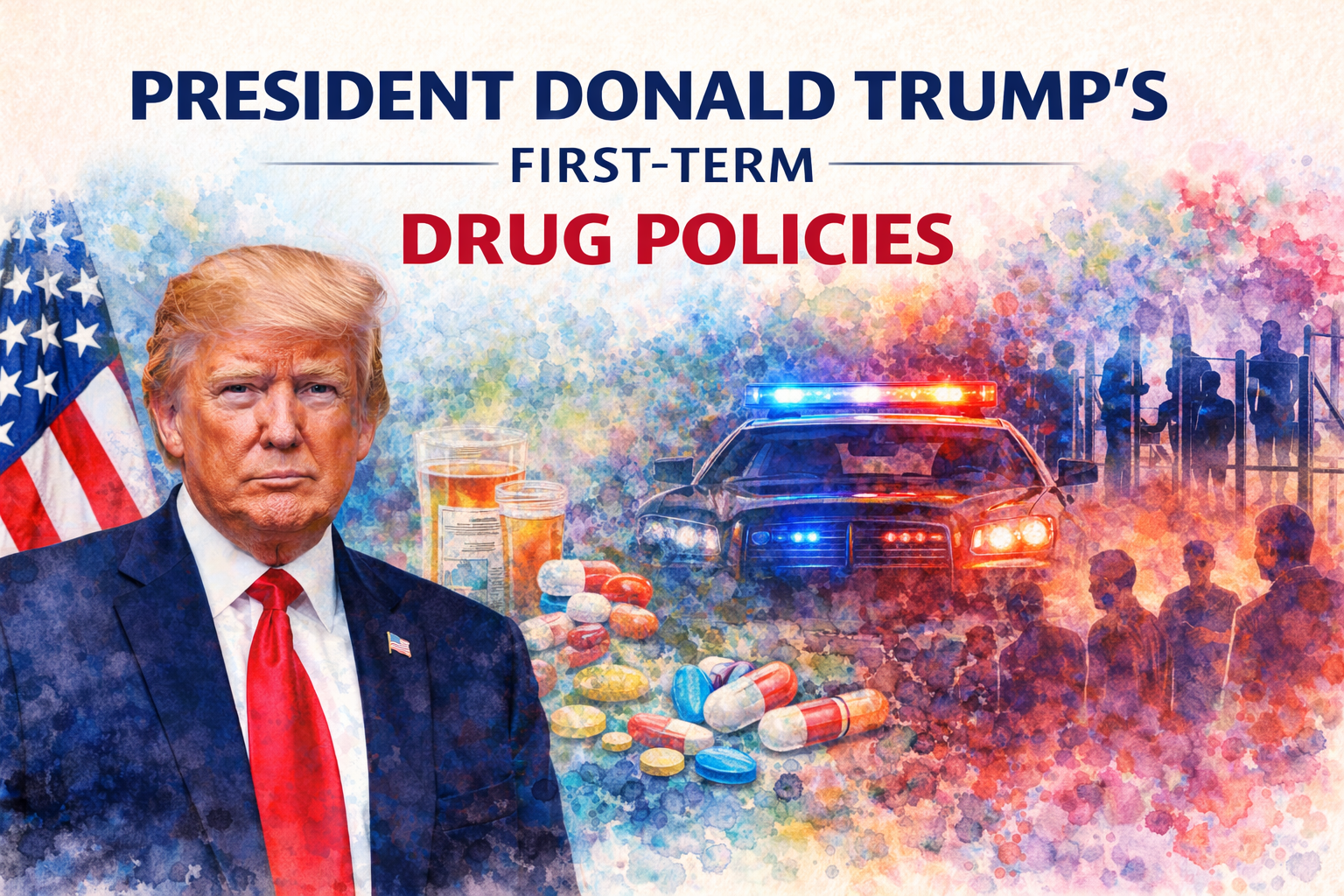
Donald Trump 1st Drug Reform

During his first term in office, Donald Trump pursued a multifaceted federal drug policy strategy that combined public health initiatives, criminal justice reform, and law enforcement efforts. His administration addressed the opioid crisis through expanded treatment funding, national awareness campaigns, and prescribing oversight, while also supporting legislative reforms such as the First Step Act aimed … Read more

Barack Obama Drug Reform Policy

During Barack Obama’s presidency, U.S. drug policy moved toward a more balanced model that incorporated public health principles alongside traditional enforcement. A major step was the Fair Sentencing Act, which reduced sentencing disparities and acknowledged racial inequities in federal drug laws. At the same time, the administration expanded prevention initiatives, treatment access, and overdose-response efforts, … Read more

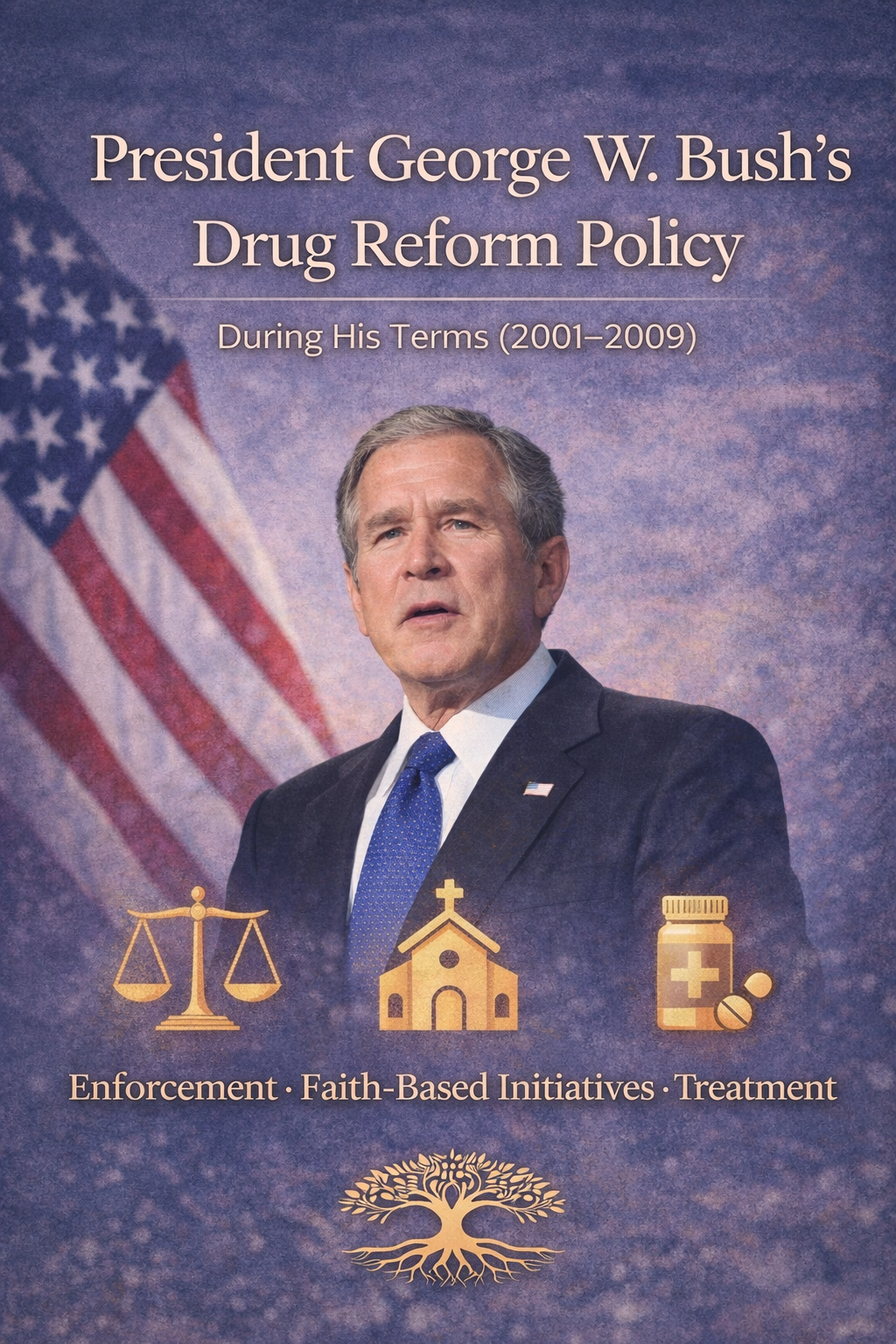
George W. Bush Drug Reform

During the presidency of George W. Bush (2001–2009), U.S. drug policy largely preserved the traditional War on Drugs structure while gradually broadening attention to treatment, prevention, and community-based services. His administration continued to provide strong federal support for law enforcement and interdiction efforts, while also advancing recovery-oriented measures such as drug courts, youth prevention initiatives, … Read more

Bill Clinton’s Drug Reform Policy

During the presidency of Bill Clinton (1993–2001), U.S. drug policy operated at a crossroads between traditional “War on Drugs” enforcement strategies and emerging public health–oriented reforms. His administration maintained strong law enforcement funding and supported legislation such as the 1994 Violent Crime Control and Law Enforcement Act, which influenced drug-related sentencing and incarceration trends. At … Read more

George H. W. Bush’s Drug Reform

When George H. W. Bush took office in 1989, the United States was confronting escalating crack cocaine use, rising drug-related violence, and widespread public concern about substance misuse. Building upon earlier federal anti-drug initiatives, his administration intensified the national response through a comprehensive strategy that combined increased law enforcement funding, stronger penalties for trafficking, expanded … Read more

How Nations Lower Drug Rates

Lowering addiction rates within a country requires a comprehensive and sustained public health approach rather than isolated interventions. Substance use disorders develop through a complex interaction of biological vulnerability, psychological stressors, social environment, and economic conditions. Therefore, meaningful reduction in national addiction rates depends on coordinated strategies across multiple levels—individual self-management education, family stability, accessible … Read more

Ronald Reagan’s Drug Reform

President Ronald Reagan significantly intensified the War on Drugs during the 1980s by expanding federal law enforcement funding, strengthening penalties through mandatory minimum sentencing laws, and launching nationwide prevention campaigns that framed drug use and trafficking as urgent threats to public safety and national stability. His administration sought to deter drug activity through strict enforcement … Read more

Opioid Treatment Program Barriers

Opioid Treatment Programs (OTPs) are evidence-based and lifesaving for individuals with opioid use disorder (OUD), yet many people encounter significant barriers that limit access and retention. These barriers include stigma, transportation difficulties, financial constraints, regulatory requirements, fragmented healthcare systems, and emotional resistance rooted in fear or shame. When individuals are unable to engage consistently in … Read more

Gerald Ford’s Drug Addiction Policy

Gerald Ford assumed office at a pivotal moment in American drug policy, following President Nixon’s resignation. There is a growing national concern about substance misuse. He inherited the broader War on Drugs infrastructure that emphasized federal enforcement, centralized drug control agencies, and supply-reduction strategies. Rather than dismantling this framework, Ford adopted a cautious and pragmatic … Read more

Jimmy Carter and Drug Reform

During his presidency from 1977 to 1981, Jimmy Carter adopted a reform-oriented approach within the broader War on Drugs era. While maintaining enforcement against trafficking, he publicly supported decriminalizing small amounts of marijuana and emphasized prevention, treatment expansion, and proportional sentencing. His stance represented a partial shift from purely punitive models toward incorporating public health … Read more