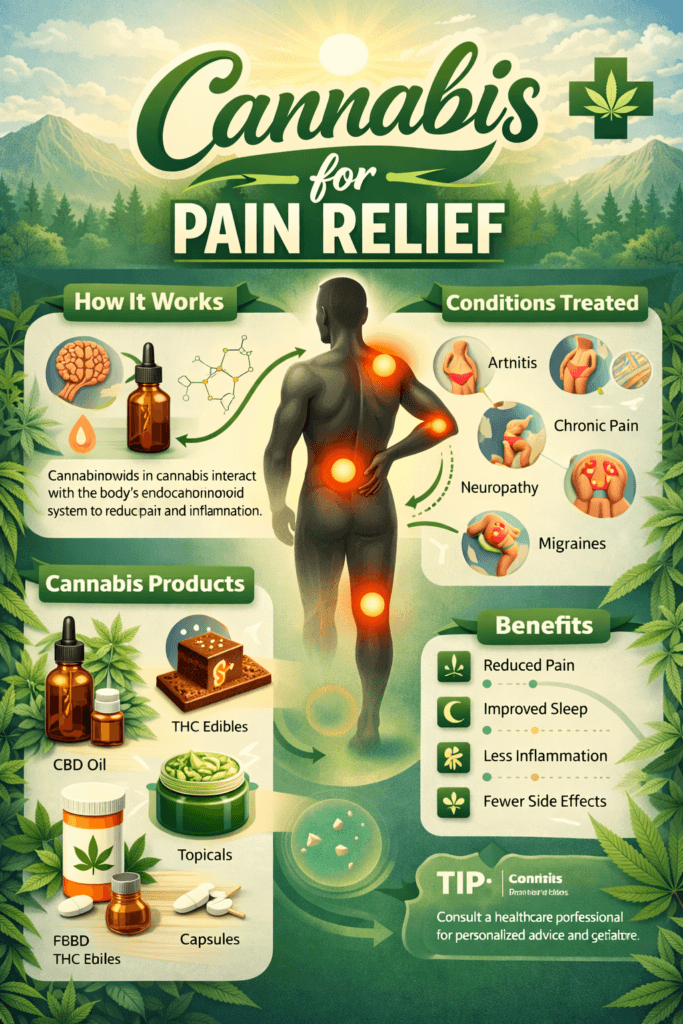
Chronic pain affects millions of individuals and can significantly impact daily functioning, emotional well-being, and quality of life. As access to medical cannabis expands, many people turn to cannabis as a self-managed option for pain relief. While some experience temporary symptom reduction, cannabis use for pain also carries risks, including tolerance, dependence, and impaired functioning if not managed carefully. Effective pain management requires more than substance use alone. Successful long-term outcomes are supported by self-management strategies, family involvement, and connections to community-based resources that promote education, safety, and healthier coping strategies.
Cannabis Use for Pain Relief: Benefits, Risks, and What Patients Should Know
Cannabis has gained growing attention as an alternative or complementary treatment for pain management, especially as concerns rise over opioid dependence and chronic pain treatment options. With legalization expanding across many regions, more patients are exploring cannabis for relief from conditions such as arthritis, back pain, neuropathy, and cancer-related discomfort. However, while cannabis may offer short-term pain reduction for some individuals, its long-term effectiveness, safety, and risk of dependency require careful consideration. Understanding how cannabis interacts with the body, along with its benefits and limitations, is essential for making informed health decisions.
How Cannabis Works for Pain Relief
Cannabis contains active compounds called cannabinoids, primarily THC (tetrahydrocannabinol) and CBD (cannabidiol). These compounds interact with the body’s endocannabinoid system, which helps regulate pain perception, inflammation, mood, and sleep. THC produces psychoactive effects and may reduce pain sensitivity, while CBD is non-intoxicating and may decrease inflammation and nerve pain. Together, they can modulate pain signals, offering relief for certain chronic pain conditions.
Potential Benefits
Some individuals report that cannabis:
- Reduces chronic nerve and inflammatory pain
- Improves sleep disrupted by pain
- Decreases reliance on opioid medications
- Enhances relaxation and quality of life
Medical studies suggest moderate evidence for cannabis effectiveness in neuropathic pain, multiple sclerosis-related pain, and chemotherapy-induced discomfort. However, results vary significantly by individual, dosage, and product type.
Risks and Side Effects
Despite its benefits, cannabis is not risk-free. Potential concerns include:
- Cognitive impairment and reduced concentration
- Increased anxiety or paranoia in some users
- Dependency and Cannabis Use Disorder
- Tolerance requiring higher doses over time
- Impaired driving and coordination
- Possible long-term effects on memory and motivation
Additionally, combining cannabis with alcohol or sedative medications increases health and safety risks.
Legal and Medical Considerations
Cannabis laws differ by state and country, but legal access does not equal medical safety. Patients should:
- Consult healthcare providers before use
- Avoid smoking methods that harm lung health
- Use controlled, low-dose products
- Monitor side effects and dependency signs
- Never drive while under the influence
Healthcare supervision ensures cannabis use is part of a broader pain management plan, not a stand-alone solution.
Alternatives and Complementary Options
Effective pain management often combines:
- Physical therapy
- Anti-inflammatory medications
- Mindfulness and relaxation techniques
- Cognitive-behavioral therapy
- Lifestyle changes and exercise
These approaches address both physical and emotional components of chronic pain without substance-related risks.
Summary
Cannabis may provide meaningful pain relief for some individuals, particularly when conventional treatments fail. However, it is not a universal solution and carries risks of dependence and cognitive impairment. Safe and effective pain management requires medical guidance, informed decision-making, and balanced use of multiple treatment strategies. By approaching cannabis with awareness and caution, patients can better protect both their physical health and long-term well-being.
Self-Management Strategies for Using Cannabis for Pain Relief
1. Start Low and Go Slow
Begin with the lowest possible dose. Pain-relief effects vary widely between individuals, and higher doses — especially THC — can increase anxiety, dizziness, or impaired thinking.
2. Track Your Symptoms
Keep a simple log of:
- Pain level before and after use
- Dosage and product type
- Time of effect
Tracking helps prevent overuse and identifies what works best.
3. Choose Product Types Carefully
- CBD-dominant products may help with inflammation and pain with less intoxication.
- THC-dominant products may provide stronger pain relief but carry a higher risk of dependence and cognitive effects.
Product quality and labeling accuracy matter.
4. Avoid Daily Escalation
Frequent use builds tolerance, meaning more is needed over time. Schedule “non-use days” when possible to reduce dependence risk.
5. Use Non-smoking Routes When Possible
Inhaled smoke irritates the lungs. Edibles, tinctures, or topical products reduce respiratory harm, though they act more slowly.
6. Combine with Non-drug Pain Strategies
Cannabis works best when paired with:
- Physical therapy or stretching
- Heat or cold therapy
- Mindfulness or relaxation breathing
- Adequate sleep routines
7. Avoid Mixing with Alcohol or Sedatives
Combining substances increases impairment and health risks.
8. Watch for Dependence Warning Signs
- Needing more to get the same effect
- Using despite memory or motivation problems
- Difficulty stopping
If these appear, reassess usage.
9. Communicate with Healthcare Providers
Even if cannabis is self-directed, a clinician can check for medication interactions and safer pain-management plans.
10. Re-evaluate Regularly
Ask: “Is this improving my function and quality of life?” If not, adjust the plan.
Important Note
Cannabis is not an FDA-approved medical treatment for pain, and its effectiveness varies. Long-term daily use increases the risk of dependence and cognitive effects, especially in younger users.
Family Support Strategies for Using Cannabis for Pain Relief
1. Create Open, Judgment-Free Communication
Encourage honest conversations about why cannabis is being used for pain. Avoid criticism or fear-based messaging. Feeling safe to talk reduces secrecy and misuse.
2. Learn Together About Cannabis and Pain
Families who understand differences between THC and CBD, dosing variability, and potential risks are better equipped to support responsible use and spot red flags early.
3. Help Track Use and Pain Outcomes
Offer to help keep a simple journal of pain levels, product type, dosage, and effects. This promotes mindful use and prevents unintentional overuse.
4. Encourage Balanced Pain Management
Support combining cannabis with non-drug strategies such as physical therapy, stretching, heat/cold therapy, relaxation breathing, and healthy sleep routines.
5. Watch for Signs of Dependence
Gently monitor for:
- Increasing dose over time
- Using despite negative effects
- Irritability when not using
If noticed, approach the topic with care, not accusation.
6. Set Household Safety Agreements
Discuss safe storage away from children, avoiding driving while impaired, and not mixing cannabis with alcohol or sedatives.
7. Support Medical Involvement
Encourage check-ins with healthcare providers to review pain management, medication interactions, and alternative treatments.
8. Focus on Function, Not Just Pain Scores
Ask whether cannabis use is improving daily activity, mood, and quality of life, not only reducing pain numbers.
9. Avoid Enabling Escalation
Offer emotional support, but avoid supplying products or encouraging heavier use if tolerance is increasing.
10. Provide Emotional Encouragement
Chronic pain is exhausting. Compassion, patience, and shared coping activities strengthen recovery-focused behavior rather than substance reliance.
Key Takeaway
Family support works best when it combines education, communication, safety planning, and emotional understanding — not control or shame.
Community Resource Strategies for Using Cannabis for Pain Relief
1. Access Reliable Education Programs
Community health centers, pain clinics, and public health departments often provide workshops on chronic pain management, substance safety, and alternative therapies. Education reduces misinformation and unsafe self-dosing.
2. Utilize Medical Consultation Services
Some communities offer low-cost or sliding-scale clinics where individuals can discuss cannabis use, pain conditions, and medication interactions with healthcare professionals.
3. Join Chronic Pain Support Groups
Peer-led or clinician-led pain management groups provide shared coping strategies, emotional support, and accountability — reducing reliance on substances alone.
4. Seek Behavioral Health Services
Counseling centers and therapists specializing in pain psychology, CBT, or mindfulness help individuals manage pain perception without escalating substance use.
5. Explore Physical Rehabilitation Resources
Community physical therapy centers, yoga studios, and movement-based pain programs improve mobility and reduce dependence on any single pain strategy.
6. Use Community Wellness Programs
Local recreation centers often offer relaxation classes, meditation groups, and gentle exercise programs that have been proven to reduce pain intensity and stress.
7. Access Substance-Use Prevention Services
Harm-reduction organizations and recovery centers provide education on tolerance, dependence risk, and safer-use planning for individuals using cannabis regularly.
8. Encourage Safe Product Access Information
Community outreach programs can guide individuals on legal access, product labeling, and how to avoid contaminated or mislabeled products.
9. Promote Safe Storage Education
Local family resource centers often provide guidance on keeping cannabis products safely stored away from children and teens.
10. Connect to Integrated Pain Clinics
Multidisciplinary pain clinics combine medical care, therapy, physical rehab, and education — offering long-term solutions beyond self-medication.
Key Takeaway
Strong community support systems reduce isolation, improve pain coping skills, and lower the risk of cannabis dependence by promoting education, monitoring, and healthy alternatives.
Frequently Asked Questions
Here are some common questions:
Q1. Does cannabis actually relieve pain?
Some individuals experience short-term pain reduction, particularly with neuropathic or inflammatory pain. However, results vary, and cannabis does not cure underlying pain conditions.
Q2. Is CBD effective for pain relief?
CBD may help reduce inflammation and discomfort without intoxication. Evidence is still emerging, and effects depend on dose and product quality.
Q3. Is THC stronger for pain relief than CBD?
THC can produce stronger pain-relieving effects but also causes intoxication, impaired thinking, and a higher risk of dependence.
Q4. Can daily cannabis use for pain lead to addiction?
Yes. Regular use can build tolerance and dependence, especially with high-THC products.
Q5. Will I need increasing amounts over time?
Possibly. The body adapts to frequent use, requiring higher doses for the same effect.
Q6. What are common side effects?
Drowsiness, dizziness, impaired memory, anxiety, increased heart rate, and coordination problems.
Q7. Is smoking cannabis safe for pain relief?
Smoking harms lung health. Non-smoking methods reduce respiratory risk but may have delayed effects.
Q8. Can cannabis interact with medications?
Yes. It can interact with pain medications, antidepressants, blood thinners, and sedatives.
Q9. What happens if I stop after long-term use?
Withdrawal symptoms may include irritability, sleep disruption, restlessness, and increased pain sensitivity.
Q10. What are safer ways to manage chronic pain?
Physical therapy, cognitive-behavioral therapy, mindfulness, exercise, proper sleep, and medical care provide proven long-term benefits.
Conclusion
Using cannabis for pain relief is a personal decision, but it is most effective and safest when approached with structured self-management, supportive family involvement, and access to reliable community resources. Tracking symptoms, avoiding dose escalation, encouraging open communication, and engaging in alternative pain therapies all reduce the risk of dependence while improving daily functioning. When individuals, families, and communities work together to provide education, emotional support, and integrated care, pain relief becomes part of a balanced wellness plan rather than a cycle of increasing substance reliance.
Video: How cannabis actually stops inflammation # THC #cbd #painrelief