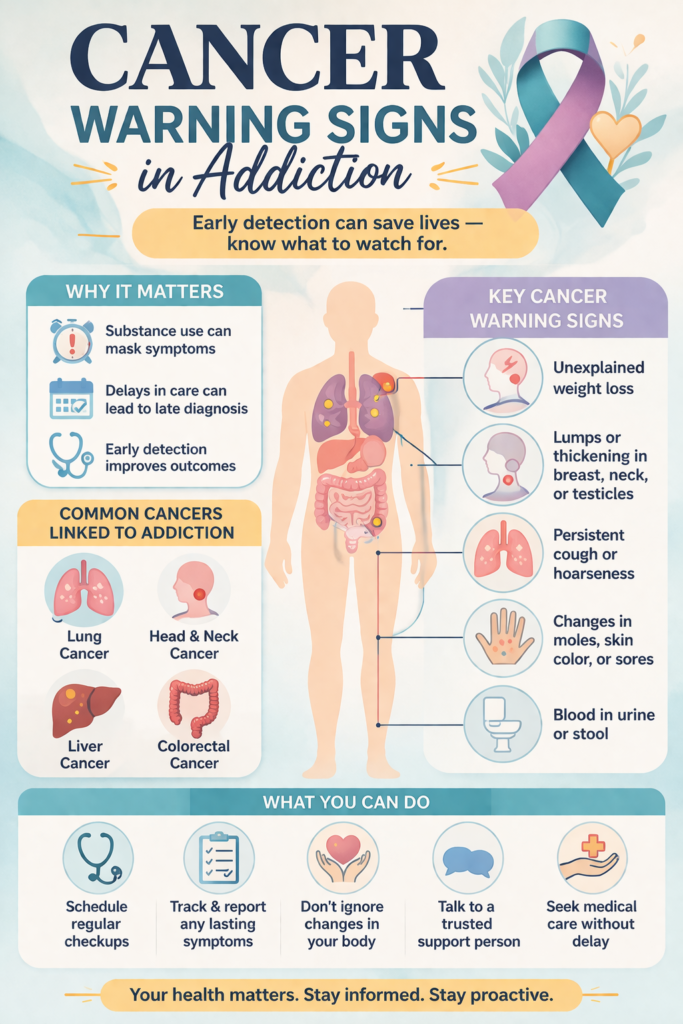
Cancer and addiction are not often discussed together, but in reality, they can be closely connected. For individuals struggling with substance use, recognizing potential warning signs of cancer is especially important. Symptoms may be overlooked, dismissed as side effects of drugs or alcohol, or ignored due to reluctance to seek medical care. Unfortunately, these delays can prevent early detection, when cancer is most treatable. Raising awareness of what to watch for can make a significant difference, helping individuals act sooner and improving the chances of better health outcomes.
Why Cancer Warning Signs are Often Overlooked in Addiction
Addiction brings a bunch of physical and mental changes, and it isn’t always easy to notice when something new or unusual is happening in your body. Withdrawal, hangovers, changes in sleep, and weight loss are pretty common in substance use, and they’re also symptoms that overlap with cancer. That’s why someone with addiction, or people close to them, might shrug off warning signs and think it’s “just the drugs” or part of the lifestyle.
Drug and alcohol use can reduce pain sensitivity or cause people to be less aware of how they’re feeling, which makes it easier to overlook mild or even moderate symptoms. Another aspect is that routine medical checkups sometimes fall by the wayside during addiction, so warning signs don’t always come to a doctor’s attention as soon as they should.
Not every symptom means cancer, and some signs are more likely in certain types of substance use. But it pays to be alert to changes, especially if something lingers for a few weeks or gets worse over time. Feeling comfortable enough to talk with someone when you’re feeling off is important because catching issues early is key to better outcomes.
Common Cancer Warning Signs to Know
So what should you actually be on the lookout for if you or someone you care about is struggling with addiction? Here’s a rundown of cancer warning signs that are most likely to be missed or misattributed due to substance use:
- Unexplained weight loss: Losing a lot of weight without trying can be chalked up to some drugs or alcohol, but it’s also one of the most common early signs of cancer. Watch how your weight shifts over time.
- Persistent pain: Ongoing pain that doesn’t go away, whether it’s in the abdomen, bones, or elsewhere, isn’t something to ignore. Painkillers or alcohol might cover it up or make it seem less severe, so keep track if it sticks around.
- Fatigue that won’t quit: Feeling wiped out all the time is common with addiction, but if it’s happening no matter how much you rest or use, it could be more than substance effects. Ongoing fatigue should be checked out.
- Changes in skin or sores that don’t heal: If you notice new lumps, bumps, or sores (especially in the mouth, throat, or on the skin) that aren’t improving, they need attention. Even small wounds that don’t heal are worth mentioning.
- Unusual bleeding or bruising: Blood in the urine, stool, or when coughing isn’t normal. Neither are frequent nosebleeds nor bruises without a clear cause. Tell someone if this is happening.
- Changes in bathroom habits: New constipation, diarrhea, or trouble peeing can sometimes be due to drugs, but lasting changes should be checked out. Document these changes so your healthcare provider gets the full story.
- Hoarseness or a cough that won’t go away: A stubborn cough, wheezing, or change in your voice, especially if you’re a smoker or use inhaled drugs, might be a red flag. Notice if it lingers for more than two weeks.
Noticing any of these doesn’t automatically mean cancer, but if a symptom sticks around for two weeks or more, it’s a really good idea to get checked out by a healthcare professional. If you have a past or current substance use issue, jotting down any changes and bringing those notes to an appointment can help make sure nothing gets missed.
Cancer Risks Linked with Different Substances
It’s helpful to know that some types of addiction carry increased risks for certain cancers, while others might weaken your immune system or make it harder for your body to recover. Here are some examples I think are worth knowing about:
- Tobacco: Cigarette and cigar smoking, as well as chewing tobacco, raise the risk of cancers of the lungs, mouth, throat, esophagus, and more. Vaping isn’t risk-free, either, though research is still ongoing about its long-term cancer risk.
- Alcohol: Heavy drinking has been linked to cancers of the mouth, throat, liver, breast, and colon. Alcohol can irritate and cause constant damage to tissues, which leads to an increased cancer risk over time.
- Injected drugs: Sharing needles puts you at risk for viruses like hepatitis B and C or HIV, which can lead to liver cancer and some blood cancers.
- Marijuana and other smoked drugs: Smoking anything can irritate or damage lungs and airways, potentially increasing lung cancer risk, especially if combined with tobacco use.
The more you use, the higher the overall risk, but even light or occasional use can still play a role, especially if there are other risk factors like family history or other illnesses. If you’re using more than one substance (polysubstance use), risks can add up in unexpected ways. Start conversations with your care team about any worries you have, so they can help you make a plan to monitor your health.
How Addiction Can Delay Detection and Treatment
People fighting addiction may be less likely to seek regular healthcare or may avoid the doctor altogether. Concerns about stigma, insurance, or being judged can be major barriers. Some folks are worried about withdrawal symptoms if they have to go to appointments, and others worry about their substance use being discovered or reported. Transportation, unstable housing, and mental health can all add to these barriers.
This gap in healthcare is a big reason why cancers are sometimes found later, making treatment more difficult. It’s one of the reasons why support networks and harm reduction services often push for nonjudgmental, accessible healthcare for anyone, or at the very least, making it as easy as possible for people to talk to a doctor when something seems off. Even mentioning to a trusted addiction counselor or peer support person that you’ve noticed new symptoms can help get the ball rolling on getting checked out. Bringing a support person with you to appointments can help you remember what you want to say and help ease any anxiety.
Community outreach programs sometimes offer free screenings or health checkups at local centers or shelters. Finding out where these happen in your area can be a good way to get checked out with less stress. Don’t be afraid to ask about privacy, what reports are made, and your rights as a patient—it can help you feel safer and more in control of your healthcare choices.
What to Do If You Spot a Cancer Warning Sign
Here’s what I always tell people: If you notice a new change in your body that doesn’t go away or keeps getting worse, try not to ignore it. Maybe you’re used to toughing things out, but this is one situation where talking to a doctor could make a huge impact. Even if it turns out to be nothing, you’ll have peace of mind.
- Monitor your symptoms: Write down what’s happening, when it started, and whether anything makes it better or worse. This might help you spot patterns and remember details at appointments. Even small details help your doctor.
- Reach out for support: If you don’t feel comfortable calling a doctor right away, consider asking a trusted friend, family member, or addiction counselor for help. Bringing someone along can make the process less overwhelming.
- Seek medical advice: Let the provider know about both the symptoms and your substance use. Don’t worry, they’re focused on helping, not judging. Honest information helps with faster, more accurate diagnoses.
- Follow up: Follow-up: If the doctor recommends tests or additional visits, try to keep
Catching problems early isn’t about being paranoid. It’s about giving yourself the best shot at a healthy future—addiction or no addiction. Taking small steps, like writing down your symptoms, joining a support group, or just talking about your concerns, can really make a difference in getting timely care.
Barriers to Early Detection in the Addiction Community
There are several reasons why people struggling with addiction might have a tougher time spotting or acting on cancer symptoms. Besides the direct effects of substance use, there are also social factors. These include:
- Lack of access to healthcare: Not everyone has health insurance, transportation, or even a working phone to make appointments. People might feel lost figuring out where to turn.
- Stigma and discrimination: Some people worry they’ll be judged or treated badly at clinics and hospitals because of their addiction or past substance use. That can stop them from reaching out for help, even if they know something is wrong.
- Fear of legal consequences: In areas where drug use is criminalized, there may be real anxiety about seeking help. People fear getting reported or facing trouble just for asking about their symptoms.
- Mental health issues: Depression, anxiety, and trauma are common and can make it harder to reach out, even when someone knows something is wrong. Mental health struggles often go hand in hand with addiction, making everything more complicated.
Addressing these barriers requires community efforts, compassionate healthcare, and advocacy for better access. Medical teams, harm reduction groups, and community clinics are working hard to reduce these problems, but it often helps when people know their rights and push for the care they need. No one should have to choose between getting help and feeling safe, and support groups can partner with health clinics or offer basic screenings, especially for conditions like hepatitis, to bridge the gap.
Frequently Asked Questions
Here are some things people tend to ask when it comes to cancer signs and addiction:
Question: Should I stop using substances if I notice a symptom?
Answer: It’s always a good idea to talk to a healthcare provider. Some symptoms can be due to withdrawal or side effects, while others need further checking. Don’t stop certain substances suddenly without guidance, as this might be risky; for example, quitting alcohol cold turkey can lead to dangerous withdrawal.
Question: Can addiction treatment centers help with cancer screening?
Answer: Ask what services are available, or request a referral for a physical checkup. If a treatment center doesn’t offer screenings, you can often ask for information about local clinics or programs that do.
Question: What if I’m afraid of bad news?
Answer: Let the provider know how you’re feeling. Health professionals can help talk through your worries and answer questions before any tests or exams.
Final Thoughts on Staying Proactive with Your Health
Knowing cancer warning signs, even in the middle of addiction, is a way to look out for yourself or someone you care about. No symptom is too small to mention, and staying connected with healthcare, even just occasionally, helps make sure nothing dangerous slips through the cracks. Everyone deserves a shot at early detection and good care, regardless of where they are on their recovery path. Keep talking, keep asking questions, and don’t give up on your health—your future is worth watching out for.
Video: