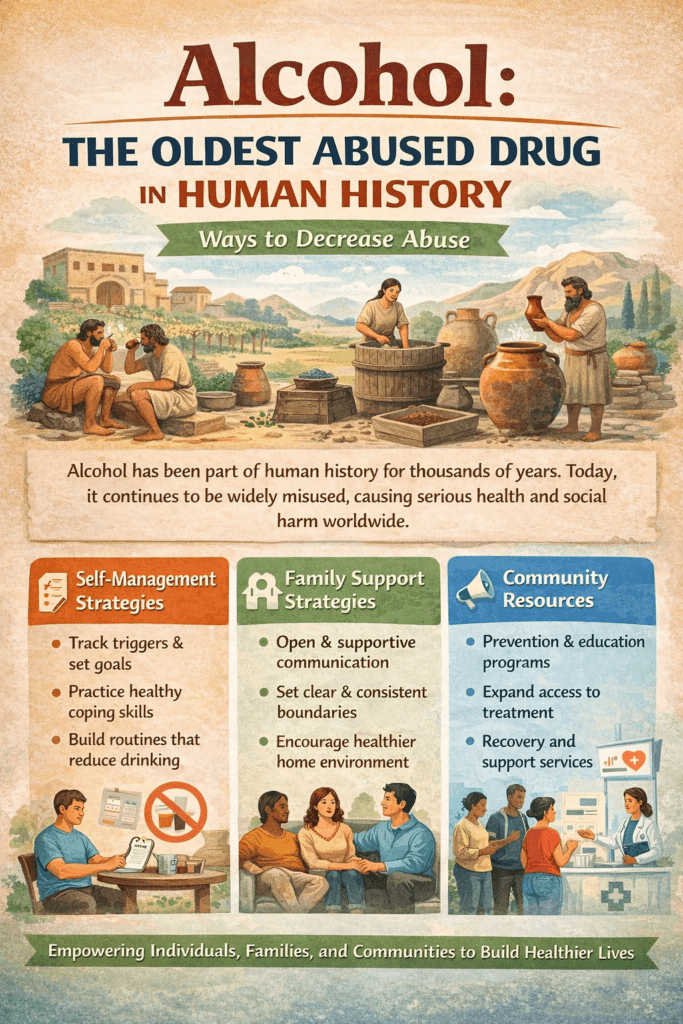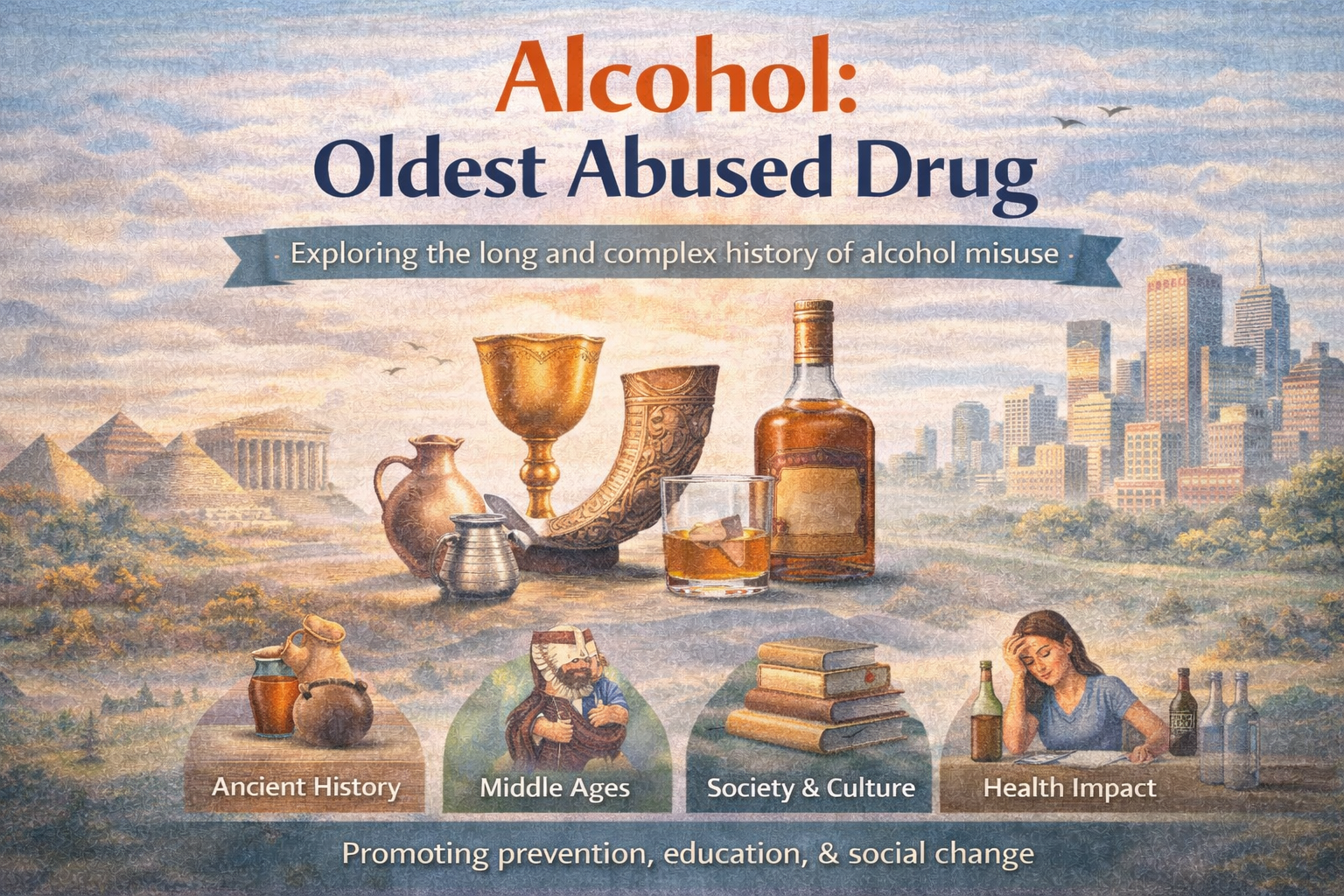
Alcohol is widely recognized as the oldest abused drug in human history, deeply woven into human culture, rituals, and social life for thousands of years. While alcohol has long been accepted and even celebrated, its widespread availability and social normalization have also contributed to significant health, social, and economic harm. Understanding alcohol abuse through a modern lens highlights that misuse is not simply a matter of poor choices but the result of habits, coping patterns, family dynamics, and community environments. Addressing alcohol abuse effectively requires a multi-level approach that empowers individuals through self-management, strengthens family support systems, and leverages community resources to reduce harm and promote healthier lifestyles.
Alcohol: The Oldest Abused Drug in Human History
Alcohol is widely recognized as the oldest abused drug in human history, with evidence of its use dating back more than 9,000 years. Archaeological findings show that early humans discovered fermentation accidentally when wild yeast interacted with grains and fruits, producing intoxicating beverages. What began as a natural byproduct of food storage soon became deeply embedded in human culture, rituals, and daily life.
In ancient civilizations, alcohol held both practical and symbolic value. Early societies used fermented drinks such as beer and wine for hydration when clean water was scarce, as fermentation killed harmful pathogens. Alcohol also played a central role in religious ceremonies, social bonding, and economic trade. In Mesopotamia, Egypt, China, and later Greece and Rome, alcohol was praised as a gift from the gods and a marker of civilization.
Despite its cultural significance, historical records also reveal early recognition of alcohol’s harms. Ancient texts describe excessive drinking leading to illness, violence, social disorder, and moral decline. Even early physicians warned about the dangers of overconsumption, noting its effects on judgment, behavior, and physical health. This dual role—both celebrated and feared—has followed alcohol throughout human history.
As societies evolved, alcohol production became more concentrated and accessible, increasing its addictive potential. Industrialization and mass production amplified availability, potency, and marketing, contributing to widespread misuse. Unlike many illicit substances, alcohol remained socially acceptable and legally regulated, often masking its risks and reinforcing patterns of abuse across generations.
Today, alcohol continues to be one of the most commonly misused substances worldwide, contributing to addiction, chronic disease, injury, and social harm. Understanding alcohol as the oldest abused drug in human history highlights an important truth: substance misuse is not a modern problem, but a longstanding human challenge shaped by culture, access, and social norms. Recognizing this history helps reframe addiction as a public health issue rooted in human experience—one that requires education, prevention, and compassionate, evidence-based responses.
Self-Management Strategies to Decrease Alcohol Abuse
Reducing alcohol abuse through self-management focuses on building awareness, strengthening healthy routines, and creating practical safeguards that support long-term change. Rather than relying on willpower alone, effective self-management emphasizes skills that help individuals anticipate risk, manage cravings, and replace alcohol-centered habits with healthier alternatives.
A foundational strategy is self-monitoring and goal setting. Tracking drinking patterns—such as when, where, and why alcohol is used—helps identify triggers like stress, social pressure, or boredom. Setting clear, realistic goals (for example, reducing quantity, limiting drinking days, or choosing alcohol-free weeks) provides structure and measurable progress. Written goals and regular check-ins increase accountability and motivation.
Trigger management and coping skills are essential. Many people use alcohol to manage emotions such as anxiety, anger, or loneliness. Learning alternative coping strategies—deep breathing, exercise, creative outlets, or brief mindfulness practices—reduces reliance on alcohol as emotional regulation. Planning ahead for high-risk situations, such as social events or stressful days, helps prevent impulsive use.
Another key strategy is restructuring routines and the environment. Establishing consistent sleep, meals, and activity schedules reduces vulnerability to cravings. Removing alcohol from the home, avoiding drinking-centered environments, and substituting non-alcoholic options can significantly lower consumption. Small environmental changes often lead to meaningful behavioral shifts over time.
Social support and boundary setting also play a critical role. Communicating limits to friends or family, choosing supportive social circles, and participating in sober or low-alcohol activities reduce social pressure to drink. Support does not require disclosure to everyone; even one trusted person can provide encouragement and accountability.
Finally, health-focused engagement strengthens self-management. Regular healthcare check-ins, honest conversations about alcohol use, and addressing co-occurring stress, sleep issues, or mental health concerns improve outcomes. Viewing alcohol reduction as part of overall wellness—not a moral test—helps sustain change.
Ultimately, self-management strategies to decrease alcohol abuse empower individuals to take control of their habits through awareness, preparation, and support. By replacing alcohol-centered coping with healthier skills and environments, individuals can reduce harm, improve well-being, and build a more balanced, sustainable lifestyle.
Family Support Strategies to Decrease Alcohol Abuse
Family support plays a powerful role in decreasing alcohol abuse by shaping daily environments, communication patterns, and emotional safety. Families often witness the impact of alcohol use firsthand, and when support is informed, consistent, and compassionate, it can significantly influence healthier choices and long-term change.
One of the most effective family strategies is education and understanding. When families learn about alcohol misuse as a health issue rather than a moral failing, conversations become less confrontational and more supportive. Understanding how stress, trauma, and mental health intersect with alcohol use helps families respond with empathy instead of blame, reducing defensiveness and resistance.
Healthy communication is another cornerstone of family support. Open, calm discussions about concerns—using respectful language and focusing on behaviors rather than character—encourage honesty. Expressing care and setting clear expectations helps individuals feel supported while understanding the impact of their drinking. Consistent, non-judgmental communication builds trust and reduces secrecy around alcohol use.
Setting clear and consistent boundaries is essential. Families can define acceptable behaviors in the home, such as limits on drinking at family events or expectations related to safety and responsibilities. Boundaries are not punishments; they are protective measures that support accountability while preserving relationships.
Families can also help by creating a low-risk home environment. Reducing or eliminating alcohol in shared spaces, offering non-alcoholic alternatives, and planning alcohol-free activities encourage healthier habits. Shared routines—meals, exercise, or family outings—help replace alcohol-centered time with connection and structure.
Finally, encouraging professional and community support strengthens family efforts. Families can support healthcare visits, counseling, or peer support participation while respecting autonomy. Seeking family therapy or support groups can also help relatives manage stress, improve communication, and avoid burnout.
Ultimately, family support strategies to decrease alcohol abuse focus on partnership rather than control. By combining education, communication, boundaries, and shared wellness efforts, families can create environments that reduce alcohol-related harm and support lasting, healthy change.
Community Resource Strategies to Decrease Alcohol Abuse
Community resources play a critical role in decreasing alcohol abuse by addressing the social, environmental, and structural factors that influence drinking behaviors. Alcohol misuse is not only an individual issue—it is shaped by availability, cultural norms, stressors, and access to support. Community-based strategies focus on prevention, early intervention, and sustained recovery through coordinated public health efforts.
One of the most effective community strategies is the provision of accessible prevention and education programs. Schools, workplaces, healthcare systems, and local organizations can provide education on the health risks of alcohol misuse, early warning signs, and healthy coping strategies. Public awareness campaigns help shift social norms by reducing stigma and challenging the normalization of excessive drinking.
Healthcare and access to treatment are other essential components. Community health centers, outpatient treatment programs, and primary care providers offer screening, brief interventions, counseling, and medication support for alcohol use disorder. When services are affordable, local, and integrated into routine healthcare, individuals are more likely to seek help early—before alcohol misuse escalates.
Peer support and recovery services further strengthen community impact. Support groups, recovery coaches, sober community spaces, and alcohol-free social events reduce isolation and provide accountability. These services foster connection and belonging, which are protective factors against continued alcohol abuse.
Communities also reduce alcohol-related harm through policy and environmental strategies. Responsible alcohol sales practices, limits on alcohol outlet density, enforcement of underage drinking laws, and promotion of alcohol-free public events all reduce excessive consumption. These strategies improve safety while reinforcing healthier community standards.
Addressing social determinants of health is equally important. Community programs that support housing stability, employment opportunities, transportation access, and mental health services reduce the stressors that often contribute to alcohol misuse. By improving the overall quality of life, communities lower the risk of alcohol being used as a primary coping mechanism.
Ultimately, community resource strategies to decrease alcohol abuse create environments that support healthier choices. Through education, healthcare access, peer support, policy initiatives, and social stability, communities can reduce alcohol-related harm and promote long-term well-being for individuals and families alike.
Frequently Asked Questions
Here are some common questions:
Why is alcohol considered the oldest abused drug in human history?
Alcohol is considered the oldest abused drug because fermented beverages have been used by humans for thousands of years. Archaeological evidence shows alcohol production dating back over 9,000 years, long before modern drugs existed. Its early discovery through natural fermentation made it widely accessible and culturally embedded.
Why has alcohol remained socially accepted despite its risks?
Alcohol has been integrated into social traditions, religious rituals, celebrations, and daily life across cultures. Its legal status and normalization often minimize perceived risk, even though alcohol contributes to significant health, social, and economic harm worldwide.
What makes alcohol abuse especially dangerous today?
Modern alcohol is more potent, widely available, and heavily marketed. Chronic misuse increases the risk of addiction, liver disease, heart problems, mental health disorders, injuries, and family and social disruption. Because it is legal and normalized, problematic use can go unnoticed for long periods.
What are effective self-management strategies to decrease alcohol abuse?
Self-management strategies include tracking alcohol intake, identifying triggers, setting clear drinking limits or reduction goals, and developing healthier coping skills for stress and emotions. Creating consistent routines, removing alcohol from the home, and replacing drinking with healthier activities also support long-term change.
How can families help reduce alcohol abuse?
Families can support change through education, open and respectful communication, and clear boundaries around alcohol use. Creating a supportive home environment, reducing alcohol availability, and encouraging healthy routines help reinforce positive behaviors. Family support works best when it focuses on empathy rather than control or blame.
What role do community resources play in decreasing alcohol abuse?
Community resources provide prevention education, healthcare access, treatment services, and peer support. Community-based programs reduce stigma, promote early intervention, and offer recovery-focused environments that reduce isolation and relapse risk.
Are professional services necessary to reduce alcohol abuse?
Not always, but professional support can be very helpful—especially when alcohol misuse is persistent or affecting health and relationships. Healthcare providers, counseling services, and support groups offer evidence-based tools and accountability that strengthen self-, family-, and community-level efforts.
Can alcohol abuse be reduced without complete abstinence?
For some individuals, harm reduction approaches such as cutting back, spacing drinks, or avoiding high-risk situations may reduce harm. Others may benefit most from abstinence. Effective strategies depend on individual health, risk level, and personal goals.
How does understanding alcohol’s history help reduce stigma?
Recognizing alcohol abuse as a long-standing human challenge—not a moral failure—promotes compassion and understanding. This perspective encourages people to seek help earlier and supports public health approaches rather than punishment or shame.
What is the most effective way to decrease alcohol abuse overall?
The most effective approach combines self-management skills, supportive family involvement, and accessible community resources. When individuals are empowered, families are informed, and communities provide prevention and treatment support, alcohol-related harm can be significantly reduced.
Conclusion
Reducing alcohol abuse is most effective when self-management, family support, and community resources work together. Self-management strategies help individuals build awareness, manage triggers, and develop healthier coping skills. Family support reinforces change through education, communication, boundaries, and a stable home environment. Community resources expand these efforts by providing prevention programs, healthcare access, peer support, and policies that reduce alcohol-related harm. By combining personal responsibility with relational and societal support, alcohol abuse can be addressed as a long-standing human challenge rather than a personal failure. This integrated approach promotes safer choices, sustained recovery, and healthier individuals, families, and communities over time.
Video: