Acute pain management is a complex and essential component of healthcare, affecting recovery from injury, surgery, and acute illness. While effective pain control is necessary to promote healing and function, it presents significant challenges, including accurate pain assessment, medication risks, individual variability, and the potential transition from acute to chronic pain. Addressing these challenges requires more than pharmacologic treatment alone. Successful acute pain management depends on a coordinated approach that integrates self-management strategies, family support, and community resources to ensure pain is treated safely, comprehensively, and in a way that supports long-term recovery.
Challenges of Acute Pain Management: Balancing Relief, Safety, and Recovery
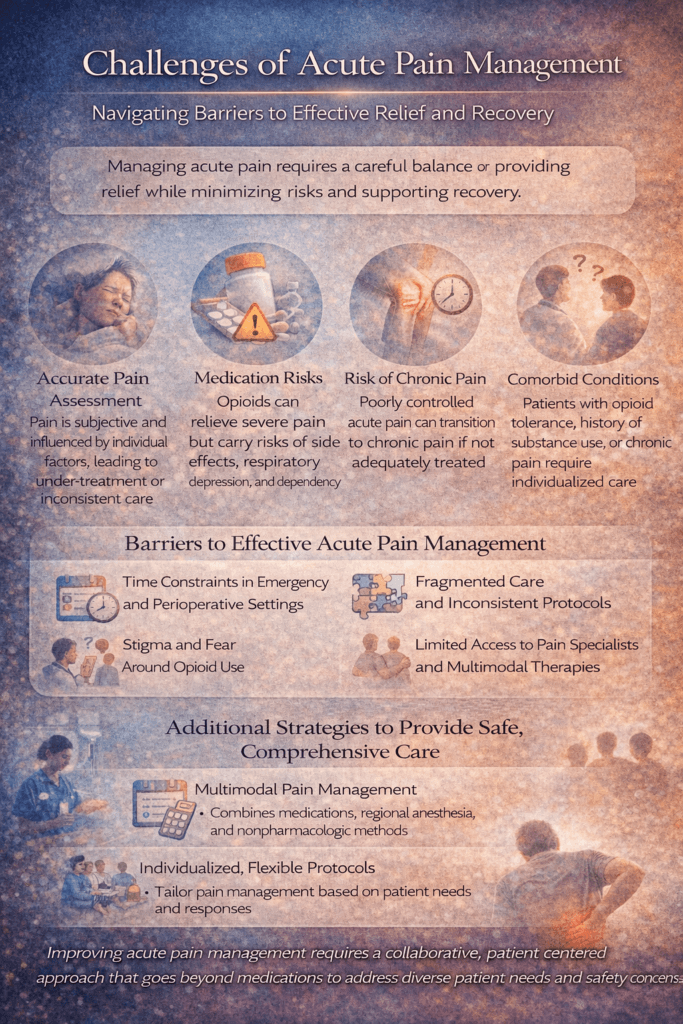
Acute pain management is a critical component of medical care, affecting outcomes in surgery, trauma, emergency medicine, and acute illness. Acute pain is sudden, often intense, and typically linked to tissue injury, inflammation, or medical procedures. While effective pain control is essential for healing and patient comfort, managing acute pain presents complex clinical challenges that require careful balance between relief, safety, and long-term health.
One major challenge is accurately assessing pain. Pain is subjective and influenced by biological, psychological, and cultural factors. Patients may underreport pain due to fear of appearing weak, while others may struggle to describe its severity or quality. Clinicians must rely on self-report, behavioral cues, and clinical judgment, which can lead to under-treatment or inconsistent care.
Medication-related challenges are also significant. Opioids remain effective for severe acute pain, but their use carries risks including respiratory depression, side effects, and potential transition to prolonged use. Clinicians must balance adequate analgesia with minimizing exposure, especially in patients with risk factors such as substance use disorder, sleep apnea, or advanced age. Non-opioid options may be safer but are sometimes insufficient alone.
Another challenge is the risk of pain becoming chronic. Poorly controlled acute pain can sensitize the nervous system, increasing the likelihood of persistent pain long after the initial injury has healed. Early and appropriate pain management is therefore not only about comfort, but also about preventing long-term disability.
Comorbid conditions further complicate care. Patients with opioid tolerance, chronic pain, or a history of substance use disorder often require individualized strategies. Standard dosing may be ineffective, while higher doses increase risk. Stigma and fear of misuse can also result in inadequate pain treatment for these populations.
System-level barriers add to the complexity. Time constraints, limited access to pain specialists, inconsistent protocols, and fragmented care can interfere with timely and coordinated pain management. In fast-paced settings such as emergency departments, these challenges are especially pronounced.
Modern approaches emphasize multimodal pain management, combining medications with different mechanisms of action, regional anesthesia, physical modalities, and nonpharmacologic strategies such as education, reassurance, and movement. When tailored to the individual, these approaches improve pain control while reducing reliance on any single intervention.
Acute pain management is not simply about eliminating pain—it is about supporting recovery, function, and safety. Addressing its challenges requires clinical skill, empathy, patient-centered communication, and systems that support flexible, evidence-based care. When acute pain is managed effectively, patients heal better, mobilize sooner, and face fewer long-term complications.
Self-Management Strategies for Acute Pain Management
Acute pain is a sudden and often intense experience that can arise from injury, surgery, illness, or medical procedures. While medications play an important role in controlling acute pain, self-management strategies are essential complements that empower individuals to participate actively in their recovery. Effective self-management can reduce pain intensity, improve function, and support healing while minimizing reliance on medications.
One of the most important self-management strategies is understanding the pain. Knowing the cause, expected duration, and normal healing process helps reduce fear and anxiety, which can intensify pain. Education from healthcare providers enables individuals to distinguish expected discomfort from warning signs that require medical attention.
Movement and positioning are key components of acute pain self-management. Gentle movement, as recommended by a provider, helps prevent stiffness, improve circulation, and reduce muscle guarding. Proper positioning, use of pillows or supports, and gradual return to activity can significantly improve comfort and function during recovery.
Nonpharmacologic techniques are highly effective in managing acute pain. Heat or cold therapy can reduce inflammation, relax muscles, and provide localized relief. Relaxation techniques such as deep breathing, progressive muscle relaxation, and guided imagery help calm the nervous system and reduce pain perception. These techniques are particularly useful during pain spikes or before activities that may increase discomfort.
Pacing and activity planning also support pain control. Overexertion can worsen acute pain and delay healing, while complete inactivity can lead to stiffness and deconditioning. Balancing rest with activity—often referred to as pacing—allows the body to recover without exacerbating symptoms.
Sleep and hydration play important roles in pain recovery. Poor sleep increases pain sensitivity, while dehydration can worsen muscle pain and fatigue. Establishing good sleep habits and maintaining adequate fluid intake support overall healing and pain tolerance.
Communication and self-advocacy are also essential. Reporting pain levels, medication effects, and side effects helps healthcare providers adjust treatment plans appropriately. Patients who actively participate in decision-making are more likely to achieve effective pain control.
Self-management does not replace medical treatment, but it enhances it. By combining education, movement, nonpharmacologic techniques, and healthy routines, individuals can better manage acute pain, promote healing, and regain function more quickly and safely.
Family Support Strategies in Acute Pain Management
Acute pain can be physically and emotionally overwhelming, especially following injury, surgery, or sudden illness. While medical treatment addresses the physiological aspects of pain, family support plays a vital role in recovery. Thoughtful, informed family involvement can reduce distress, improve pain control, and support safe healing during the acute phase.
One of the most important family support strategies is providing emotional reassurance. Anxiety, fear, and uncertainty can amplify pain perception. Family members who offer calm presence, empathy, and encouragement help regulate emotional responses and create a sense of safety. Simply listening and validating the individual’s experience can significantly reduce stress-related pain escalation.
Practical assistance is another key component. Acute pain often limits mobility and independence. Families can assist with daily activities, including meal preparation, transportation, medication organization, reminders for wound care, and household tasks. Reducing physical strain allows the individual to rest and heal without unnecessary exacerbation of pain.
Supporting adherence to the pain management plan is also essential. Families can help track medication schedules, encourage the use of nonpharmacologic strategies such as ice, heat, or relaxation exercises, and assist with safe movement or physical therapy exercises as recommended. This support promotes consistency and prevents both underuse and misuse of medications.
Education is a powerful tool for families. Understanding the expected course of pain, warning signs of complications, and safe medication practices helps families respond appropriately without panic or overreaction. Education also reduces fear around pain medications, which can otherwise lead to undertreatment or unsafe use.
Families should also encourage balance between rest and activity. Overprotection can lead to inactivity, stiffness, and delayed recovery, while pushing too hard can worsen pain. Supporting pacing and gradual return to function helps maintain mobility and confidence.
Finally, families must care for themselves. Acute caregiving can be stressful, and caregiver fatigue can affect the quality of support. Taking breaks, sharing responsibilities, and seeking guidance when needed help families remain effective and compassionate.
Family support is a powerful, often underestimated component of acute pain management. When families provide emotional reassurance, practical support, education, and balanced encouragement, they create an environment conducive to comfort, healing, and recovery, thereby enabling medical treatments to work more effectively.
Community Resource Strategies in Acute Pain Management
Acute pain management does not end when a patient leaves the hospital or clinic. Community resources play a crucial role in supporting recovery, improving pain control, and preventing complications during the transition from medical care to daily life. When effectively integrated, community-based strategies help individuals manage acute pain safely, restore function, and reduce unnecessary reliance on emergency services or medications.
One of the most valuable community resources is outpatient rehabilitation services. Physical therapy and occupational therapy clinics help individuals regain mobility, strength, and confidence after injury or surgery. Guided movement, education on body mechanics, and individualized exercise plans reduce pain, prevent stiffness, and promote faster healing.
Community health clinics and primary care services also support acute pain management through follow-up care and monitoring. Timely reassessment allows providers to adjust pain plans, address side effects, and identify early signs of complications. Access to consistent follow-up reduces care gaps that can exacerbate pain or delay recovery.
Home health services are especially important for individuals with limited mobility, older adults, or those recovering from major procedures. Visiting nurses and therapists provide pain assessment, medication education, wound care, and functional support in the home environment. This approach reduces strain on patients and families while supporting safe recovery.
Pharmacy-based community resources further enhance pain management. Pharmacists offer medication counseling, identify potential drug interactions, and educate patients on safe use, storage, and tapering of pain medications. This guidance is particularly important during short-term opioid use, helping prevent misuse or adverse effects.
Community education programs also play a role in improving pain outcomes. Workshops, support groups, and educational materials focused on pain-coping strategies, movement, and self-care empower individuals to actively participate in their recovery. Education reduces fear, improves adherence to treatment plans, and enhances confidence in managing pain.
Finally, social and support services address practical barriers that can worsen pain. Transportation assistance, meal services, temporary caregiving support, and workplace accommodations reduce stress and physical strain during recovery. By addressing these social factors, community resources help create an environment that supports healing.
Community resource strategies strengthen acute pain management by extending care beyond clinical settings. When individuals have access to rehabilitation, follow-up care, education, and practical support, acute pain becomes more manageable, recovery is smoother, and long-term outcomes improve.
Frequently Asked Questions
Here are some common questions:
What is acute pain?
Acute pain is sudden-onset pain that is typically linked to injury, surgery, illness, or medical procedures. It is typically time-limited and resolves as healing progresses, but requires appropriate management to support recovery and function.
Why is acute pain difficult to manage effectively?
Acute pain is challenging because it is subjective, varies widely between individuals, and is influenced by emotional, psychological, and cultural factors. Clinicians must balance providing adequate relief while minimizing medication-related risks and long-term complications.
How does poor acute pain control affect recovery?
Inadequately managed acute pain can delay healing, limit mobility, increase stress responses, and raise the risk of acute pain transitioning into chronic pain. It can also negatively impact sleep, mood, and overall quality of life.
What are the risks associated with opioid use for acute pain?
Opioids can be effective for severe acute pain but carry risks such as respiratory depression, sedation, constipation, nausea, and potential progression to prolonged use. These risks require careful dosing, monitoring, and short-term use when appropriate.
Why is pain assessment considered a challenge?
Pain cannot be measured objectively and relies heavily on patient self-report. Communication barriers, fear of stigma, cognitive impairment, or cultural differences can lead to underreporting or misunderstanding of pain severity.
How do comorbid conditions complicate acute pain management?
Conditions such as chronic pain, opioid tolerance, substance use disorder, anxiety, depression, or medical comorbidities often require individualized treatment plans. Standard pain protocols may be ineffective or unsafe for these patients.
What system-level barriers affect acute pain management?
Time constraints, limited access to pain specialists, inconsistent protocols, fragmented care, and fast-paced clinical environments—especially emergency settings—can interfere with timely and coordinated pain management.
Can acute pain turn into chronic pain?
Yes. Poorly controlled acute pain can sensitize the nervous system, increasing the risk that pain persists beyond normal healing timelines. Early, effective pain management helps reduce this risk.
What is multimodal pain management?
Multimodal pain management uses a combination of medications with different mechanisms, regional anesthesia, physical strategies, and nonpharmacologic approaches to improve pain control while reducing reliance on any single therapy.
How do nonpharmacologic strategies help address pain management challenges?
Techniques such as movement, positioning, ice or heat, relaxation, and patient education reduce pain perception, improve function, and enhance recovery while minimizing medication exposure.
What role do patients play in managing acute pain challenges?
Patients who actively participate through self-management strategies, communication, and adherence to treatment plans often experience better pain control and recovery outcomes.
What is the key takeaway about acute pain management challenges?
Effective acute pain management requires balancing relief with safety, addressing individual needs, and integrating medical treatment with self-management, family support, and community resources to promote healing and prevent long-term complications.
Conclusion
Overcoming the challenges of acute pain management is most effective when individuals, families, and communities work together alongside clinical care. Self-management strategies empower individuals to understand and cope with pain, promote movement and healing, and reduce reliance on medications. Family support provides emotional reassurance, practical assistance, and reinforcement of treatment plans, while community resources extend care through rehabilitation services, follow-up support, education, and social assistance. When these strategies are combined, acute pain management becomes more patient-centered and sustainable, supporting comfort, function, and recovery while minimizing complications and long-term pain-related risks.
Video: The Impossible Job of Treating Severe Pain Safely #HealthcareChallenge #DoctorDilemma