When you hear the phrase “the oldest drug in the world,” it’s easy to imagine something pulled from an ancient apothecary shelf or a long-forgotten herbal remedy. In reality, the answer is both more fascinating and more nuanced, because it depends on how we define a “drug.” Is it any substance that alters the body or mind, a plant used for healing, or something taken for ritual or relief? Archaeological evidence and early written records suggest that humans have been using psychoactive and medicinal substances for thousands of years, long before modern medicine existed. Several candidates consistently appear in the historical record, each tied to early human attempts to manage pain, illness, emotion, or spiritual experience. In this piece, I’ll explore what researchers believe were the world’s earliest drugs, how ancient cultures used them, and what these early practices reveal about the origins of medicine and human behavior.
The Search for the Oldest Drug: Where Do We Start?
Determining the oldest drug raises several questions. Are we talking about the first substance ever used to treat illness? Or are we also counting psychoactive plants that ancient people used for rituals? Either way, the answer goes way back, further than recorded history itself.
Most experts agree that early humans experimented with whatever plants and minerals they could find in their environment. Written records don’t go back far enough, but evidence from ancient burial sites, fossilized remains, and cave paintings shows that humans have used natural remedies even before the start of written civilization. The definition of “drug” here even includes things that don’t look like modern medications, such as chewing willow bark to ease pain or using poppy plants for their calming effects.
In fact, what people used as drugs often reflected a mix of their environment and their beliefs about health and the world. Some substances were valued not only for healing, but also for their ability to shift moods or even connect with spiritual realms—all of which complicate our understanding of what the “oldest drug” really is.
Top Candidates for the Oldest Known Drugs
Several natural substances show up again and again in archaeological digs and old medical texts as some of the world’s first drugs. Some standout examples include:
- Opium (from the poppy plant): Dates back at least 7,000 years, found in the Mediterranean and later in ancient Egyptian and Sumerian cultures. Used for its pain-relieving and sleep-inducing effects.
- Willow Bark: Used throughout ancient Egypt, Sumer, ancient Greece, and beyond as a pain and fever reducer. Willow bark led to the development of modern aspirin.
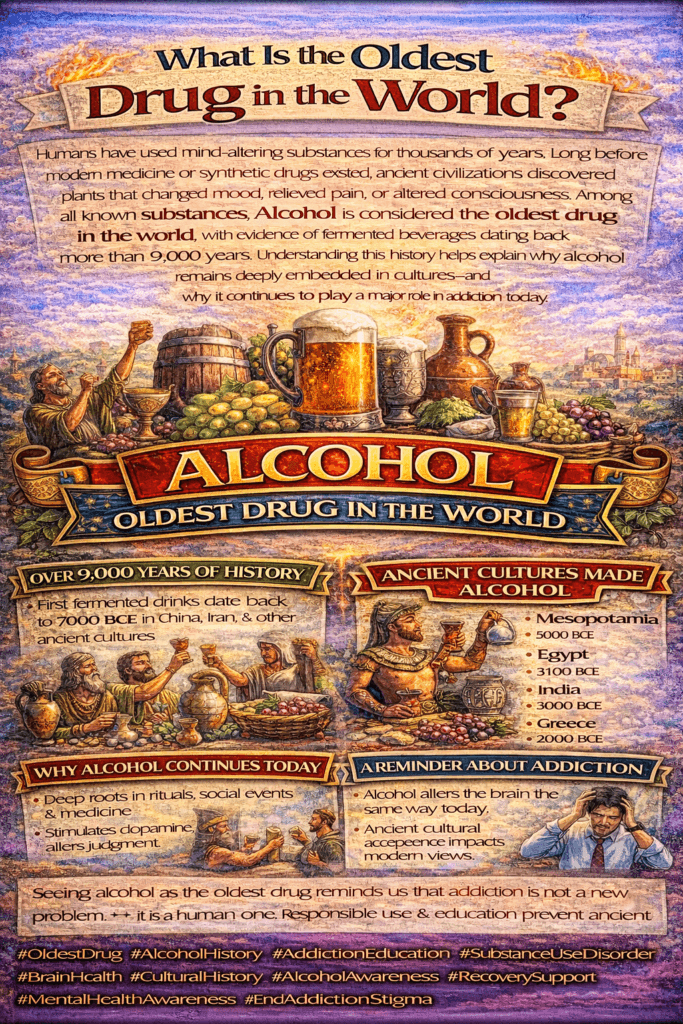
- Alcohol (fermented drinks): There’s evidence that people were making and drinking alcohol over 9,000 years ago in places like China and the Middle East. Used for everything from religious rites to basic wound cleaning and pain relief.
- Cannabis: Archaeological evidence from China and Central Asia suggests cannabis use going back nearly 5,000 years.
Other contenders include honey, used on wounds for its antibacterial properties, as well as juniper, mandrake, and myrrh. Each of these natural sources played a role in both healing and ritual across early societies. If we’re picking a single drug, most sources land on opium as the oldest known psychoactive and medicinal drug used by humans.
It’s fascinating to examine the historical uses of these natural remedies and realize that many cultures arrived at similar solutions independently. Often, discoveries in one region were spread to others along trade routes, thanks to travelers, merchants, and healers sharing their tricks of the trade.
The Discovery and Early Use of Ancient Drugs
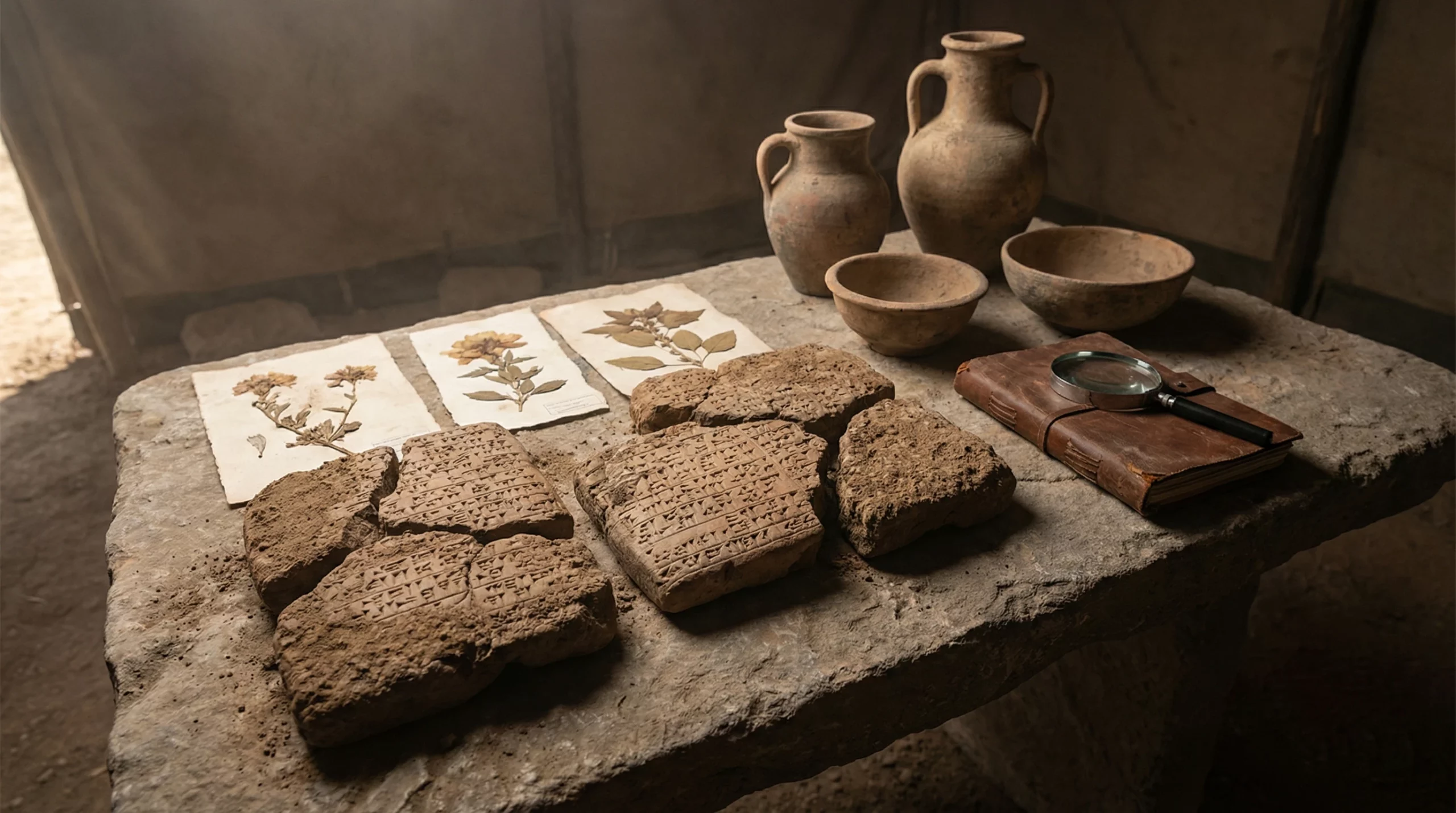
People across the world identified the benefits of plants and minerals largely through trial and error. The earliest known written medical texts, such as the Sumerian clay tablets from around 2100 BCE and the Ebers Papyrus from Egypt, describe mixtures of these early drugs to treat conditions ranging from headaches to infections.
Opium was harvested from poppies by making cuts in the seed pods and collecting the sticky sap. Willow bark was chewed or brewed as tea for pain. Alcohol was made by fermenting grains, fruits, or honey for use as medicine, disinfectant, and, of course, intoxicant.
Many drugs first popped up alongside spiritual or religious rituals, especially plants that could affect moods or consciousness. Over time, as civilizations shared knowledge through trade and conquest, different regions quickly adopted one another’s remedies and expanded their use. These exchanges fueled rapid innovation in ancient medicine and are a key reason why certain drugs spread so widely.
How Ancient Drugs Were Used in Daily Life
Most early drugs weren’t used solely to treat illness. Poppy-based opium helped with pain but was also believed to ward off evil spirits. Alcohol was turned to for everything from dulling pain during dental work to funerary ceremonies meant to honor the dead. Willow bark gained a reputation for easing fever, so people reached for it whenever sickness struck, long before anyone had mapped out enzymes or chemical reactions.
Some ancient methods seem downright strange today, like mixing lizard blood or powdered minerals into tonics, using burned plant soot for cosmetics, and chanting incantations as part of applying a “medicine.” At the time, there was little distinction between science and superstition. The important thing, though, is that many remedies did offer relief and became part of communities’ standard practices.
What the Sciences Say: Archaeological and Medical Evidence
Researchers have uncovered everything from ancient tablets listing drug recipes to DNA residues of plant alkaloids on prehistoric teeth. For instance, traces of morphine (a key ingredient in opium) have been found in Bronze Age burial sites. Analysis of pottery sherds reveals traces of beer or wine, suggesting the everyday, ritual, and medical uses of alcohol. Fossils and dried plant remains help piece together which substances ancient people tried, often revealing that pharmacological knowledge spread faster than you might guess.
Science doesn’t just identify what the old drugs were; it reveals how quickly and widely people shared their knowledge. For example, the Silk Road facilitated the spread of plant remedies—and the know-how to use them—between Europe, Africa, and Asia. So the story of the world’s first drugs is also a story about the growth of civilization and how collaboration sparked medical progress.
It’s worth noting that new discoveries keep updating what we know about ancient drugs. Advances in technology, such as DNA analysis and chemical residue studies, have shed further light on how early humans put their discoveries to work. Each year, archaeologists stumble upon new finds that help us rewrite the story, painting a fuller picture of humanity’s relationship with natural healing agents.
Why Ancient Drugs Still Matter
Many of the drugs our ancestors first tried are still in use (or have modern counterparts). Aspirin, derived from willow bark, remains one of the world’s most common painkillers. Opioids, though more strictly regulated today, are still used for managing serious pain. Alcohol remains a staple for social, ritualistic, and certain medical uses.
Examining these remedies entails considering how medical knowledge has developed over millennia. Sometimes the old ways worked so well that little about them has changed. In other cases, ancient drugs inspired the search for safer treatments by enabling scientists to initiate new lines of research in chemistry and biology. In both respects, ancient remedies are the seeds from which today’s sophisticated medicines have grown.
Common Challenges and Lessons from Early Drugs
- Dosing and safety: Early users had no way to measure doses exactly. Overusing opium or alcohol could lead to addiction or poisoning.
- Superstition and science: Rituals mattered just as much as the physical effects, and it was hard to tell what really worked before modern testing.
- Innovation through necessity: With few choices, people had to get creative with what they had on hand. This led to extensive experimentation, for better and worse.
Dosing and Poisoning Risks
No one had a measuring spoon thousands of years ago, so working out the right amount required lots of guessing. While some home remedies were probably harmless, others could be quite dangerous. Opium, for example, could bring pain relief in tiny amounts, but overuse threatened lives. Alcohol, too, was risky when consumed in excess. These challenges encouraged the transmission of knowledge and cautionary tales within communities, but mishaps nevertheless occurred.
Mixing Belief and Medicine
Ancient treatments blended physical effects with spiritual or supernatural beliefs. The use of a plant or mineral for its properties was often accompanied by chants, prayers, or group rituals. This overlap made it harder to distinguish which cures really worked through chemistry and which worked through suggestion or luck. Still, the whole process was a social affair, connecting healer and patient in a way that’s sometimes missing from medicine today.
Advanced Tips for Exploring the History of Ancient Drugs
If you’re curious to dig deeper into humanity’s oldest medicines, here are some ways to get closer to the world of ancient pharmacology:
- Look at archaeological discoveries: Sites in Mesopotamia, Egypt, China, and Central America all show fascinating pieces of the pharmaceutical puzzle, from ancient mortar and pestles to preserved plant samples.
- Consult ancient medical texts: The Ebers Papyrus, Edwin Smith Papyrus, and Sumerian tablets are worth consulting in translation for their recipes, case notes, and surprisingly keen observations.
- Review exhibits and documentaries: Many museums highlight ancient medicine, and some documentaries provide details on how early healers prepared and used their drugs.
- Read up on traditional remedies in use today: Investigating current folk medicine can provide a living link to ancient practices—many “modern” herbal cures are far older than you think.
Engaging with these sources will give you a sense of the imagination and hard-earned wisdom behind many of today’s familiar medicines. It’s also a reminder that experimentation and curiosity are timeless elements of the healing arts.
Frequently Asked Questions
Question: Is willow bark really as effective as modern aspirin?
Answer: The main active chemical in willow bark is salicin, which is processed into salicylic acid in the body. This is very similar to how aspirin works, but willow bark is less concentrated, so its effects can be milder and less predictable. It’s worth asking your doctor before swapping modern medicine for willow bark tea, especially if you have medical conditions.
Question: Are ancient drugs still used in any modern medical treatments?
Answer: Quite a few ancient medicines still play a role today. Modern painkillers, anti-inflammatories, and even some chemotherapy drugs have roots in plants used thousands of years ago. Ongoing research into ancient remedies continues to yield new ideas and pharmaceutical leads.
Question: How did early people know which plants were safe to use?
Answer: Trial and error was crucial. Early communities observed one another—and sometimes animals—to identify what was safe or effective. Oral traditions, storytelling, and apprenticeships helped transmit lessons, eventually giving rise to written records.
Key Takeaways About the Oldest Drug in the World
Tracing the oldest drug in the world is a window into how humans and medicine learned and grew together. From poppies and willow bark to alcohol and other natural compounds, our ancestors established a foundation that continues to shape today’s healthcare landscape. Ancient drugs didn’t just change how people felt; they shaped entire communities, religious practices, and the science we keep developing. Tracking down these roots is a strong reminder of how human curiosity and inventiveness have always fueled our attempts to heal and improve daily life.
Video: How Humans Accidentally Discovered the World’s Oldest Drug #history #alcohol #discovery