If you’ve poked around the world of cannabis lately, there’s a good chance you’ve heard whispers about THCP. It’s a fairly new name next to the more familiar THC, but it’s sparking a lot of interest, raising plenty of questions—especially for anyone concerned about sobriety or the strength of cannabis products. I’ve spent a lot of time exploring these compounds to help clear up the confusion and point out what matters most when you’re making informed choices.
What Is THCP? How Is It Different from THC?
THCP stands for tetrahydrocannabiphorol. If you’re used to hearing about THC (technically delta9 tetrahydrocannabinol), adding those extra letters can feel confusing—but they make a pretty big difference. THCP was only stumbled upon in 2019 by Italian researchers, which is surprising considering how long people have been using cannabis.
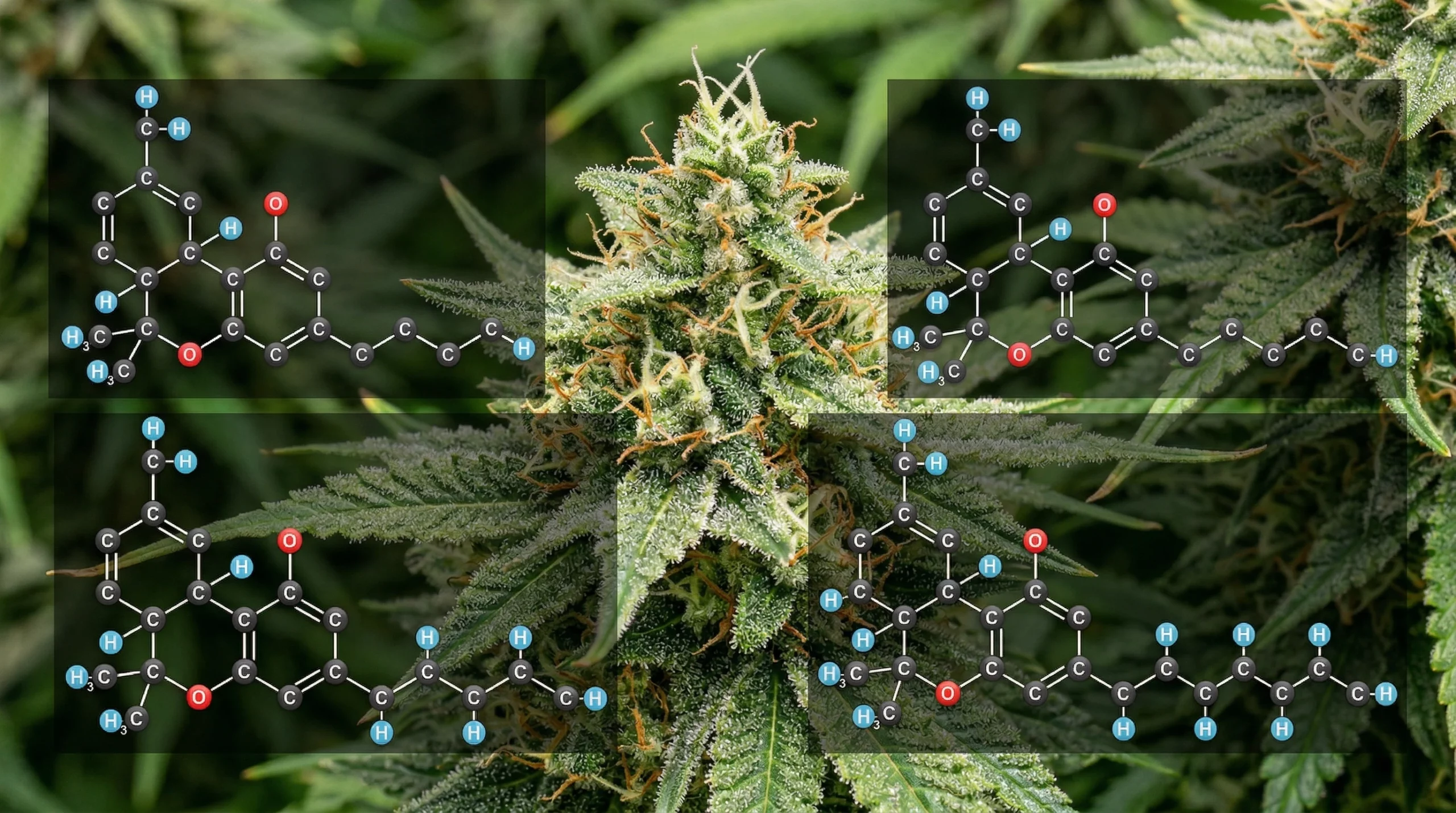
Both THCP and THC come from the same family of cannabinoids, the active compounds in cannabis. Where they split paths is in their structure and, as a result, their effects. THCP has a longer side chain (seven carbon atoms versus THC’s five), and this plays into how strongly it locks onto the body’s cannabinoid receptors, especially the CB1 receptor that sets off most of those familiar euphoric effects.
THCP shows up naturally in cannabis, but in extremely tiny amounts. Most products that list THCP have it extracted or synthesized, which makes it easier for brands to control doses and effects. If you want to dig into how THCP is made, Leafly does a nice job explaining the basics of cannabinoid extraction and lab synthesis.
Why Are People Talking About THCP?
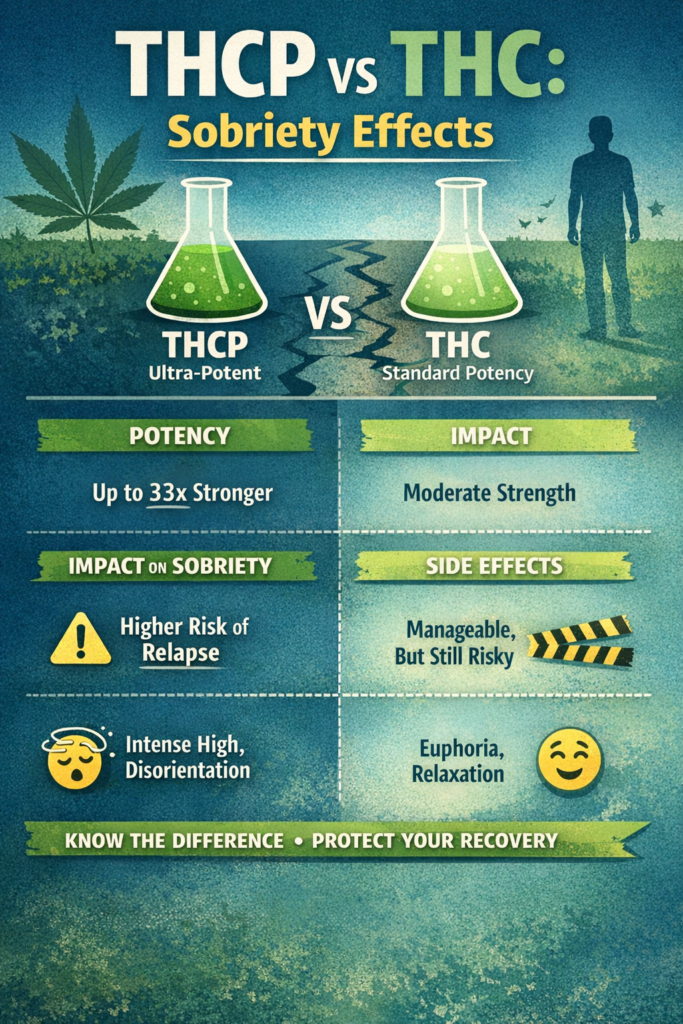
The biggest buzz around THCP comes from some early studies showing it could be far more potent than standard THC. Researchers found THCP might be up to 30 times more active at CB1 receptors, which suggests it can pack a much stronger punch effectwise—or at least gets more of your attention than THC.
However, these numbers come from laboratory research and animal testing, not real-world human trials. That means we know THCP is potent in theory, but it’s still not clear how it feels at different doses, how long it lasts, or what side effects might pop up more often than with regular THC. Real people tend to react differently from lab rats, so it’s not entirely possible to draw firm conclusions yet.
How THCP and THC Affect Sobriety
When it comes to sobriety or cannabis moderation, understanding potency really matters. People who use cannabis for fun, for managing symptoms, or as part of medical therapy often try to control their intake. Suddenly encountering products containing THCP can complicate those efforts.
- Stronger Effects: Even tiny amounts of THCP can deliver noticeable results. That means products labeled with lower THC levels might still hit much harder if THCP is inside.
- Greater Risk of Overconsumption: Because THCP is more powerful than THC, it’s much easier to use a larger dose than you intend, especially if you’re not watching out for this compound.
- Less Predictable Experiences: With so many unknowns about how THCP interacts with other cannabinoids and your body, the effects can be less predictable—even for people who know their way around THC products.
For anyone in recovery, maintaining sobriety, or tracking how cannabis affects them, these differences really matter. Being caught off guard isn’t fun, and it’s easy to slip into uncomfortable territory if you’re used to regular THC but try something high in THCP instead.
THCP and Drug Testing—Does It Show Up?
Another practical point is how THCP relates to drug testing. Most standard tests look for THC-COOH, a metabolite that appears after your body processes THC. Right now, there isn’t enough research to say for sure, but it’s highly likely that using THCP will also trigger a positive THC test since the compounds are so similar and might break down to the same metabolites.
This matters for anyone in a role that requires drug testing, such as certain workplaces, legal settings, or the armed forces. Even though THCP is “new,” it won’t help you dodge a drug test, so be thoughtful about what’s in any cannabis product you pick up.
THCP in the Cannabis Market: What You’ll Find on Shelves
Right now, most dispensary products still focus on THC, CBD, and sometimes newer cannabinoids like delta8 THC or THCV. THCP, though, is starting to appear in specialty tinctures, vape cartridges, and edibles—mainly in states or online stores with relaxed regulations. Labels that say “ultrapotent” or “extra strong” may signal that THCP is inside.
If you’re shopping, it pays to check lab test results or Certificates of Analysis (COAs) when brands offer them. A recent Forbes article does a solid job breaking down why COAs are worth looking for, especially when new cannabinoids are in play. These documents show which compounds are really present and at what strength, which is always safer than guessing.
Safety Considerations: What Are the Risks?
- Poor Understanding of Dosage: Since THCP is much stronger than THC, classic dosing advice doesn’t always apply—and many people have no idea how much is “too much.”
- Possible Stronger Side Effects: There’s a good chance THCP’s punch means stronger dry mouth, paranoia, anxiety, or even rapid heart rate, especially for those already sensitive to THC.
- Not Much Research Yet: What’s known about THCP mostly comes from rats or computer models. Human experiences can vary, making it hard to know what will happen for certain.
I’ve heard from some users who say THCP edibles can “sneak up” on them—effects taking longer to kick in but coming on much stronger than expected. That unpredictability is worth some caution, particularly if you already have a low tolerance or are careful about your intake for health or personal reasons.
Key Differences on a Practical Level
- THCP: Found in very small amounts in cannabis, usually lab-made for commercial products, and far stronger at the body’s CB1 receptor.
- THC: Naturally found in much higher amounts in most cannabis, with effects and dosing pretty well understood by regular users.
- Legal Status: Both compounds are generally covered under current cannabis regulations, though some states haven’t updated their laws to mention THCP yet. Double-checking your local rules is always smart.
Things to Ask Before Choosing Products with THCP or THC
- Does the product list how much THCP or THC it contains? If not, it’s harder to really know what you’re getting.
- Are there lab results or a COA available? Trustworthy brands tend to share these.
- What’s your own experience or tolerance? If you’re new or trying to maintain strict sobriety, sticking to what’s familiar is usually safer.
- Are you in recovery or need to track your intake closely? Consider talking to a clinician or specialist first, as they may have experience working with patients who ask similar questions.
Practical Tips for Staying on Track with Sobriety or Moderation
- Read product labels carefully: Especially when shopping online or at stores with a huge selection, take the time to find products that specify THC and THCP content separately.
- Look for up-to-date lab results: If you don’t find one, ask. Any hesitation or lack of clear info is a good reason to walk away.
- Start low, and be patient: If you do decide to try a THCP product, start with far less than you’d use with regular THC products and wait a long time to gauge effects.
- Track your response: Note how you react in a journal or app. Different people have totally different experiences, and documenting things helps you stay in control.
- Don’t mix with other substances: Combining THCP with alcohol, prescription drugs, or other cannabinoids can make effects way less predictable.
FAQs on THCP, THC, and Sobriety
Q: Does THCP get you higher than THC?
A: Initial research says yes; THCP can kick harder than THC at similar doses, thanks to how it locks onto CB1 receptors in your brain.
Q: Are THCP products legal?
A: In many places, THCP falls under the same laws as THC. Because it’s so new, laws could change, so always check your own state or country’s rules before buying or using.
Q: Will THCP show up on a drug test?
A: Most likely, yes. Standard drug tests look for THC breakdown products, and THCP is so similar to THC that it’d probably flag a positive result just the same.
Q: Is there a safe amount of THCP to use?
A: There’s not enough data on what’s safe for everyone. If you want to experiment, start small and be alert for strong effects.
Wrapping Up
Getting a handle on the differences between THCP and THC is essential for anyone managing their cannabis use, tracking sobriety, or just trying to avoid surprises. New cannabinoids like THCP add layers to an already complicated plant, so looking into lab results, using small doses, and paying attention to your own reactions are all crucial tips right now. If you’re in doubt, lean toward caution—THCP isn’t just another new trend; it’s a potent player in the constantly changing cannabis scene.
Video: