Alcohol cravings can be hard to ignore and often feel like they come out of nowhere. It can seem like your body and brain are working against your intentions, especially when you’re cutting back or trying to quit drinking. I’m going to break down the science behind these cravings, why they happen, and what’s really going on inside your head and body when you get that urge for a drink.
How Alcohol Cravings Work in Your Brain
Alcohol cravings don’t just show up out of the blue; they’re linked to brain chemistry and how your brain handles reward and motivation. Drinking produces changes in brain circuits related to pleasure, and over time, these changes can build up pretty strong mental associations that trigger craving.
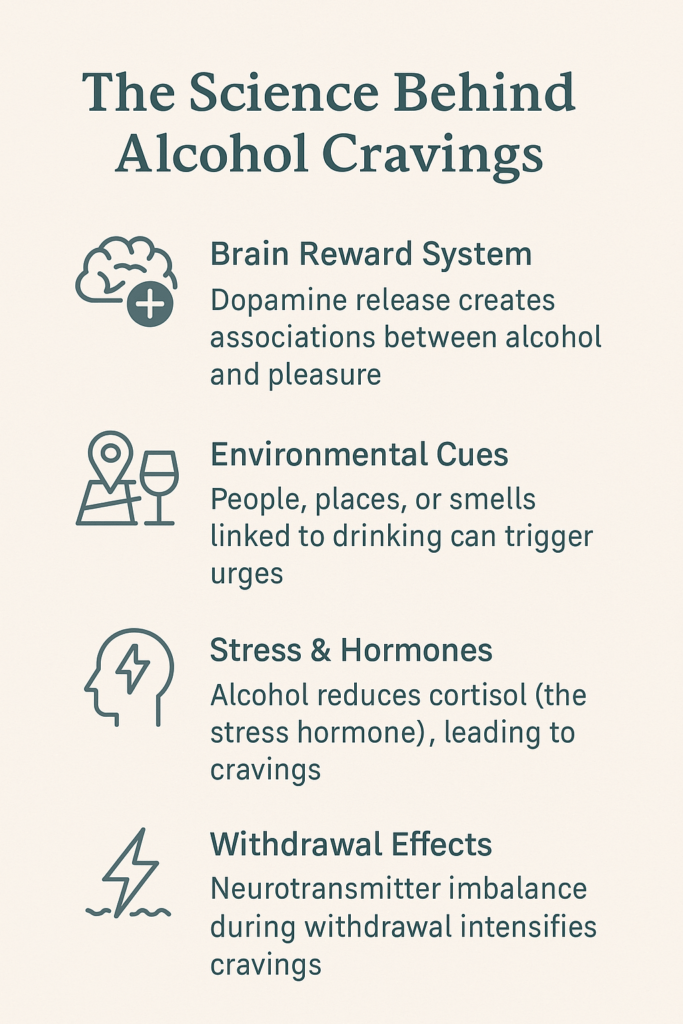
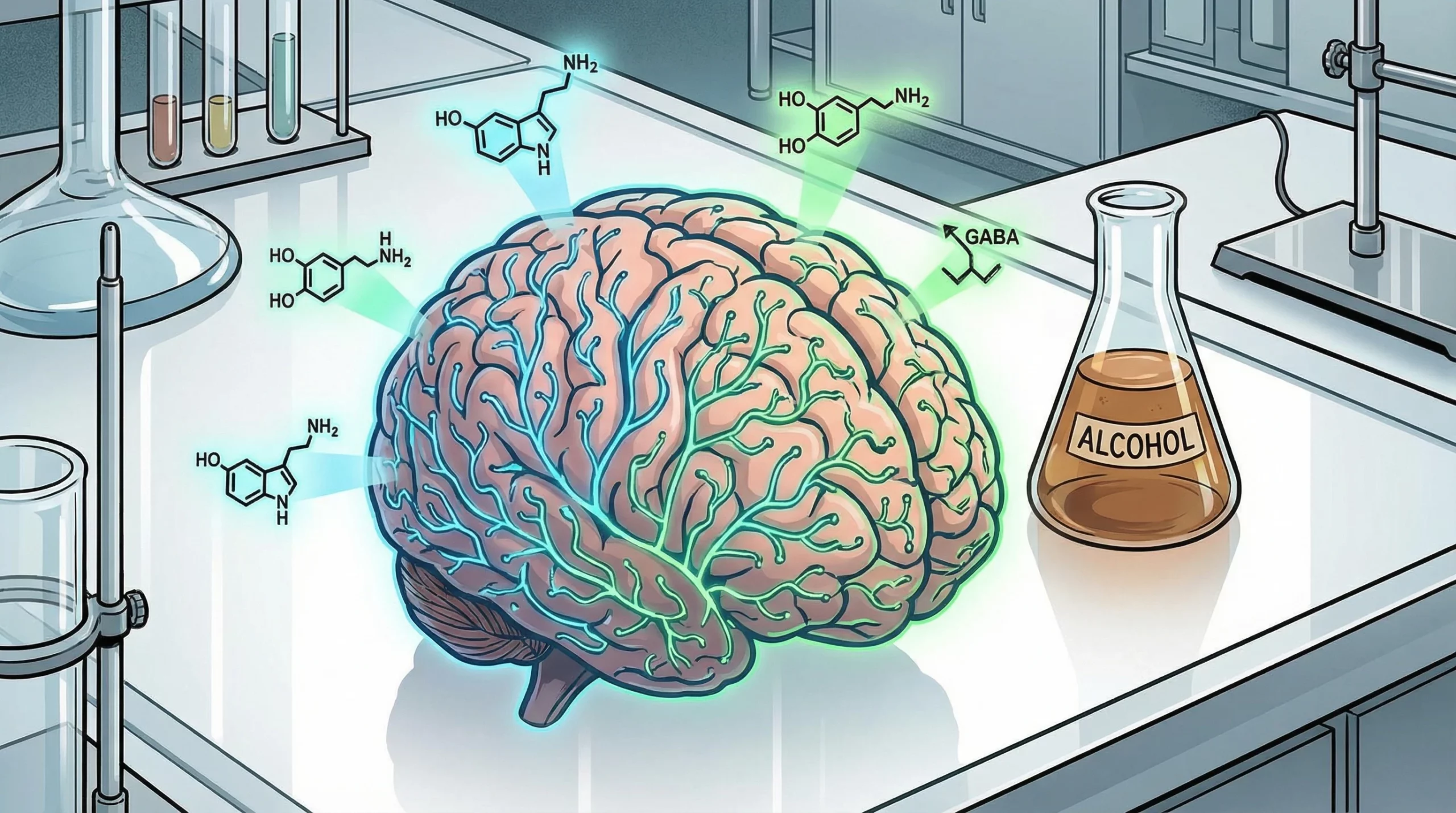
For most people, alcohol kicks off a release of dopamine, the “feel-good” neurotransmitter, especially after the first drink. This dopamine hit tells the brain, “Hey, that felt nice, let’s do it again.” When you drink often, your brain starts linking alcohol with positive experiences, relaxation, or even just winding down after a hectic day. The more these associations set in, the more likely your brain is to prompt cravings when you see alcohol, think about it, or experience certain situations.
Addiction science calls this “cue reactivity,” where certain people, places, or feelings act as cues that spark an intense urge to drink. This is why you might notice a craving at a party, in a favorite bar, or even just seeing an advertisement for beer on TV.
Why Cravings Feel So Powerful
Some people wonder why cravings for alcohol seem so much stronger than other desires. Part of it is down to brain adaptation. The brain’s reward pathways become more sensitive to alcohol cues and less responsive to natural rewards such as food or social connection. This is often called “neuroadaptation.”
On top of dopamine, other neurotransmitters like GABA and glutamate play a role in cravings. Alcohol boosts GABA (which calms the brain) and reduces glutamate (which excites the brain), creating relaxation. If you drink regularly, your brain tries to balance these out. When you remove alcohol suddenly, this balance gets thrown off and can trigger withdrawal symptoms; intense cravings can follow because your brain is trying to reset itself.
Stress hormones are involved, too. During stressful times, the body ramps up cortisol, which can trigger cravings as a coping mechanism. The urge to drink is often strongest during challenging moments because your brain has learned that alcohol is a quick, although temporary, way to escape stress.
What Triggers Alcohol Cravings?
- Environmental Triggers: Bars, restaurants, holidays, or places associated with good drinking memories can trigger cravings.
- Emotional Triggers: Feeling anxious, lonely, bored, or stressed often sets off the urge to drink because alcohol has been linked with relief in the past.
- Social Triggers: Hanging out with drinking buddies or seeing friends post about drinking on social media can make cravings pop up.
- Physical Triggers: Your body can remind you to drink if you’ve gotten used to drinking at certain times, like after work or at dinner.
- Withdrawal Triggers: If you’ve built up tolerance and dependence, going without alcohol can make you feel restless, irritable, or physically off, which can make cravings stronger.
Practical Tips for Managing Cravings
Managing alcohol cravings takes a mix of understanding your own patterns and having tools in place. Here are practical ways that I’ve seen work for people aiming to cut back or quit alcohol:
- Know Your Triggers: Jot down when you get cravings. Notice if they happen in certain places, at certain times, or around certain people. This helps you predict when they’ll show up and create a plan for those situations.
- Distract Yourself: When a craving hits, try swapping your focus; go for a walk, call a friend, or start an activity that grabs your attention. The urge usually passes in about 15-30 minutes if you don’t give in right away.
- Change Your Routine: If your craving is linked to routine (like always having a drink while watching TV), swap out that drink for something nonalcoholic or try a new activity altogether during that time.
- Breathe and Ground Yourself: Stress is a massive driver for cravings. Taking a few deep breaths, listening to music, or practicing mindfulness can help calm your nervous system.
- Set Boundaries: If being around alcohol or certain people makes cravings worse, it’s totally okay to take a step back while you’re building new habits.
Another helpful trick is to keep nonalcoholic drinks on hand. When you crave that familiar hand-to-mouth interaction, having a fizzy water, tea, or another favorite beverage nearby can help fulfill the urge without giving in to alcohol itself. Sometimes, simply changing up your environment—like stepping outside or turning on some music—breaks the connection your brain expects and weakens the craving.
Things to Consider if You Experience Frequent Alcohol Cravings
Frequent, intense cravings usually point to changes in your brain’s reward and stress systems. If this sounds familiar, it’s worth checking in with a healthcare provider. Here’s why:
- Physical Dependence: If you notice withdrawal symptoms like shaking, sweating, trouble sleeping, or feeling physically ill when you stop drinking, your body has likely developed dependence. Suddenly stopping can be risky and needs medical support.
- Underlying Mental Health: Anxiety, depression, PTSD, and other issues very commonly overlap with cravings and alcohol use. Managing mental health can ease cravings and help with overall recovery.
- Social Support: Going it alone makes dealing with cravings a lot tougher. Support groups, therapy, or talking with supportive friends or family can offer both accountability and practical tips.
Physical Dependence
Cravings can be a warning sign that your body’s gotten used to alcohol working in its system. This often means that neurotransmitter levels and stress hormones are out of balance. If you experience severe withdrawal signs, such as confusion, fever, or even seizures, it’s essential to reach out to a medical professional.
Mental Health and Cravings
Many people find that cravings get worse when they’re anxious, overwhelmed, or feeling low. Alcohol can temporarily mask these feelings, but it doesn’t solve them. Working with a counselor or therapist to build healthier coping tools can reduce cravings and make recovery stickier.
Support Networks
Recovery is a team sport. Whether it’s professional therapy, group support, or just leaning on a friend, having people to talk to really lowers the odds of acting on cravings. Plus, you can learn new tricks from people who’ve been through similar challenges.
Here’s the thing: frequent cravings aren’t a personal failing. They’re a sign that your brain and body have adapted to alcohol. With practical approaches and support, you can retrain those habits and find more freedom from the constant urge to drink.
Advanced Brain Science: What Research Says
Addiction research has come a long way in understanding cravings. Here are some modern findings that I find pretty interesting:
- Brain Imaging Studies: Using MRI and PET scans, scientists have shown that alcohol cues light up specific brain regions, particularly the nucleus accumbens and amygdala. These areas are linked to reward and emotion.
- Genetics: Some people are more prone to crave alcohol because of genetic factors. Specific genes affect how powerfully your brain responds to alcohol’s effects.
- Medication: Drugs like naltrexone and acamprosate are designed to help reduce cravings by changing how your brain responds to drinking cues.
Staying up to date with research can offer some hope. Scientists are always looking for new ways to interrupt these powerful cravings and give people more tools for change. If you want, you can look up information at the National Institute on Alcohol Abuse and Alcoholism for more details. Some new research suggests that sleep quality and physical activity also affect the intensity of cravings, so working on those areas may support your plan.
How Cravings Play Out in Everyday Life
Alcohol cravings don’t always look like a desperate urge. Sometimes they’re just a passing thought; other times, they can feel overpowering. I know people who describe the urge as “white noise” in the background, while others say it feels like a wave. These day-to-day swings are totally normal.
- Social Scenarios: During family gatherings, work events, or happy hour, cravings may ramp up even if you planned not to drink.
- Boredom: Sometimes cravings pop up simply because there’s nothing else to do, or drinking was part of relaxing before.
- Coping: If you’ve used alcohol to numb challenging emotions, cravings might show up most when you’re upset or stressed.
Finding new routines and being gentle with yourself goes a long way. Cravings lose power over time, especially when you practice new habits and celebrate your progress, even if it’s just one small win at a time. Keeping track of your achievements, no matter how minor they seem, can give you the motivation to keep making positive changes.
Frequently Asked Questions
Question: How long do alcohol cravings typically last?
Answer: Most cravings pass in about 15 to 30 minutes, though some might linger longer. Over time, especially if you change routines, cravings usually become less intense and less frequent.
Question: Can I get entirely rid of cravings?
Answer: Cravings may never entirely go away, especially after heavy or long-term drinking, but they do fade a lot as you build new habits and brain connections. Having coping skills on hand makes them more manageable.
Question: Are alcohol cravings a sign of addiction?
Answer: While everyone experiences cravings from time to time, frequent, intense, or overwhelming cravings can suggest developing dependence or an alcohol use disorder. Checking in with a professional for an honest assessment is a smart move.
Key Takeaways for Understanding Alcohol Cravings
Alcohol cravings mix brain chemistry, stress, habits, and triggers from daily life. Understanding how they work can help you feel more in control. Being aware of your triggers, creating new routines, and leaning on support can turn the volume down on cravings and make long-term change possible. If your cravings are intense, talking with someone experienced in addiction can give you extra support and guidance along the way. Remember, every day you resist a craving is a win. Over time, these add up and encourage healing.
Video: The Brain Mechanism Behind Alcohol Cravings #addiction #science #shorts