Recovering from a chronic illness can feel like a true mental and physical roller coaster. While people often focus on the physical side of healing—managing symptoms, attending appointments, and slowly rebuilding strength—the emotional side of recovery can be just as challenging. Whether someone is learning to live with a lifelong condition or recovering from a severe flare-up or period of illness, the process often brings uncertainty, frustration, and emotional strain. Many individuals experience anxiety about their health, fear of symptoms returning, or feelings of isolation as their daily routines change. At the same time, adjusting to new limitations or lifestyle changes can impact confidence, independence, and overall well-being. Despite how common these emotional struggles are, they are frequently overlooked in conversations about recovery. Understanding how chronic illness affects mental health is an important step toward supporting both the body and the mind during healing. By recognizing these challenges and exploring healthy coping strategies—such as building strong support systems, practicing self-care, and seeking professional help when needed—individuals can better navigate recovery and protect their mental well-being.
The Overlap of Chronic Illness and Mental Health
When someone is living with a chronic illness, it’s pretty common for mental health to get tangled up in the whole process. Chronic illnesses stick around for months, years, or even a whole lifetime, and this long-term struggle can cause stress, anxiety, and sometimes depression. The reason for this is simple: managing medical appointments, medication routines, physical symptoms, and big lifestyle changes can feel overwhelming at times. According to a World Health Organization report, people with chronic illnesses are at a greater risk for mental health issues. That connection isn’t random; it comes from the constant effort it takes to juggle both physical and emotional health.
Think of all the invisible work happening behind the scenes. Treatments take time, energy, and money. Social plans might get put on hold. Uncertainty about the future can creep in quietly but steadily. This impacts daily life, sometimes even changing your sense of identity. That’s why supporting mental health becomes such a big part of the recovery playbook.
What Recovery Looks Like with Chronic Illness
Recovery from a chronic illness isn’t always linear. You might feel really good one week, and the next, you could be wiped out again. Chronic illnesses come with their own timelines. Some people hit long stretches of stability, while others face recurring flare-ups. Because of this unpredictability, it can be hard to know when recovery has started or if it’s happening at all.
Mental health during this stage often takes on a life of its own. There’s relief, of course, when symptoms back off or routines start to feel normal. But there can also be doubts, frustration, and anxiety about what happens next, especially if setbacks happen frequently. It’s completely normal to wonder, “Why isn’t this easier?” or “Am I ever going to feel like myself again?” Those questions come up for just about everyone on this ride.
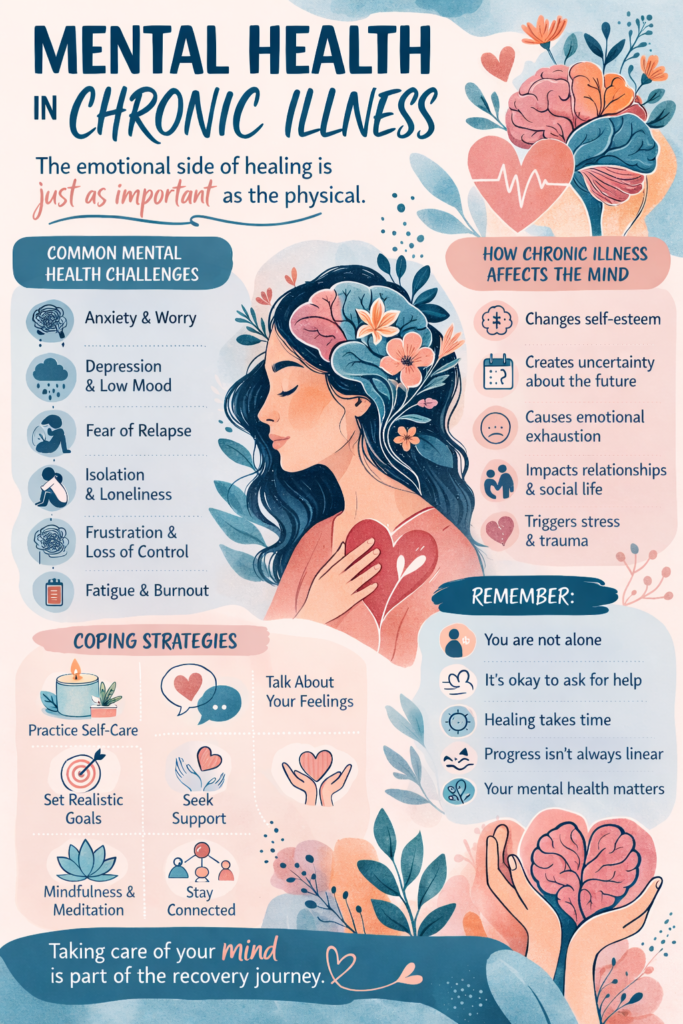
- Anxiety: Worrying about new symptoms or waiting for the next flare-up.
- Depression: Feeling hopeless when progress is slow, or setbacks hit.
- Isolation: Missing out on social events and feeling disconnected from others.
- Uncertainty: Not knowing what recovery will look like or how long it will last.
The Emotional Challenges of Recovery
Daily life during recovery brings a steady stream of emotional challenges. Most people deal with a range of feelings:
- Frustration and Impatience: Progress can be measured in small steps, and that can be frustrating when you just want things to be “normal” again.
- Loss of Control: Inability to control symptoms or outcomes can leave people feeling powerless and stressed.
- Stigma: Some chronic illnesses, especially those that aren’t obvious to others, carry stigma. This can make people hesitant to share what they’re going through and cause a sense of loneliness.
- Financial Stress: The cost of treatment and lost workdays can create money worries, adding pressure during a sensitive time.
All these emotions stack up, often before anyone outside your immediate circle notices. This makes it really important to keep an eye on emotional wellbeing, rather than just tracking physical progress.
Managing Mental Health During Recovery
Focusing on mental health isn’t always about big, complicated changes. Sometimes, it’s about finding small, everyday habits that help lighten the mental load. Here are a few approaches that I’ve seen make a difference:
- Build a Flexible Routine: Routines help, but flexibility is the name of the game. Setting gentle goals, breaking big tasks into smaller chunks, and letting yourself rest when needed can prevent overwhelming days. You might want to keep a planner or set daily reminders, but leave plenty of wiggle room for your energy to shift.
- Stay Connected: Even if it’s just a quick call or text, touching base with friends or family can make a difference. Online communities for people with similar health experiences offer support, too. Sharing your day, even the little stuff, can lift your spirits and remind you that you’re not alone in this challenge.
- Journaling or Creative Activities: Writing things down or exploring other creative outlets, such as sketching, music, or photography, gives you a way to express what words can’t always cover. It can help process emotions and track progress over time. You might not feel inspired every day, but these activities can show you how far you’ve come.
- Professional Support: Sometimes, chatting with a therapist or counselor is really helpful. Mental health professionals can offer strategies and an outside perspective that friends and family might not have. There are also support groups and hotlines available that can boost both your understanding and your emotional toolkit.
In addition to these steps, consider mindfulness or breathing exercises. Practicing mindful breathing or short meditations, even for just a few minutes, can bring a sense of calm and help you check in with your body and mind. If new emotions or anxieties arise, remind yourself that it’s okay—they’re a natural part of the process.
Common Questions About Chronic Illness and Mental Health Recovery
I get a lot of questions about what mental health looks like when dealing with long-term health problems and what to expect during recovery. Here are a few:
Question: Is it normal to feel anxious during recovery?
Answer: Yes. Anxiety is one of the most common feelings people experience during this time. Worrying about new symptoms or how your body feels is a pretty normal part of adjusting to ongoing changes. If anxiety gets in the way of daily life, connecting with a mental health professional or doctor is worth considering.
Question: When should I look for professional help?
Answer: If sadness, anxiety, or stress make it difficult to eat, sleep, or take care of responsibilities, support from a therapist or counselor can be super useful. Even if things just feel off, having a conversation with a mental health expert is a safe, practical step.
Question: How can I support a friend or family member during recovery?
Answer: Sometimes, the best support is just being there and listening. Avoid offering solutions unless asked, but check in regularly and offer help with practical tasks, such as running errands or making appointments. Understanding and patience go a long way. Try to be flexible, as their needs may change from week to week.
Practical Tips for Navigating Recovery at Home
Adjusting your day-to-day life can take some of the pressure off while recovering from a chronic illness. Here are a few straightforward strategies that really help people feel a bit better mentally:
- Break Up Big Tasks: If something feels overwhelming, splitting it into smaller steps or spreading it out over time makes it less stressful.
- Prioritize Self-care: Even simple things like a warm shower, a favorite TV show, or a five-minute meditation can make a difference. Spending time with pets, getting fresh air, or enjoying a hobby can put a smile on your face, too.
- Celebrate Small Wins: Progress doesn’t need to be huge. Noticing small improvements or celebrating efforts (not just outcomes) can boost motivation and keep spirits up. Rewarding yourself for sticking with your routines or trying something new matters.
- Prepare for Setbacks: Flare-ups and bad days might happen. Have a loose plan in place: comfort items, distractions, or even a list of people you can reach out to if things get rough. You can set up a “bad day kit” with your favorite snacks, shows, and supportive reminders from loved ones.
Recognizing When Support Is Needed
You’re the expert on your own experience, but sometimes it’s tricky to know when to reach for extra support. If feelings of hopelessness, anxiety, or sadness stick around for more than a couple of weeks or make daily activities feel impossible, talking with a medical professional or mental health expert is a smart move. There’s no need to tough it out alone; help is there, and it can really make a difference in recovery.
How to Talk About Mental Health with Your Healthcare Team
Being open about mental health with doctors and other healthcare professionals is really important. Sometimes, appointments focus mainly on physical symptoms, but bringing up how you’re feeling emotionally can lead to better overall care. You can make a quick list of things you want to mention, or even bring a friend or family member to help cover the mental health side of things if that feels easier.
Most providers want to know how ongoing stress or sadness is affecting daily routines, sleep, appetite, or relationships. Medication changes, referrals to therapists, or even small adjustments to care routines can sometimes help with mood and overall wellbeing. Don’t be afraid to talk about small changes—sometimes a new perspective or a little support makes a big impact.
Being upfront with your healthcare team about mental health concerns paves the way for better solutions. Providers can help you connect with community resources, share coping strategies, or coordinate care that addresses both your body and your mind. If it feels awkward, remember: your long-term health is the top priority, and mental health is part of that.
Useful Resources for Additional Support
- National Alliance on Mental Illness (NAMI) – Offers guides and support for people with chronic illnesses and mental health needs.
- Anxiety & Depression Association of America – Good for tips about handling anxiety or depression during medical recovery.
- Mental Health America – Helpful info and screening tools for anyone curious about mental health symptoms.
Recovery from chronic illness is about more than just your body healing. Mental health ebbs and flows alongside your physical progress. Everyone’s path is different, but taking time to recognize the emotional side, building in daily self-care, and asking for support can lighten some of the load. Healing is a process, and it’s one that deserves patience, compassion, and a little help from time to time. Remember, taking care of your mind is as important as looking after your body—one step at a time, you can move toward a better, steadier sense of wellbeing.
Video: Living With Chronic Illness Almost Broke Me #mentalhealthawareness #chronicillness #emotionalhealing