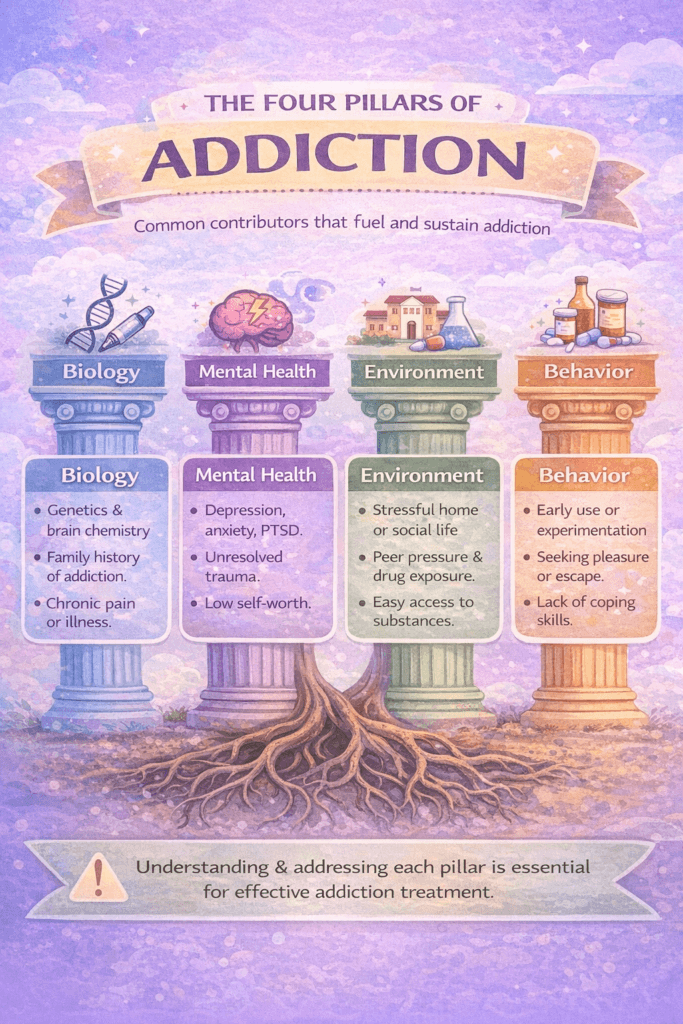
Addiction recovery is an adventure full of ups and downs, but checking out the four pillars of addiction can make a real difference in how someone approaches treatment and healing. These pillars are the main building blocks that support long-term recovery: Biological, Psychological, Social, and Spiritual. Each one targets a different side of addiction, but together, they provide a much fuller picture. I’ll break down what these pillars are all about, why they matter, and how they work together.
Understanding Addiction: A Multi-Faceted Challenge
Addiction isn’t just a matter of willpower or simple bad choices. The way it develops and persists is influenced by a mix of physical, mental, social, and spiritual factors. When I first learned about the four pillars, I realized how important it is to see addiction as something that moves into every area of life, not just one.
Even though science has told us a lot about how the brain changes with substance use, recovery is rarely only about treating the physical side. Mixing all four pillars leads to much more meaningful healing. According to the Substance Abuse and Mental Health Services Administration (SAMHSA), a combination of these approaches gives people the best shot at lasting recovery.
The Biological Pillar: Treating the Body
Physical health is always a big part of addiction. Substances change how the brain works, disrupt natural chemical balances, and can lead to physical dependence, in which the body comes to expect the substance to function normally. In my experience, the biological side of recovery is often the first focus because withdrawal and cravings are tough to handle alone.
- Medications: Doctors might use medications like methadone, buprenorphine, or naltrexone to help manage symptoms, especially in opioid addiction. These meds work by reducing cravings and making it easier to focus on recovery.
- Detox: The process of getting the body free of substances under medical supervision is a big step for many folks.
- Physical Health Care: Ongoing care for issues like liver health, nutrition, and sleep is really important. Addiction can take a toll, so rebuilding physical wellness is a huge part of the adventure.
Ignoring the biological side can make recovery a lot rougher, especially if withdrawal is having a big impact. Getting the body stabilized creates a stronger foundation to build on the other pillars.
The Psychological Pillar: Healing the Mind
Mindset and mental health play a gigantic role in addiction. Patterns of thinking, tough emotions, and underlying mental health conditions like anxiety or depression all feed into addictive behaviors. I’ve seen plenty of people try to recover without working on their mental health and eventually circle back to old habits. That’s why counseling and therapy show up in almost every treatment plan.
- Cognitive Behavioral Therapy (CBT): This kind of talk therapy helps people spot and change unhealthy thoughts and behaviors tied to addiction.
- Motivational Interviewing: This conversational approach helps uncover motivation and make real changes, even when someone isn’t sure they’re ready.
- Treating Co-Occurring Disorders: Sometimes disorders like PTSD, bipolar disorder, or depression are tangled up with addiction. Addressing these simultaneously, called dual diagnosis treatment, yields better results.
Mental health support is super helpful for learning new coping strategies, dealing with stress without substance use, and building resilience for tough days. That’s why the psychological pillar is such a game-changer for folks facing emotional triggers during recovery.
The Social Pillar: The Role of Relationships and Community
Addiction happens in a social setting, and recovery thrives on connection. When I think about how people I know have made progress, strong support networks and positive relationships always come up. The social pillar is all about building healthy, supportive connections and creating an environment that encourages change.
- Support Groups: Groups like Alcoholics Anonymous (AA), Narcotics Anonymous (NA), or SMART Recovery give people a safe space to share, get tips, and feel less alone.
- Family Counseling: Addiction can put a strain on families. Family therapy helps everyone heal together, clear up misunderstandings, and set healthy boundaries.
- Community Involvement: Getting involved in community activities, volunteering, or finding new sober connections helps fill the gap left by old habits and builds a sense of belonging.
- Professional and Social Skills Training: Programs that help with job skills, education, or the development of new hobbies can open up new paths for those in recovery.
Loneliness is a big risk factor for relapse, so building social connections really matters. I’ve seen people light up when they find a group where they finally feel welcome and understood.
The Spiritual Pillar: Meaning and Purpose
The spiritual side of recovery means different things for different people, but it’s about finding meaning, purpose, or a sense of something bigger than day-to-day living. This doesn’t have to be religious; it can be about mindfulness, meditation, gratitude, or personal values.
- 12-Step Programs: Many recovery groups include a spiritual element, encouraging members to lean on a higher power (however they define it) for guidance and strength.
- Mindfulness and Meditation: Practices like meditation or mindful breathing help people become more present and handle cravings or anxiety.
- Personal Values and Purpose: Exploring what truly matters makes recovery feel worthwhile. Setting goals that aren’t just about staying sober, but about making life meaningful, can keep motivation high.
Even for those not into spiritual practices, focusing on purpose and meaning helps ground recovery in something positive. I’ve noticed that folks who find their “why” usually do better over time.
Bringing the Four Pillars Together
No single pillar works completely on its own. Lasting recovery is often strongest when all four are supported together. One person might really need medication to help with cravings at first, and later focus more on building social support and taking care of mental health after detox. Someone else might see their own growth spring from finding meaning and purpose, which fuels motivation on hard days.
According to the Hazelden Betty Ford Foundation, recovery is more likely to succeed when biological treatment, psychological therapy, social support, and spiritual growth are used together. Mixing up these pillars can include:
- Joining a support group while seeing a therapist
- Taking medications and focusing on better nutrition
- Meditating every day and reaching out to others for support
- Staying active while making new, healthy relationships
Switching up these strategies makes recovery feel less overwhelming, since it’s not about one “right way” but more about finding the balance that works for your unique situation.
Common Challenges and How to Tackle Them
I’ve noticed people run into a lot of the same hurdles across these pillars, but there are ways to tackle them:
- Stigma: Negative attitudes about addiction can lead to shame. Talking openly about addiction and mental health in safe spaces really helps.
- Lack of Support: Building your own network might mean checking out new groups, therapists, or community events if friends or family aren’t available.
- Co-occurring Health Issues: Taking care of health problems (both physical and mental) with a medical professional can ease the journey during recovery.
- Burnout: If you’re juggling too many changes at once, it can be tiring. Focusing on one pillar at a time with small, reasonable steps can make the load lighter.
Progress isn’t always a straight shot, and that’s totally normal. Staying flexible and open to trying new tools or methods can really come in handy when things get tough.
Tying It Together: Real-Life Examples
Many recovery programs and success stories draw on all four pillars. Someone might join an inpatient program for a supervised detox (biological), meet with a counselor once a week (psychological), attend NA meetings regularly (social), and keep a gratitude journal (spiritual). This kind of mix doesn’t just cover the basics; it helps people build a life they can look forward to.
I also know someone who switched from drinking to going for a morning walk, connecting with people in recovery groups, and practicing mindfulness meditation. Not only did the cravings slow down, but their mood and stress levels improved, too. These little combinations stack up over time and lead to lasting change.
Frequently Asked Questions
Here are some questions that come up a lot regarding the four pillars of addiction:
What’s the first step if I want to start recovery?
Most people begin by seeing a doctor or counselor who knows about addiction. Getting connected to support for more than one pillar right at the start helps.
Can I focus on just one or two pillars?
While some pillars might demand more attention at certain times, combining all four gives the best results. Even small steps in each pillar make a big impact.
Do I have to be religious for the spiritual pillar to work?
Not at all. Spirituality in recovery is about meaning and connection, which can come from nature, art, meditation, or whatever helps you feel grounded.
Why does social support matter so much?
Positive relationships keep motivation high and offer a safety net in tough times. Even online groups can help if meeting in person isn’t possible.
Building Your Recovery Foundation
The four pillars of addiction—biological, psychological, social, and spiritual—work together to support recovery in a meaningful, well-rounded way. Finding a balance in all four that fits your life can boost your chances for lasting change. Whether someone’s just kicking things off or far along in their recovery adventure, focusing on these pillars makes recovery steady, deeply personal, and real. Recovery is possible, and with a mix of practical steps and the right support, it’s totally possible to build a good life beyond addiction.
Video: The Four Pillars of Addiction