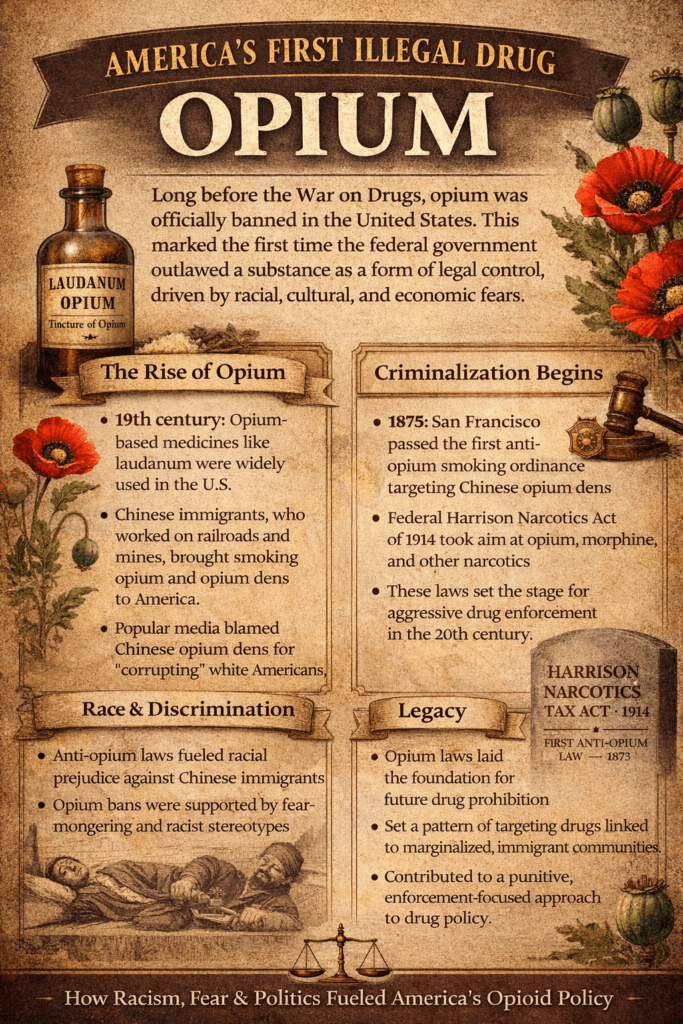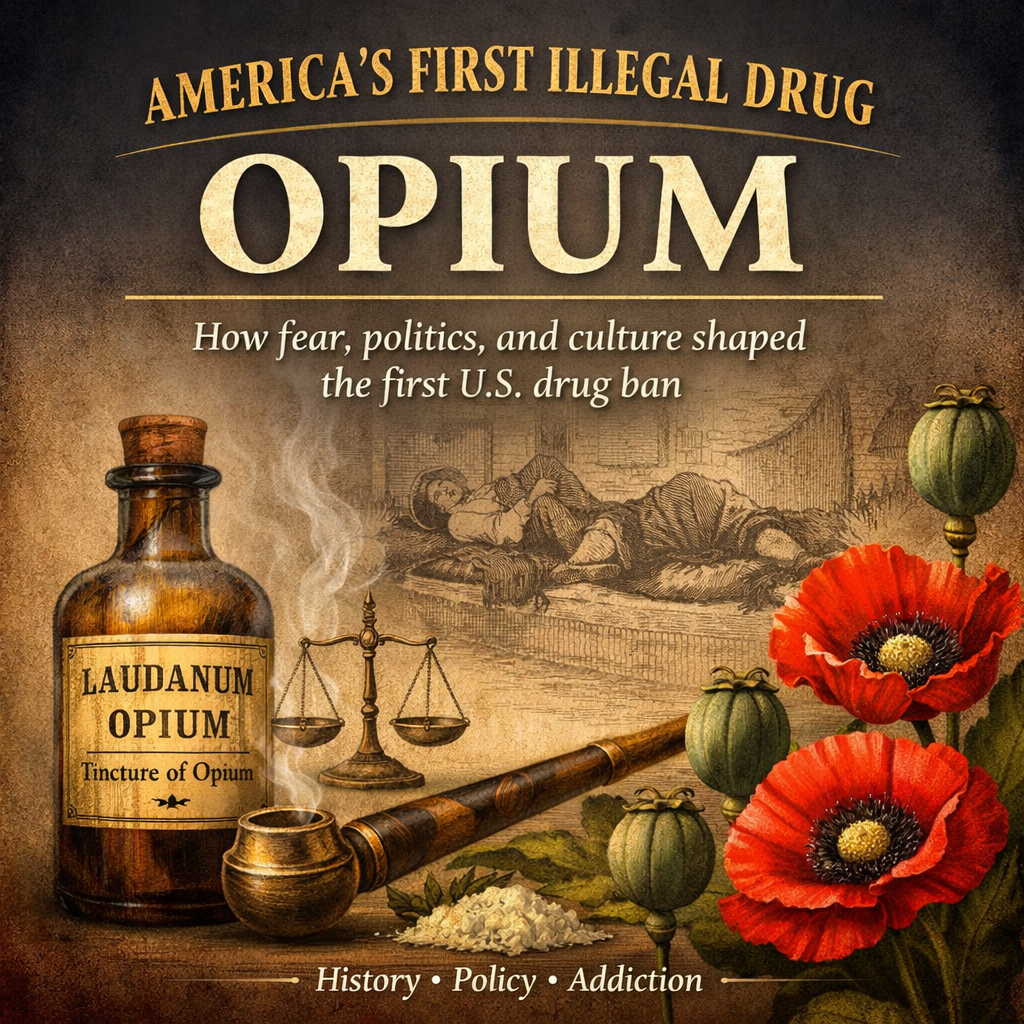
The story of America’s first illegal drug is about far more than a single substance being outlawed. It reflects a turning point in how politics, culture, race, and public fear began shaping national drug policy. Long before modern debates over addiction and public health, early drug laws were driven by social anxieties, economic interests, and moral panic as much as by medical evidence. Although this topic is frequently mentioned in discussions about drug laws, it’s often reduced to a simple timeline of bans and regulations. In this piece, I’ll unpack what the first illegal drug in the United States actually was, why it became a target for government control, and how that moment reshaped American attitudes toward drugs—laying the groundwork for decades of punitive policies that still influence the system today.
How the First Drug Ban Happened in America
Most people think the U.S. started banning drugs in the 20th century with Prohibition, but the drug laws actually go back a lot further. The first drug to get banned in the United States wasn’t alcohol or even cocaine. It was actually opium. The earliest opium bans kicked in during the late 1800s, starting out on the West Coast.
Opium entered the U.S. with Chinese immigrants in the 19th century, particularly during the California Gold Rush. While opium was part of Western medicine too, “opium dens”—places where people smoked the drug—became linked with Chinese communities, especially in San Francisco.
By the 1870s and 1880s, public anxiety about Chinese immigrants was running high. Many newspapers at the time ran sensational stories about opium dens. These stories did not focus solely on the drug itself. They played into broader fears about immigration and racial mixing, sometimes inventing wild tales about young white people getting drawn into Chinatown to smoke opium.
What Was Actually Outlawed?
The first citywide law specifically targeting drug use popped up in San Francisco in 1875. Lawmakers there made it illegal to operate or even be present in an opium den. This was the first time in the country that a specific drug was made illegal simply because of its use, not because it was linked to violence or a safety issue, but largely because of its connection to a specific group of people.
Opium as a painkiller in medicine wasn’t banned, though. In fact, you could still find opium-based medicines at your local pharmacy for decades after the dens were outlawed. The laws targeted the recreational smoking of opium, especially in public places. Authorities raided opium dens, mostly aiming at Chinese business owners but sometimes their customers as well.
The Bigger Picture: Social Fears and Policy
Understanding why opium got banned means looking beyond the substance itself. This wasn’t a science-based policy about health dangers. At the time, plenty of Americans took opium or morphine for pain and coughs with no legal trouble. The difference? Those drugs were usually swallowed as pills, drops, or syrups and sold by doctors or pharmacists.
The earliest bans mostly took aim at a way of using opium (smoking it) and a community viewed as “different.” Many historians point out that these laws were mixed in with anti-Chinese sentiment. Other West Coast cities, such as Los Angeles and Portland, followed San Francisco, enacting similar ordinances over the next twenty years.
This pattern of using drug bans as a way to police certain groups kept repeating in different forms. Later bans on cocaine, cannabis, and other substances often followed public moral panics or times when certain communities were already in the spotlight for other reasons.
Key Moments in Early Drug Law History
- San Francisco, 1875: The first city law targeted opium dens, fining or jailing both users and operators.
- California state law, 1881: California brought in its own ban, expanding the city rules to a statewide law.
- Harrison Narcotics Tax Act, 1914: The federal government didn’t step in until decades later, making opiates and cocaine available only with a doctor’s prescription. This act was a turning point as the first federal U.S. drug law.
How Public Attitudes Shaped the Laws
For most Americans back in the 1800s, “drugs” meant medicine, not crime. But as stories about opium dens became more sensational, and as politicians grew nervous about increasing Chinese populations, drug laws became a tool for enforcing social boundaries.
The effects of these early laws stuck around. By making a big public spectacle out of drug bans, officials laid the groundwork for the “war on drugs,” thinking that would take center stage in the 20th century. This switch from treating drug use as a medical issue to making it a crime paved the way for all the later drug bans in the U.S.
Comparing Opium to Other Early Drug Bans
Some people point to Prohibition—the nation’s alcohol ban that started in 1920—as the first big drug law. But even before Prohibition, cities were rolling out all sorts of laws, not just against opium but also targeting substances like cocaine and cannabis. Here’s what helped make opium stand out:
- The earliest law centered on one drug: The 1875 San Francisco law focused only on opium dens, making it more specific than other early rules.
- Tied to a single community: Many bans were openly created to push out “undesirable” immigrant populations, not just for public health.
- Focus on the method of use: Smoking was seen as exotic and “foreign,” while methods like drinking opium-based syrups stayed widely accepted for years.
Common Questions About America’s First Illegal Drug
Many rumors float around early U.S. drug laws. Here are a few questions people often ask:
Q: Why did the government pick opium out of all the drugs to ban first?
A: The smoking of opium by Chinese immigrants was highly visible and easy to target in big West Coast cities. Lawmakers used this as an excuse to single out a group they already wanted to control, and drug laws gave them a way to do it openly.
Q: Was opium really that dangerous compared to other medicines at the time?
A: Opium definitely came with risks, especially with large or long-term use, but at the time, the same drug in pill or syrup form was everywhere for pain and coughs. The law didn’t go after medical use for a long time.
Q: Did the early drug laws actually slow down drug use?
A: It’s tough to say for sure, but records show that people wanting to use opium often just changed methods or found ways around the rules, such as taking legal tinctures.
Q: When did the federal drug war really get started?
A: The federal government started getting involved with the Harrison Act of 1914. This was the start of turning certain drug use from a local or social issue into a nationwide crime, making the landscape for drug laws much more complex.
Bigger Lessons from America’s First Illegal Drug
I see a few big lessons from the story of opium in America. First: drug laws have almost always been about much more than public health alone. These bans are woven in with political pressure, social fears, and ideas about who “belongs” in society. Second: whether something is a legal medicine or an illegal drug can basically come down to who is using it, how they’re using it, and what social anxieties are bubbling up at the time.
- Laws can be used to single out communities, not just drugs themselves.
- Public opinion and media stories play a huge role in which drugs get the spotlight.
- The earliest drug bans weren’t always about health or science—they often reflected who had power and whose lifestyles counted as “normal.”
Where Did Drug Policy Go After That?
After opium laws were locked in, new bans came quickly. Cities and states expanded the rules to other drugs, from cocaine to cannabis, often for similar reasons—sometimes paying special attention to minority groups or making use of public fears. Even today, America’s approach to drugs is shaped by beliefs, biases, and headlines, not just hard science.
Knowing where these policies started helps explain a lot about why drug laws and debates about drug use look the way they do now. If you’re curious about history, and about why drug policy sometimes feels off the rails, this is a chapter worth checking out. By understanding the roots of America’s drug laws, we get a clearer view of how social fears and political choices can change not just the substances people use, but whole communities. Whether you see these stories as warnings or lessons, they definitely give us something to think on when looking at today’s debates over what should be legal—and why.
Video: This Common 1800s Medicine Became America’s First Illegal Drug #history #shocking