The phrase “drug with the highest death rate” sounds pretty intense, but it’s a real and important issue that strikes at the core of public health, addiction, and society’s rules. With so many substances available, both legal and illegal, figuring out which one claims the most lives involves exploring a complicated mix of statistics, user habits, and deep-rooted cultural influences. In this article, I’ll break down the numbers and reasons behind why certain drugs are far more deadly than others, often for reasons people don’t expect.
What Does “Deadliest Drug” Really Mean?
It’s easy to think the drug that does the most damage would be something illegal like heroin or fentanyl, but it turns out the answer might surprise many people. When experts talk about the “deadliest drug,” a few main points come into play:
- Number of deaths each year: Not just overdoses, but also deaths caused by long-term health problems.
- Death rate per user: The likelihood of dying for each person who uses the drug.
- Wider impact: Including indirect effects like risky accidents or chronic illness development.
Most major health organizations—including the CDC and World Health Organization—agree that tobacco, mainly in the form of cigarettes and other smoked products, is responsible for the largest number of drug-related deaths across the world. For drugs with a high rate of direct overdose death, opioids, especially fentanyl and its relatives, top the list. These substances impact health in various ways, but their risks add up fast, often with tragic consequences.
Tobacco: The Biggest Killer on the List
Cigarettes and other tobacco products are legal almost everywhere, so it’s easy for people to forget just how dangerous they actually are. According to the World Health Organization, tobacco use causes more than 8 million deaths every year worldwide. In the United States, the CDC estimates over 480,000 people die each year from smoking, whether through direct use or secondhand exposure. That outnumbers alcohol, opioids, illegal drugs, car accidents, and gun violence combined.
Unlike many illicit substances, tobacco kills slowly. The real threat is in long-term, chronic illness. Smoking attacks nearly every organ in the body. It’s a leading cause of cancer, heart disease, stroke, and lung diseases like COPD. Even moderate daily use over the years can significantly increase the risk of an early death.
On top of personal health effects, there’s a considerable impact on families and healthcare systems. Smoking-related illnesses take a huge toll in terms of treatment costs and loss of productivity. Even though there’s more awareness now than ever before, tobacco products remain a major part of daily life for millions.
Opioids: Overdose Rates and the Current Crisis
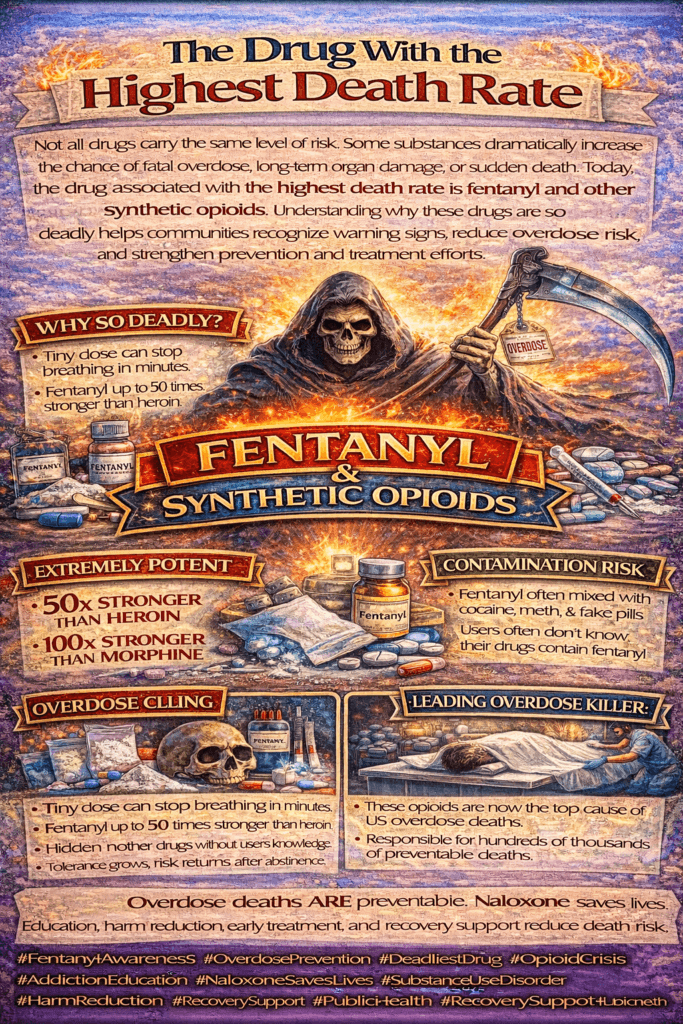
If we’re talking about the highest death rate per user, opioids—especially synthetic ones like fentanyl—stand out. Fewer people use opioids than tobacco, but those who do face a much higher risk of sudden death due to overdose. Overdose deaths from opioids have surged in the last decade. The CDC reports that over 80,000 people died from opioid overdoses in the U.S. in 2022, with roughly two-thirds of those deaths involving synthetic opioids, mainly fentanyl.
Fentanyl is especially dangerous because of its incredible potency. Even a tiny amount can cause fatal respiratory depression. Many users have no idea they’re taking fentanyl, since it’s commonly mixed with heroin or even counterfeit pills, leading to accidental overdoses that can happen in minutes.
Why Are Opioids So Deadly?
- Strength: Fentanyl is up to 100 times stronger than morphine, so judging the dose wrong is often fatal.
- Hidden ingredients: Illicit fentanyl is often combined with other drugs, increasing confusion and risk.
- Instant impact: Even a single misuse can cause someone to stop breathing quickly.
Compared to most drugs, including alcohol, opioids carry a far higher immediate risk—meaning people who use them even briefly can be in serious danger if they aren’t careful or don’t know what’s in their supply.
Alcohol: A Silent Heavy-Hitter
Alcohol’s inclusion on this list might seem strange at first. While not the most dangerous when it comes to death rate per user, alcohol is still responsible for a huge number of deaths, both through direct toxicity (like alcohol poisoning) and long-term conditions (like liver failure or alcohol-related cancers). The CDC attributes about 140,000 deaths per year in the U.S. to alcohol.
The hazards of alcohol don’t end with physical health. Alcohol use often sets the stage for car accidents, injuries, violence, and risky decision-making. Even if someone doesn’t drink enough to risk poisoning, regular use can knock years off their lifespan through its cumulative effects on organs and overall health.
Comparing the Numbers: What Makes a Drug Truly Deadly?
Statistics alone don’t give the full picture. Here’s how the main suspects shake out:
- Tobacco: Causes the highest number of deaths worldwide every year, mostly distant but deadly, through cancer, heart, and lung diseases tied to years of use.
- Opioids (like fentanyl): Outpace all others for immediate overdose death rates per user. Even a small dosing error can be fatal.
- Alcohol: A monstrous figure in overall deaths, due to both direct toxicity and the ripple effect of related health issues and accidents.
Other illegal stimulants like cocaine and methamphetamine cause thousands of deaths per year too, but they aren’t as widespread or deadly per user as opioids, nor do they stack up the sheer annual toll of tobacco or alcohol.
Why Are Legal Drugs Responsible for So Many Deaths?
People often react to crises like the opioid epidemic, but legal drugs such as tobacco and alcohol actually account for the largest share of drug-related deaths worldwide. Here are a few reasons why these substances are so deadly:
- Accessibility: Almost anyone can buy them with little trouble.
- Daily use: Frequent, regular use over the years leads to escalating health problems.
- Cultural roots: Smoking and drinking are deeply embedded in social practices, making them harder to discourage or strictly regulate.
Since legal substances are both addictive and everywhere, society often underestimates or overlooks the risks until they’re much harder to address.
Is There a Single “Most Deadly” Drug?
All drugs have specific risks, and “deadly” can mean different things based on what we measure. Globally, tobacco continues to claim the most lives each year, hands down. If what you’re after is the drug with the highest rate of death per user—how likely someone is to die if they use it regularly—then synthetic opioids like fentanyl take the crown. Understanding these differences helps anyone looking to keep themselves and their loved ones safer.
Understanding Risk: Factors That Raise the Death Rate
No matter which drug you focus on, certain things drive up the fatality risk:
- Combining drugs: Mixing different substances or meds with alcohol often causes dangerous, sometimes fatal side effects.
- Poor health: Pre-existing issues like lung or heart disease make bad outcomes much more likely.
- Unpredictable doses: Not knowing the dose or what might be mixed in can be a life-or-death gamble, especially with street drugs.
Even with everyday drugs like alcohol and tobacco, using more or more often seriously ramps up the risk to health over time.
Real-World Impact: Stories and Stats
Statistics quantify a problem, but personal stories bring the dangers into focus. For instance, I once lived next door to someone who seemed healthy on the outside, but decades of smoking led to a fatal heart attack in his 40s. Another friend’s life fell apart in a matter of months after getting hooked on fentanyl-laced painkillers, showing that legal and illegal drugs can both wreck lives in different ways. These aren’t just numbers—they’re people, families, and communities changed forever.
Every year, public health workers, families, and friends fight to keep people safe. Sometimes they win, but all too often, the combined risks of powerful, accessible drugs prove overwhelming without the right support or awareness.
Frequently Asked Questions
Question: Isn’t heroin the most dangerous drug?
Answer: Heroin and synthetic opioids are extremely risky due to their high overdose potential. However, tobacco still leads in overall annual deaths. Fentanyl, in particular, holds the highest death rate per user among illegal drugs because overdoses happen so quickly.
Question: Why don’t we treat tobacco and alcohol like illegal drugs?
Answer: Culture, economics, and history play big roles. Both are woven into social life and were already mainstream long before their dangers were fully understood, which makes stricter rules difficult to implement.
Question: Are e-cigarettes and vaping safer?
Answer: Vaping cuts out the harms from smoke, but we still don’t have enough long-term research to say it’s totally safe. For now, most experts tell non-smokers to avoid any kind of nicotine use.
What It Means for Health, Prevention, and Policy
Understanding which drugs cause the most deaths is more than a numbers game. It’s about improving life, developing effective public policies, and protecting as many people as possible. Programs that help people quit smoking, reduce risky drinking, or avoid opioid addiction all help in different but crucial ways. Lasting change needs better access to treatment, more honest conversations, and policies that mix education with support and public safety goals.
By learning where the real risks are, we all get better at spotting them, looking out for loved ones, and speaking up for safer, healthier communities. The bottom line is, the deadliest drug isn’t always the one making headlines or fueling criminal crises. It’s often the one you can buy on any corner, the one we’ve lived with so long it’s become a normal part of the background—and that’s exactly why it deserves our attention.
Video: The Deadliest Substance Nobody Talks About #opioids #crisis #shorts