College campuses encourage independence and experimentation, exposing many students to substances for the first time. Social pressure, stress, and curiosity play major roles. While the most commonly used college drug is widely known and socially accepted, its impact goes beyond prevalence, involving patterns of use, mental health effects, and risk of dependency.
Most Common Drug on College Campuses
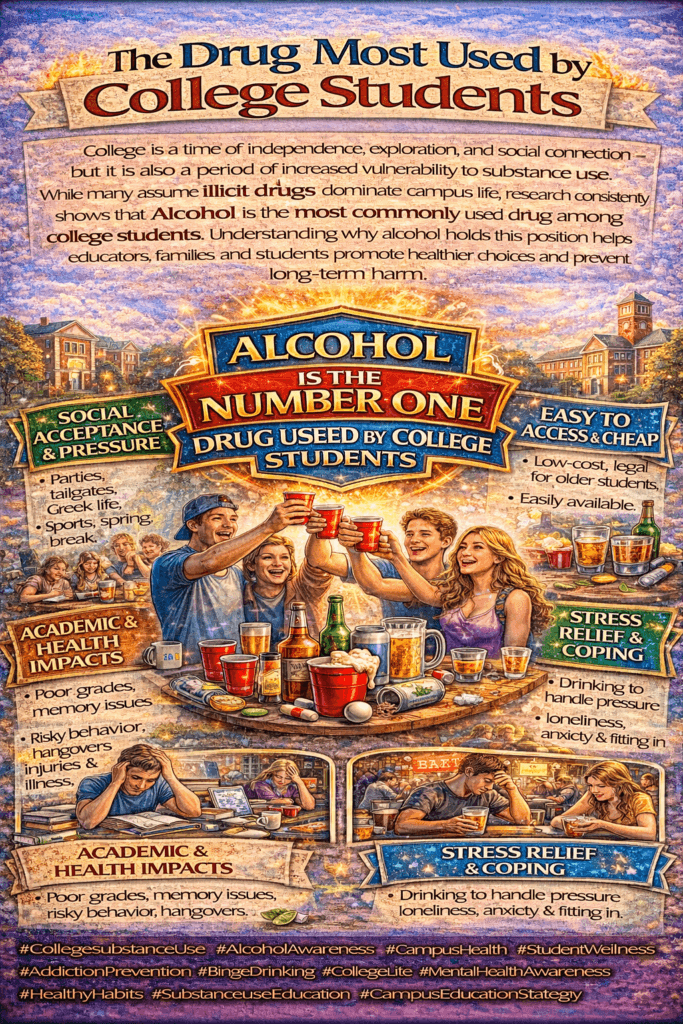
When people hear “drugs in college,” wild parties or risky behavior might spring to mind. While some campuses do see harder substances now and then, the most widely used drug among college students is alcohol. It’s labeled a drug because it changes how your brain and body behave, even though it’s totally legal for those over 21 in the U.S.
The National Institute on Drug Abuse and surveys like Monitoring the Future show that the majority of college students report drinking alcohol at least once in the last year. Binge drinking, which usually means having several drinks quickly, is also pretty common during weekends and big events. Alcohol shows up everywhere: social gatherings, Greek life, sports games, and quiet dorm hangouts, which explains why it spreads so easily.
Marijuana comes in second and is getting more popular thanks to changing laws. Alcohol still leads the way, but understanding why it’s such a central piece of student life gives insight into campus culture and health challenges.
Why Alcohol Is So Popular Among Students
Looking back, alcohol was everywhere at college events, from small group study pick-me-ups to big parties. There are some common reasons you’ll find in research and everyday conversation:
- Social Pressure: Students want to fit in, especially early on. Drinking can feel like the quickest way to make new friends or join groups.
- Freedom from Parents: For a lot of people, college is the first taste of real independence. Less supervision opens up choices—including risky ones.
- Campus Traditions: Drinking games, club nights, and tailgates are part of the rhythm at many schools; it feels normal to drink regularly.
- Stress Relief: College is stressful. Many students turn to alcohol to relax or take a break from the pressure, even if it’s only a short-term fix.
- Accessibility: Fake IDs or generous upperclassmen make it simple for underage students to get alcohol. Bar-heavy towns or off-campus apartments also step up access.
Common Patterns and Trends
Not every college student drinks the same way, and the reasons can be all over the map. Some individuals may have a drink or two only at celebrations, whereas others build their routine around social drinking. Here are a few patterns seen in national surveys and personal observations alike:
- Binge Drinking: Many students “pre-game” or drink heavily in short bursts. About 30–40% of students admit to recent binge drinking, according to the National Institute on Alcohol Abuse and Alcoholism.
- Weekend and Event-Focused Use: Key dates—sports, holidays, and parties—are prime time for drinking. The academic schedule makes drinking mostly a weekend thing for many students.
- Mixing Substances: Some students mix alcohol with other substances like energy drinks or marijuana, which can lead to riskier effects and make troubles harder to spot.
- Dropping Numbers: There’s been a slow dip in binge drinking lately as awareness grows, but it’s still widespread enough to worry health professionals and parents alike.
Risks and Consequences of College Drinking
It’s easy to see college drinking as just letting loose and having fun, but there are very real risks. I’ve watched friends handle some tough fallout, and studies back up those struggles:
- Academic Trouble: Missing classes, bad grades, and trouble focusing are part and parcel with late-night drinking.
- Health Worries: Alcohol poisoning, injuries, memory blackouts, and long-term health risks can all follow. Hangovers are just the tip of the iceberg.
- Legal Problems: Underage drinking, parties that get out of control, and fake IDs can get students into legal hot water or school-related trouble.
- Mental Health: Alcohol often makes anxiety, depression, or stress worse—even though some might use it to take the edge off at first.
- Personal Safety: Bad decisions under the influence lead to risky situations like unsafe sex, drunk driving, or being out late alone.
Alcohol and College Culture
Drinking’s social acceptance can make it seriously hard for some students to turn down a drink. There’s pressure to keep up or “not be boring,” so saying no sometimes feels isolating. Notably, more colleges now offer alcohol-free events or wellness clubs for those seeking something different. There are peer support groups and resources for individuals seeking to cut back or in need of recovery support.
Things To Keep in Mind About Other Substances
Marijuana comes in just behind alcohol in popularity on campus. Current surveys from the Substance Abuse and Mental Health Services Administration say almost half of college students have tried marijuana at least once. Vaping, prescription stimulants meant for studying, and party drugs like ecstasy or cocaine show up less often but are still in the mix at some schools.
Prescription stimulants—think Adderall or Ritalin—are of special concern. Some students use these “study drugs” without a prescription, hoping to score better grades or stay up later. This shortcut can lead to legal and medical issues with serious consequences.
- Marijuana: The legal status keeps changing state by state, but mental side effects like reduced focus and motivation are ongoing risks for students who use it often.
- Vaping: Smoking has gone out of style, but vaping’s become popular, especially at parties where flavored vape pens are easy to share discreetly.
- Study Drugs: Misusing prescription stimulants may be tempting when finals roll around, but it brings side effects and legal trouble that can take you out of the college game entirely.
Illegal drug use is generally less common on campuses, but it does exist. Most students are more likely to encounter alcohol or marijuana, while harder drugs circulate much less often and usually within smaller social circles.
How Campuses Are Dealing with Substance Use
Colleges understand that substance use is part of student life and have built in a number of ways to support healthy choices:
- Education Programs: Information sessions on alcohol and drug risks, as well as campus rules, are typically included in new student orientation.
- Counseling and Support: Health centers and campus counseling services often offer confidential support to students who are struggling or seeking to change their habits.
- Safe Ride and Escort Services: Lots of campuses make it easy to get a ride home if you’re too impaired to get back safely on your own.
- Peer Educators: Training students to reach out to their classmates can effectively disseminate information about making smart choices and supporting friends who want to avoid substances entirely.
Knowing about these resources helps students look out for themselves—and their friends. It could be making a plan before a night out, stepping in to keep a friend safe, or seeking help after things take a bad turn. Support is usually just a call or a short walk away.
Frequently Asked Questions
Question: Why is alcohol considered a drug if it’s legal?
Answer: Alcohol affects your body and mind, changing how you think, feel, or act. Even though it’s legal for adults, it’s still classified as a drug by health experts and can carry real risks, just like illegal substances, when it’s misused.
Question: What should I do if I’m worried about a friend’s drinking?
Answer: Many campuses have counseling services and peer programs. If you’re worried, try an honest (and nonjudgmental) talk with your friend and encourage them to consult those resources if things seem out of hand.
Question: Are there safe alternatives to alcohol for socializing?
Answer: Absolutely. Campus clubs and groups regularly host nonalcoholic events. Try music nights, game tournaments, movie marathons, or volunteering. Plenty of ways exist to get involved and meet people—no substance required.
Question: How common is marijuana use compared to alcohol?
Answer: Alcohol is still more widely used than marijuana, but marijuana’s popularity is climbing, especially where it’s legal. Alcohol remains the top drug you’ll find on nearly any college campus, though.
Key Takeaway for Students and Parents
Alcohol takes the top spot for college drug use, but every campus is unique. By spotting the reasons why students choose to drink—and knowing the options and resources available—students and parents can keep college life rolling in a safer direction. Being aware and informed goes a long way, whether it’s for making personal decisions or sparking important conversations. Here’s to a smart, safe, and eye-opening college adventure.
Video: They Hide This About College Parties #alcohol #college #darktruth