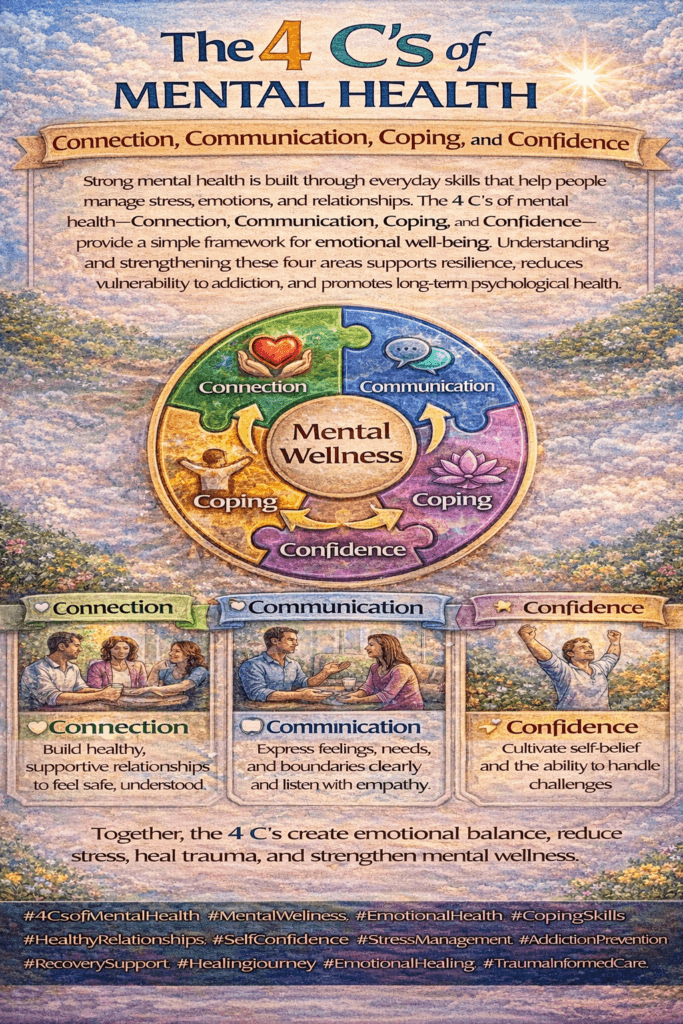
Mental health can feel like a tough puzzle to sort out, but there are some simple ideas that can really help build a stronger foundation. When I think about what makes up good mental health, I always come back to four main things: Connection, Communication, Coping, and Confidence. I call these the 4 C’s of Mental Health, and focusing on each one makes daily challenges much more manageable.
Why the 4 C’s Matter in Mental Health
Mental health isn’t just about avoiding problems; it’s about feeling comfortable with yourself, handling life’s bumps, and thriving in your relationships. The 4 C’s give a practical way to look at mental health, making things less complicated. Paying regular attention to these areas can help reduce stress, build resilience, and improve overall wellbeing.
Many mental health professionals use these “C’s” to give therapy and self-care some structure. Psychological research suggests that strong social support, open communication, effective coping skills, and a healthy sense of self-confidence are linked to better mental well-being. While there’s no one-size-fits-all solution, these pillars can fit into just about anyone’s routine, so you can mix them into whatever works for you.
Breaking Down the 4 C’s of Mental Health
Each of the 4 C’s brings something unique. Building skills in these areas doesn’t have to be overwhelming, but it does take some effort and attention. Here’s my personal take on each one:
- Connection: Building and maintaining relationships that provide support and belonging.
- Communication: Expressing thoughts, needs, and boundaries clearly—both to yourself and others.
- Coping: Finding healthy ways to manage stress, setbacks, and tough emotions.
- Confidence: Believing in your value and abilities, even when things get rocky.
Digging Into Each “C”
Connection
Human beings are wired for connection. Whether it’s family, friends, neighbors, or classmates, having people to turn to makes tough times easier. Feeling seen and supported sharpens emotional stability and helps tackle feelings like loneliness or anxiety.
I’ve found that a strong connection looks different for everyone. Some folks thrive with a tight group of friends, while others prefer deep one-on-one bonds or even online communities. The key is to find people who listen, support you, and make you feel welcome.
- Why it matters: Good connections help protect against stress and make us feel like we belong.
- How to build it: Schedule regular check-ins with people you care about, volunteer, or join a hobby group. Saying a simple “hello” can create new connections, too.
Communication
Being able to share your feelings, needs, and opinions is pretty important for mental health. When I keep things bottled up, my mood goes downhill quickly. Practicing open communication helps others support you and, just as important, helps you set healthy boundaries.
This isn’t just about talking; it’s about listening too. Good communicators make room for others while remaining honest about their feelings.
- Why it matters: Clear communication can stop small problems from building up and give you a stronger voice in your own life.
- How to build it: Practice stating your feelings with “I” statements (like “I feel overwhelmed when…”), ask for what you need, and remember it’s okay to say “no.” If talking is tough, writing things down can make it easier.
Coping
Life isn’t always easy. That makes coping skills pretty handy. Coping is all about how you handle stress, tough moods, or unexpected changes. There’s no “perfect” way to cope, but some habits are more helpful than others and really can keep your mind clearer.
Healthy coping might mean taking a walk, listening to music, doodling, or reaching out for support. When you notice stress building, using one of these skills can keep things from getting overwhelming, stopping problems from piling up.
- Why it matters: Coping skills help you feel less stuck and more in control when things go sideways.
- How to build it: Make a list of things that usually help you feel better, and keep it nearby. Try new techniques to see what works best for you, like breathing exercises, journaling, or spending time outdoors.
Confidence
Confidence is your belief in your worth and abilities. When I struggle with confidence, even simple tasks can feel stressful. People with healthy confidence are more willing to try new things, set boundaries, and bounce back from mistakes.
Building confidence takes patience, so it’s worth treating yourself with kindness. Small wins add up and can really boost your sense of self. Remember, comparing yourself with others just hurts motivation—it’s your own progress that counts.
- Why it matters: Confidence helps you take healthy risks and handle criticism or setbacks without shutting down.
- How to build it: Celebrate your progress—even the little stuff. Speak kindly to yourself, work on self-acceptance, and face fears in small steps. If you mess up, treat it as a learning moment and keep going.
Common Challenges & Practical Tips
Each of the 4 C’s comes with its own speed bumps. Here are a few common challenges and the tricks I turn to:
- Feeling isolated? Reach out to someone you trust—even a brief check-in matters. Community centers and online groups can help if your circle is small. Sending a message to an old friend now and then keeps the window open for reconnecting.
- Struggling to speak up? Practice ahead of time or write out what you want to say. Apps like “Mood notes” can help you track and express feelings. Taking the chance to speak in low-pressure situations can build your confidence over time.
- Keen for coping tools? Explore physical activities, creative hobbies, or apps like Insight Timer for simple mindfulness exercises. Even a quick deep breath or a couple of minutes of stretching can make a big difference when you’re overwhelmed.
- Confidence low? Try keeping a “win journal”—write down something you handled every day, no matter how small. Looking back at your wins can remind you of your progress over time.
Barriers to Building the 4 C’s
Everyone hits roadblocks. Sometimes mental health problems make it tough to socialize, or past experiences make confidence seem out of reach. There’s no shame in finding this stuff hard. Support from a counselor or therapist can help develop skills that feel out of reach right now. If you need a nudge, even online support forums or peer-run helplines can give you a safe place to talk things through and start fresh.
Real-World Scenarios Using the 4 C’s
The 4 C’s aren’t meant to be a checklist. I weave them into daily life to keep things steady. Here are a few everyday examples that make them feel real:
- Connection: You join a weekly video chat with friends or family. Even if it’s just for 20 minutes, it fights off isolation and keeps you plugged in.
- Communication: At work, you let your boss know when you’re overloaded. Being open about your workload can make work less stressful and set clearer expectations for yourself and your team.
- Coping: On a tough day, you take a timeout for a walk in the park. The fresh air and movement lower your stress and reset your mood, plus nature itself can be calming.
- Confidence: After a project goes well, you jot down three things you did right. Taking stock like this makes it easier to trust yourself next time, and helps reinforce the skills you want to keep using.
If you combine these, you’ll find that your life starts to feel a bit steadier, and setbacks don’t knock you off course as easily. It’s a gradual process, but real growth comes from steady effort. Practicing these habits every day, even with little steps, adds up more than you’d think.
Frequently Asked Questions
These are some of the questions I get a lot when talking about the 4 C’s of mental health:
Question: Can I build these skills on my own?
Answer: Yes, but support from friends, family, or professionals can speed up the process and give you new ideas. Peer groups and online resources are a great starting point if you’re not ready for therapy right away.
Question: What if one of the Cs is really tough for me?
Answer: Everyone finds some areas more difficult. Focus on small, consistent steps and remember that even little improvements count. Some days will be harder than others, so celebrate your wins and stay patient with yourself.
Question: Are there apps or books that can help?
Answer: There are lots! Apps like Calm, Headspace, and Moodnotes can help with coping and confidence. Books like “The Gifts of Imperfection” by Brené Brown are also worth checking out. If you’d like podcasts, “The Happiness Lab” and “The Science of Happiness” are filled with helpful tips.
Question: How do I know if I need extra help building these skills?
Answer: If you feel stuck or overwhelmed for more than a couple of weeks, it’s a good idea to check in with a professional, such as a therapist or counselor. It doesn’t mean you’re failing—it just gives you more support.
Bringing the 4 C’s into Your Life
Building the 4 C’s of mental health is something you can work at every day, no matter where you’re starting from. Even if you pick just one area to focus on first, you’ll notice a difference over time. There’s nothing fancy about these skills; they’re just practical, real-life habits I use, and they make life less overwhelming. If you ever feel stuck, reaching out to a counselor or peer support group can give you an extra boost.
Taking care of your mind shouldn’t feel complicated. The 4 C’s keep it simple and relatable. Try one out today and notice how it shapes your mood, your relationships, and your day-to-day experience. Every step you take gives a boost to your mental health—not by being perfect, but by showing up for yourself in real, basic ways.
The bottom line is, you have what it takes to build a strong mental health toolkit. Choose one C as a starting point and get involved. Over time, you’ll see the habits stick, and your confidence, coping abilities, communication, and connections all get stronger.
Video: These 4 Pillars Changed Everything for Me #mentalhealth #personalgrowth