Dealing with addiction is a reality that thousands of people across the United States face every day. Nobody plans to struggle with substance misuse, yet certain states grapple with particularly tough challenges—high drug and alcohol misuse rates, soaring overdose deaths, and real gaps in available treatment. Understanding where these struggles hit hardest helps people, healthcare providers, and policymakers focus their efforts and send resources where they’re needed most.
Understanding the Scope of Addiction Across States
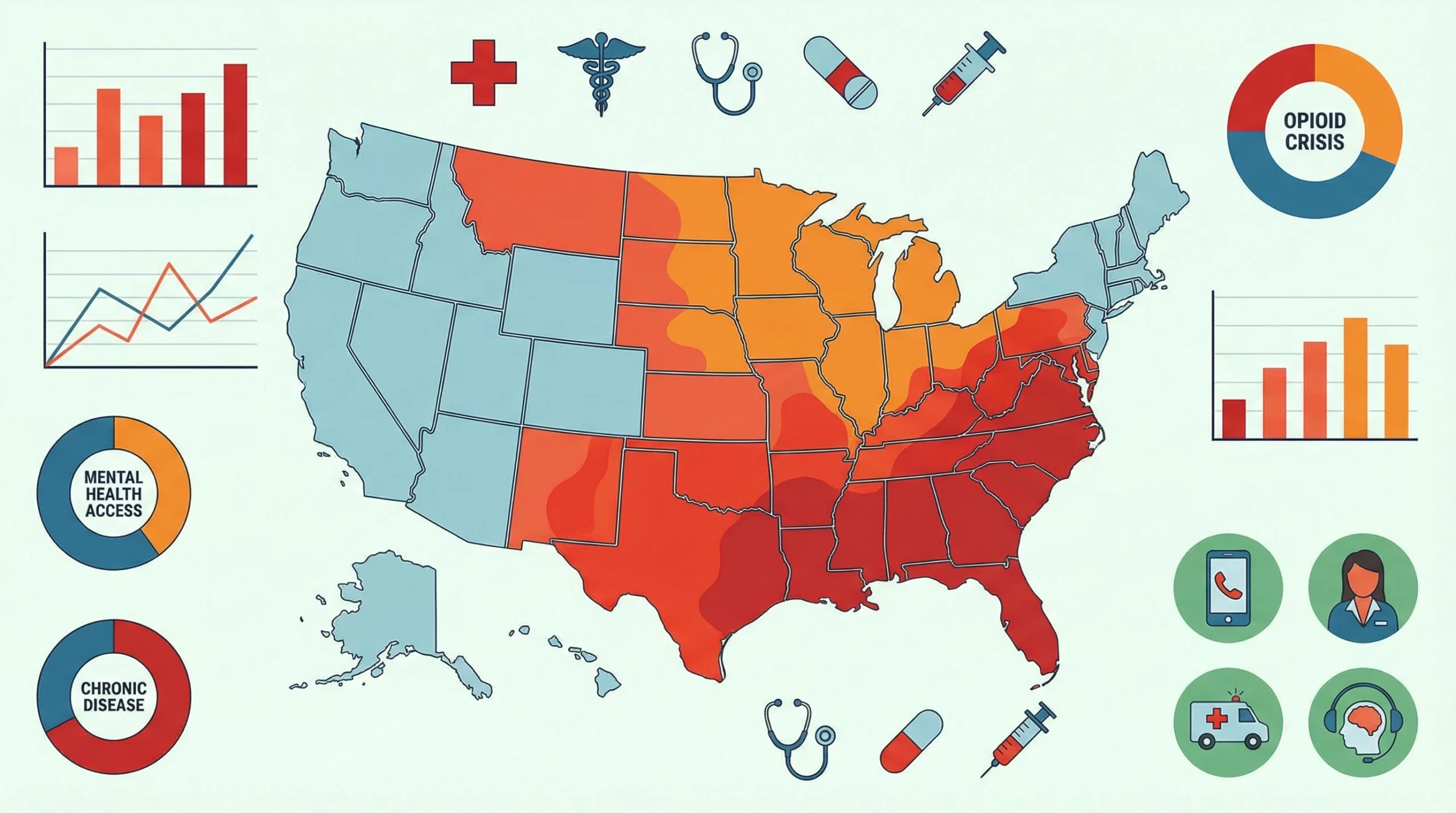
Addiction can turn lives upside down, and its effects spread through families, workplaces, and entire communities. While drug and alcohol misuse exists everywhere in the U.S., some states find themselves fighting much bigger battles. Rural locations, areas rocked by economic changes, or places with spotty access to treatment typically see the harshest numbers on overdose deaths and substance use disorder rates.
The Centers for Disease Control and Prevention (CDC) reported that over 100,000 Americans died from drug overdoses in 2022. Regions throughout the Midwest, Appalachia, and the South all report rates above the national average. These stats point to several overlapping issues: the ongoing opioid crisis, emerging threats from new synthetic drugs, and huge shortages in addiction treatment options. The Substance Abuse and Mental Health Services Administration (SAMHSA) has also pointed out that millions of Americans living with substance use disorder simply can’t get the specialized help they need.
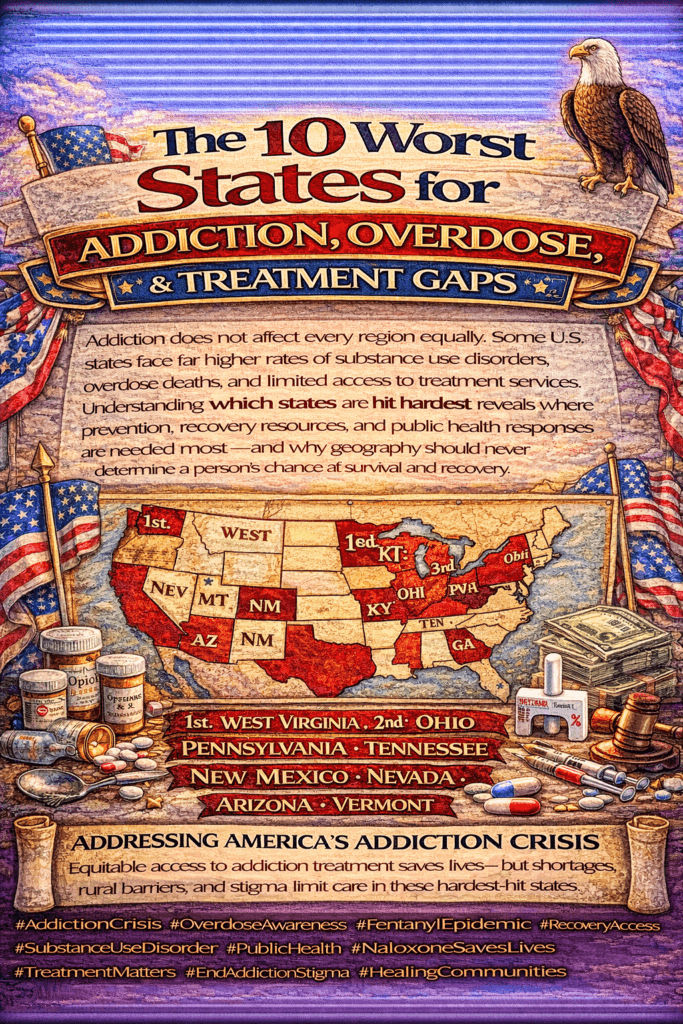
The 10 States Struggling Most With Addiction and Overdose
I’ve pulled data from CDC reports, state health profiles, and SAMHSA surveys to bring you the top 10 states where addiction, overdose, and obstacles to treatment are the most severe. These states face especially high rates and the steepest barriers to care:
- West Virginia. Year after year, West Virginia tops the list for the highest overdose death rate in the nation. The opioid crisis hit this state hard, and many rural counties have almost no treatment resources.
- Ohio. Fentanyl and methamphetamine have fueled overdose rate spikes in Ohio, even as prescription opioid use retreats. Tough numbers don’t lie—addiction is still a crisis here.
- Kentucky. High opioid addiction combined with low access to rehab centers (especially in Appalachian counties) makes recovery even tougher.
- Tennessee. Prescription opioid use first opened the door, and fentanyl is now behind a surge in overdose deaths and ER visits statewide.
- Pennsylvania. Diverse drug issues and big divides between rural and urban treatment access push Pennsylvania’s numbers above the national average year after year.
- New Mexico. Longstanding struggles with heroin, methamphetamine, and alcohol keep New Mexico high on both overdose death and alcohol-related disease charts.
- Missouri. Missouri continues to see rising deaths from both opioids and stimulants, with some of the lowest rates of residents who can find mental health or addiction care.
- Louisiana. High rates of drug deaths, emergency room visits related to drugs, and limited access to rehab mean serious challenges all over Louisiana.
- Maine. With overdose numbers climbing and fentanyl now the top threat, Maine faces big hurdles, particularly in its rural, sparsely populated areas.
- Alaska. Alaska’s unique geography, harsh weather, and isolated communities make access to treatment difficult. Opioid overdoses here are well above U.S. averages.
Why These States Face Bigger Challenges
So why do these states struggle more than others? It’s rarely just one cause. Most of the time, it’s a mix of economic factors, healthcare gaps, and worsening drug trends.
- Rural Geography. In states with many rural communities, people live far from hospitals or mental health care services. Long travel times, combined with limited treatment centers, mean that many never receive specialized care.
- Poverty and Unemployment. High poverty and job losses, especially in areas once dominated by mining or manufacturing, leave more people at risk for addiction and with fewer resources to find help.
- Prescription Drug Practices. In some places, painkillers were handed out for years and were cracked down on only recently. Unfortunately, this just led to more illegal drugs swooping in—fentanyl and heroin, in particular.
- Limited Healthcare Infrastructure. Not enough mental health professionals, addiction counselors, or even basic doctors make it tough for many to track down the support they need, especially in small or remote towns.
Addiction Types and Overdose Trends
Addiction is not just about opioids—though fentanyl and heroin are causing most overdose deaths right now. Alcohol, prescription medications, and methamphetamine remain huge problems, too. In rural or tribal communities, alcohol misuse still leads to a lot of deaths and chronic health issues.
- Opioids. Synthetic opioids like fentanyl are far more potent than older drugs, so even small doses are extremely risky. In states like West Virginia and Ohio, fentanyl is seen in the majority of overdoses.
- Stimulants. Methamphetamine and cocaine are causing more overdoses again and are frequently mixed with opioids, making overdoses harder to treat.
- Alcohol. In several states, especially where healthcare access is low, deaths from alcohol-related illness or poisoning remain distressingly high.
Barriers to Addiction Treatment
Getting help for addiction isn’t as simple as picking up the phone. Many of these states face real-world obstacles to recovery:
- Long Waitlists. The demand for care is higher than the supply of beds or addiction specialists, which means many wait weeks or even months for an open spot in rehab.
- Lack of Insurance. Plenty of residents either have no insurance or are covered by plans that do not pay much for substance use or mental health care.
- Stigma and Privacy Concerns. Small-town life can make it especially hard to seek treatment, since people worry about their personal struggles becoming public or being judged.
- Legal Barriers. State laws that restrict or limit the use of medication-assisted treatment (MAT), or that don’t allow for harm reduction strategies like syringe exchanges, can block the path to recovery.
What’s Being Done to Bridge the Gap?
Despite these problems, many states are adopting new solutions. Hospitals, nonprofits, and local governments are working hard to save lives and get people the help they need:
- Telehealth Expansion. Virtual counseling and telemedicine allow people to access care without hours of travel—this is significant for those in remote or rural locations.
- Community Health Hubs. Some places now bring mental health, substance use support, and physical healthcare together under one roof, smoothing the way for people to get help faster.
- Naloxone Distribution. Free naloxone (Narcan) programs have saved thousands as opioid deaths rise—especially where fentanyl is a factor.
- Peer Recovery Programs. Support from those who have recovered can be incredibly helpful for people trying to start their own recovery adventure.
What Else Could Make a Difference?
There’s not just one way to solve addiction and overdose. But based on research and what’s worked in some communities, these ideas could narrow the treatment gaps:
- Expanded Medicaid and insurance coverage for substance use treatment
- Boosted funding for addiction counselors and treatment options in rural places
- More education about mental health and addiction in schools, workplaces, and communities
- Expanded harm reduction, such as syringe exchanges and safe consumption spaces
- Streamlined moves from ER or hospital stays into long-term treatment programs
Frequently Asked Questions About Addiction and Overdose
Question: Why do some states have so much higher overdose and addiction rates?
Answer: It usually comes down to several factors: geographic isolation, gaps in healthcare, high unemployment or poverty, and drug supply trends, all mixing at once. All of these set the stage for higher risk.
Question: Can medication-assisted treatment (MAT) really help?
Answer: Yes, MAT is proven to be safe and effective for many people with opioid addiction. It can reduce overdose risk, ease cravings, and improve the chances of lasting recovery.
Question: Is stigma still a problem for people seeking help?
Answer: Absolutely. In small or traditional communities, individuals may avoid seeking help due to concerns about judgment or discrimination, which can delay recovery and increase risk.
Getting Involved or Finding Support
If you or someone you care about is struggling with addiction, you’re far from alone, and there are people who want to help. Start by contacting your public health department or calling the SAMHSA national helpline (1-800-662-HELP). Recovery groups, local hotlines, and online meetings are becoming more common, even in these challenging states.
Standing by people affected by addiction really does matter. Even spreading information or volunteering locally can help weave a stronger safety net for everyone living with substance use struggles. By helping, you help bring hope and practical support to your community.
Video: Which State Has America’s Worst Addiction Problem? #shorts #geography #usa