Ropinirole is a medication commonly prescribed for Parkinson’s disease and restless legs syndrome (RLS). While it’s known for easing tremors and muscle discomfort, increasing attention has been paid to its ties with unusual behavioral side effects, especially behavioral addictions like compulsive gambling, shopping sprees, binge eating, or overactive sexuality. If you or someone you know is on ropinirole, here’s a super detailed look at how these issues can pop up and what to watch for.
What Is Ropinirole?
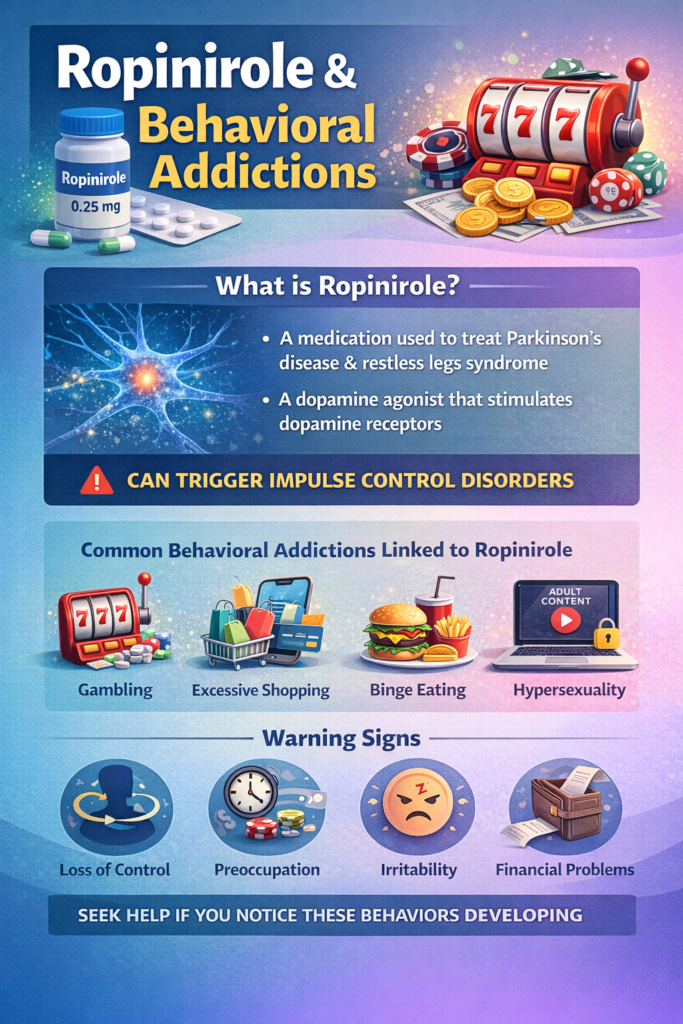
Ropinirole belongs to the group of medicines called dopamine agonists. These drugs work by mimicking dopamine, a chemical in your brain that’s crucial for movement, emotions, and feelings of reward. In Parkinson’s disease and RLS, dopamine activity gets knocked off balance, so boosting the pathway with ropinirole can give a big lift to how people move and feel day to day. Since its approval in the late 1990s, ropinirole has been a standout for managing movement disorders, with fewer side effects than some older treatments.
Doctors prescribe it under the brand Requip or as a generic. Usually, it’s given as a tablet, and the dose gets tweaked over time based on symptoms and any problems. Most people know about common side effects like nausea, sleepiness, dizziness, and swelling. Still, over the years, a new cluster of challenges has emerged—unexpected behavioral quirks tied to its effect on the brain’s reward circuits.
How Behavioral Addictions Show Up in People Taking Ropinirole
Behavioral addiction refers to uncontrollable urges to do certain things—even when those actions start messing up your life. These aren’t about craving a substance, but about compulsions that feel impossible to resist. With ropinirole, these behaviors sometimes surface suddenly, even months after starting the drug or when the dose is bumped up.
Experts have picked up on the strong connection between ropinirole and impulses like:
- Compulsive gambling: Finding it impossible to quit betting or taking money risks, racking up losses that can hurt finances and relationships.
- Excessive shopping: Getting swept up in the urge to buy things out-of-the-blue, sometimes piling on huge credit bills.
- Binge eating: Going through lots of food in one go, unable to stop even while knowing it’s a problem.
- Hypersexuality: Unusually intense sexual thoughts or behaviors that are tough to manage.
These aren’t small issues. People facing them often talk about feeling like they’re not themselves, describing almost out-of-body experiences in which they watch their actions spiral but can’t hit the brakes.
Why Does Ropinirole Trigger Behavioral Addictions?
It’s all about how the brain’s chemical messengers operate. Dopamine, the main one involved here, gives you a hit of excitement or pleasure when you score a win or do something enjoyable. In Parkinson’s disease, dopamine signals are suppressed, so ropinirole steps in to patch that up.
The tricky thing? Dopamine’s influence isn’t limited to body movements. When you pump up the dopamine system with ropinirole, you also stimulate the circuits responsible for reward, risk-taking, and pleasure. Every day hobbies or temptations start to feel even more irresistible. Some people are wired to be more sensitive to these effects, especially those with an existing or family background in addiction or mental health challenges.
Researchers are still trying to determine exactly why only some people experience these behavioral issues. There’s no check or genetic clue available yet to pinpoint who might have trouble, so being aware and staying sharp is key for anyone starting ropinirole or upping the dose.
Recognizing the Signs: What to Watch For
Warning signs can vary between individuals, but typical red flags for ropinirole’s behavioral effects include:
- A fresh obsession with gambling, online sports betting, scratch-offs, or casino trips
- Sudden changes in spending, especially big spends on non-essentials
- Evolving eating patterns, like sneaky pantry raids, hidden wrappers, or food cravings you can’t control
- Spending lots more time occupied by sexual thoughts or activities, especially risky or out-of-character behaviors
- Keeping secrets about these new symptoms, often out of embarrassment or fear of being noticed
- Arguments, conflicts, or stress with loved ones because of these new habits
Families and friends sometimes recognize these problems before the person does, especially as the behaviors ramp up. Any major or emerging shifts in personality or behavior in someone taking ropinirole should raise a flag and be discussed with a healthcare provider.
What Does the Research Say?
For over a decade, clinical studies have highlighted the risk. A review in The Lancet Neurology (2010) tracked that about 13.6% of patients taking drugs like ropinirole ended up with some impulse control issue, compared to less than 2% in those not using these meds. That’s a major difference.
With more studies and FDA alerts added over the years, the risk has become widely recognized, and official drug sheets now list compulsive behaviors as a warning. Those who are older, on higher doses, or have a history of addiction or mental health challenges could be especially vulnerable.
Real-life accounts shared on forums and in support groups paint a vivid picture. Some people describe losing life savings to gambling or watching relationships fall apart because of secret shopping binges. While not everyone reacts in the same way, the side effect is far from rare.
Managing Behavioral Addictions Linked to Ropinirole
The best outcomes happen when the problem is caught early. If you’re starting to notice strange urges or out-of-character habits, reach out to your doctor right away. You don’t have to wait until things get out of hand. Treatment options might include:
- Cutting down the ropinirole dose
- Switching to an alternative medication
- Adding on therapy or counseling to help control compulsive urges
For most people, these behaviors fade or disappear when the medication is reduced or stopped. If financial fallout or mental health struggles have occurred, support like debt counseling or therapy can help get things back on track.
There’s no shame in bringing up these details with your healthcare provider. They’re familiar with the issue, and open, honest sharing can speed the road toward resolution. Friends and relatives who spot these symptoms should approach things with concern, not blame—compassion leads to better outcomes.
Coping with Challenges: Common Hurdles and Practical Tips
Choosing whether to stay on ropinirole isn’t always simple. For some, it’s the one thing that keeps symptoms in check. Strategies for staying safe and balanced include:
- Communication: Keep a log of any unusual urges or personality changes so you can share updates with your doctor at appointments.
- Involve Trusted People: Family and friends can offer feedback and help you spot behaviors you might not otherwise notice.
- Money Management: Use spending caps, track purchases, or ask a trusted person to help keep an eye on finances if things get risky.
- Prompt Action: If you catch new habits forming, talk to your provider immediately; acting sooner is easier than waiting.
Most of the time, adjusting the treatment approach or mixing in behavioral therapies can make a world of difference.
Can Stopping Ropinirole Suddenly Help?
Abruptly quitting ropinirole is not a good plan without medical input. For those with Parkinson’s, especially, it can set off withdrawal or make movement symptoms suddenly worse. Always have these changes mapped out with your healthcare provider so you stay safe and steady during the switch.
Real Experiences: What Patients and Families Say
Hearing actual stories brings the science to life. One patient described going from never gambling to losing thousands in a matter of months before recognizing that ropinirole was the only recent change. Another shared how her online shopping spiraled out of control for the first time in her 60s. Support from loved ones helped them discuss everything honestly with their doctors and make the changes needed to get back in control.
If you notice any of these patterns, you’re definitely not alone. There’s a network of resources and real understanding out there from others who have walked the same path.
Frequently Asked Questions
Question: Is everyone who takes ropinirole at risk for behavioral addictions?
Answer: Not all patients will develop these side effects. Most use ropinirole without trouble, but anyone on dopamine agonists should be aware that these symptoms are a known possibility, especially if there’s a personal or family background in addiction or mental health.
Question: How soon after starting ropinirole could behavioral addictions develop?
Answer: Compulsive behaviors might crop up anywhere from a few weeks to several months after starting or increasing the dose. Sometimes they even begin years later, so regular self-checks and conversations with your provider are always helpful.
Question: Will these side effects go away if I stop the medication?
Answer: For most people, adjusting the dose or stopping ropinirole leads to a clear improvement, or even complete recovery, from these symptoms. Make any changes as advised by a doctor to stay safe and comfortable.
What Matters Most When Taking Ropinirole
Ropinirole remains a powerful tool for managing movement issues and restless legs, but its behavioral effects deserve just as much attention. Staying sharp for any strange or new urges—gambling, shopping, overeating, or anything that’s just not you—can help catch trouble early.
Keep talking openly with your healthcare team and loved ones, and don’t hesitate to reach out as soon as something feels off. Medications are just one piece of the adventure; ongoing awareness and a solid support network keep things on track and make sure you stay in the driver’s seat for both your body and mind.
Video: The Dopamine Hack That Turns Into a Gambling Nightmare #ropinirole #awareness #shorts