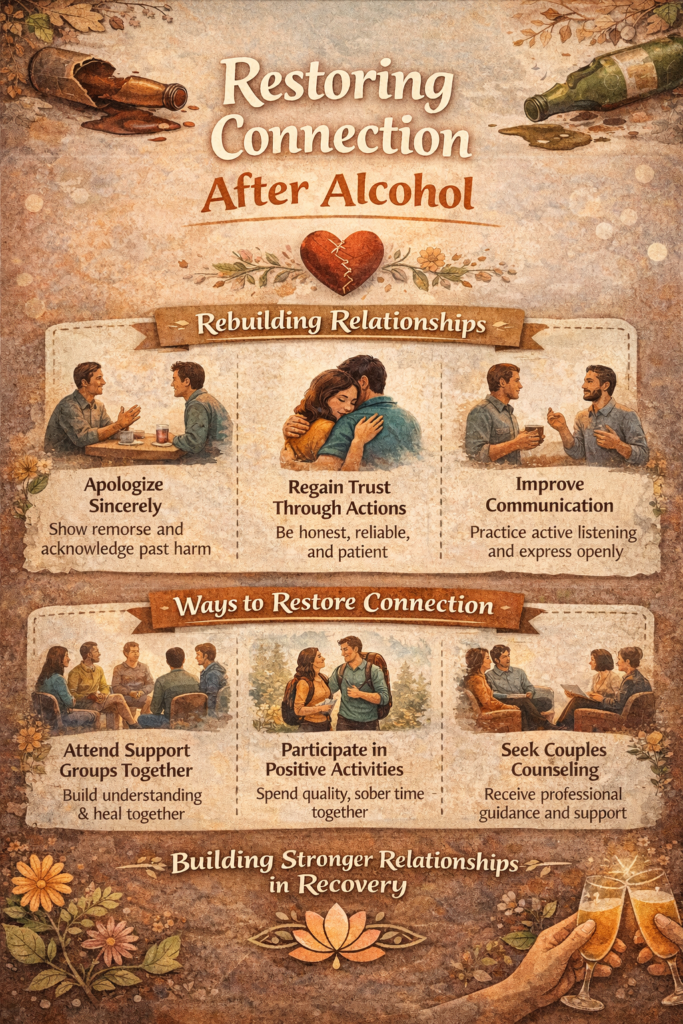
Restoring connection after alcohol can feel overwhelming, especially if drinking has created distance between you and the people or things that matter most. Over time, alcohol use can chip away at trust, emotional closeness, and even self-understanding. What I’ve noticed is that rebuilding this sort of connection takes patience, some honest self-reflection, and practical changes in daily life. I’m going to walk you through steps and ideas that make this adventure possible, highlighting what I’ve learned both personally and from others who’ve done the same.
Understanding Disconnection After Alcohol
Alcohol often becomes a barrier, whether it’s between you and your family, your friends, or even your own values. Drinking can lead to arguments, broken promises, and a whole lot of misunderstandings. This sort of disconnection rarely shows up overnight. Instead, it builds slowly and quietly. Spotting the patterns of disconnection is one of the first steps toward healing, so it helps to start by recognizing some common signs:
- Emotional Distance: You might feel numb, detached, or less interested in others than you used to.
- Broken Trust: If past drinking led to dishonesty or letting people down, rebuilding that trust can be tough, but totally doable.
- Isolation: Avoiding people or activities you once enjoyed is often a sign that alcohol has gotten in the way.
When I realized I was pulling back from friends and missing out on family moments, it was a real wake-up call. Facing those moments honestly, even if it stings a little, is really important when starting to repair what’s been lost.
First Steps Toward Reconnecting
Getting back on track starts with some really straightforward moves. Even simple changes can start to close the gap that alcohol may have caused. I recommend keeping these at the front of your mind if you’re just starting out:
- Get Honest With Yourself: Noticing how alcohol affected your relationships and routines is an important first step.
- Reach Out, Even If It’s Awkward: Send a text, write a note, or call someone you’ve lost touch with. You don’t need fancy words; just say what’s on your heart.
- Take Small Actions: Offer to meet for coffee, join a family dinner, or invite a friend for a walk. Reconnecting doesn’t need to be dramatic; it just needs to start somewhere.
Every time I made a small effort, like just showing up on time or replying to a message, it reminded people that I was trying. Eventually, these little actions build momentum.
Practical Tips for Rebuilding Relationships
Restoring connection means rebuilding trust and learning new habits. It doesn’t all get fixed overnight, but making consistent, thoughtful efforts really does help.
- Apologize When Needed: A genuine apology can go a long way. Saying, “I’m sorry for how I acted when I was drinking,” and backing it up with changed behavior is even more powerful than words alone.
- Show Up and Be Reliable: Following through on your promises—even small ones—proves that things are really changing. If you say you’ll meet up, be there.
- Listen More Than You Talk: When reconnecting with others, folks sometimes just want to share how your actions affected them. Letting them vent or express themselves without getting defensive can help the healing start.
- Relearn Fun Together: Alcoholfree activities, like movie nights, hikes, or game nights, help build new and positive memories. It’s a chance to remember you can actually have fun together without drinking.
There were times when I messed up and had to try again, but I realized that most people are willing to meet you halfway if they see real change. You’re not alone if it feels bumpy; just keep showing up. If you’re struggling to figure out how to rebuild shared trust, consider checking in with a counselor or community group. They often share new ideas on rebuilding friendships and support you through awkward moments.
Handling Setbacks and Difficult Emotions
Rebuilding a connection after alcohol isn’t always a straight line. Sometimes it can feel like you’re taking a step forward, only to slide back. Shame, anger, or regret might pop up unexpectedly. Here’s how I learned to handle those rough patches without giving up:
- Forgive Yourself: Slipping into old habits or having tough conversations doesn’t erase progress. Being kind to yourself actually makes it easier to keep moving forward.
- Ask for Support: Whether you lean on a support group, a therapist, or a sober friend, having someone to talk things through with makes a real difference.
- Take Breaks When Needed: If things get heated, it’s okay to step back, gather your thoughts, and return when you’re ready.
Even after a setback, I found that returning to my routines and being open about my struggles kept me grounded. People appreciate honesty instead of perfection. Sometimes it helps to focus on small routines—like taking walks or setting aside time for a hobby you love—because these tiny actions can make big feelings easier to handle.
Building Connection With Yourself
One thing I didn’t realize at first was how much I’d lost touch with my own interests and values because of alcohol. Restoring connection internally is actually a huge part of feeling whole again. Here are some things that helped me:
- Journaling: Writing out what I was feeling, what I hoped for, and what I wanted to change gave me insight I didn’t expect.
- Rediscovering Old Hobbies: Picking up an instrument, painting, or hiking again made me remember who I was beyond drinking.
- Setting New Goals: These don’t have to be big. Even something like reading a book series or growing a small garden helped me feel a sense of progress.
Building self-connection takes time, but every small step builds confidence and helps reinforce the changes you’re making in your relationships, too. If you struggle to get motivated, set up a small, daily routine and stick to it. You might track down a support group online where others share tips about getting back in touch with themselves after addiction. Remember, progress here reflects in your other relationships, too.
Addressing Common Hurdles
Everyone faces their own unique bumps along the road when repairing connections after drinking. Here are some things you might come across and some ways to find your way through them:
- Slow Progress: Not everyone will respond quickly. Some folks need more time or space to trust again. Letting things develop naturally and not pushing too hard respects their boundaries.
- Uncomfortable Conversations: These will probably happen, and having a few phrases ready (like, “I’m working on myself and want you to know I regret how things went,”) can make it easier to start.
- Ongoing Triggers: If certain situations or people make you want to drink again, preparing ahead and setting boundaries is super important. Sometimes it’s about finding new routines or circles that support your new path.
Slow Progress
One of the hardest lessons for me was realizing that not everyone was ready to reconnect at the same time I was. Waiting patiently, rather than demanding forgiveness or closeness, helped those relationships heal better in the long run. When you give others the space they need, you show respect for their feelings, and this often leads to a stronger bond.
Understanding Relapses
Relapses do happen during recovery. That doesn’t mean all progress is lost. When I had setbacks, a direct apology and a recommitment to sobriety helped restart conversations. People appreciated seeing me hold myself accountable rather than offering excuses. It’s also important to remember that each relapse is an opportunity to learn about your triggers, your feelings, and new ways you can set yourself up for success in the future.
Tips for Unsure Moments
Not every moment is going to feel clear-cut. Here are some common questions and practical answers I’ve found super useful:
What if people don’t trust me yet?
Give it time and keep showing change. Consistency means more than making promises. The more people see the real you coming through, the easier it becomes for them to trust again.
How do I handle others’ anger?
Sometimes anger is really disappointment or hurt. Listening and acknowledging it, instead of arguing, can break the tension. Let the person talk, take their words seriously, and respond with understanding rather than defensiveness.
What about relationships that don’t come back?
Some people might choose to keep a distance. Respecting their space, while focusing on the connections you can and do have, helps keep you moving forward. It’s also a chance to build new relationships based on the person you are now.
Should I talk about my recovery adventure?
Sharing your experience is up to you. Some folks find it helps explain the changes they’re making, while others prefer to let actions speak for themselves. Choose what’s comfortable for you. Sometimes, opening up can let others know they’re not alone and start conversations that lead to mutual support.
Why Restoring Connection Matters for Long-Term Healing
Getting sober isn’t just about stopping drinking; it’s about building a healthier, fuller life with real connections. The benefits go way beyond just mending relationships. Rebuilding trust and closeness makes day-to-day living more enjoyable, reduces loneliness, and actually helps prevent relapse. The process of reconnecting often brings out strengths and talents that might have gotten buried during tough times. I’ve seen people get closer to family, make new friends, and stumble upon passions they once set aside, all because they focused on restoring connection as part of their recovery. You might even track down hidden talents or rediscover passions you never knew you missed.
It’s not about perfection or quick fixes, but about being real, showing up, and giving both yourself and others grace as things change. If you’re on this path, it’s worth taking things one step at a time and celebrating every bit of progress along the way. Your story can inspire others; every small effort counts in this meaningful adventure.
Video: