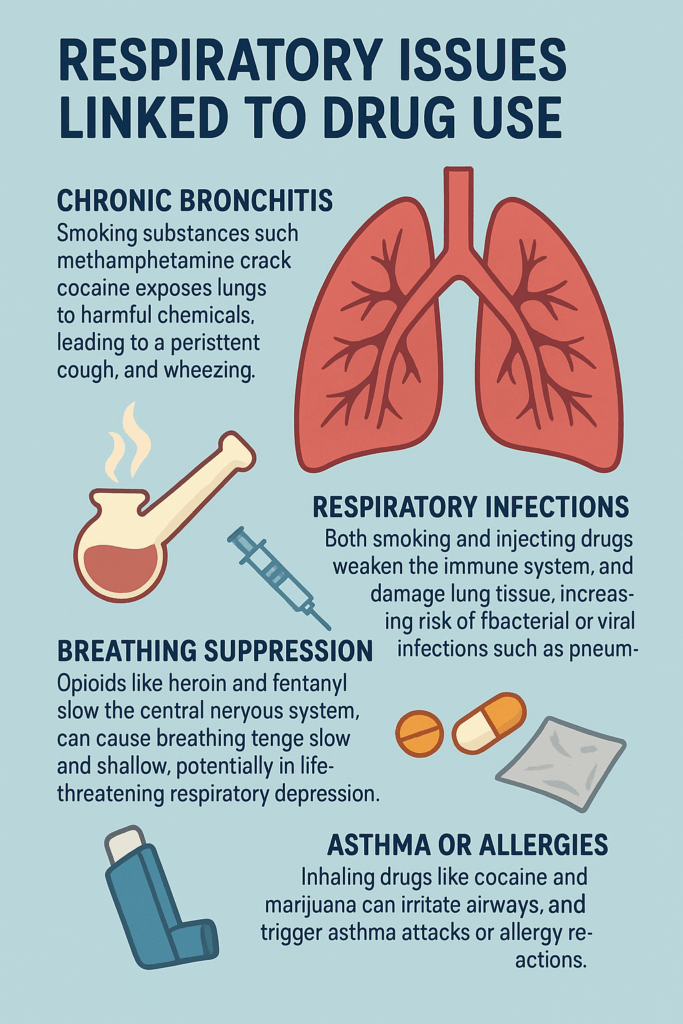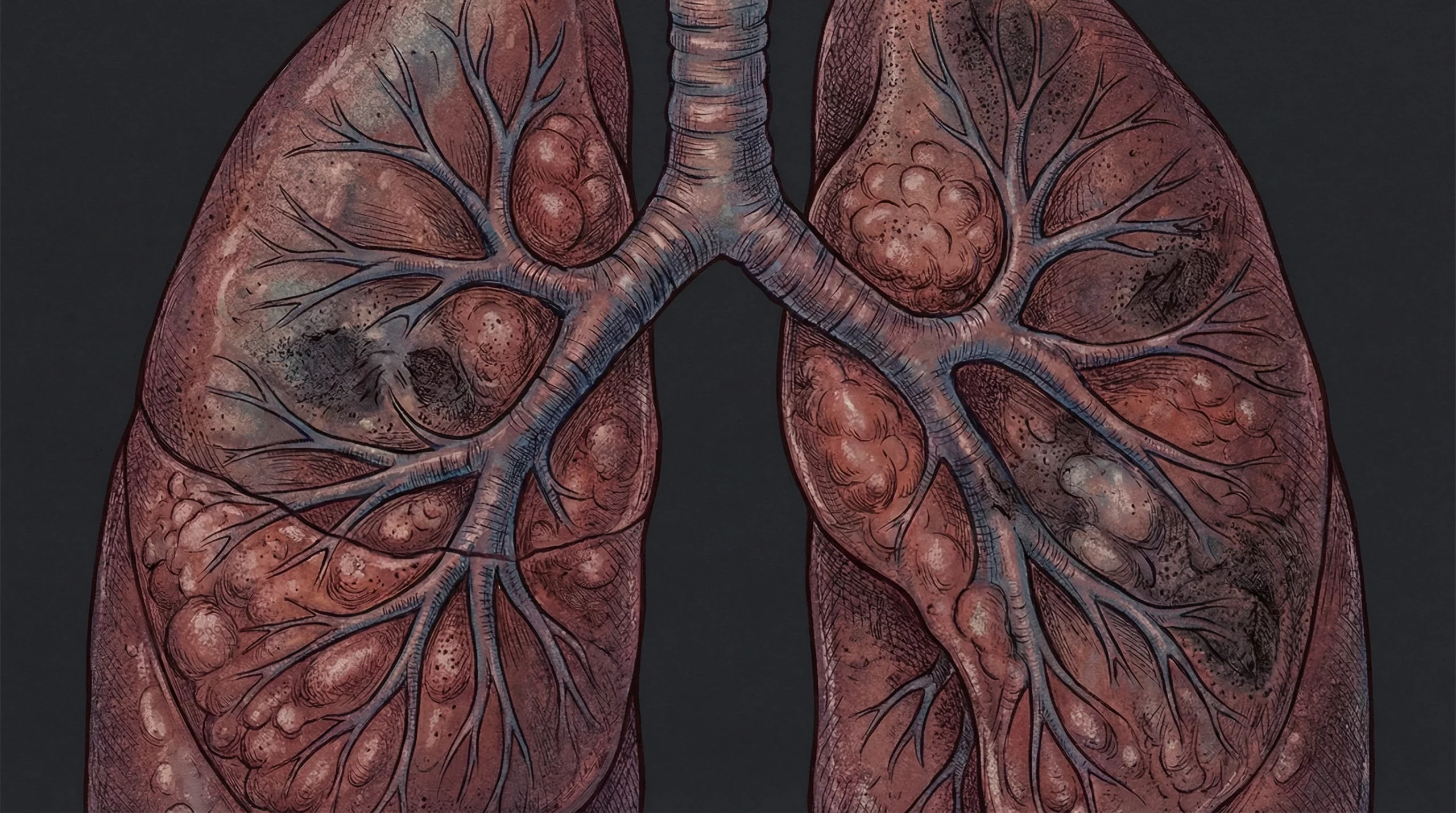
Drug use can affect many parts of the body, but the impact on the respiratory system is one of the most concerning. Whether it’s tobacco, prescription drugs, or illegal substances, many types of medicines can cause breathing problems that range from mild irritation to life-threatening complications. I’m going to break down how different drugs affect the lungs and airways, the kinds of symptoms you might notice, and what can be done to reduce harm or seek help if you or someone you know is dealing with respiratory issues linked to drug use.
How Drugs Affect the Respiratory System
The lungs work hard to keep the blood rich with oxygen and get rid of carbon dioxide. When drugs are introduced, whether smoked, inhaled, injected, or swallowed, this process can be disrupted in several ways. Much of the impact depends on what drug is used and how it is taken. For instance, smoking anything can irritate the airways, while certain opioids can slow down breathing entirely. Here’s a look at some common drug types and how they mess with the respiratory system:
- Cigarettes and Tobacco: Smoking increases the risk of chronic bronchitis, emphysema, and lung cancer. It also weakens the lungs’ defenses against infection.
- Cannabis (Marijuana): Cannabis smoke carries many of the same chemicals as tobacco smoke, and long-term use might cause coughing, wheezing, and airflow problems. Some people develop chronic bronchitis symptoms.
- Stimulants (like cocaine or methamphetamine): Smoking or snorting these drugs can inflame or damage the nasal passages, lungs, and even cause bleeding or scarring in the airways. Some inhalants can trigger sudden respiratory failure.
- Opioids (including heroin, fentanyl, or prescription painkillers): These drugs are especially risky because they slow down breathing. An overdose can easily cause breathing to stop almost completely, which is very dangerous.
- Vaping (nicotine or THC): Vaping might not have the same toxins as cigarette smoke, but it’s still linked to lung injuries, sometimes called EVALI (e-cigarette, or Vaping Product use-associated lung Injury).
- Other Inhalants: Glue, paint, or aerosol sprays can trigger sudden lung swelling, airway burns, and chemical pneumonia.
Signs and Symptoms of Drug-Related Breathing Problems
When the airways or lungs are irritated, your body gives you clues. Being aware of these signs is essential, especially if you or someone you care about uses drugs. Some symptoms show up right away, while others build up over time:
- Shortness of breath, especially with regular activity
- Coughing that won’t go away, often with mucus
- Wheezing or noisy breathing
- Chest pain or tightness
- Frequent respiratory infections, like bronchitis or pneumonia
- Unexplained fatigue, sometimes due to less oxygen in the blood
- Blue-tinged lips or fingernails (a sign of low oxygen)
Opioids can cause much more severe symptoms, like slow, irregular breathing or long pauses between breaths. This is a medical emergency and needs immediate attention.
Common Respiratory Conditions Related to Drug Use
Over time, drug use can set off a series of health problems involving the lungs and breathing tubes. Here’s a look at some common conditions that pop up in people who use drugs, primarily by inhalation but sometimes by swallowing or injection:
- Chronic Obstructive Pulmonary Disease (COPD): Often found in long-term tobacco smokers, but marijuana and some other smoked drugs can contribute to it, too. COPD causes lasting breathing trouble, chronic cough, and mucus overload.
- Asthma: Smoking or inhaling irritants can make existing asthma much worse or even start asthma symptoms in people who have never had them before.
- Infections: Drug use can weaken the lungs and immune system, making conditions like pneumonia and tuberculosis more common. Sharing pipes or needles raises the risk of certain viral infections, too.
- Lung Cancer: Primarily a risk from tobacco, but some research is starting to connect cannabis smoke and other inhaled drugs to increased cancer risk.
- Acute Lung Injury: Inhaling drugs or chemicals (including from vaping) can trigger sudden, severe lung inflammation and damage, sometimes called acute respiratory distress syndrome (ARDS).
- Pulmonary Hemorrhage: This is bleeding into the lungs and can happen with cocaine, crack, or inhalant use. Noticing blood in mucus is a warning sign.
Managing the Risks: Harm Reduction and Support
Stopping or cutting back on drug use is the most effective way to protect lung health. But not everyone is ready for that step. There are still steps you can take to minimize harm:
- Switch to Safer Methods: If possible, choose ingestion methods that avoid the lungs, like oral use, but be aware that every drug still carries risks in other ways.
- Do Not Mix Drugs: Especially avoid combining depressants (like alcohol, benzodiazepines, or opioids), since this can increase the risk of slow or stopped breathing.
- Use Clean Accessories: Always use clean needles, pipes, or vaporizers to reduce the risk of infection and lung injury.
- Take Breaks and Monitor Symptoms: Pay attention to coughs or breathlessness. If you notice any new symptoms, consider seeking advice from a healthcare provider.
For people who want to quit, talking to a doctor or counselor about treatment options is a smart first step. There are support groups, medications, and resources available for all kinds of addiction recovery.
Factors That Increase the Risk of Respiratory Problems
Not everyone who uses drugs will develop lung disease, but certain things can bump up the risk:
- Using high doses or using drugs more often
- Preexisting lung conditions like asthma, COPD, or pulmonary fibrosis
- Smoking other substances at the same time (dual tobacco plus cannabis use, for example)
- Living in polluted environments, where the lungs are already under stress
- Weak immune systems, including those from other chronic diseases, HIV, or those using immunosuppressive medication
- Poor nutrition and a lack of exercise weaken the body’s ability to fight off infection and repair tissue
I can’t stress enough how important it is to keep these risk factors in mind, especially if you have a history of lung issues or other health problems. Careful attention and regular health checks play a huge role in prevention and early detection.
Real-world Examples and What Research Says
Over the past few years, researchers have been digging into the connection between drug use and respiratory illness. Here are a few practical examples and what research has revealed:
- EVALI: In 2019, the CDC reported thousands of cases of vaping-related lung injury in the United States. Many were linked to vaping THC (sometimes with vitamin E acetate as a cutting agent), but nicotine-only vapes also caused problems. Symptoms included cough, chest pain, and even respiratory failure in some cases. More details are at the CDC’s EVALI resource.
- Opioid Overdose: According to the National Institute on Drug Abuse, most opioid overdoses directly result from respiratory depression, as breathing slows until it stops. This is why fast access to naloxone (Narcan) can save lives.
- Cocaine and Crack Lung: Doctors have seen cases where heavy use has led to scarring and bleeding in the lungs. Sometimes, symptoms show up even after just a single use.
In my experience, even those who use it occasionally can run into trouble with respiratory side effects. So, it’s always important to stay alert to any changes in your breathing.
Breathing Easier: Practical Steps for Better Lung Health
If you’re worried about the effects of drug use on your lungs, there are a few steps that can really make a difference and help you breathe easier:
- Schedule regular checkups, especially if you have symptoms or a history of smoking or drug use
- Get vaccinated against respiratory infections, like the flu or pneumonia, as recommended by your doctor
- Stay active, eat well, and drink plenty of water to help your body recover and fight infection
- If you smoke, think about support programs or medications that can help you quit
- If you use other drugs and want to cut back or quit, reach out for support through a local clinic, helpline, or trusted friend
Frequently Asked Questions
Here are some questions I often get about the link between drug use and respiratory issues:
Question: What drugs are most likely to cause breathing problems?
Answer: Tobacco and opioids cause the most breathing issues. Stimulants, cannabis, and inhalants also have risks, especially when smoked or inhaled.
Question: Can quitting drugs reverse lung damage?
Answer: Some lung damage may get better or even reverse after quitting smoking or drug use, especially in the early stages. Chronic diseases like COPD can’t be undone, but symptoms can improve over time with treatment.
Question: What should I do if I have trouble breathing after using drugs?
Answer: Call for medical help right away if you have severe shortness of breath, chest pain, or blue lips or fingernails. For less severe symptoms, check in with a healthcare provider as soon as possible.
Final Thoughts
Respiratory issues linked to drug use are something I see often, and the effects can be severe. Staying informed and making small changes, such as using safer methods, seeking help, or monitoring symptoms, can protect your breathing and overall quality of life. No matter where you are on your adventure, options and support are always ready when you need them.
Video: Respiratory Issues Linked to Drug Use #facts #holisticaddictionrecovery #addictiontreatment