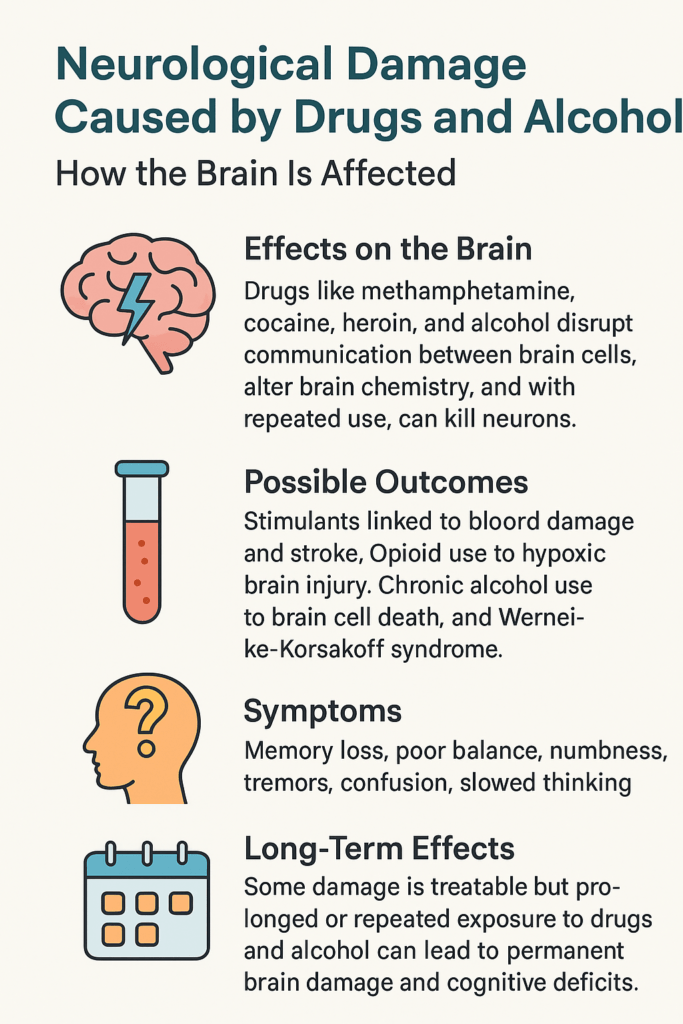
When people talk about the effects of drugs and alcohol, the focus usually lands on the more familiar consequences—liver disease, withdrawal, or addiction itself. But one of the most critical and often overlooked areas is how these substances impact the brain and nervous system. The truth is, repeated or heavy use can disrupt the very systems responsible for movement, memory, mood, coordination, and decision-making. Learning about this opened my eyes to the long-term neurological risks that don’t always show up right away but can quietly progress beneath the surface. This article breaks down how drugs and alcohol can damage the brain, what “neurological damage” really means, the mechanisms behind it, and the signs to look out for—so you can better understand the whole picture and the importance of early intervention.
Understanding Neurological Damage: What It Means
Neurological damage occurs when parts of your nervous system, mainly your brain and the nerves running through your body, are harmed or don’t work as they should. This can mess up movement, memory, mood, and decision-making. Drugs and alcohol can damage nerve cells, disrupt chemical signals, and even shrink or change certain regions of the brain.
Some research shows that even moderate use of certain drugs or too much alcohol can mess with your brain’s wiring. If someone keeps using, the risks stack up, leading to trouble thinking clearly, shaking, or even seizures if the brain’s signals get scrambled.
How Drugs Cause Neurological Harm
Different drugs damage the nervous system in their own ways, but several stand out as being particularly tough on your brain and nerves:
- Stimulants (Cocaine, Meth): These mess with your brain’s dopamine system, which can lead to memory problems, trouble focusing, and sometimes permanent changes in mood or personality.
- Opioids (Heroin, Prescription Painkillers): They slow down brain activity and hurt nerve connections. Over time, this can lower pain tolerance and cause things like brain infections or trouble breathing during an overdose.
- Hallucinogens (LSD, Ecstasy/MDMA): Can trigger long-lasting issues with mood, sleep, and how you sense the world around you.
- Marijuana: Heavy or long-term use might change brain areas involved with learning and attention, especially in teens.
The more often someone uses these drugs, or the higher the dose, the greater the risk for permanent or hard-to-reverse problems.
Alcohol’s Effects on the Brain and Nerves
Alcohol might be legal and easy to get, but that doesn’t mean it’s safer for your nervous system. It can shrink the brain over time, making certain regions smaller, and destroy the cells responsible for memory, balance, and coordination.
Some issues that show up with heavy or long-term drinking:
- Blackouts: Patches of memory loss after drinking heavily, even if the person seemed aware at the time.
- Wernicke-Korsakoff Syndrome: A severe disorder caused by vitamin B1 (thiamine) deficiency that appears as confusion, trouble moving, and memory gaps. Chronic drinking makes it difficult for your body to absorb thiamine, so this is a real risk for people who drink a lot.
- Peripheral Neuropathy: Tingling, pain, or numbness in the hands and feet because nerves are damaged.
- Cerebellar Degeneration: This disrupts movement and balance.
Alcohol-related brain damage isn’t just about how much someone drinks at the moment, but also how long they’ve been drinking, their overall diet, and genetics.
Signs and Symptoms of Neurological Damage
Spotting neurological issues caused by drugs or alcohol isn’t always easy. Sometimes, problems show up as regular forgetfulness, mood swings, or even basic clumsiness. But sure, signs are especially worth paying attention to:
- Memory loss or confusion that lingers
- Slurred speech
- Trouble concentrating or keeping attention
- Tingling, numbness, or shaky hands
- Balance or movement problems
Even if you don’t notice obvious symptoms, changes in the brain may be happening beneath the surface well before you can feel them. Starting recovery early, such as cutting down drinking or seeking help, makes a big difference in the outcome.
Risk Factors That Make Damage More Likely
Not everyone who uses drugs or drinks heavily ends up with big neurological problems, but several things can increase your odds:
- Using drugs or drinking from a young age (teen brains are extra sensitive)
- Mixing different drugs, or drinking and using drugs together
- Family history of addiction or neurological disorders
- Poor diet or malnutrition, especially with heavy drinking
- Other health conditions, like liver disease or diabetes
Even occasional use can build up over time, and those using substances while still growing up might see more lasting effects.
Brain Chemistry: The Role of Neurotransmitters
Neurotransmitters are chemical messengers that let brain cells talk to each other. Drugs and alcohol often flood or block these systems, making you feel high or drunk, but also setting up long-term problems.
- Serotonin: Affects mood, sleep, and appetite; altered by alcohol, MDMA, and LSD
- Dopamine: The “reward” signal, hit by cocaine, meth, and most addictive drugs
- GABA and Glutamate: Control overall brain activity; both are strongly changed by alcohol
If these systems stay out of balance for too long, your brain adapts in ways that are difficult to reverse. This can lead to depression, anxiety, or movement problems that stick around for years.
Are Some Effects Reversible?
Stopping drugs or alcohol does help, and for some, with brain damage, the nervous system may bounce back over time. Young brains are especially good at recovery when they receive proper support. Memory, focus, and mood might improve once someone is sober, but there are limits. Brain cells don’t always grow back, so scar tissue or cell loss can mean permanent problems.
Treatment centers use the term “neuroplasticity”—the brain’s power to rewire itself. Healthy routines, nutrition, therapy, and medications all play roles in recovery, but results can vary widely from person to person. It is helpful to stay patient and keep at it, as improvements can take time.
Dealing with Neurological Problems: Practical Steps
It’s a good idea to ask a doctor if you notice any weird changes in your thinking or movement. Some doctors use brain scans or nerve testing to figure out what’s going on and recommend a plan.
- Cut down or quit: For most people, reducing or stopping use is the most helpful first step.
- Eat balanced meals: B vitamins such as B1, B6, B12, and folate are essential for nerve health, especially for people recovering from alcohol problems.
- Counseling or support groups: These can help you work through changes and stay on track with recovery.
- Physical therapy: This can help with movement and coordination problems; a therapist can guide you through exercises that rebuild strength and balance.
- Medications: Certain medicines ease pain or help restore balance in brain chemistry, depending on the specific nerve problems you have.
Why Nutrition Matters for Brain Recovery
A healthy diet is about more than just physical recovery—it provides your nervous system with what it needs to repair and rebuild cells. People in recovery after heavy drinking often need more B vitamins. Greens, lean proteins, nuts, and whole grains all give your body energy and help your brain heal.
Can the Brain Fully Heal?
Sometimes the brain can bounce back really well, especially if the damage is caught early and the person is still young. But heavy use that goes on for many years can cause changes in memory or personality that last a long time. Still, most people see some improvement after quitting or cutting back, so taking steps toward recovery is definitely worth it. Patience and a supportive environment make a big difference in how well the brain recovers.
Frequently Asked Questions
Question: Can a single night of heavy drinking damage my brain?
Answer: One night usually won’t cause permanent harm in most people. However, repeated episodes, especially severe binge drinking, raise your risk a lot. Blackouts or memory loss during these times are your brain’s warning sign that it’s under real stress and needs a break.
Question: What drugs are most dangerous for the nervous system?
Answer: Stimulants like meth and cocaine, along with heavy alcohol use, are linked to the highest risks. Opiates, some synthetic drugs, and even vaping certain chemicals can cause severe damage, especially when used together or in large amounts.
Question: Is any amount of drinking or drug use safe for the brain?
Answer: No amount is totally safe, especially for teenagers or people with health issues. Occasional moderate drinking is less risky for healthy adults, but the less often you use, the lower the risk for long-term harm.
Key Takeaways About Brain Health and Substances
Understanding how drugs and alcohol impact the brain isn’t just about scare tactics; it’s about having the info you need to make solid choices. Spotting the warning signs, knowing the risks, and looking for help if things feel off can help protect your brain or even repair some damage over time. Stay tuned for any changes in memory, movement, or mood—noticing these early is key. There’s always hope for improvement, especially with healthy changes and support from others. Taking early action makes a big difference for your future brain health.
Video: The Irreversible Damage Substance Abuse Causes #health #warning