Dealing with conflict is usually tough for everyone, but when ADHD is in the mix, it can bring a whole other set of challenges. Disagreements at home, at work, or between friends can intensify, especially when factors like impulsivity, sensitivity to criticism, or forgetfulness are involved. Managing these situations isn’t impossible, though. Knowing a few practical strategies can help keep things from spiraling out of control. Here’s what I’ve learned about handling conflict while living with ADHD, so you get tools you can use in daily life.
How ADHD Affects Conflict
ADHD is more than just having trouble paying attention. The symptoms, such as impulsivity, distractibility, and difficulty with emotional regulation, can fuel misunderstandings and arguments. It’s pretty common to get frustrated quickly, interrupt others unintentionally, or forget details from previous conversations, which makes it tough to resolve even small disagreements.
Researchers have found that people with ADHD are likely to experience more conflict, especially in close relationships. One study published in Frontiers in Psychology notes that adults with ADHD regularly face social difficulties due to impulsivity and struggles with emotions. Knowing these tendencies helps you catch yourself when things get heated.
Getting to Know Your Triggers
Everyone has those things that push their buttons. With ADHD, the reactions can be faster and more intense. Identifying your most common triggers is really important for handling conflict. Here are a few examples I’ve noticed and heard from others in the ADHD community:
- Feeling misunderstood: When someone misreads your intentions, it can lead to instant frustration.
- Interruptions: Both being interrupted or accidentally interrupting others, because your mind moves so quickly.
- Criticism: Even mild feedback can sometimes feel personal and overwhelming.
- Disorganization: Arguments can spring up when forgotten plans or misplaced items become a pattern.
It helps to jot down or note in your phone when you notice you’re getting worked up. That way, you can start to see patterns and find out which triggers impact you most, so you can track down specific strategies for each one.
Managing Emotions in the Moment
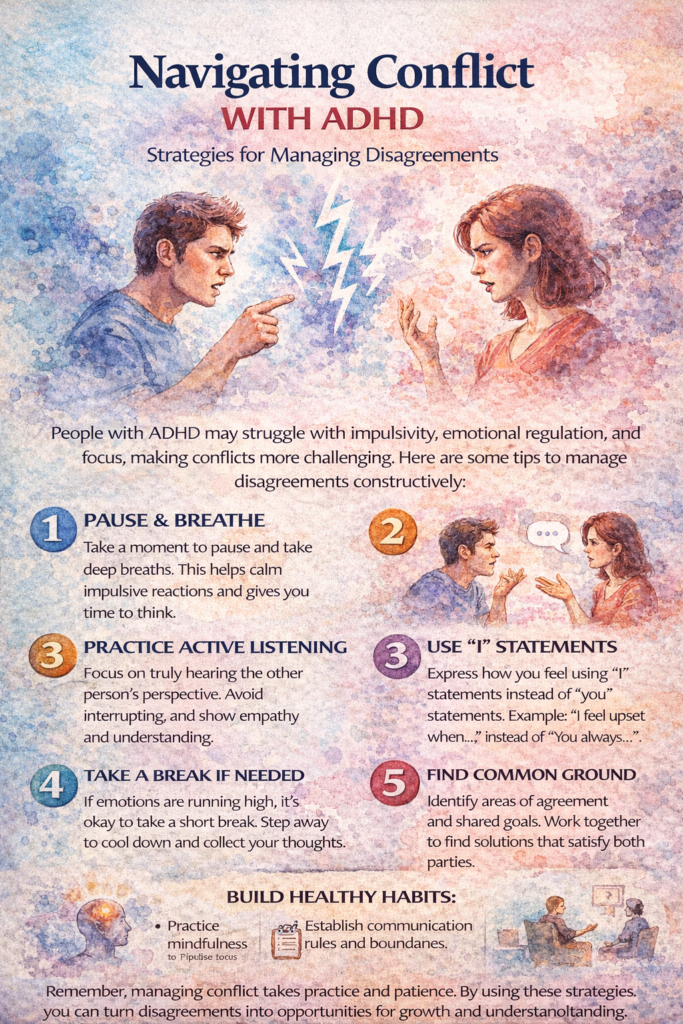
It’s really common for emotions to hit like a wave when conflict starts. With ADHD, that feeling can be even stronger. Here are a few simple steps that help me keep my cool when I feel like I’m about to lose it:
- Pause before speaking: Even just stopping for five seconds before you jump in can stop an argument from escalating.
- Breathe deeply: It sounds basic, but deep breaths actually help your brain switch gears and lower anxiety.
- Take a break if you need to: There’s nothing wrong with saying, “I need a minute to calm down,” and leaving the room if things are getting heated.
- Name your feelings: Saying, “I’m feeling overwhelmed right now,” lets the other person know what’s going on, instead of just snapping at them.
Staying aware of where you’re at emotionally is the first step to keeping your feelings from running the show. After practicing these for a while, you’ll likely notice arguments don’t spiral as quickly. Remind yourself it’s totally normal to need time to cool off; ADHD brains can be extra sensitive, so giving yourself permission to pause is actually a smart move, not a sign of weakness.
Building Communication Skills That Work With ADHD
Open, honest, and clear communication is really important for avoiding misunderstandings that get out of control. Here’s how I approach tough conversations while keeping ADHD in mind:
- Stay focused: If possible, talk in a quiet place where you’re less likely to get distracted or overwhelmed. Fewer distractions mean less chance that your brain will wander off.
- Use clear and simple language: Stick to specifics and avoid generalizations like “You always” or “You never.” This makes it easier to talk about the actual issue without piling on extra negativity.
- Practice “active listening”: Repeat back what you think the other person said in your own words. This avoids misunderstandings and helps you remember the main points.
- Set reminders: Sometimes it helps to jot down what you want to say ahead of time, or use notes during the conversation to stay on track.
Improving your communication habits doesn’t fix things overnight, but the people in your life will probably start to notice when things go more smoothly during disagreements. Over time, it gets easier to ask the right questions, clarify issues, and reduce confusion.
Common Roadblocks and How to Work Around Them
Conflict with ADHD can bring specific challenges, but there are practical ways to get through them. Here are a few hurdles I’ve come across and how I handle them:
- Forgetfulness: Missing an appointment or forgetting what was agreed on can lead to arguments. Using shared calendars, text reminders, or apps like Google Keep helps me back up my memory.
- Impulsivity: Blurted statements or quick reactions can make things worse. Sometimes I keep a phrase on hand, like “Let me think about that for a second,” to give myself a brief pause and avoid jumping straight into defense mode.
- Emotional overload: Once my frustration hits a certain level, it’s harder to think clearly. Having a go-to routine, like stepping outside, drinking water, or turning on calming music, helps me reset before saying something I’ll regret.
Developing a toolkit with these practical steps makes common issues way more manageable. Sometimes trial and error is involved; what works for me might be different for you. Keep adding to your toolkit as you stumble upon new tricks that help you handle friction better.
Forgetfulness
This comes up so much with ADHD, and it’s honestly one of the things that frustrates both people and me around me. Keeping a digital calendar with notifications is a gamechanger. I also let those close to me know that if I forget, it’s rarely intentional. Having honest conversations about my memory has made others a lot more understanding. I’ve seen that explaining it ahead of time eases tension when slip-ups occur. If you keep important notes visible, it also helps make sure you’re tracking your commitments.
Impulsivity
Quick decisions or strong reactions are pretty common with ADHD, but slowing things down even a little can make a difference. Practicing responses in advance (sometimes even out loud) or writing out how I’d respond if a situation pops up again can help train my brain. Over time, this builds better habits and helps you sidestep saying things you’ll regret. Even keeping a small notebook for “pause phrases” can make a surprising difference.
Emotional Overload
Getting overwhelmed happens, but having a plan for when emotions spike is really useful. I make it clear that needing to pause or walk away isn’t about avoiding the person; it’s about making sure I come back calmer. Over time, friends and family have come to appreciate these small boundaries. It also sends a message that you’re invested in working things out, just on a timeline that keeps everyone calm and safe.
Pro Tips for Smoother Conflict Resolution
You can build up your conflict resolution skills by picking up a few advanced tricks that work with how your brain operates. Here are some bits of advice I’ve put to the test myself:
Know your patterns: Tracking when and where arguments start helps you see the bigger picture. Sometimes it’s always at the end of a workday or after missing meds. Spotting these links can let you plan around tough moments. One thing I like to do is check in with myself throughout the day and jot down brief notes about my mood; it’s really helpful over time.
Practice self-compassion: Beating yourself up for setbacks only adds extra stress. Reminding yourself that ADHD is part of who you are (and not something you picked!) makes it easier to keep trying new approaches without giving up, even on days when things go sideways. Celebrate small wins and talk to others who “get it” so you can share victories and struggles.
Use visual cues: Sticky notes or reminders around common friction spots (like the front door or the fridge) can help keep important info top of mind and reduce unnecessary arguments about lost items or missed chores. Visual cues take the pressure off your working memory and prevent problems from piling up.
Consider outside help: Therapy, coaching, or joining ADHD support communities can give you new tools, a place to vent, and a reminder that you’re not alone in this. Sometimes just knowing someone else has the same challenges makes tough situations feel less lonely, and group problem-solving can spark fresh ideas. Exploring local support groups or online forums can even lead to friendships and accountability partners who help you grow.
Everyday Examples of Handling Conflict With ADHD
Trouble with conflict doesn’t only show up in friendships or romantic relationships; it pops up with coworkers, neighbors, and even strangers. Here’s a quick look at where I’ve seen these skills in action:
- At work: Missed deadlines or messy desks can trigger tension. Using checklists, alarms, or a check-in message to your boss or coworkers goes a long way in shrinking misunderstandings. Writing clear emails and asking for feedback also tones down confusion.
- At home: Forgetting to do chores or being late is pretty common in ADHD households. Teaming up for household tasks, like cleaning together or using a shared to-do list app, can make things less stressful and help each person feel like part of the solution. Little routines, like a “Sunday reset,” can anchor the week and get everyone on the same page.
- Among friends: Spacing out during conversations or forgetting plans can hurt feelings. Honest texts (“My brain’s been scrambled lately, thanks for being patient with me!”) keep friendships from drifting off due to misunderstandings. Suggesting flexible plans or backup reminders can take the sting out of slip-ups and help you stay connected.
Frequently Asked Questions
Here are some common questions that come up for people managing conflict with ADHD:
Question: What if I get defensive easily during arguments?
Answer: Notice when your defense kicks in; that’s the first step. Taking a moment to pause before responding and practicing phrases like “I hear what you’re saying” can keep things from getting worse.
Question: How do I handle conflict with someone who doesn’t understand ADHD?
Answer: Sharing resources or a personal explanation (when calm) often helps. Sometimes, having a mediator or neutral third party involved makes it easier for everyone to understand. You can also send helpful articles or videos after the fact if it feels too hard to explain in the moment.
Question: Should I mention my ADHD when dealing with conflict?
Answer: Sharing that you have ADHD can lead to more understanding, especially with people you trust. It’s up to you, and it’s okay to keep details private if you don’t feel comfortable sharing them. There’s no right or wrong answer—just what feels safe and helpful for you in that relationship.
Wrapping Up
Handling conflict with ADHD involves a mix of self-awareness, communication tweaks, and practical tools. Understanding your triggers and taking time to build the right habits can make stressful moments a little less overwhelming. Whether at home, at work, or hanging out with friends, practicing these strategies can make a real difference in your everyday life. Trying out small adjustments, asking for support, and being kind to yourself are smart ways to move forward, no matter where you are on your ADHD adventure. Don’t expect instant changes; every conversation is a chance to learn, improve, and give yourself (and others) some grace.
Building these habits isn’t about perfection; it’s about making life a little easier, one conversation at a time. The more you experiment with different tools, the better you’ll get at handling whatever comes your way.
Video: