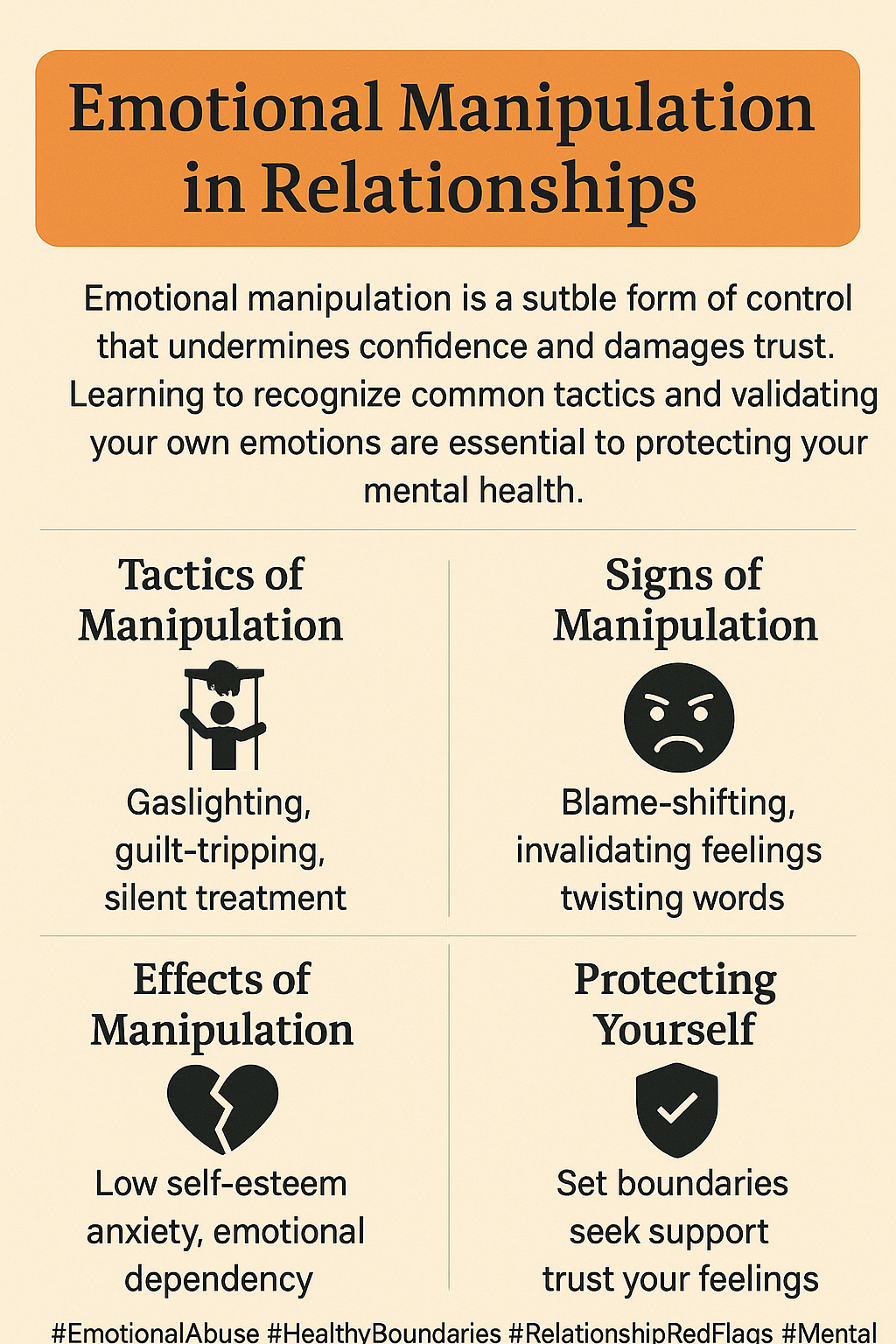
Recognizing emotional manipulation in relationships is crucial for safeguarding your sense of self and preserving emotional well-being. The tricky part is that manipulation often shows up quietly—through guilt trips, subtle blame, shifting responsibility, or tactics that make you question your own feelings. Over time, this can leave you feeling confused, emotionally drained, or constantly “wrong,” even when you haven’t done anything wrong. Recognizing these patterns early helps you establish healthy boundaries, communicate more effectively, and disentangle yourself from dynamics that harm your confidence or peace of mind. Whether it’s in a romantic relationship, friendship, workplace, or family setting, understanding the red flags gives you the power to respond rather than react. This article breaks down what emotional manipulation looks like in everyday life and offers practical strategies for spotting it and handling it with clarity and confidence.
Understanding Emotional Manipulation in Relationships
Emotional manipulation in relationships occurs when one person employs subtle tactics to control or influence another person’s feelings, behaviors, or decisions. It’s not about honest disagreement. It’s more like subtle mind games that leave you feeling guilty, responsible, or unsure of yourself. Emotional manipulation can occur in romantic relationships, between friends, within families, or at work, and is often not immediately apparent.
Manipulation looks different than an ordinary argument or a tough day. It leaves a pattern where you feel like you’re always in the wrong, blaming yourself for things that aren’t your fault, or constantly walking on eggshells.
Signs You Might Be Experiencing Emotional Manipulation
It’s not always easy to spot emotional manipulation, but there are some common tactics you might notice:
- Guilt-tripping: You’re made to feel guilty for saying no, setting boundaries, or not doing what someone wants, even when you’re not actually in the wrong.
- Gaslighting: This is when someone tries to make you doubt your own memory or reality, often by denying things that happened or telling you you’re “too sensitive.”
- Silent treatment: Refusing to talk or withholding affection and attention to get you to act a certain way, instead of talking things out.
- Playing the victim: Someone constantly shifts blame onto you or others, taking no responsibility for their own actions, and expects you to fix things or feel sorry for them.
- Overthetop flattery or love bombing: Flooding you with praise, affection, or gifts to lower your guard or get you to agree to something quickly, then withdrawing that attention later.
- Making threats or ultimatums: Implied or direct threats (“If you loved me, you’d…”) that force you into choices you don’t want to make.
You might recognize one or more of these signs in your relationship. People who use these tactics often do so repeatedly, turning them into patterns rather than rare slip-ups.
Why Emotional Manipulation Happens
There isn’t always one apparent reason why someone is emotionally manipulative, but understanding the motives can help you respond. Often, it’s about getting what they want, whether power, control, comfort, or avoiding responsibility. Some people develop these habits in childhood or from past relationships, especially if they never learned healthier ways to communicate or resolve conflicts.
Recognizing the motive doesn’t excuse the behavior, but it can help you avoid taking it personally. Emotional manipulation isn’t about you not “doing enough.” It’s about someone else’s way of dealing with their own needs or anxieties.
Quick Guide to Spotting Emotional Manipulation
Improving at recognizing emotional manipulation requires a bit of self-awareness and some practice. Here are some ways to spot the signs in your day-to-day life:
- Pay attention to how you feel after interactions: Constantly feeling guilty, confused, anxious, or responsible for someone else’s mood is a big red flag.
- Notice patterns, not just one-off moments: Everyone slips up occasionally, but repeated behaviors, such as gaslighting or guilt-tripping, reveal a pattern.
- Keep track of shifting blame: If you’re constantly being told things are your fault, or you’re the one apologizing all the time, there might be manipulation at play.
- Check your boundaries: If someone pushes you to do things you’re uncomfortable with or punishes you for saying no, it’s time to pay attention.
- Watch for backhanded compliments or “jokes”: Insults dressed up as humor are often just another way to undermine your confidence.
If you notice these patterns, it can be helpful to discuss them with a trusted friend or therapist for an outside perspective.
Challenges People Face When Dealing with Emotional Manipulation
Standing up to emotional manipulation isn’t easy. Here are some common hurdles and tips on how to handle them:
- Doubting your instincts: If you’ve been manipulated for a while, you might question your own judgment. Writing down events and how you felt right after can help you see patterns more clearly.
- Fear of conflict: You might be worried about starting a fight or being left out if you push back. Setting boundaries is really important for your own well-being, even if it feels awkward at first.
- Feeling responsible for others’ emotions: Remember, you don’t owe anyone your emotional energy at the cost of your own mental health.
- Being isolated from support: Manipulators sometimes cut you off from friends or family. It helps to keep even just one outside connection for reality checks and support.
Getting support when you spot these red flags can make a real difference. Reaching out to a mental health professional or being honest with friends can help put things in perspective and prioritize your own well-being.
Gaslighting and Its Effects
Gaslighting is a manipulation technique that makes you question your reality. You might hear things like “That never happened” or “You’re remembering wrong.” Over time, this wears down your trust in your memory and instincts. If you start collecting evidence, such as journals, text messages, or discussing things with someone you trust, it becomes easier to see what’s really going on and strengthens your confidence.
Handling Guilt and Obligation
Manipulators love to make you feel guilty for not meeting their expectations. That nagging sense of obligation isn’t your responsibility if you’re being asked to sacrifice your values, peace, or happiness. Practicing saying no, in small ways at first, can help you get more comfortable with setting boundaries.
Breaking Down Isolation
A significant challenge arises when you feel isolated from others due to someone’s manipulation. Even small steps, such as texting an old friend or joining a support group (online or in person), can help rebuild your sense of support and make things feel less overwhelming. Building new connections outside the manipulative relationship can also help you remember your worth and shake off any blame put on you. Being part of a community, even a small one, can provide strength and clarity in tough times.
Practical Steps for Protecting Yourself
If you think you’re dealing with emotional manipulation, there are a few practical steps you can take to protect yourself and start to switch things up:
- Set boundaries: Decide what behavior you’re willing to accept, and what’s off limits. Practice calmly stating your limits.
- Limit your emotional investment: Avoid getting caught up in their drama. Keep your communication brief and to the point if necessary.
- Document interactions: If things are getting especially confusing or stressful, jot down what happened, how you felt, and how the other person responded.
- Seek outside support: Therapists, hotlines, or trusted friends are all valuable resources for perspective and help in developing effective strategies.
- Remind yourself of your worth: You deserve respect and honesty in your relationships, even if someone else tries to convince you otherwise.
Taking small steps toward more honest and healthy connections can help you feel stronger and more grounded, regardless of what someone else is trying to convince you of.
How Emotional Manipulation Shows Up in Different Relationships
Emotional manipulation isn’t limited to one kind of relationship. Here’s how it might look in different settings:
- Romantic relationships: Jealousy, constant testing, and blaming you for their feelings.
- Friendships: Backhanded compliments, guilt-trips for spending time with other people, or constantly one-upping adversity.
- Work relationships: Colleagues or bosses shifting blame, giving you the silent treatment, or threatening job security over small mistakes.
- Family: Playing favorites, guilt-tripping you for choices that don’t match their expectations, or using money and approval as bargaining chips.
Spotting these patterns early in any relationship helps you set boundaries and maintain your own emotional stability. By noticing manipulation sooner, you can stop it from growing further and focus on building trust and respect.
Frequently Asked Questions
Here are a few questions people often ask when trying to figure out if they’re dealing with emotional manipulation:
Question: What’s the difference between emotional manipulation and a regular argument?
Answer: Arguments are usually about specific issues and end once things are resolved. Manipulation is more about getting control, often creating confusion, self-doubt, or guilt that sticks around even after the conversation.
Question: Can emotional manipulation happen even with someone I really care about?
Answer: Definitely. Emotional manipulation isn’t about how much you care about someone; it’s about unhealthy ways of relating. You can love someone and still need to set boundaries.
Question: If I realize I’m being manipulated, what’s the first step?
Answer: Start with self-awareness and document what’s been happening. Reach out to someone you trust or a professional to get another perspective and create a plan for setting boundaries.
Building Stronger, Healthier Relationships
Recognizing emotional manipulation is a crucial aspect of self-care in any relationship. Setting boundaries, getting outside support, and trusting your own instincts are all tools you can use to stay clear on your needs and recognize what’s not okay. Relationships should make you feel safe and respected, not anxious or confused. You deserve connections that build you up, not ones that break you down.
If you’re unsure or want someone to discuss it with, there’s nothing wrong with seeking support. You’re not alone, and honest, caring relationships are worth striving for.
Video: How to Spot Emotional Manipulation Fast