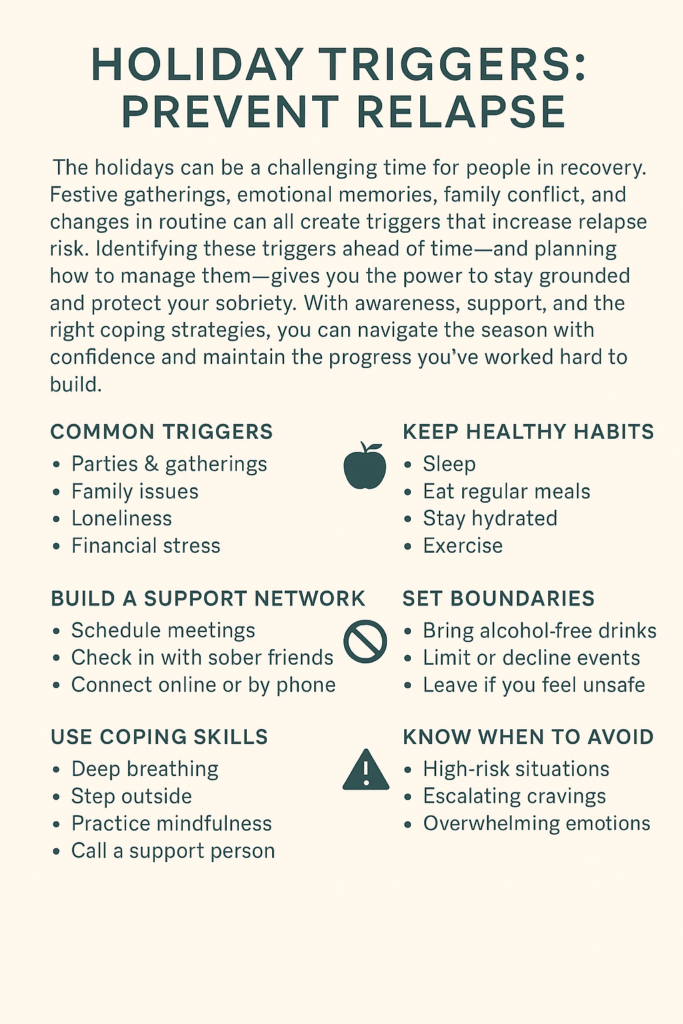
If you’re in recovery, the holidays can be packed with moments that feel a little tricky to find your way through. With so many social events, changes in routine, and a lot more pressure in the air, managing triggers to avoid relapse takes a bit of planning and self-awareness. I’ve found that understanding your triggers and having a solid action plan makes a huge difference when things get stressful this time of year.
Why the Holidays Can Bring Up Triggers
The holiday season stirs up all kinds of emotions and memories. For anyone with a history of addiction, it’s pretty standard to find certain sights, sounds, people, or even just a location bringing back old habits or cravings. Mix in travel, family tension, or feeling alone, and you’ve got a recipe for feeling unsettled, even if you’ve been steady in your recovery all year long.
It helps to know what you might run up against. Some common holiday triggers include:
- Family Gatherings: Old patterns, tough family relationships, or just being back in a familiar environment can unzip some old feelings fast.
- Alcohol Focused Events: Holiday parties often come with free-flowing drinks, making it challenging to steer clear if drinking was part of your past.
- Stress and Expectations: Trying to meet other people’s expectations (or your own) can crank up anxiety.
- Feeling Left Out or Lonely: Not everyone is surrounded by friends or family this time of year, and social media can make everyone’s holiday look perfect even when it’s not.
Understanding these triggers puts you one step ahead, giving you time to set boundaries and create strategies that actually work for you.
Building Your Holiday Trigger Plan
Having a plan for the moments that feel risky can lower anxiety and help you make better choices on the spot. I’ve put together a few things that can come in handy during the holiday rush:
- Stay Connected: Keep in touch with friends, sponsors, therapists, or support groups. Having people to call or text when you’re feeling shaky can make a world of difference. Some people like to schedule regular check-ins with someone they trust before and after particularly stressful events.
- Know Your Triggers: Make a list of situations, people, or even foods and smells that you know trip your wires. Once you’ve got them written out, you can brainstorm ways to dodge or handle each one.
- Prep Your Responses: You don’t have to say yes to every invite. It’s totally fine to share that you’re not drinking or using for health reasons, or to have a “soft out” ready if something starts to feel uncomfortable. Rehearse what you’ll say ahead of time. The more you’ve practiced, the less awkward it feels in the moment.
- Bring Your Own: If you’re heading to a party or dinner where you expect alcohol, bring a drink you actually like—sparkling water or something festive but nonalcoholic—to keep something in your hands and avoid feeling left out.
Another tip is to bring a personal item that reminds you of your commitment to recovery. This could be a keychain, bracelet, or any small object that’s meaningful to you. Holding onto it in tense moments gives a subtle boost of reassurance.
Things to Watch for and Handle During the Holidays
Holiday triggers are pretty sneaky and sometimes look a lot like everyday seasonal stress. Here are a few things I always keep an eye out for and how I handle them:
- Subtle Peer Pressure: Sometimes, well-meaning friends or family will offer a drink or something else you’re avoiding. Just keep it polite and straightforward with something like, “No, thanks. I’m good with this.” Your health comes first.
- Tiredness and Overwhelm: Too many commitments can make you feel frazzled and more likely to slip. Build in downtime, whether that’s taking a walk, reading, or allowing yourself not to go to every gathering.
- Holiday Blues: Winter and the holiday rush can bring on seasonal sadness for many people. If you’re feeling down, talk to someone you trust or reach out to a professional. Even texting a helpline helps.
- Routines Getting Off Track: Travel or staying with others can mess up routines you rely on to stay grounded. As much as possible, find ways to continue the habits that work for you—journaling, meditation, exercise, or a healthy bedtime ritual.
Subtle Peer Pressure
Direct offers to drink or use are easy to prepare for, but sometimes it’s the passing comments or jokes that make things challenging. Having a ready response, like “I’m not drinking tonight” or “I’m focusing on staying healthy,” keeps things quick and helps steer conversations away from tense topics.
Holiday Blues
Missing people who are gone, feeling left out, or just feeling the winter gloom is pretty standard, but it doesn’t make it any easier. My go-to move is connection, even if it’s just reaching out by text or an online meeting; almost always, someone else is feeling the same thing.
Actionable Tips for Managing Holiday Triggers
Staying in control of your recovery over the holidays often comes down to little tweaks rather than significant changes. I lean on these practical tricks:
- Make a Game Plan: Look at your calendar and circle any events that could be risky. Decide ahead of time if you’re going, how long you’ll stay, and your exit strategy if things get stressful.
- Have a Support Buddy: Line up someone you can message or call if you start feeling triggered. They don’t even need to be at the event. Just knowing someone’s got your back is constructive.
- Create Traditions of Your Own: Find some fun rituals that don’t revolve around your old habits. Maybe a movie night, a homemade hot chocolate recipe, or a post-dinner walk. Having new things to look forward to stacks the deck in your favor.
- Practice Mindfulness: When things feel overwhelming, focus on breathing or notice three things around you—what you see, hear, or smell. This helps settle nerves and brings your mind back to the present.
- Celebrate Small Wins: Every time you make it through a stressful event sober or choose to walk away from a trigger, give yourself some credit. Jot it in a journal or share with your group. Progress adds up.
Giving yourself rewards for meeting your goals, even tiny ones like an extra-long bath or your favorite treat, goes a long way in reinforcing positive behaviors. Remember, the small stuff really does stack up, especially during a busy, triggering season like the holidays.
Why Setting Boundaries Helps
One of the best tools I use over the holidays is learning how and when to say no. Even if you’re usually the “yes” person in your family or friend group, putting your recovery first is what keeps you steady. This could mean skipping a family event that always ends in arguments, saying no to staying overnight at a relative’s house, or just letting folks know you’re taking things low-key this year.
Setting boundaries isn’t about shutting others out; it’s about keeping yourself well. People might not get it right away, and that’s ok. With practice, it gets easier (and it’s worth it for your peace of mind).
It’s normal to feel bad at first when you set a boundary, but remember, saying no to things that don’t support your recovery is saying yes to yourself and your well-being. Over time, others will start to respect your decisions more as you stay consistent.
Real-world Examples
In the real world, I’ve seen all kinds of approaches work, from people teaming up with a “holiday sponsor” to others hosting their own small, substance-free get-togethers. I know one friend who always brings a favorite bandana to fidget with at parties—just a small thing, but it switches focus and keeps hands busy. Another organizes a late-night video chat for friends who feel alone on New Year’s, creating new traditions and filling the midnight gap with connection rather than temptation.
- Substance-Free Events: Organize (or find) potlucks, movie nights, or coffee meetups focused on connection rather than alcohol or drugs.
- Online Communities: Many recovery groups offer virtual meetings, especially around major holidays. They’re worth checking out even if you’ve never done one before.
- Personal Rituals: Lighting candles, doing yoga, or just sitting by the fire with your favorite book—these lowkey rituals can bring the comfort the holidays promise, with none of the risk.
Frequently Asked Questions
Here are a few questions people sometimes ask about managing triggers and avoiding relapse during the holidays:
Question: What should I do if I accidentally slip up?
Answer: Relapse happens, and it doesn’t mean you’ve failed. Reach out for help as soon as you can, to a support group, a sponsor, or a trusted friend. The sooner you talk about it, the easier it is to get back on track.
Question: How do I deal with relatives who don’t understand my recovery?
Answer: Sometimes family members won’t “get it” and might push or question your choices. Keep responses brief, stick to your boundaries, and remember—you’re not responsible for making everyone comfortable with your life changes.
Question: Is it okay to stay home instead of going to gatherings?
Answer: Absolutely. Your recovery comes first, and it’s perfectly fine to decline invitations. Plan your own night in with things you actually enjoy.
Wrapping Up
Handling triggers during the holidays is a skill that gets easier with practice. Knowing what sets you off and setting up plans that honor your recovery isn’t just helpful; it’s how you make the holidays actually work for you. This season, looking out for your own health means you’re doing exactly what you need to keep feeling steady well into the new year.
Video: Don’t Fall Into These Holiday Relapse Traps #RecoveryJourney #AddictionRecovery